
Ethiopia Yirgacheffe 1 Natural Rosemary
36455 – 30.0 kg GrainPro Bags – SPOT SHANGHAI

Grower
Smallholder farmers organized around the Banko Chelchele processing station

Altitude
1900 – 2300 masl

Variety
Regional cultivars 74110, 74112

Soil
Vertisol

Region
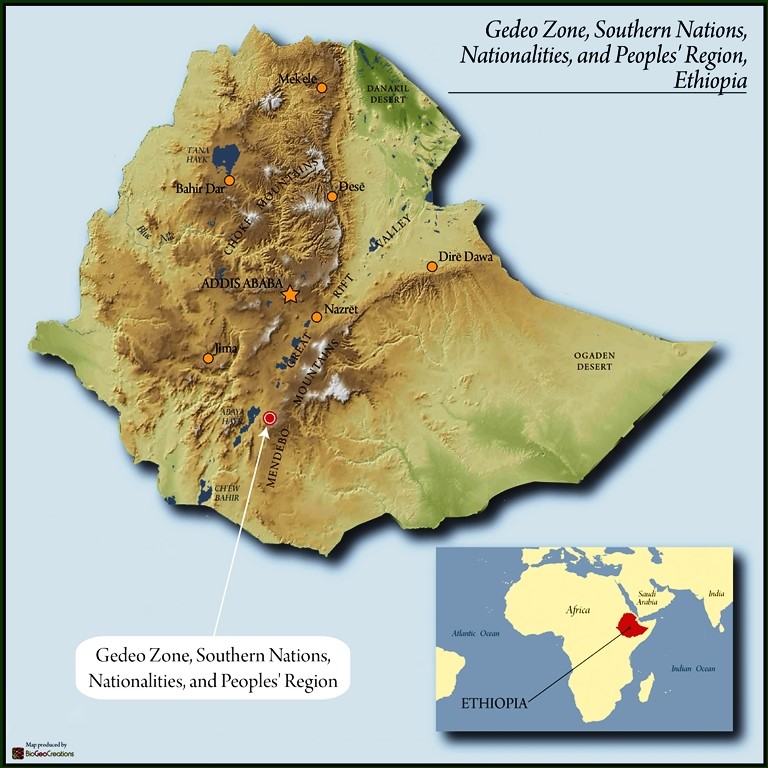
Banko Chelchele, Chelchele Kebele, Gedeb Woreda, Gedeo Zone, Southern Nations, Nationalities, and Peoples’ Region

Process
Anaerobic co-fermented natural with fresh rosemary

Harvest
October - December

Certification
Conventional
This coffee comes from smallholders in the Chelchele area, part of the Gedeb district in southern Gedeo Zone, where some of Ethiopia’s most complex and aromatic naturals come from year after year. Gedeb is a unique area dense with coffee growers and processors. The coffee was processed at a central site in Banko Chelchele, one of the district’s most prolific coffee areas.
This very special process involves an anerobic fermentation with added rosemary, a widely appreciated herb in Ethiopia’s extraordinary cuisine. Both the fermentation and the rosemary are used to create a transformed cup profile.
Gedeb's Significance and Coffee Profiles
The district of Gedeb takes up the south-eastern corner of Ethiopia’s Gedeo Zone—a narrow section of plateau dense with savvy farmers whose coffee is known as “Yirgacheffe”, after the zone’s most famous district. Gedeb, however, is a terroir, history, and community all its own that merits unique designation in our eyes. Coffees from this community, much closer to Guji Zone than the rest of Yirgacheffe, are often the most explosive cup profiles we see from anywhere in Ethiopia. Naturals tend to have perfume-like volatiles, and fully washed lots are often sparklingly clean and fruit candy-like in structure.
The municipality of Gedeb itself is a is a bustling outpost that links commerce between the Guji and Gedeo Zones, with an expansive network of processing stations who buy cherries from across zone borders. These processors (and we would agree) would argue their coffee profiles are not exactly Yirgacheffe, but something of their own. The communities surrounding Gedeb reach some of the highest growing elevations for coffee in the world and are a truly enchanting part of the long drive into Guji. Banko Chelchele is one of the communities in eastern Gedeb and includes numerous local cooperatives, as well as independent processing stations of various types, like this one.
EDN Ethiopian Coffee
EDN Ethiopian Coffee is an independent processor and exporter of coffee with processing sites in Guji, southern Yirgacheffe, and Sidama. The coffee was processed at the group’s site in Banko Chelchele, one of Gedeb’s most prolific coffee producing areas.
The Banko Chelchele site employs over 200 people during harvest months to manage the continuous rotating and sorting of sundried cherry and parchment, as well as all other intake, payment, security, and inventory operations. Being a processor for EDN is much more than transactional—they prefinance all their contributing farmers, provide educational resources, daily meals and lodging for staff. Amenities like these are both a gesture of care and acknowledgment of the potential instability inherent to small-scale farming. They are also strategic, since many processors in the area compete for farmer loyalty, and important for the sustainability of coffee and its workforce in the area.
Processing at Banko Chelchele
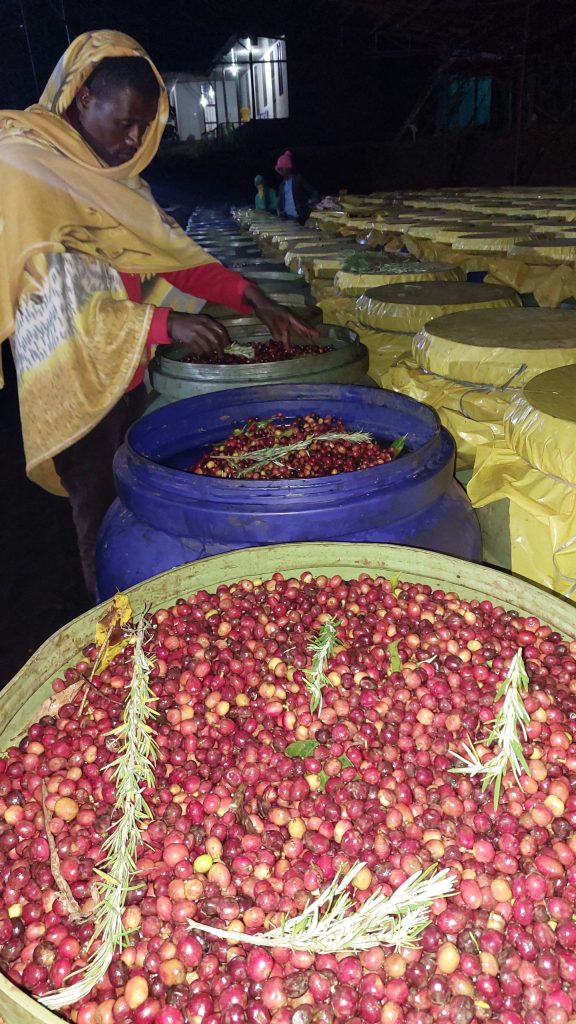
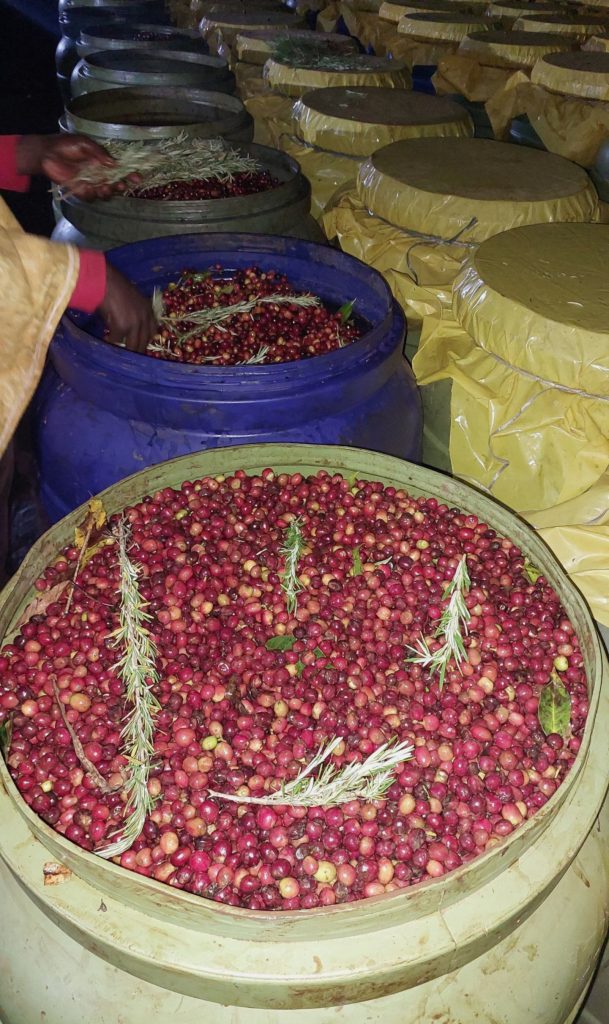
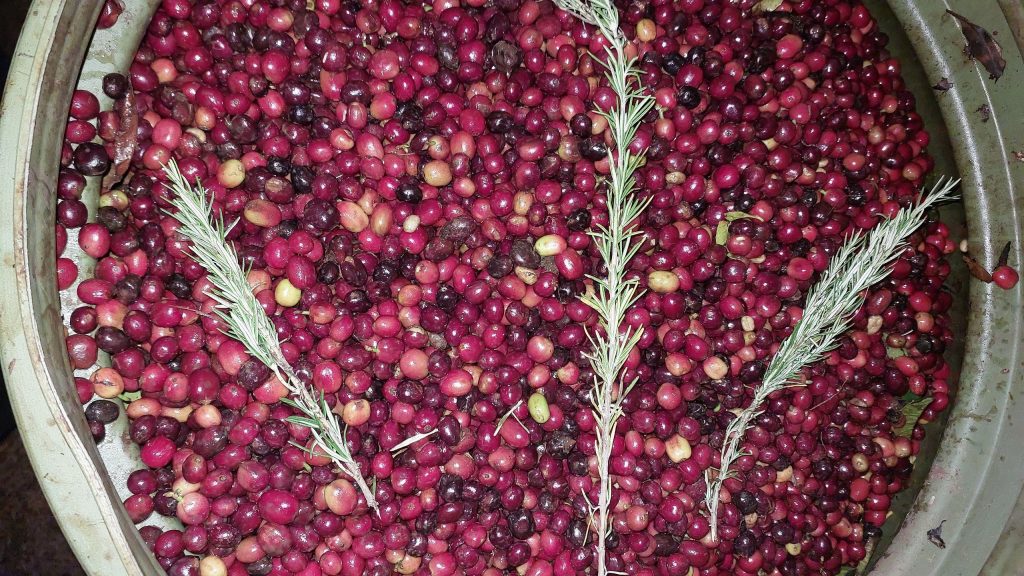
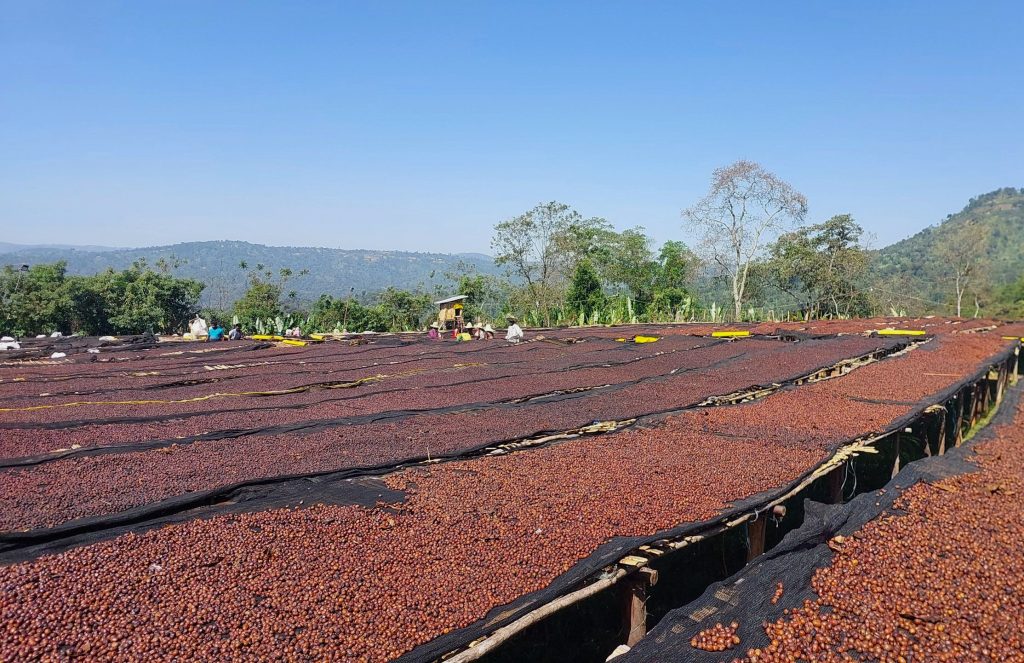
Normally, naturals at the Banko Chelchele station are hand-sorted upon delivery and moved directly to raised screen beds to sundry. In the case of this special microlot, fresh cherry is sealed into carbon fiber drums with fresh rosemary sprigs and left to ferment anaerobically (deprived of fresh oxygen) for 10 full days between 15-18 degrees Celsius. This stage allows the sugars in the fruit to develop far beyond where they would in a traditional natural without the risk of over fermenting. The addition of rosemary infuses the cherry must that surrounds the fruit and creates new aromatic esters in the fermentation that wouldn’t otherwise form.
After the 10-day drum fermentation, the soft and syrupy cherry mixture is carefully moved to raised screen beds to dry, slowly and gradually, for 28 days. Once it reaches a fully dried state, the pods are moved to a cool warehouse where they are left to rest for a number of weeks. This last step allows the internal moisture to equilibrate and the water activity to settle, preparing the green coffee for a long shelf life of vibrant flavors.