
Ethiopia Yirgacheffe 1 Washed Double Ferment Banko Taratu
36188 – GrainPro Bags – SPOT SHANGHAI
Bags 2
Warehouses Shanghai
Please Note This coffee landed more than 8 months ago.
Check out our Guide to Ethiopian Coffee Grades



Grower
Smallholder farmers organized around Banko Taratu processing site

Altitude
1950 – 2300 masl

Variety
74112 and 74110 local landraces

Soil
Vertisol

Region
Banko Taratu, Gedeb, Gedeo Zone, Southern Nations, Nationalities and Peoples’ Region, Ethiopia

Process
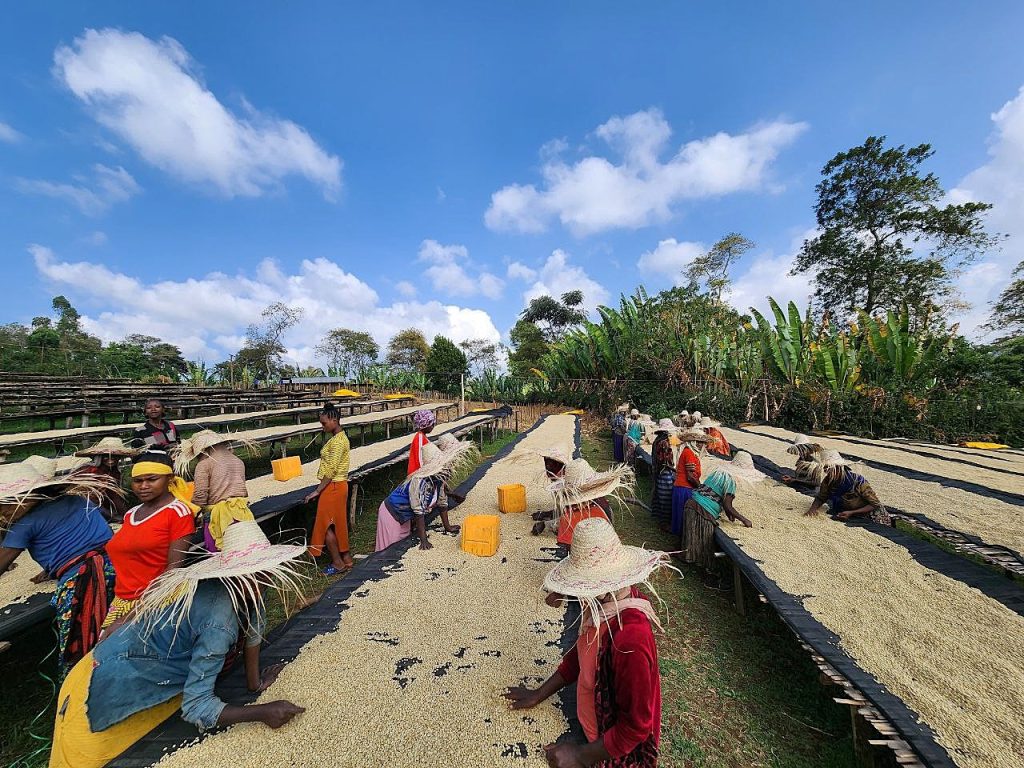
Fully washed, double fermented, and dried on raised beds

Harvest
October – December

Certification
Conventional
This coffee was grown and processed in Gedeb, a remote trading town at the southern end of the world-famous Gedeo zone, a small and high-elevation plateau also known as Yirgacheffe. The arabica genetics and growing conditions of this area are historic to coffee and are well known for producing excellent, complex and berry-forward washed coffees, like this one.
Gedeb's Significance and Coffee Profiles
The district of Gedeb takes up the south-eastern corner of Ethiopia’s Gedeo Zone. While seemingly wild and forested, the Gedeb district is actually teeming with coffee growers and processing stations. Gedeb, in our eyes, is a terroir, history, and community all its own that merits unique designation. Coffees from this region, much closer to Guji Zone than the rest of Yirgacheffe, are often the most explosive cup profiles we see from anywhere in Ethiopia. Naturals tend to have perfume-like volatiles, and fully washed lots are often sparklingly clean and fruit candy-like in structure.
The municipality of Gedeb itself is a bustling outpost that links commerce between the Guji and Gedeo Zones, with an expansive network of processing stations who buy cherry from across zone borders. These processors would argue (and we would agree) that their coffee profiles are not exactly Yirgacheffe, nor exactly Guji, but something of their own. The communities surrounding Gedeb reach some of the highest growing elevations for coffee in the world and are a truly enchanting part of the long drive through Ethiopia's south. Banko Taratu is one of the communities in eastern Gedeb and includes numerous local cooperatives, as well as independent processing stations of various types, like this one.
EDN Ethiopian Coffee Export PLC
This lot comes by way of the independent Banko Taratu processing site owned and operated by EDN Coffee Export PLC, who manages a total of 4 different sites throughout southern Gedeo zone. EDN’s founder, Michael Gebreselassie, spent many years living in the United States (and working at the Port of Oakland, one of the busiest coffee ports in the country) and watching the popularity of Ethiopia’s coffee continue to grow. Feeling certain that the supply chain could be improved at the farm level, Michael founded EDN in 2018.
The Banko Taratu processing site receives cherries from farms up to 2300 meters in elevation, some of the highest in Ethiopia, and indeed the world. The site relies on a team of brothers, Seleshi and Degafe Beyene, to manage the cherry collection from all contributing growers, as well as 190 staff members who manage the day-to-day processing during harvest.
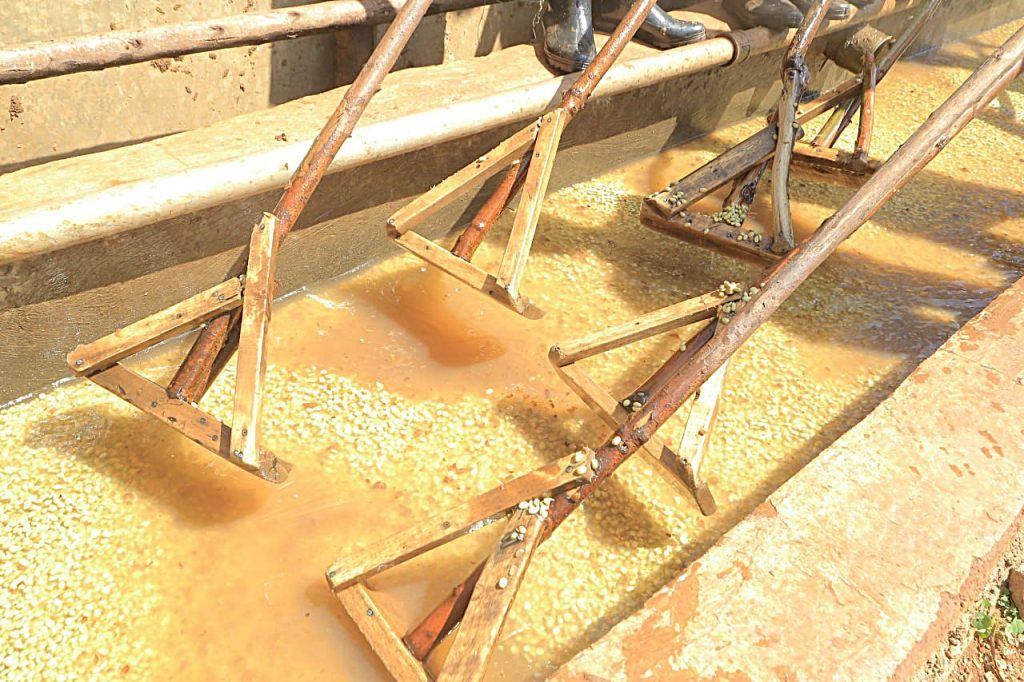
The double fermentation processed coffees are sorted by hand on arrival, then floated to remove less dense and damaged cherries. Next the sorted cherries are depulped, fermented between 12 to 24 hours and washed. Next, coffee is placed in tanks for a second fermentation between 12 to 24 hours and then taken to raised beds to fully dry. Finished dried parchment is stored locally to rest and allow internal moisture to equilibrate, and then trucked to Addis Ababa to be dehulled and for additional sorting and preparation for export.
Despite being a young company, EDN has already begun investigating novel processing equipment and techniques. The company is experimenting with an electronic color sorter for precise cherry selection, something that has existed as a prototype for a number of years but has yet to really penetrate into the producer industry. In addition, the company is working with honey processing and anaerobic fermentation techniques across their processing sites, continuously chasing a portfolio of coffee profiles they believe will best serve their farmers and help the industry achieve new ideals.