
Ethiopia Yirgacheffe 2 Natural Belayneh Jibicho
36786 – GrainPro Bags – SPOT RCWHSE
Bags 58
Warehouses Oakland
Flavor Profile Black tea, butterscotch, floral
Check out our Guide to Ethiopian Coffee Grades



Grower
Belayneh Jibicho Aduka

Altitude
1800 - 2200 masl

Variety
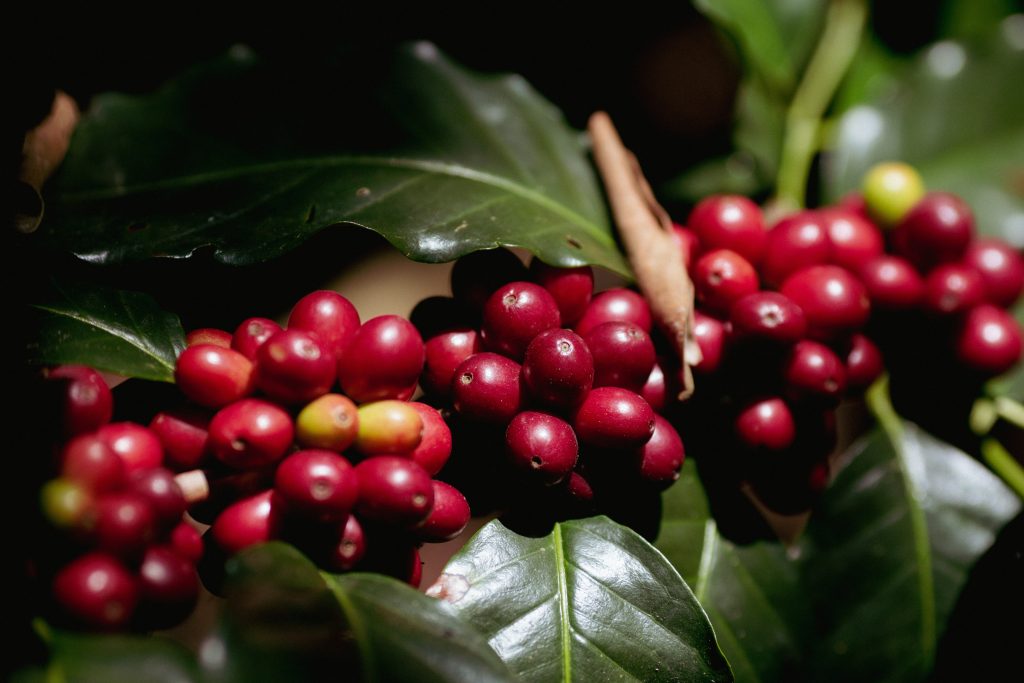
Regional cultivars 74110 and 74112

Soil
Vertisol

Region
Worka municipality, Gedeb district, Gedeo Zone, Southern Nations, Nationalities, and Peoples’ Region, Ethiopia

Process
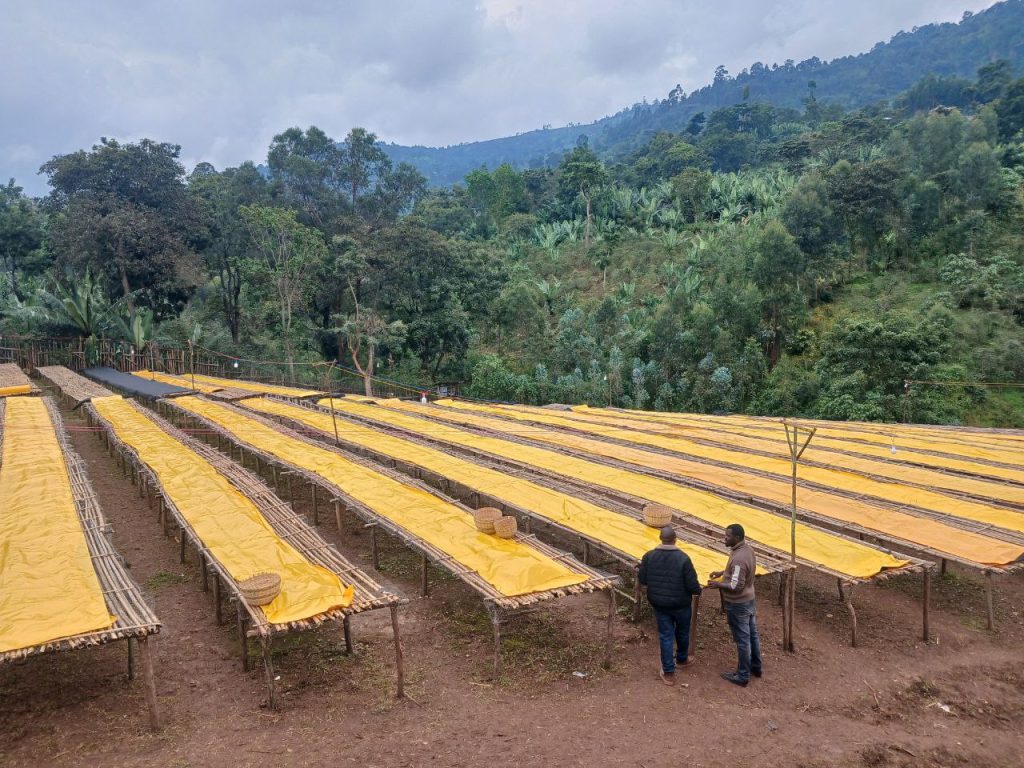
Natural, sundried on raised beds

Harvest
December - February

Certification
Conventional
Coffees from individual farmers are becoming less difficult to find in Ethiopia, but they are still extremely rare and require a full supply chain in their support. Belayneh Jibicho Aduka works with Jebo Workineh and his export company, Agrifarm, to produce and promote his coffees directly to international buyers.
Gedeb and Its Coffee
The district of Gedeb, where Belayneh’s farm is located, takes up the south-eastern corner of Ethiopia’s Gedeo Zone—a narrow section of plateau dense with savvy farmers whose coffee is known as “Yirgacheffe”, after the zone’s most famous district. Gedeb, however, is a terroir, history, and community all its own that merits unique designation in our eyes. Coffees from this community, much closer to Guji Zone than the rest of Yirgacheffe, are often the most explosive cup profiles we see from anywhere in Ethiopia. Naturals tend to have perfume-like volatiles, and fully washed lots are often sparklingly clean and fruit candy-like in structure.
Gedeb is remote but impressively industrious in coffee production. Half of its territory is planted with coffee. Until recently coffee exports were allowed only limited channels and the vast majority of coffee grown in this area was sold by the Yirgacheffe Coffee Farmers Cooperative Union (YCFCU), consolidated under the wide-reaching Worka Cooperative, or sold anonymously through the Ethiopia Commodity Exchange (ECX).
Today, however, in addition to the Worka Cooperative splitting into multiple smaller coops, there are increasing numbers of single farm owners like Belayneh and independent companies like Agrifarm, who are processing and exporting direct. It is an exciting time to be buying in Gedeb, where we expect to see new layers of coffee continuously unfold as its local industry accelerates.
Belayneh Jibicho Aduka’s Farm & Processing
The vast majority of coffee processing in Ethiopia is centralized due to complete lack of infrastructure or efficiencies at the farm level. Larger plots like Belayneh’s 3.5 hectares allow for greater personal control, and volumes large enough to be viable for exportation on their own. (3.5 hectares is considered large in Gedeb, where the average farmer has 1 hectare or less.)
Belayneh employs 40 people each harvest for cherry collection and processing assistance. Cherry is picked gradually throughout the day during harvest, where it is sorted for acceptability based on ripeness and uniformity, and floated in water to screen for density. Top quality cherries are moved directly to raised drying tables for sun-drying, where they are rotated continuously for 10-20 days until the final desired moisture content is reached.
Fully dried cherry pods are de-hulled locally before being transported to Ethiopia’s capital, Addis Ababa, for final dry milling and preparation for export.
Related Coffee
Berry, black tea, cocoa
Oakland 26 Bags
ETHIOPIA YIRGACHEFFE 1 NATURAL ORGANIC ABEBE GODANA
36392 – GrainPro Bags – SPOT RCWHSE
Berry, black tea, cocoa
Spot
26 Bags
$5.85 per pound
Honey, dried fruit, dried florals, chocolate
Oakland 27 Bags
ETHIOPIA YIRGACHEFFE 1 NATURAL ORGANIC WELDE HIRBE
36395 – GrainPro Bags – SPOT RCWHSE
Honey, dried fruit, dried florals, chocolate
Spot
27 Bags
$5.80 per pound
Strawberry, floral, peanut, chocolate
Oakland 32 Bags
Strawberry, floral, peanut, chocolate
Spot
32 Bags
$5.71 per pound
Melon, chocolate, clean
Oakland 262 Bags
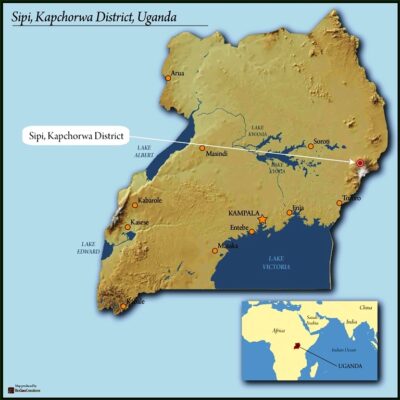
UGANDA ORGANIC SIPI FALLS
35184 – GrainPro Bags – SPOT RCWHSE
Melon, chocolate, clean
Spot
262 Bags
$5.71 per pound