
Ethiopia Yirgacheffe 2 Natural Idido Abaynesh Dori
36785 – GrainPro Bags – SPOT RCWHSE
Bags 97
Warehouses Oakland
Flavor Profile Papaya, dried fruit, black tea
Check out our Guide to Ethiopian Coffee Grades


Grower
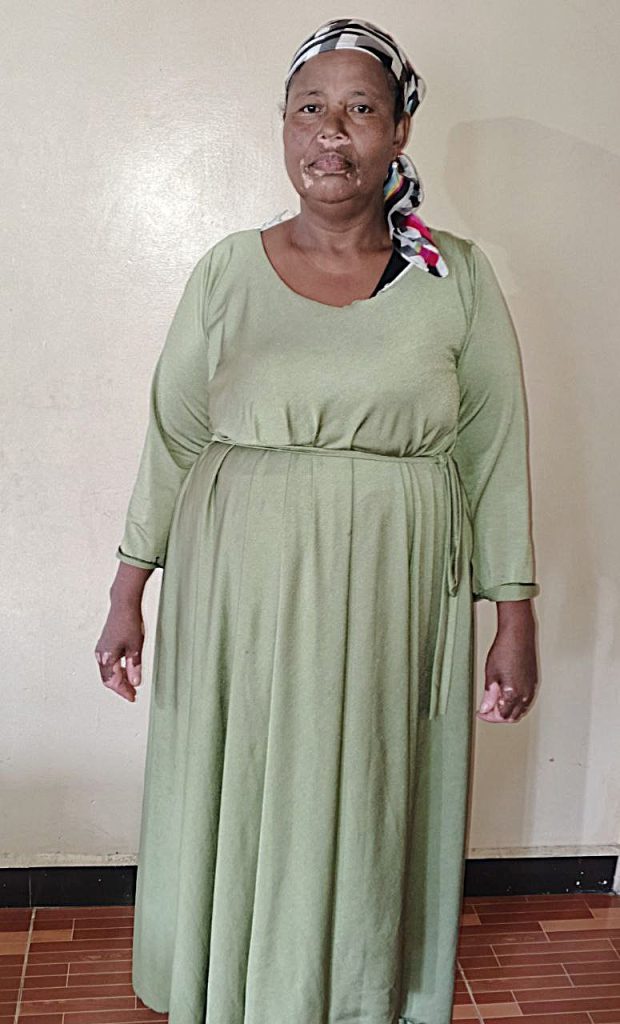
Abaynesh Dori

Altitude
1800 - 2200 masl

Variety
Regional cultivars 74110 and 74112

Soil
Vertisol

Region
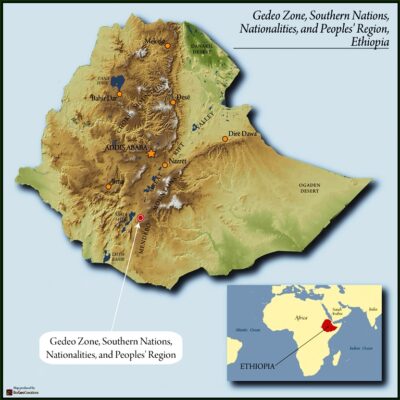
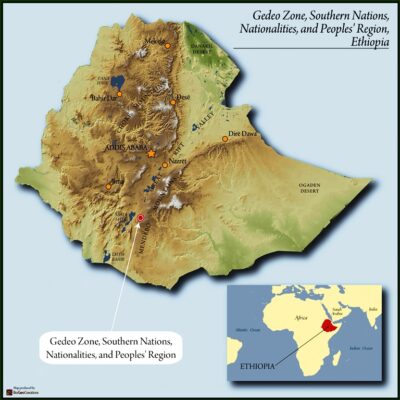
Idido municipality, Yirga Chefe district, Gedeo Zone, Southern Nations, Nationalities, and Peoples’ Region, Ethiopia

Process
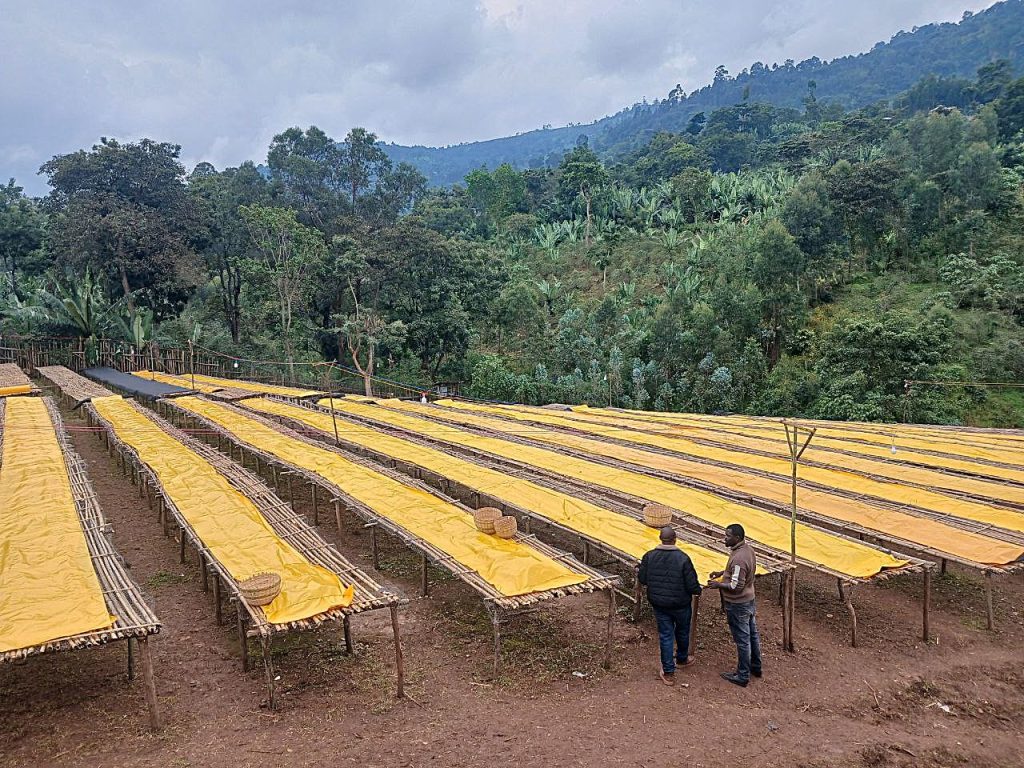
Sundried on raised beds

Harvest
October – February

Certification
Conventional
Coffees from individual farmers are becoming less difficult to find in Ethiopia, but they are still extremely rare and require a full supply chain in their support. Abaynesh Dori works with Jebo Workineh and his export company, Agrifarm, to produce and promote his coffees directly to international buyers.
Yirga Chefe & Idido
The Yirga Chefe district is in the heart of southern Ethiopia’s coveted Gedeo Zone. Gedeo is a narrow section of highland plateau dense with savvy farmers and fiercely competitive processors. This entire zone has been known commercially as “Yirgacheffe” for many years, based on a shared terroir and because the Yirga Chefe district was one of Ethiopia’s first areas to fully wash its coffee, distinguishing it from the rest of the country.
As a coffee terroir, Yirgacheffe has for decades been considered a benchmark for beauty and complexity for arabica coffee worldwide, as well as a carefully protected asset by Ethiopia’s government, who cups every export to be sure there is in fact “Yirgacheffe flavor” in every lot attributed to the area.
Idido itself is deeply tied to Yirgacheffe’s legendary celebrity. Originally the area was known as “Misty Valley” after the humidity that settles into the area at night. “Misty Valley” was used by some of the first processing sites in the area to brand their coffee, and the term became synonymous with Yirgacheffe specialty coffee long before traceable coffee was available elsewhere in the country. Now, of course, there are multiple central processing stations in the Idido area, and more and more individual farmers able to process at home and export as unique microlots of coffee.
Abaynesh Dori’s Farm & Processing
The vast majority of coffee processing in Ethiopia is centralized due to a widespread lack of infrastructure or efficiencies at the farms, which tend to be tiny by any standard. Larger plots like Abaynesh’s 4.4 hectares allow for greater personal control, and volumes large enough to be viable for exportation on their own. (4 or more hectares is considered large in Yirga Chefe, where the average farmer has 1 hectare or less.)
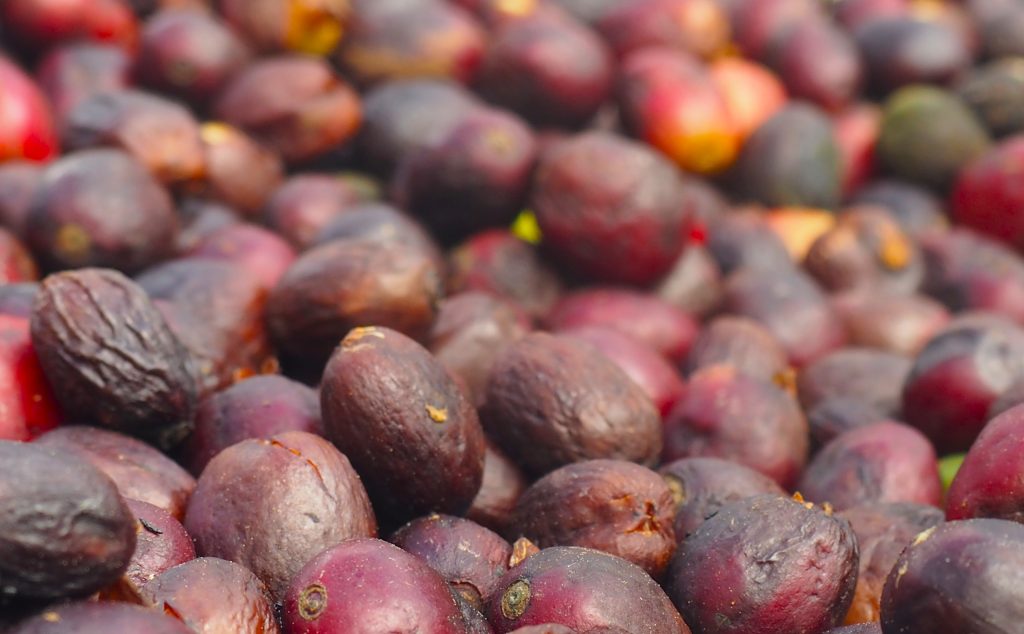
Abaynesh employs 40 people each harvest for cherry collection and processing assistance. Cherry is picked gradually throughout the day during harvest, where it is sorted for acceptability based on ripeness and uniformity, and floated in water to screen for density. Top quality cherries are moved directly to raised drying tables for sun-drying, where they are rotated continuously for 10-20 days until the final desired moisture content is reached.
Fully dried cherry pods are de-hulled locally before being transported to Ethiopia’s capital, Addis Ababa, for final dry milling and preparation for export.
Related Coffee
Berry, black tea, cocoa
Oakland 26 Bags
ETHIOPIA YIRGACHEFFE 1 NATURAL ORGANIC ABEBE GODANA
36392 – GrainPro Bags – SPOT RCWHSE
Berry, black tea, cocoa
Spot
26 Bags
$5.85 per pound
Honey, dried fruit, dried florals, chocolate
Oakland 27 Bags
ETHIOPIA YIRGACHEFFE 1 NATURAL ORGANIC WELDE HIRBE
36395 – GrainPro Bags – SPOT RCWHSE
Honey, dried fruit, dried florals, chocolate
Spot
27 Bags
$5.80 per pound

Persimmon, apple juice, cashew butter, tomato, cocoa
Oakland 291 Bags
UGANDA ORGANIC
38141 – Ecotact Bags – SPOT RCWHSE
Persimmon, apple juice, cashew butter, tomato, cocoa
Spot
291 Bags
$5.21 per pound
Strawberry, floral, peanut, chocolate
Oakland 32 Bags
Strawberry, floral, peanut, chocolate
Spot
32 Bags
$5.71 per pound