
Editor’s Note: The White House is clarifying that Trump’s announcement of a 90-day tariff “pause” means that the “tariff level will be brought down to a universal 10% tariff” during that time, while “negotiations are ongoing.”
Article Summary:
Max Nicholas-Fulmer breaks down the new U.S. import tariffs announced by the Trump Administration, effective April 5. Despite talk of a “90-day pause,” the White House confirmed a universal 10% tariff on nearly all imports including coffee while negotiations continue.
Key points:
- Tariffs = taxes on importers, not foreign exporters. U.S. companies like Royal must pay immediately at customs, creating major cash flow strain and higher financing costs.
- Coffee impact: Most green coffee faces a 10% tariff, while Vietnam’s (world’s #2 producer, mainly Robusta) faces a 46% tariff, likely disrupting global Robusta supply chains and raising U.S. prices.
- Exemptions: Coffee already landed or shipped before April 5 may escape tariffs. Mexico and Canada remain tariff-free under USMCA—though decaf coffee processed there from other origins still incurs tariffs.
- Market implications: Expect volatility. Tariffs could raise U.S. coffee prices, pressure supply chains, and accelerate inflation across both commercial and specialty markets.
- Outlook: Tariffs can be lifted anytime by the President, but political uncertainty remains. Bipartisan legislation aims to return tariff authority to Congress, though Trump vows to veto.
What’s Going On? Understanding the Impact of New Tariffs on Coffee Imports
By now, you’ve likely heard: the Trump Administration has enacted broad tariffs on U.S. imports, effective April 5. Let’s be clear—tariffs are taxes, paid not by foreign governments, but by American companies. That means us.
As a green coffee importer, Royal Coffee is directly responsible for paying these tariffs at the time of customs entry—via immediate ACH transfer. In real terms, that’s a sudden and significant increase in our cost of goods. To cover these payments, we must tap into our line of credit, which also means accruing additional interest fees. Consider this: a single container of Brazilian coffee can easily top $150,000 at current market prices. Add 10% to that and now scale that across our entire inventory. The numbers get serious, fast.
What Are the Tariff Rates?
As it stands, nearly all imported coffee is facing a minimum 10% tariff.
Exceptions? Unfortunately, yes—and not in the good way:
Vietnam faces a whopping 46% tariff. Royal doesn’t import much Vietnamese coffee, but this matters significantly for the industry. Vietnam is the world’s second-largest producer of Robusta. A 46% tariff will dramatically disrupt Robusta flows to the U.S., and unless renegotiated, could set off ripple effects across the global coffee market. Vietnam even offered to drop its 5.1% average U.S. import tariff* to zero in a reciprocal deal which was rejected by the Trump Administration.
*Average of all products, according to the WTO
Will Tariffs Apply to Coffee Already Contracted?
It depends. Any SPOT coffee physically in the U.S. before April 6th is exempt. Additionally, coffee on its final vessel by midnight April 5th may also be exempt (we believe). But here’s the nuance: coffee that stops at a transshipment port on the way could still be hit, even if it left its origin port before April 5th. Most April arrivals are expected to be exempt, but it’s a case-by-case situation. Of course, we will only apply a tariff if it is assessed, and we will keep a record of all costs and will be able to provide if needed.
How Are Tariffs Calculated?
Tariffs are based on the FOB (Free on Board) value of the coffee at customs entry—not your final price. So, the added cost to you may be less than 10% in many cases. If someone tacks 10% onto your price without explanation, ask questions.
However, keep this in mind: if a producer fixes their price in a higher market (say $4/lb) and the market dips to $3, that higher FOB is still used for the tariff calculation. That scenario is unlikely right now, but it could become common if prices soften further.
What About Mexico?
Products from Mexico (and Canada) are tariff-exempt if the exporter complies with the USMCA trade agreement (essentially NAFTA 2.0). Many Mexican exporters qualify, but not all.
It’s also important to note most of the green coffee used in decaf comes from other countries and is processed in Mexico or Canada. For example, we frequently ship coffee from Peru, Brazil, and Central America to plants located in both countries. These will receive a 10% tariff applied not only to the green coffee, but to the cost of the decaf toll as well. The tariff rate is assessed based on the declared import value of the product. Mexican coffee that is tariff exempt will still be tariff exempt if it is used in decaf. In those cases, the 10% tariff applies to both the green coffee and the decaf toll cost.
With Mexico now the only producing country with 0% tariffs, expect suppliers there to raise their prices. It’s a global market—and pricing tends to follow opportunity.
How Will This Affect Coffee Prices?
Unclear—and volatile. The NY “C” market dropped nearly 50 cents in three sessions, fueled by general market panic and a global shift toward risk aversion. The price of crude oil has declined below the significant level of $60/barrel, at which it is assumed it is no longer profitable for American drillers to operate. The long-term view? Murkier.
Even before tariffs, the coffee market was fragile. The market was telling us that one more major global supply shock could be calamitous for the availability of coffee. This after the back-to-back small Brazilian frosts of 2021 and 2022, and the drought conditions, which persisted for much of 2024, have yet to fully resolve. Fundamentally speaking, those same market dynamics still exist. However, as of this moment, the world seems to be looking more at the potential for a global recession and the impact it would have on demand.
Tariffs have just added pressure. Vietnamese Robusta will become unsellable in the United States with a 46% price increase. It will all need to be rerouted to Europe and other markets, which carries profound implications for the price of commercial grade coffee in the United States. Re-routing from Vietnam to Europe alone will squeeze U.S. commercial supply. Result? Either demand drops, or prices rise—likely a bit of both. Higher commercial prices would undoubtedly have knock-on effects to the specialty market as well.
Looking Ahead
It is important to remember that Donald Trump can decide to remove these tariffs at any time. Whether that happens is anyone’s guess. If they are removed, expect a jolt of market optimism across all sectors, coffee included.
Meanwhile, bi-partisan bills to wrest control of tariff policy back from the President to Congress have already passed in the Senate and have been introduced in the House. Trump has said he will veto them if they reach his desk. If you disagree with the tariff policy, write to your Congressperson, and most importantly, vote in the 2026 election.
—Max Nicholas-Fulmer, CEO, Royal Coffee, Inc.

Latest Articles by Max Nicholas-Fulmer
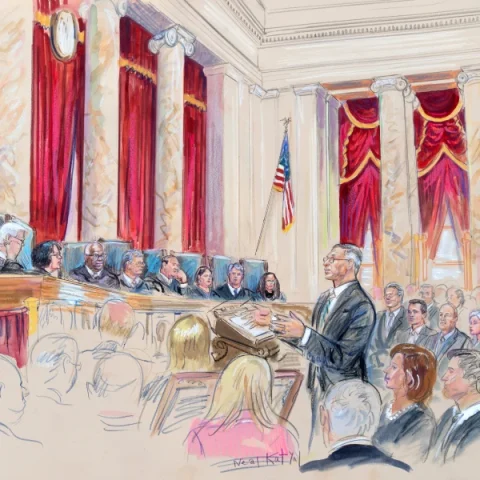
What Does the Supreme Court Tariff Hearing Mean for Coffee?
The Supreme Court’s recent hearing on the IEEPA tariffs signals skepticism about presidential trade powers but no quick relief for importers. Refunds appear off the table, and tariff risk, especially...
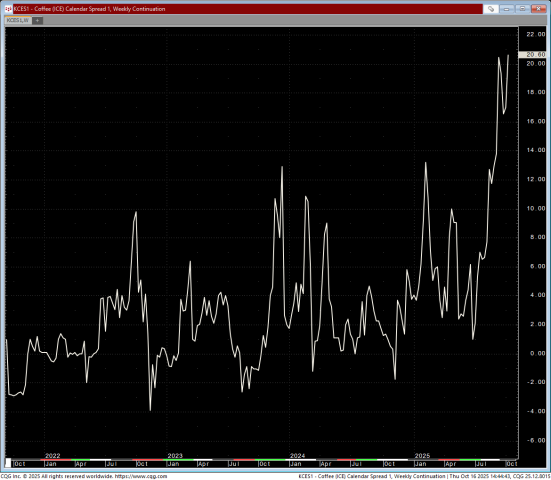
Coffee Market Update: Backwardation and What It Means for Roasters
The global coffee market has entered uncharted territory. Tight inventories, Brazil tariffs, and U.S.–Colombia trade tensions are pushing C-market prices higher and sustaining extreme backwardation. Learn what it means for...

Tariff Updates: What’s Changing and What to Watch
Editor’s Note August 20th: Brazil: A 50% tariff on green coffee takes effect August 6, with no exemption granted. The increase is tied to recent political tensions and was confirmed by Commerce Secretary...
Will you be able to shield Canadian coffee roasters from these tariffs buy using a bonded warehouse? Or will these tariffs be applicable when the coffee that comes into the US is to be exported again?
Hi Seth. We are sending as much as possible to Vancouver directly, bypassing all tariffs. You can check out our position at the Seaforth warehouse in Vancouver.
Great and clear explanations. Thank you.
We very much appreciate the letter Max …
So telling that in the short time between when this article was written and when it appeared in my email, Trump changed his position- again. As of this hour, reciprocal tariffs are postponed for 90 days. Until they’re not. Trump’s word is worthless to a business world that needs to plan further out than Trump’s next brain wave.
When anyone, even someone as important as a US president, is constantly changing their stance on an issue as critical as tariffs, whatever they say almost ceases to matter. That’s because through hard experience we know that in a very real sense it doesn’t matter what Trump says, because he may be lying, or he may change his mind tomorrow, next week, next month, or…never.
Oh sure, the stock market, emotionally driven as it is, registered an instant 2000 rise today. But that may well disappear tomorrow if/when Trump flip-flops again.
Business hates uncertainty. Trump believes uncertainty is his greatest negotiating tool.
If we all remain in thrall to Trump’s whims, we can already see what to expect.
Thanks for the outline and info. “If you disagree with the tariff policy, write to your Congressperson, and most importantly, vote in the 2026 election.” So, if we do agree with the tariff policy… don’t vote in 2026? Good to know.
Thanks for reading. To clarify: we encourage everyone to vote in 2026, regardless of where you stand on tariff policy (or anything else, really). Our note was meant to emphasize civic engagement, especially on issues that directly affect small businesses, producers, and the specialty coffee community. Whether you agree or disagree with the current policy, your voice —and your vote — matters.
Dear Mr. Nicholas-Fulmer,
You site the reciprocal tariffs on coffee from Vietnam, Indonesia, India and Nicaragua, but you fail to mention that the vast majority of specialty coffee origins have no reciprocal tariffs. In all of Central and South America, only Nicaragua has reciprocal tariffs. And while there are reciprocal tariffs imposed on many African countries, these DO NOT INCLUDE Kenya, Ethiopia, Uganda, Rwanda, Tanzania, and several others that specialty consumers might be interested in. Yes, there are reciprocal tariffs on coffee from Indonesia, but NOT from Papua New Guinea. You suggest that Decaffeinated coffee from all countries but Mexico will experience reciprocal tariffs, but if the coffee is coming from most of the world’s specialty coffee origins, this should not be the case. Is ROYAL COFFee planning to document the reciprocal tariffs on each bag of coffee it sells?
The list of countries and tariffs available on the Whitehouse website (https://www.whitehouse.gov/wp-content/uploads/2025/04/Annex-I.pdf) and also available on the CBS website (https://www.cbsnews.com/news/trump-reciprocal-tariffs-liberation-day-list/), and most of the origins that specialty coffee consumers
Thank you for your thoughtful comment and for highlighting important distinctions in the tariff structure. You’re right that not all coffee-producing countries are facing reciprocal tariffs. That said, it’s important to note that all the countries Royal currently imports from are now subject to a 10% tariff, with the sole exception of Mexico.
Our goal was to provide a clear overview of how these changes are impacting our business and our customers, but we agree that more detail is always helpful—especially in a landscape that continues to evolve.
Tariffs are meant to protect American industries from foreign competitors, so the idea of any tariff on green coffee is insane. The U.S. produces less than 1% of the world’s coffee. That means we’re being heavily taxed on a product that has no real domestic equivalent.
All this does is drive up already high coffee prices, push small wholesalers and roasters out of business, and raise the cost of your morning latte. There needs to be louder and more consistent protest against tariffs on any good that doesn’t have a U.S.-based alternative. This isn’t protecting anything — it’s just hurting small business.