
Unroasted, green coffee is an agricultural commodity, and specialty coffee buyers typically treat specialty quality coffee as a seasonal product with a finite shelf life.
While opinions may differ on best practices, there are a few guiding principles to keep in mind when considering your green coffee storage to best preserve and use your coffee in a timely manner.
Can Green Coffee Beans Go Bad?
Green coffee can spoil under poor storage conditions, such as high moisture environments. If your storage facility has a relative humidity of 70% or higher, or your green coffee measures 14% moisture by weight or more, your coffee might be at risk for growing mold, and you should take immediate action to either roast your coffee quickly, reduce your environmental humidity, and/or dry your coffee to improve its shelf life.
How can you tell if green coffee has gone bad? Usually, there will be a visible indication, like the kind of mold you’d see on stale bread or old fruit. It may also smell musty or moldy. If you have a moisture meter or water activity meter, you can measure your risk – any coffee over 0.70 water activity is at risk of growing mold. That roughly equates to about 14% moisture under typical conditions. It’s very rare for specialty-grade coffee to reach these levels, most exporters and importers won’t accept coffee at risk of going bad.
How Long Do Green Coffee Beans Stay Fresh?
How long does green coffee stay fresh? The answer might depend on our definition of “fresh.”
From a product safety perspective, there’s virtually no limit to green coffee’s storage timeline. During the process of writing this article, I decided to roast a green coffee from Venezuela, harvested circa 1988 and stored in a brown craft paper bag. I brewed and served it to The Crown staff, and it certainly tasted stale, “like the aroma of a vintage clothing store,” but not “rancid,” nor did it make us sick.

Aged coffees remain a roast of distinction for some brands. Sumatran and Javan selections were often selected for this style, frequently roasted very dark. While it has fallen out of favor with third-wave roasters, this type of coffee still has a cult following.
For 21st-century specialty roasters, however, the coffee’s freshness is tied to nuanced flavor characteristics that do not last forever. Bright citrusy acidity, deeply sweet sugar browning notes, lush ripe berry flavors, and effervescent floral tones all fade over time. Stale, aged, faded, or “past crop” coffees tend to taste papery, woody, or even a little like a cucumber (per Jean Lenoir in the description for the Le Nez du Café aroma training sample).
Fresh-tasting coffee, when well processed and dried at origin, and well packaged and stored during the rest of its lifespan, usually lasts about a year after harvesting.
There are some exceptions to this timeline, most frequently related to origin, processing style, drying conditions, storage environment, and the coffee’s moisture and water activity levels. Some coffees might be said to show “premature aging” if tasting stale around six months after harvesting, or even on arrival after shipping from origin. Others, frequently the dryest and highest-grown coffees, may continue tasting delicious well past a year under the right conditions.
How to Store Green Coffee Beans
Packaging
Standard packaging for much of the green coffee traded worldwide is jute, burlap, or other plant-fiber sacks, which usually hold between 100-155lbs (45-70kg) of green coffee. Most of these allow air and moisture to move through the beans, which can age the coffee over time, particularly if the environment is especially dry or humid.
GrainPro, Ecotact, and other alternative bag liners have become standard practice for many high-grade specialty coffees. These plastic bag liners prevent moisture migration and have been proven to extend a coffee’s shelf life and best preserve stable moisture and water activity. Coffees may taste fresh for much longer when stored with good packaging. Some exporters and roasters at small scale may vacuum seal their green coffee to extend its storage further.
Of course, this comes with a downside, as plastic liners are unhealthy for the environment. One eco-friendly alternative is paper bag liners inside the jute, which may have similar preservative properties but are more susceptible to tearing during transit.
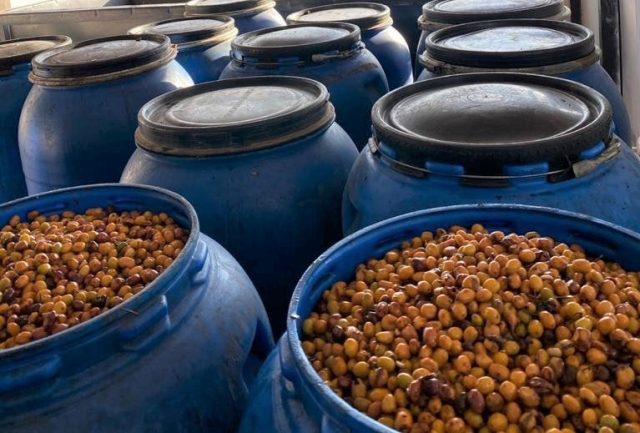
Some roasters chose to store their coffee in bins, buckets, or even grain silos. This can make for convenient production practices, but I often encourage the use of air-tight lids or reusing plastic liners to preserve freshness best. Others may use palates and shelving for larger quantities. In either case, a first-in, first-out order of operations should be observed to promote freshness.
Temperature and Humidity
Ideal storage temperature and humidity are usually quoted industry-wide at 50-75 F (10-24 C) and between 50-70% relative humidity. The International Coffee Organization has some good data on this topic, indicating that cup quality remains stable for over two hundred days at 70% relative humidity, fungal growth is completely prevented at 60% or lower, and that at 80% relative humidity or above the risk for mold increases exponentially.
Remember that warm air can hold more moisture than cool air, and that if ambient temperatures are changing in your warehouse, so are relative humidities. If environmental controls are within your ability to manage, moderate and stable temperature and humidity is the desired outcome.
Among the most extreme examples of environmental impact on green coffee in storage might be the Monsooned style coffees, frequently sourced from India and branded as “Monsooned Malabar.” An early coffee history example of making lemonade out of lemons, this style of green coffee storage exposes the beans to the monsoon rains, washing out their color and imparting distinctive flavor properties, much like the flavors related to aged beans. When properly dried and stored, monsooned coffees remain safe for consumption.
While extreme heat is never good for coffee storage, some coffee buyers use cold storage, including deep freezing, to extend the shelf life of coffee. In a study published first in Roast Magazine, conducted by The Crown, we concluded that “even in home or small-scale commercial environments with limited packaging options, there may be some benefits to freezing the highest-quality green coffee for long-term storage.”
Conclusion
Green coffee’s shelf life is not infinite. Specialty roasters typically source seasonally and consider green coffee “fresh” and “in season” for roughly a year after its harvest. Good storage conditions and best practices for handling can ensure your product stays fresh for a long time. These recommendations include stable temperatures and humidity, appropriate packaging protections, responsible sourcing practices (including good inventory projections), and more.
It’s unlikely – but possible – for green coffee to go rancid, so bad that it will make you sick. This can occur in extreme moisture and/or heat conditions, or if a coffee is not properly handled during processing and shipment.
From a product safety perspective, green coffee has a very long shelf life, indeed. We tested a green coffee aged over 35 years and while it was not delicious, it was also not unhealthy for us.

Latest Articles by Chris Kornman

Notes Between Cuppings Entry 1
Co-fermented coffee is a new processing approach where producers add natural ingredients like fruit, hops, or spices during fermentation to enhance flavor complexity. Unlike flavored coffee, these additives interact with...
Excerpt: Additive Fermentation: “Infused” Coffee is Gaining Popularity and Sparking Industry Debate”
Co-fermented coffee is a new processing approach where producers add natural ingredients like fruit, hops, or spices during fermentation to enhance flavor complexity. Unlike flavored coffee, these additives interact with...
Are All Green Coffees the Same? Factors That Affect Their Flavor
Explore July 2025 Crown Jewel coffee arrivals from Sumatra, Ethiopia, Tanzania, and more. Bold flavors, innovative processing, and standout producers.