
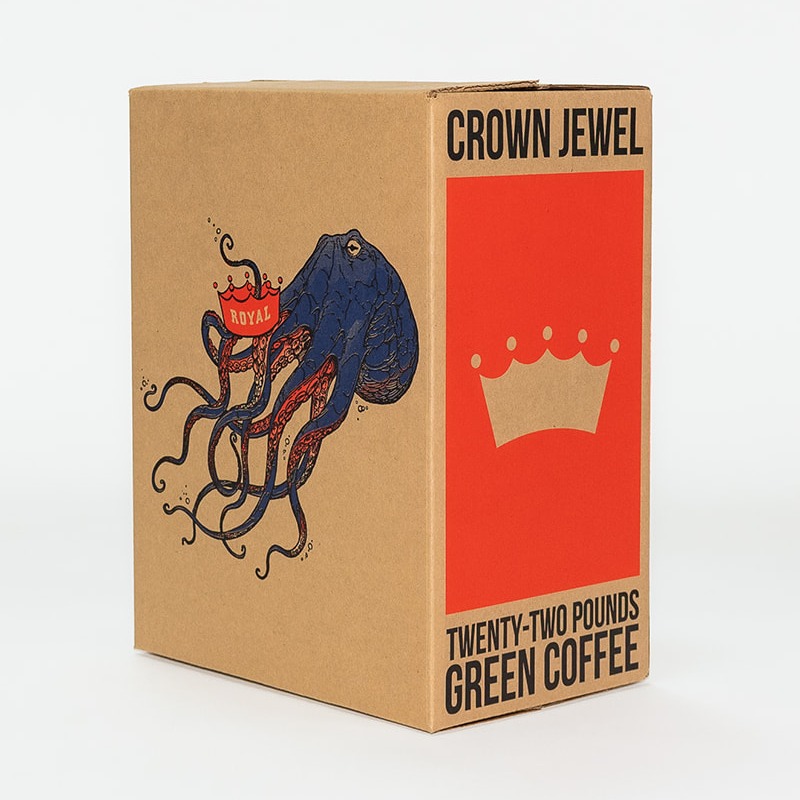
Crown Jewel Sumatra Lychee Coferment Wet Hull Bener Meriah
36549-1 – SPOT RCWHSE
Boxes 0
Warehouses Oakland
Flavor Profile Lychee, apple, caramel, marmalade, and honeydew
Out of stock

Overview
Overview
This is a high intervention coffee cofermented with lychee fruit from Bener Meriah, on the island of Sumatra in Indonesia, produced by Asbi’s estate in association with the Aalamin brand and Central Sumatera Coffee company.
The flavor profile is distinctive and unmistakable. Alongside the immediately recognizable lychee fruit flavor, we tasted pear, white grape, and floral notes.
Our roasters found first crack to be very quiet and urge a little extra attention to your end of roast approach as the coffee can be slightly deceptive as it nears completion.
When brewed, the team found that a moderate to high dose, a coarser grind, and a conical brewer brought out the most sweetness and preserved the clarity of the brighter fruit notes.
Taste
Taste Analysis by Isabella Vitaliano
Last year we also received this Lychee fermented coffee from the same group in Sumatra. For me personally, this is a major improvement from last year’s coffee. While the previous year’s lot was very in your face and bombastic, which a lot of people loved, this time around, the coffee feels a bit more restrained. It seems like producers are really locking in this year because across the board we just see flavors and methods getting more and more precise in execution.
Lychee, of course, is in the cup but there are also notes of mangosteen, magnolia, pastry, pear and white grape. Last year they used freshly juiced lychee fruits and leaves into a processing step but this time around they used dried lychee powder instead. I think this slight change is a testament to how refined Central Sumatera Coffee group is willing to go when curating their microlot offerings. Personally I think it makes a huge difference for the coffee and only for the better.
Source
Source Analysis by Charlie Habegger
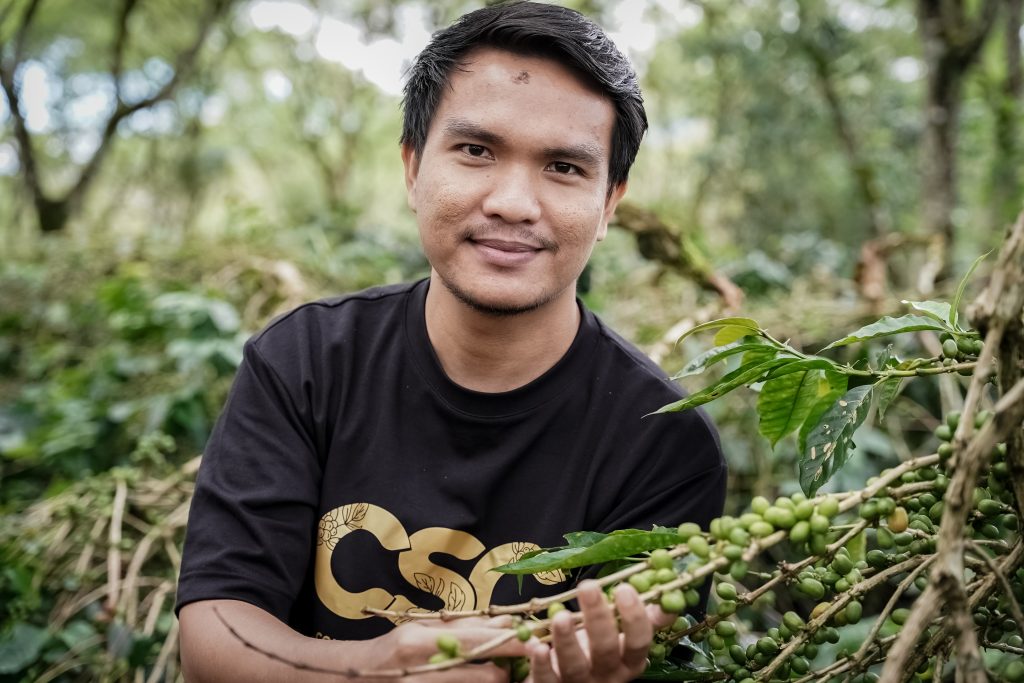
This is an estate-grown coffee from Aceh Province, Sumatra’s most famous and prolific production area for specialty wet-hulled profiles. Unlike most coffee in the area, which is traditionally grown by hundreds of smaller farmers and gradually consolidated through processing, collection, and milling, Central Sumatera Coffee operates a 100-hectare estate right in Bener Meriah regency, where they can control the genetics, harvesting, and post-harvest techniques to perfection.
This is a super unique processing style that uses anaerobic fermentation, yeast inoculation and a co-fermentation with powdered dried fruit to achieve a totally distinct, heavily flavored coffee with perfume like fragrances and sweet, fresh, lychee fruit.
Sumatra’s Aceh Province
Aceh (pronounced AH-CHEY) is the northernmost province of Sumatra. Its highland territory, surrounding Lake Tawar and the central city of Takengon, is considered to be the epicenter of one of the world’s most unique coffee terroirs.
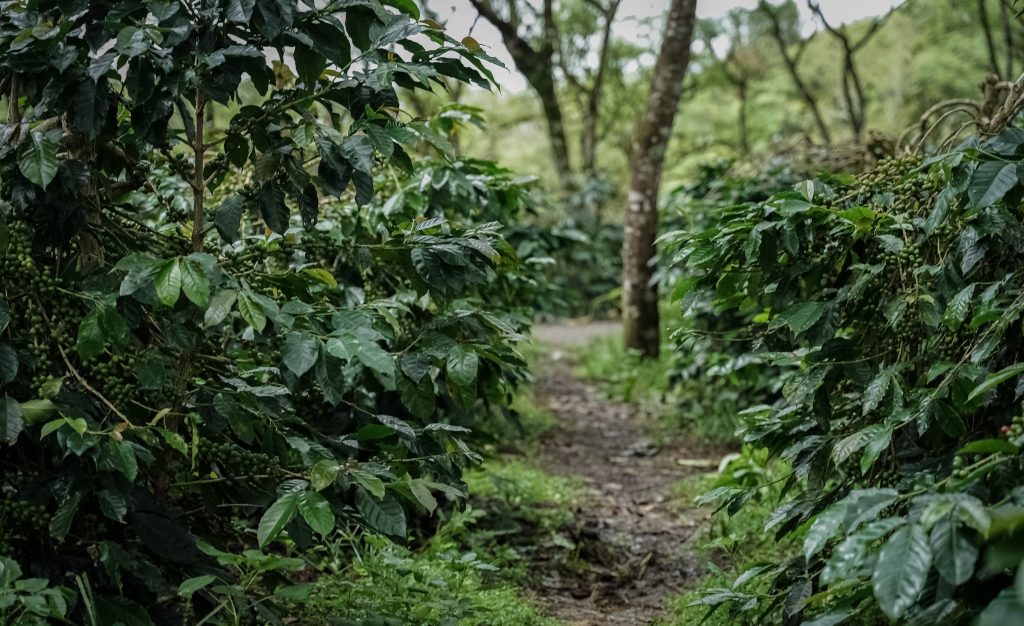
Coffee farms in this area are managed with the experience of many generations of cultivation, while also harmoniously woven into their surrounding tropical forests. The canopies are loud and fields are almost impenetrably thick with coffee plants, fruit trees, and vegetables, all of which are constantly flushing with new growth. Year-round mists and rain showers never cease, farm floors are spongy and deep with layered biomass, and almost every square meter of the region seems to exude life. Nothing is ever still. Including coffee ripening, which occurs ten months out of the year.
Central Sumatera Coffee
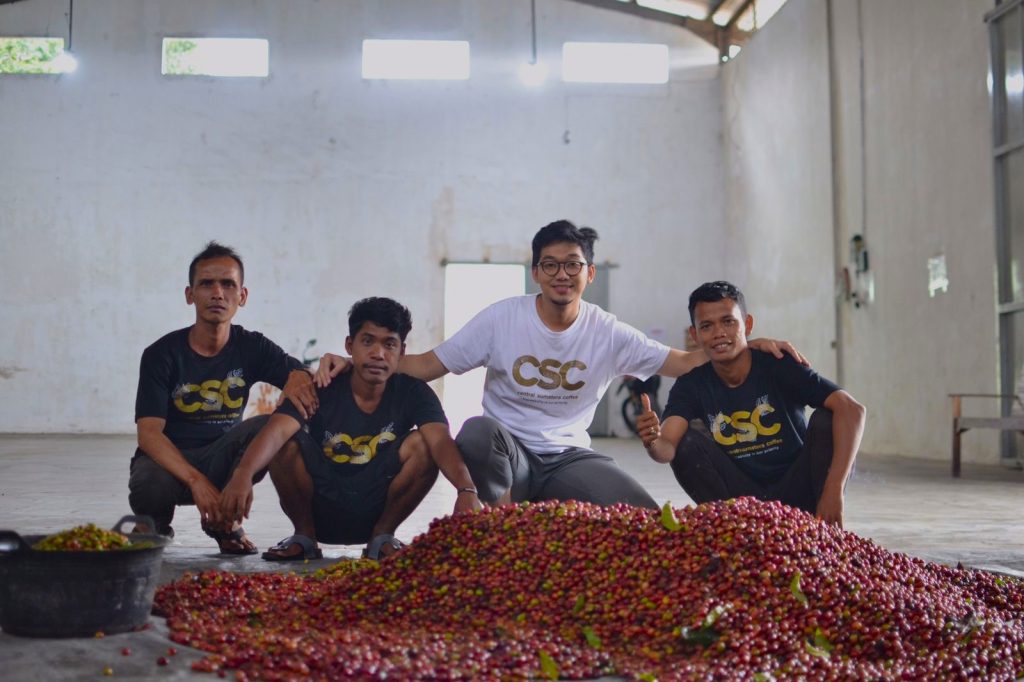
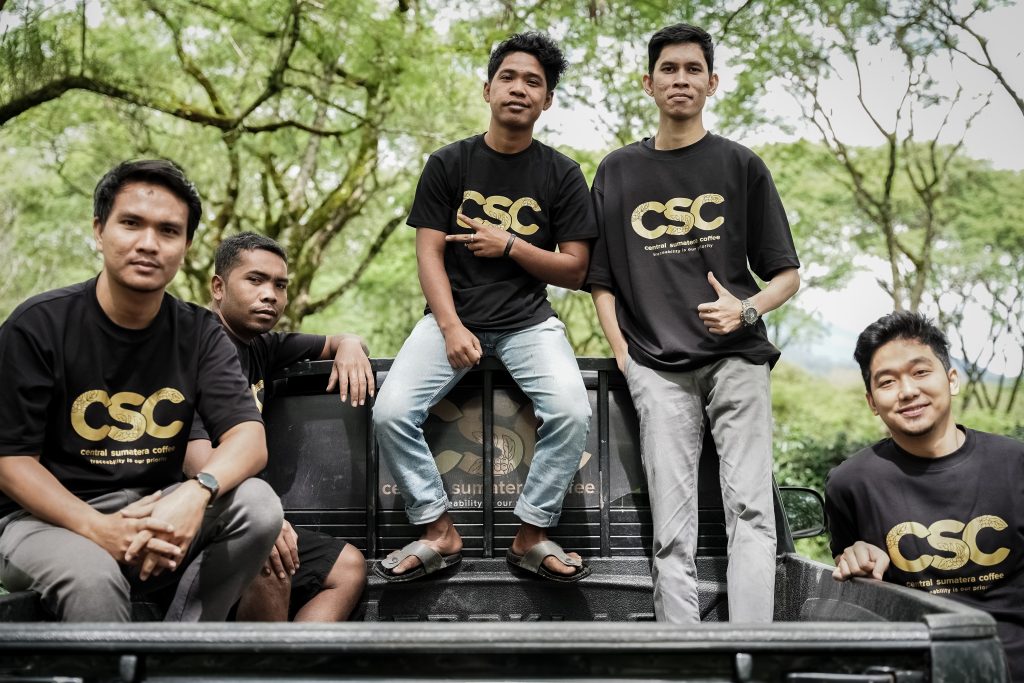
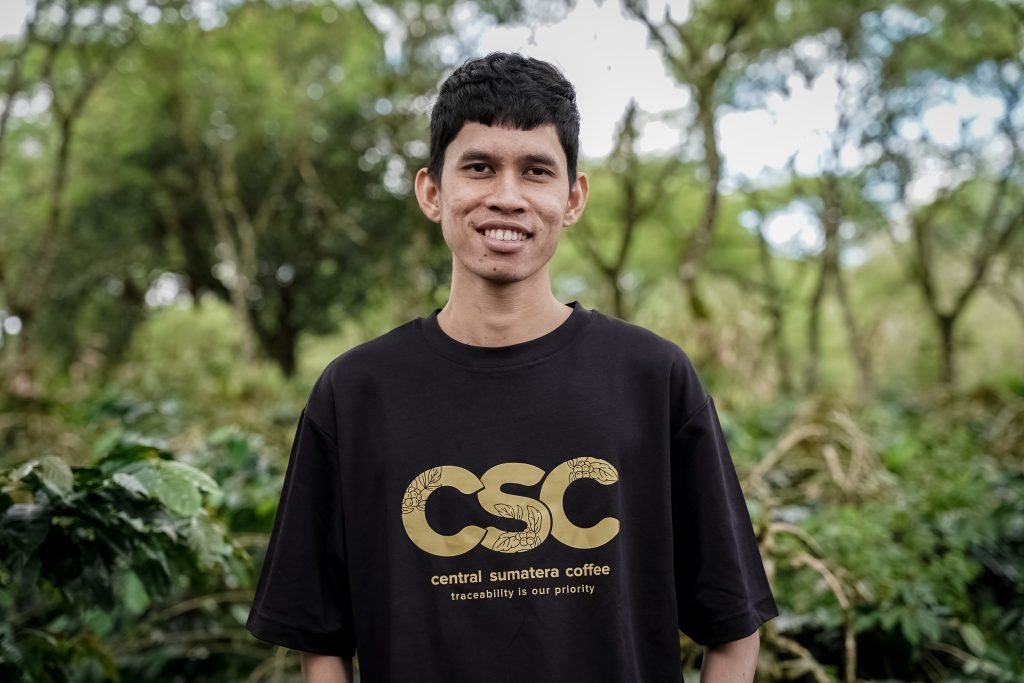
Central Sumatera Coffee (CSC) is a young group, with young leadership. It was originally founded in 2015 by Enzo Sauqi Hutabarat, then a University student with family ties to Bener Meriah. Aware of the growing demand across greater Indonesia for Sumatra’s best coffees, he gravitated toward Aceh as a culture and potential business environment. Until 2020 CSC only sold coffee domestically, but starting in 2021 they began to export as well, selling bits of coffee to the Middle East, Europe, Asia, and finally, in 2024, the United States, via Royal Coffee, for the first time.
CSC buys coffee from smallholders like a typical processor does. However, CSC also operates 3 large estates of about 100 hectares each: one in Bener Meriah, where this lot was produced; as well as 2 others in North Sumatra province, near Lake Toba. Their farms are organized varietally, allowing them to maintain unique genetic separations during harvest and processing.
Typical smallholder coffee in Aceh tends to be a blend of traditional heirloom cultivars, most of which are catimor hybrids, and this gives much of the area’s coffee a set of common characteristics that can be hard to transcend for a single producer. In CSC’s case, they have the genetic isolation, and the volume from such a large estate, to help them produce something unique. Even with similar processing styles as the collectors and coops around them.
“Lychee Process”
CSC manages processing on their own estates. The Bener Meriah estate employs 30 pickers during harvest months, and six specialists for processing. Most of their estate coffee is wet-hulled in the traditional fashion, but this microlot took an entirely different route, blending multiple unique fermentation techniques to augment the final cup, and ultimately processed as a semi-washed.
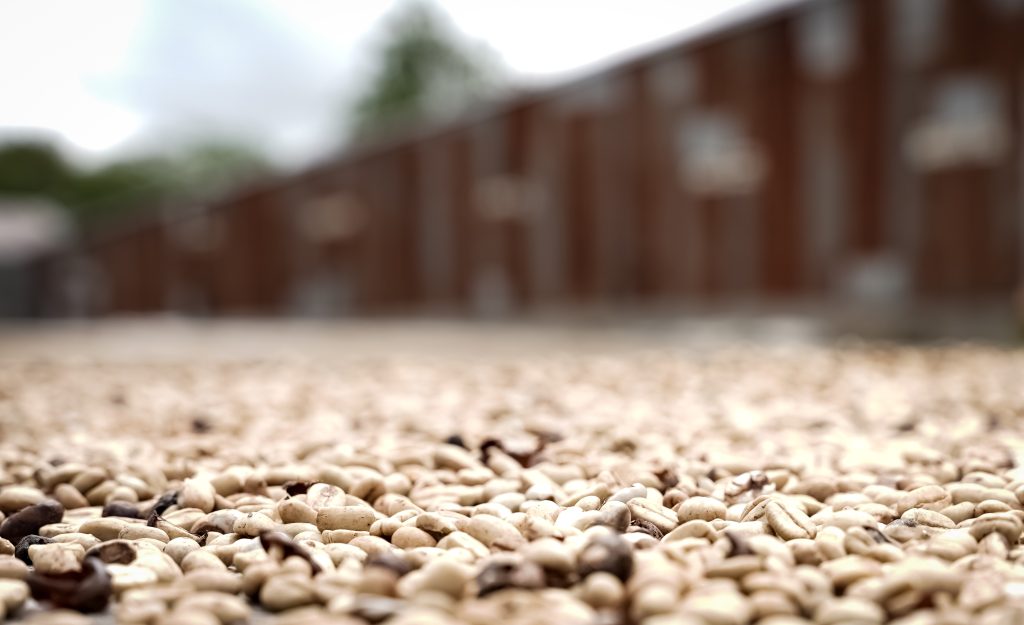
After picking, the cherry was depulped and fermented anaerobically in sealed containers with the addition of Lallemand Saccharomyces cerivisiae, for a total of 48 hours. Once the first fermentation cycle was complete, the containers were opened, dried lychee fruit powder was added, and then they were resealed for another 12 hours. After the full multi-stage 60-hour fermentation, the containers were opened, the parchment washed clean and moved directly to raised screen tables to dry. Once the parchment dried to 35% moisture content it was de-hulled (this is the wet-hulled part) and allowed to finish drying as a raw seed on the raised tables.
green
Green Analysis by Isabella Vitaliano
This co-fermented lot is a slightly large screen size, in the 20-18 range, which makes sense for the cultivar mix of this coffee. Typica is on the larger size, Rambung is a mix of Abyssina and TimTim, of which TimTim is also a more elongated bean, so the overall screen size of this lot is on the larger size. Water activity and moisture content are a little bit on the higher side.
This coffee goes through so many different processes like anaerobic fermentation, yeast inoculation, and a co-fermentation with powdered dried fruit. I sort of expect the spec to be kind of wacky because of this, but this isn’t the case for this coffee. I would argue this is hard to mess up in the roaster because the flavors are so present but be sure to check out the roasters’ notes to help you figure out what flavors you really want to highlight from this coffee. Hopefully one of those flavors is lychee.
Diedrich
Diedrich IR5 Analysis by Doris Garrido
Roasting co-fermented coffees has been a significant learning experience, and while it can sometimes feel overwhelming, finding the balance between the coffee’s inherent flavors and the introduced ones has been incredibly rewarding. And that’s what I did in this roast. I aimed for an approximately 10-minute roast, prioritizing a slow and extended drying phase. My goal was to spend as much time as possible in the yellowing stage and maintain tight control over development. This approach helps achieve a smooth, clean finish, contributing to caramelization while preserving the distinctive lychee flavor.
I initiate the roast at 390F, applying 70% gas from the first minute and maintaining it for six minutes, reducing when the roast was marking 345F. My final gas adjustment was to drop the pilot at the 8-minute mark just before the coffee began to crack. For air flow, I used 50% 6 minutes into the roast, increasing it to 100% after the first crack.
I am proud and pleased with the outcome. The lower charge temperature effectively helped guide the heat into the perfect spot, and the shorter yellowing did work highlighting the fruitiness in a delicate way.
Key considerations for roasting this coffee: pay close attention to the first crack, as a slower roast can sometimes result in a very quiet crack, (on co-fermented coffees sometimes no sounds at all). While I don’t have detailed notes on this roast (as my focus was entirely on controlling the finish), it is crucial to watch for any sudden jump in the RoR and observe the beans as they begin to expand. There is no room for distraction at this point of the roast.
The final result was a delicious and pure treat. This coffee truly delivered a delicate dessert experience: incredible sweet, with notes of pastry sweetness, buttery peach, sweet caramel, and of course lychee. My absolute favorite note: coconut slushie!
Aillio
Aillio Bullet R1 IBTS Analysis by Evan Gilman
We use the RoasTime app and roast.world site to document our roasts on the Bullet. You can find our roast documentation below by searching on roast.world, or by clicking on the link below. Take a look at our roast profiles below, as they are constantly changing!
This is our second year with this coffee, and the profile has become more refined. I was fortunate to be able to visit CSC in Bener Kelipah this year and to see their production facilities where, as they say, the magic happens. This year, dried and powdered lychee fruits were used during fermentation, as opposed to last year’s suspension of lychee concentrate being used as an infusion during the ‘gabah’ or wet parchment stage. The effect is still a distinct lychee flavor.
I trust my cohort at the Crown to show this coffee in its best light, and generally they treat coffee gently, presenting the coffee’s inherent flavor characteristics and beauty with skill. Which leaves me to introduce the influence of roast in a more brash (yet hopefully balanced) manner for fans of Sumatran coffee who may prefer a darker roast level. It’s an exciting opportunity, dear reader, and I don’t want to let you or the producer down in the process.
My goal with this coffee was to start off with a middling charge temperature, and work my way through the roast in such a way as to spend more time in Maillard than any other stage of roasting. I wanted to emphasize the body in this coffee; as we know, many people love the heavy body of Sumatran coffees. I started off with 446F charge, F2 fan, and P8 power, increasing fan to F3 at turning point then F4 at yellowing, but continuing on with P8 until 5:38 / 340F. Since I had spent so much time drying out this coffee through Maillard, I needed to reduce the total heat in the system quickly toward the end of roast. To do this, I adjusted to P7, then to P6 and F5, and P5 and F6 before first crack at 8:43 / 383F. I even hit P3 and F7 after first crack, really pulling all the smoke and heat out of the drum. The result was 1:28 in post crack development, 10:11 / 393F for drop time and temperature, and 13.7% roast loss from a coffee with 11.3% moisture content.
I achieved some nicely developed sugary notes in this coffee, that’s for certain. Up front, there was tons of chocolate and fudgy body. Of course the lychee was present, but in my cup this was a sparkling finishing touch. My immediate impression was one of fresh orange marmalade, rose-like florals, and even more chocolate. Even at a low finishing temperature of 393F, I was able to get the heavy body from this coffee by spending plenty of time in Maillard. Dark roast lovers rejoice! I felt like this roast brought out the best of both worlds.
You can follow along with my roast here at roast.world: https://roast.world/egilman/roasts/wLykBihqCoTAdtttKFFOA
IKAWA
Ikawa Pro V3 Analysis by Isabella Vitaliano
Our current Ikawa practice compares two sample roast profiles, originally designed for different densities of green coffee. The two roasts differ slightly in total length, charge temperature, and time spent between color change in first crack. You can learn more about the profiles here.
Both ikawa roasts of this Lychee co-fermented coffee were obviously lychee forward but depending on the roast, different elements of the coffee were highlighted. On the high density roast it was probably more lychee forward, higher acid and a little bit more one-note. The low density roast of this coffee was also full of lychee but a lot more 3-dimensional in that it had layers of tropical fruit like mangosteen and coconut slushie.
This coffee is so fun because in my opinion, it’s hard to really mess up. You and your customer can immediately tell what the producer is trying to do and showcase. It’s right in the pocket. I think you’ll enjoy either roast but depending on your style and audience you can choose what is best for you.
You can roast your own by linking to our profiles in the Ikawa Pro app here:
- Roast 1: Low Density Sample Roast
- Roast 2: High Density Sample Roast
Brew
Brew Analysis by Alisha Rajan
Invoking the “tension of the opposites”, this high intervention lychee cofermented coffee from Bener Meriah simultaneously and effortlessly occupies two completely different realms of flavor. On one end is a larger-than-life lychee and on the other end the subtlety of rose/jasmine florals and delicate pear liqueur. Only when we are conscious of both at once and can hold the balance between them can we appreciate the magic of this coffee. Striking that balance was certainly the aim of this brew analysis. The lychee gets us through the door, and the more delicate fruit and florals convince us to settle in and stay for a while.
I began the brew analysis with an 18g dose and 9 EKS43 grind on a V60, and the first brew was heavy yet pleasant enough. Boasting guava, chocolate covered raspberry, and caramel apple alongside the vibrant lychee, we were off to a great start. I wanted to explore some more delicate flavors so decided to coarsen the grind for the subsequent brews.
This coffee shone the brightest in the coarser grind range while using a conical brewer. The Kalita brews were pleasant enough but lacking in some of the sweetness that we were expecting from this coffee. One of my favorite brews came in at a 19g dose, 11 EKS43 grind and had an extraction time of just over 3 minutes on the V60. Jasmine-like florals played with tangerine brightness and honeydew sweetness in this fantastic iteration. The TDS was on the higher side for all brews, suggesting a generally high solubility of coffee.
The team’s other favorite brew came in at an 18.5g dose, 11.25 EKS43 grind, extracted in just under 3 minutes. As it cooled, we could taste the jasmine and rose florals as well as some pleasant malic acidity, dark chocolate, and marmalade sweetness (all presumably a result of the yeast inoculation step). Larger than life yet possessing a clarity of flavors, this one truly delighted us.
Overall, I would suggest a moderate to high dose (18-19 grams) as well as a coarser grind and a conical brewer to bring out the most sweetness and preserve the clarity of the brighter fruit notes. All in all, a truly fantastical yet nuanced tasting experience. Enjoy!
Espresso
Espresso Analysis by Asha Wells
Hailing from one of the one of the most unique localities, it comes as no surprise that we’re presented with another uniquely defined coffee. This co-ferment performed notably as an espresso; I’m always a bit hesitant working with bold co-ferments in this arena; I’ve definitely had them fall flat. This wasn’t the case here, as an espresso, I delighted in juicy, complex shots. I found this coffee favoring slightly more extreme doses and having two pretty distinct profiles on either end of the spectrum, which was fun!
After trying a few moderate doses with moderate yields, I decided to take it further in both. The first recipe I really loved was a 19.5g dose, with a yield of 45g, taking 28 seconds. I tasted this shot thinking it would be over extracted and flat. To my surprise, I was really taken by how differently it presented from what I had already tasted. It seems to me that at a heavier dose and yield was able to dull the more obvious candy notes this coffee exhibits so readily and bring forward a deeper profile. On the nose, it smelled of sunflower butter, ripe cherry and marzipan. Upon tasting I encountered notes of fragrant dark chocolate, creme fraiche, and baked pear.
After my success with a greater dose and yield, I decided to hit the other end of the spectrum. My next favored recipe was a 17g dose, yielding 37g, and clocking in at 26 seconds. This shot smelled exactly like a packet of fun-dip, and this profile was a pendulum swing from my other dial, revealing the true candy potential within this coffee. I was tasting notes of canary melon, cucumber gatorade, pineapple, and gardenia.
If you love a dynamic coffee, get you a coffee that can do both! This is that coffee.
Related Coffee
Caramel, grape, jasmine tea, biscoff cookies, and melon
Oakland 7 Boxes
Crown Jewel Yemen Anaerobic Natural Sharqi Haraz Cooperative
37919-1 – SPOT RCWHSE
Caramel, grape, jasmine tea, biscoff cookies, and melon
Spot
7 Boxes
$685.69 per box

Green apple, jolly rancher, apple, mojito, apple cider
Oakland 21 Boxes
Crown Jewel Colombia Carbonic Honey Green Apple Co-Ferment Edwin Noreña
37710-1 – SPOT RCWHSE
Green apple, jolly rancher, apple, mojito, apple cider
Spot
21 Boxes
$434.39 per box
Hops, lime, botanical, floral, and pink grapefruit
Oakland 27 Boxes
Crown Jewel Colombia Carbonic Honey Cascade Hop Co-Fermented Pink Bourbon Edwin Noreña
37702-1 – SPOT RCWHSE
Hops, lime, botanical, floral, and pink grapefruit
Spot
27 Boxes
$376.84 per box

Orange, lemon, cranberry, vanilla, pear
Oakland 45 Boxes
Crown Jewel Rwanda Washed Jarama Kivubelt Estate
Lot 50 – 37912-1 – SPOT RCWHSE
Orange, lemon, cranberry, vanilla, pear
Spot
45 Boxes
$189.33 per box