
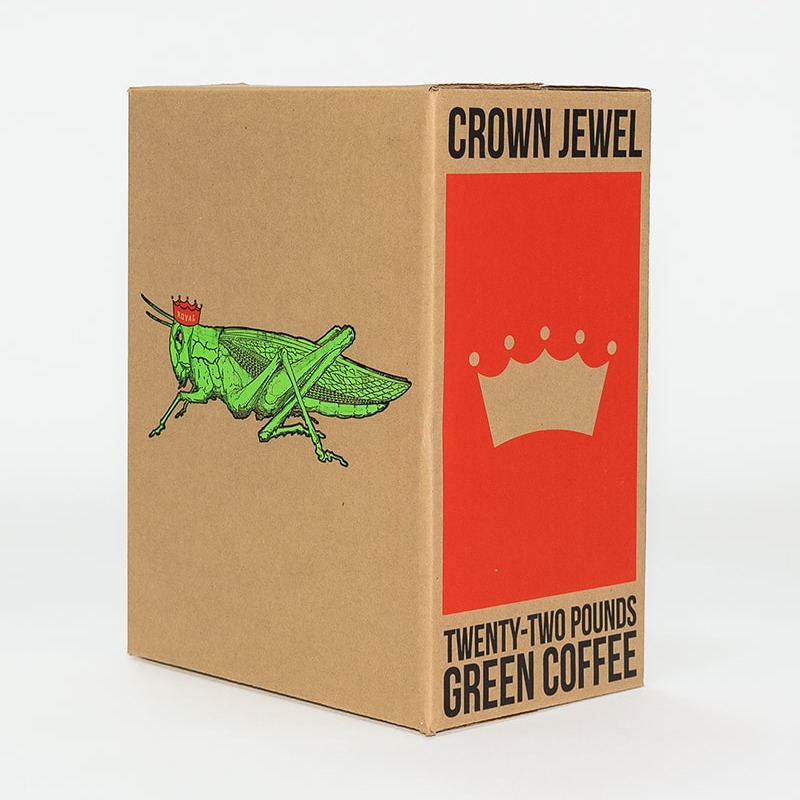
Crown Jewel Sumatra Slow Dry Natural Burni Telong
36550-1 – SPOT RCWHSE
Boxes 0
Warehouses Oakland
Flavor Profile Orange, caramel, dark chocolate, basil, and red wine
Out of stock

Overview
Overview
This is a slow-dried natural coffee from Burni Telong on the island of Sumatra in Indonesia, produced by smallholder farmers in association with the Central Sumatra Coffee company.
The flavor profile is a vibrant mosaic of ripe stone fruits and berries such as cherry, boysenberry, blackberry, nectarine, and tangerine, layered with delicate floral hints of elderflower and a touch of clove.
Our roasters found the coffee moved quickly through yellowing and after first crack and caution against applying too much heat during these stages.
When brewed, we preferred coarsely ground down-dosed conical pour-overs and espressos with quicker extraction times and slightly short yields.
Taste
Taste Analysis by Isabella Vitaliano
Sumatra is one of the oldest coffee producing regions in the world and although the specialty coffee industry has historically not been highlighted in this region in the way it deserves, it is on the up. This coffee is a representation of the evolution and sharpened execution of Sumatran coffee. Atypical flavors come from this coffee, although it is a slow dry natural it is not nearly as intense as flavors expected from this region. Doris has the Diedrich roast dialed in and is an excellent expression of the cup.
Fruity with flavors of cherry, boysenberry, blackberry, nectarine and tangerine. A slight essence of elderflower and cloves are woven through the fruit flavors. There is also a really cool savory element that brings flavors like miso, sesame and bamboo shoots to the cup. All of these components together make for a really exciting cup and is the perfect introduction to Sumatran coffee for those unfamiliar with it.
In a way this coffee is breaking the mold for what is expected from Sumatran coffees. And I, for one, am a huge fan.
Source
Source Analysis by Charlie Habegger
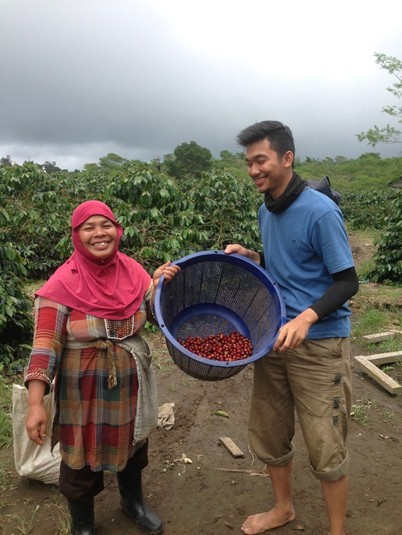
This is a coffee from Aceh Province, Sumatra’s most famous and prolific production area for specialty wet-hulled profiles. Unlike most coffee in the area, which is traditionally grown by hundreds of smaller farmers and gradually consolidated through processing and milling, Central Sumatera Coffee works directly with a small producer group to source this coffee in cherry state, bringing it down from the furthest reaches of Burni Telong mountain, just West of Bener Meriah.
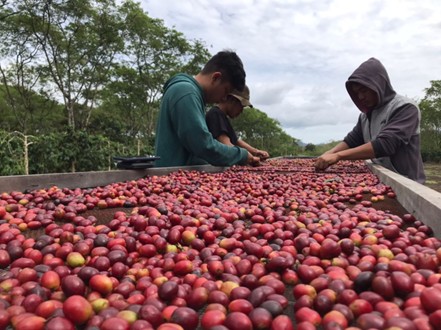
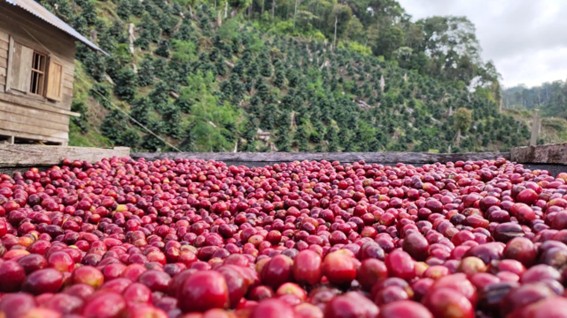
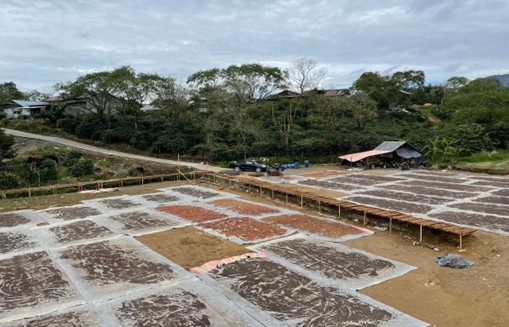
This coffee is dried on patios at CSC’s various processing facilities around Bener Kelipah. From the cherry stage, this coffee is first dried in a thin layer, then in successively thicker pilings with more agitation as the coffee dries. In the cooler climate of Bener Meriah, this drying process is stretched out for up to 27 days. Space is not as much of an issue at the tail end of harvest, and this coffee is harvested much later than the bulk of the harvest due to the elevation at which it is grown. Mount Burni Telong stands at 2645 meters above sea level, and while most of the mountain is inaccessible forest, some coffee is grown on the East and West flanks, the Southern flank being prone to lahar/lava flows and active volcanism.
The result is a super clean and even cup, with dense sugars and subtle but complex fruit flavors. This is not the ‘winey’ Sumatra natural you may be used to, but rather a new evolution using the coffee industry’s best practices for natural coffee processing alongside a heavy helping of patience and fastidiousness.
Sumatra’s Aceh Province
Aceh (pronounced AH-CHEY) is the northernmost province of Sumatra. Its highland territory, surrounding Lake Tawar and the central city of Takengon, is considered to be the epicenter of one of the world’s most unique coffee terroirs.
Coffee farms in this area are managed with the experience of many generations of cultivation, while also harmoniously woven into their surrounding tropical forests. The canopies are loud and fields are almost impenetrably thick with coffee plants, fruit trees, and vegetables, all of which are constantly flushing with new growth. Year-round mists and rain showers never cease, farm floors are spongy and deep with layered biomass, and almost every square meter of the region seems to exude life. Nothing is ever still. Including coffee ripening, which occurs ten months out of the year.
Central Sumatera Coffee
Central Sumatera Coffee (CSC) is a young group, with young leadership. It was originally founded in 2015 by Enzo Sauqi Hutabarat, then a University student with family ties to Bener Meriah. Aware of the growing demand across greater Indonesia for Sumatra’s best coffees, he gravitated toward Aceh as a culture and potential business environment. Until 2020 CSC only sold coffee domestically, but starting in 2021 they began to export as well, selling bits of coffee to the Middle East, Europe, Asia, and finally, in 2024, the United States, via Royal Coffee, for the first time.
CSC buys coffee from smallholders like a typical processor does. However, CSC also operates 3 large estates of about 100 hectares each: one in Bener Meriah, where this lot was produced; as well as 2 others in North Sumatra province, near Lake Toba. Their farms are organized varietally, allowing them to maintain unique genetic separations during harvest and processing.
Typical smallholder coffee in Aceh tends to be a blend of cultivars, most of which are catimor hybrids, and this gives much of the area’s coffee a set of common characteristics that can be hard to transcend for a single producer. In CSC’s case, they have the genetic isolation, and the volume from such a large estate, to help them produce something unique. Even with similar processing styles as the collectors and coops around them.
Green
Green Analysis by Isabella Vitaliano
This slow dried coffee from Sumatra is slightly above average range for moisture content and well below average range for density. The water activity is in the above average range as well. With these high moisture contents and lower density, you might be looking at a slightly lower charge tempa dn longer development stage to get the most out of the fruit notes and complex flavors of this cup.
Gayo 2 is supposedly meant to have TimTim genetics and either Line S (S-795) or Bourbon genetics. These combined make for a larger sized bean. Abyssinia AB3 is supposed to be the original coffee brought by Dutch scientist PJS Kramer. The 27-day drying period is very peculiar but obviously works well for this profile.
Diedrich
Diedrich IR5 Analysis by Doris Garrido
Roasting a natural Sumatra doesn’t happen frequently, but it is a pleasure to encounter coffees of this region most known for wet hulled coffees. This specific coffee presented a clean, bold body with grapefruit notes and a sweet berry finish.
Key considerations for this roast were its low density and slightly high moisture content. My initial approach was to slow the beginning of the roast, adding heat on the Diedrich after the turning point until the color changed, which theoretically worked. However, since this is a natural coffee, the beans began absorbing the heat very quickly as they lost moisture. This is exactly what happened during my roast.
I chose to start the roast at 420F. From there, I applied 70% gas for about three minutes, just after the turning point, and dropped the heat shortly after the color change. This proved to be a bit too much heat. This coffee absorbs the heat very easily, and I noted that the turning point happened at 191F, which is evidence of how soft the beans are, indicating that a gentler heat application would be beneficial. Prior to first crack I opened all the air flow to manage the yellowing and smoke. The development phase concluded in a swift 1 minute and 19 seconds.
In summary, I found that this coffee absorbs the heat quickly from the beginning but we must be careful and the end of yellowing, as it can take over. My roast finished at a slightly higher temperature than I planned but did not erase the flavors. I will keep this coffee lighter on following roasts. Overall, the cup presented notes of grapefruit, almond paste, black tea, blackberry, boysenberry, caramel, a touch of cloves, lemon zest and Seville oranges. It was a sweet and bold cup of coffee with a subtle acidity and berry finish.
Aillio
Aillio Bullet R1 IBTS Analysis by Evan Gilman
We use the RoasTime app and roast.world site to document our roasts on the Bullet. You can find our roast documentation below by searching on roast.world, or by clicking on the link below.
Take a look at our roast profiles below, as they are constantly changing!
While this is our second year working with CSC, this is our first time with their High Altitude Slow Dried coffee, a specially processed coffee that attempts to show the best facets of Gayo coffee while also using a process different from the usual wet hulled you might find from this region. Verily, Sumatra natural coffees tend to have the reputation of being a bit vinegary, but I can assure you that this coffee is so far from that designation that I had trouble putting that note in the same sentence. What’s here is the best of natural processing in general, not only in Sumatra.
I trust my cohort at the Crown to show this coffee in its best light, and generally they treat coffee gently, presenting the coffee’s inherent flavor characteristics and beauty with skill. Which leaves me to introduce the influence of roast in a more brash (yet hopefully balanced) manner for fans of Sumatran coffee who may prefer a darker roast level. It’s an exciting opportunity, dear reader, and I don’t want to let you or the producer down in the process.
I started with a mellow charge temperature of 446F, with P8 power and F2 fan as per usual. The difference was in ramping up power to P9 at turning point, to really push this coffee through the Green stage. After 50 seconds, I returned to P8 and increased airflow to F3. Then at 2:50 / 283F I reduced power to P7 and increased airflow to F4. I kept this up until 7:40 / 360F, and increased airflow to F5, only waiting until first crack to adjust further to P6 and F6.
As a natural coffee often does, this coffee attempted to get out of hand moving into first crack. While my rate of change increased slightly after first crack, it was generally in control. I would have liked to avoid that, and the effect in the cup was a touch of toastiness. Otherwise, this coffee was chock full of red velvet cake, huckleberry brightness, and a super sweet chocolate covered strawberry note once it cooled. What’s more, a zesty lime acidity persisted on the finish even when hot, a truly complementary counterpoint to the rich texture of this coffee.
This is honestly one of my favorite natural coffees in a good long time (along with the Tanzania Gesha Natural we just released, of course), and I don’t anticipate someone not enjoying this coffee on a particular brew method. This one is a sweet treat for certain!
You can follow along with my roast here at roast.world: https://roast.world/egilman/roasts/nMP0RqWaK7R80Oec15NZP
IKAWA
Ikawa Pro V3 Analysis by Isabella Vitaliano
Our current Ikawa practice compares two sample roast profiles, originally designed for different densities of green coffee. The two roasts differ slightly in total length, charge temperature, and time spent between color change in first crack. You can learn more about the profiles here.
On the low density roast of this profile I found the coffee extremely plum forward with slight tannic notes that felt comparable to a nice wine. The high density profile was very high acid forward but felt a little empty with the other attributes being on the lower side. I really enjoyed the low density roast with lots complex stone fruit and rounded out profile. Happy cupping!
You can roast your own by linking to our profiles in the Ikawa Pro app here:
- Roast 1: Low Density Sample Roast
- Roast 2: High Density Sample Roast
Brew
Brew Analysis by Katie Briggs
A fun slow dried natural here in the tasting room! I am not sure I have had the pleasure of tasting slow dried natural coffee before, so I was excited to dive into these brews! I started my brews on a V60 cone brewer at a grind of 10 and a dose of 19 grams. I did an initial pulse of 40 grams of water and let it bloom for 50 seconds. This brew came out with a high TDS and tasted like it. It felt a bit heavy, and we got notes of orange peel, bitter dark chocolate, and blueberries. I wanted to soften this coffee up a lot, so my plan for the next brew was to change the dose to 18 instead of 19.
The next two brews I made were 18 grams of coffee, one at a grind of 10 and the other at a grind of 11. I did the same bloom and pulses of water for these brews. I ended up liking the brew at 11 more than the one at 10. The first brew at 10 we got notes of dark chocolate, nectarine and orange zest. It still felt a little bit heavy, so I did the second brew at 11 to try and soften it up even more. I liked this brew a lot more! Definitely softer, we got notes of caramel, tangerine, basil, and jasmine.
I wanted to try this coffee on another brew device just to see how it would go. I did the same previous brew but this time on the Kalita Wave flatbed brewer. I honestly did not like this brew very much. It made the brew much heavier again and a little bit bitter. That’s going to be a no from me for the Kalita Wave, back to the V60 for the last brew! I did one last brew on the V60 at a grind of 11.5 and a dose of 18 grams. This brew was tasty! Similar to the 11-grind dose, but we got more notes of red wine, basil, caramel, and orange.
Overall, a very fun coffee! I would recommend a pretty coarse grind and a lighter dose on a cone brewer to bring out the sweet fruitiness of this coffee. However you decide to brew you will be enjoying a sweet funky coffee with a lot to offer!
Espresso
Espresso Analysis by MJ Smith
This Slow Dry Natural out of Mt. Burni Telong is exactly the kind of natural process coffee that I love. While it does have some delightful fruit flavors throughout, it’s also packed in some wonderfully warm and comforting sweetness in the form of chocolates and caramels. As an espresso, I noticed some really nice soda-like qualities as well. I dialed this coffee all over the place, but I found that it tasted the best with a rather average dose, and a yield and pull time on the shorter and faster side. Let’s get into these recipes, shall we?
The first recipe I’m going to discuss had a dose of 18.5g, a yield of 38g, and a pull time of 25 seconds. This was the seventh shot that I pulled, and while there were plenty of things to love in the first six shots, this one truly stood out to my taste buds. At first, I was greeted with some nice milk chocolate, cinnamon and stone fruit notes, and as I sipped, I couldn’t help but be reminded of Dr. Pepper soda. It also had some pleasant dried fruit-type notes to it, like dried apricot and fruit leather.
The next recipe I want to talk about had a slightly higher dose of 19g, and shorter yield of 35g, and pulled slightly longer, coming out at 29 seconds. If you’ve been keeping up with viral foodie trends from the past 6 months or so, I’m sure you’ve heard of “Dubai Chocolate,” which is basically chocolate with pistachio cream, tahini, and shredded phyllo dough, resulting in a rich, sweet, and slightly earthy flavor experience. This shot tasted almost exactly like that! I’m pretty sure this was my favorite shot of the day. In addition to those flavors, it also had some complementary rose, ginger ale, and apple notes that rounded it out quite beautifully.
All in all, this coffee works marvelously as an espresso, and I highly recommend it. To be honest, I found something enjoyable in almost all the shots I pulled today, but like I said above, my favorites were in the average dose range, and lower-to-medium yield and pull time range. If you like natural process coffees that aren’t too funky and have a good balance of sweet and fruity flavors, this is the coffee for you! Enjoy!
Related Coffee
Caramel, grape, jasmine tea, biscoff cookies, and melon
Oakland 7 Boxes
Crown Jewel Yemen Anaerobic Natural Sharqi Haraz Cooperative
37919-1 – SPOT RCWHSE
Caramel, grape, jasmine tea, biscoff cookies, and melon
Spot
7 Boxes
$685.69 per box

Green apple, jolly rancher, apple, mojito, apple cider
Oakland 21 Boxes
Crown Jewel Colombia Carbonic Honey Green Apple Co-Ferment Edwin Noreña
37710-1 – SPOT RCWHSE
Green apple, jolly rancher, apple, mojito, apple cider
Spot
21 Boxes
$434.39 per box
Hops, lime, botanical, floral, and pink grapefruit
Oakland 27 Boxes
Crown Jewel Colombia Carbonic Honey Cascade Hop Co-Fermented Pink Bourbon Edwin Noreña
37702-1 – SPOT RCWHSE
Hops, lime, botanical, floral, and pink grapefruit
Spot
27 Boxes
$376.84 per box

Orange, lemon, cranberry, vanilla, pear
Oakland 45 Boxes
Crown Jewel Rwanda Washed Jarama Kivubelt Estate
Lot 50 – 37912-1 – SPOT RCWHSE
Orange, lemon, cranberry, vanilla, pear
Spot
45 Boxes
$189.33 per box