
The Rise of Specialty Coffee
The Origin of Specialty Coffee
The phrase “specialty coffee” is usually attributed to the progressive and outspoken coffee importer Erna Knutsen, in a 1973 interview published in the Tea and Coffee Trade Journal. Her evolution in the coffee industry is intricately tied to the inception of our understanding of what specialty coffee actually means.
Knutsen, who passed away in 2018, was eulogized eloquently by Mike Ferguson for Sprudge.com, lauding her at one point as coffee’s “unofficial spokesperson,” and crediting her with “launch[ing] an industry” – not by coining a seminal phrase (which she did) nor by shattering the glass ceiling (which she also did), but by selling small amounts of coffee to small roasters.
Erna rose to prominence at the multi-commodity San Francisco based importing company B.C. Ireland, hired by one Bert Fulmer. She eventually bought out the company, fired the men who crudely barred her from the cupping lab, and renamed the place after herself in 1985. Talk about a power move!
Leading up to that, with Bert’s encouragement, Erna Knutsen began selling less than full container loads of coffees to regional roasters (not just the major players). Coffees were traded not just on country of origin, but on a coffee’s flavor. It was a major shift in strategy, and it began to reap results. Others began to follow suit, including Royal Coffee, founded in 1978 by Pete McLaughlin and Bert Fulmer’s son, Bob.
What Was Coffee Like Before Specialty?
Specialty, as a construct of modern conversation, tends to focus on inherent elements of the coffee bean – such as flavor or tree type (cultivar), or extrinsic qualities like the grower’s story or transparent pricing models. Many of these concepts we take for granted in current commerce and discourse were absent from much of coffee’s history.
However, almost certainly, even in the high savannahs of ancient Abyssinia, qualitative distinctions could be made between average quality coffee and something that was special, for whatever reason.
During the global colonization of coffee, much of the crop was traded on bean shape and size, with the primary quality indicators being referred to as “Mocha” type beans – smaller and rounder, such as those grown in Yemen, and “Java” types, being generally larger and more oblong, like those from Indonesia.
As coffee’s default packaging for consumers changed from bulk bins to cartons on grocery store shelves, taste distinguishment became more important (since buyers could no longer see the beans they were purchasing). This is the beginning of what coffee folks often consider the “First Wave” – a surge of popularity, dominated generally by pre-ground lighter roasts of nationally recognized big brands like Maxwell House, Folgers, Hills Brothers, and the like.
The Second Wave
Around a decade before Erna Knutsen coined the phrase, the grandfather of specialty coffee, Alfred Peet, the son of a Dutch coffee roaster, was beginning a career that would culminate in his recognition as the progenitor of our second wave.
It started in the 1960s, operating out of a little storefront on Vine Street north of the UC Berkeley campus. Five years before the founding of Chez Panisse just around the corner, Peet was dispatching dark roasts directly to consumers, or indiscreetly denying them his beans if he felt they wouldn’t appreciate them (Mark Pendergrast dedicated his book Uncommon Grounds, to Peet, the “coffee curmudgeon supreme”).
Peet’s experience in worldwide importing led him to bring a few exacting principles to his company, including roasting for flavor (in his opinion, dark) and highlighting the country of the bean’s origin. He trained Jerry Baldwin, Starbucks cofounder, who initially had his blessing and much later his ire as the upstart brand exploded, and the second wave went national.
The Third Wave
The emergence of the “Third Wave,” (a phrase widely credited to Trish Rothgeb, borrowed from other contexts) is not exactly synonymous with specialty coffee. However, coffee bars and light roasters paying closer attention to traceability and sustainability could be credited with redefining coffee in the context of increasingly common and commodified second wave locations, most recognizably ubiquitous as Starbucks and – yes – Peet’s.
Latte art, light roasts, sustainability narratives, an emphasis on single origin coffees over blends, and the emergence of new processing methods in coffee production drew distinctions between the specialty of the Third Wave and the Second. Were the coffees first pulled into elegantly poured lattes at Intelligentsia, Stumptown, and Counter Culture inherently better than those at Peet’s or Starbucks? Maybe not necessarily. But they did add value by highlighting new stories and flavors and introducing new preparation methods… which seemingly did evolve into eventually cultivating a movement seeking higher grade green coffee.
What’s Next?
Now, while micro-roasters seek differentiation by chasing unusual fermentation styles and by crafting espresso-tinis and tonics, coffee roasters in Mexico, Indonesia, Colombia, and so many other “traditional” growing countries are evolving to capture more of coffees’ value, and share it with increasingly interested local consumers, decolonizing the crop by localizing the supply chain. Not only is the product itself reappropriated, the balance of the revenue it generates remains within the economy in which it was produced.
It’s a trend I’ve seen firsthand in hyper-cool and often off-the-beaten-path cafes like Coffee Lab in São Paulo, and Stafford outside of Kigali, and at Bogotá’s Catación Pública and Azahar, admittedly urban in their locus and clientele, nevertheless evidencing appreciation for fine coffee, prepared with care, and purveyors who wish to elevate not simply the product but the people surrounding it. Coffee Lab began as a barista school, Stafford Rubagumya started his shop after seeing how Big Coffee was minimally benefitting his community, Azahar is an exporter with pricing models that extend so far as to guarantee living wages for the day laborers who harvest the coffee, and Catación Pública offers Q-grading certifications as a part of their robust education program.
Twenty years ago, we used to talk about how only the most undrinkable coffees were not sold to importers, and how Ethiopia was the only producing country that consumed more than it exported. Arabica’s homeland is now joined by Mexico and Indonesia in an emerging category of consumer-producers. In the latter, the market is so strong that it has elevated export prices, and producers can in some cases make more money selling specialty grade beans to the local market than by exporting them. That seems like a lot of potential power, and “competition” which I’d gladly welcome.

Latest Articles by Chris Kornman

Notes Between Cuppings Entry 1
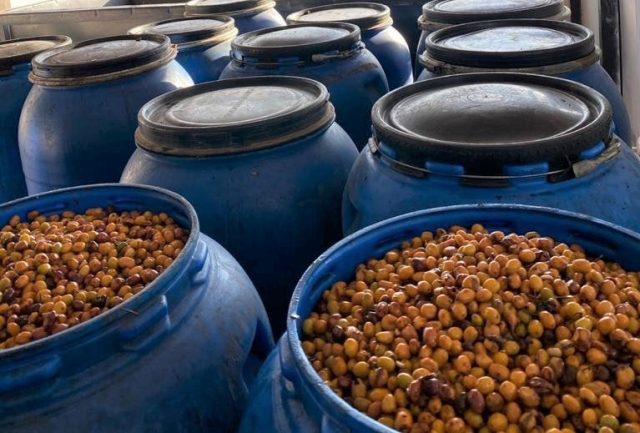
Co-fermented coffee is a new processing approach where producers add natural ingredients like fruit, hops, or spices during fermentation to enhance flavor complexity. Unlike flavored coffee, these additives interact with...
Excerpt: Additive Fermentation: “Infused” Coffee is Gaining Popularity and Sparking Industry Debate”
Co-fermented coffee is a new processing approach where producers add natural ingredients like fruit, hops, or spices during fermentation to enhance flavor complexity. Unlike flavored coffee, these additives interact with...
Are All Green Coffees the Same? Factors That Affect Their Flavor
Explore July 2025 Crown Jewel coffee arrivals from Sumatra, Ethiopia, Tanzania, and more. Bold flavors, innovative processing, and standout producers.