
You’ve maybe heard the news by now, and maybe even seen the statement issued by the Specialty Coffee Association of Panama (SCAP) and the Best of Panama (BOP) competition and auction.
Multiple coffees were disqualified this year for employing techniques that were “altered from their natural DNA expression… by using foreign additives.” The assumption is that the coffees were cofermented (or “infused,” a woefully vague term that the industry seems to be adopting).
The laughably misconstrued genetic language aside, there’s much more at stake here than what might appear on the surface.

Transparency is a Double-Edged Sword
Transparency has been a consistent theme in the conversation around experimental processing methods. Yet, as I noted in the January/February 2023 issue of Roast Magazine, I’m concerned about the lack of reciprocity offered by consuming countries, as well as about the ethics of exposing proprietary techniques.
This is a far more complicated situation than simply offering an opaquely produced coffee on Royal’s sheet, however. The stakes at BOP couldn’t possibly be higher; last year’s top auction spot sold for $10,000 per kilo, around $4,500 per pound, totaling a jaw-dropping quarter of a million dollars for just 55 lbs of green coffee. (Maybe we should talk later about how that money could be more equitably distributed to deserving farmers worldwide?)
Competitions like BOP need to be clear – transparent – about what may and may not be entered into their categories for competition – currently two Gesha categories (washed and natural) and a “varietals” [sic] category that appear to serve as a catchall for anything not Gesha. In the case of Best of Panama, unlike other competitions (such as the Cup of Excellence), these rules are not currently publicly available on either the SCAP or BOP websites.
While multiple requests were made to SCAP and BOP organizers for transparency, none responded. Nevertheless, I did manage to get my hands on this year’s submission guidelines, published in Spanish. This is the only phrase of relevance anywhere in the document:
“No se aceptan en ninguna categoría cafés contaminados con saborizantes (artificiales o naturales), o productos no propios del café.” (emphasis mine)
Rendered in English: “Coffees contaminated with flavorings (artificial or natural), or non-coffee products, are not accepted in any category.”
There are a couple of ways to interpret this. A good faith understanding of this might apparently ban cofermented coffees, (but not, say, “thermal shock” or other processing styles including backslopping, anaerobic, multi-stage fermentation, etc.).
However, glancing through the rest of the document, there’s quite a bit left to assume throughout.
The language is vague – the Merriam-Webster definition of “contaminated” is “1. soiled, stained, corrupted, or infected by contact or association” and “2. made unfit for use by the introduction of unwholesome or undesirable elements.” Cofermented coffees are not “soiled, stained, corrupted, or infected.” Are they “unfit for use?” Maybe it depends who you ask.
The phrase “Non-coffee products” is also vague and if applied literally would disqualify every coffee in the competition – all coffees include bacteria and/or yeast fermentation to some degree (intentionally or not) and many are processed using the non-coffee product “water” as an inseparable component.
There’s an interesting word choice here, as well. A more straightforward rendition of “non-coffee products” might be “productos distinctos del café” — “products distinct from coffee.” Rather, the author(s) of the guide use the adjective “no propio,” which is literally is about ownership, but in this context could be translated as “not typical” of coffee or “not characteristic” which sounds highly debatable, particularly to a cofermenter like Edwin Norena who choses his ingredients based on their similar flavors to the coffees they ferment with. The “not characteristic” loophole could be perceived as quite wide.
When it comes to processing styles, there are zero definitions offered by the guide, especially troubling considering they separate washed and natural Geshas. Where would a honey process fall? Disqualified? It’s not clear.
There is, however, a discussion about the category and flavor of “un geisha lavado clásico” (classic washed Gesha) wherein the phrase “sin atributos que se atribuyen al proceso de fermentación” (“without the attributes attributed to the fermentation process”) appears. Pardon my ignorance, but aren’t classic washed Geshas all fermented, making their flavors fully attributable to fermentation?
There’s a wild section that follows where a ranking system of 0-5 is described, where submissions are subject to rankings of “fermentation flavor” and are disqualified with a score of 2.5 or above. But not once is that flavor explicitly defined. How do you expect producers to intuit this? It’s exclusionary elitism at its finest – assuming institutional norms and penalizing deviation without defining it.

Conflicts of Interest?
Beyond the prerequisites for entry (whatever they may be) there’s another disturbing theme that’s emerged in the SCAP statement.
As noted by Sprudge, the statement was authored by J. Hunter Tedmen (the president of the SCAP) and posted first by Wilford Lamastus… both of whom also happen to have farms that placed first in separate categories this year.
It’s not hard to view this as an uncomfortable conflict of interest. The winners of the competition dictate the rules – to what appears for all the world as a reactionary statement rather than a proactive prohibition. Did they change the rules after the game had begun?
These are serious issues to consider, with the potential here that SCAP’s leadership and legitimacy may be called into question.
Exclusionism
Who wins competitions? Who has access in the first place? What barriers to entry exist – institutional or implicit – that make it more difficult for farmers to participate?
Does banning cofermentation set at a disadvantage groups of farmers who innovate to overcome obstacles like lower elevations or less coveted cultivars?
Would wholesale acceptance of cofermented coffee further distance an already-broadening crevasse between producers of means and privilege and those whose limited access to funding and infrastructure?
BOP has grappled with this before. In 2004, a new-to-the-scene cultivar changed the competition forever. It broke into its own category about a decade later, around the same time as natural coffees were granted access to the competition.
Consideration, adaptation, and inclusivity may point to a path forward.
Words Matter
There are some less serious, albeit intellectually stimulating problems that might be worth attention, particularly for those interested in teasing syntactical logic out from some of the concepts and idioms peppered throughout the SCAP’s statement.
“True Coffee Profiles” & Terroir
Surely there are numerous farmers, “representing the true coffee profiles of Panama’s unique terroir” who are undoubtedly thrilled they don’t have to compete against “altered coffees masquerading as specialty products.”
It’s been suggested (and perhaps shouted) in some circles that “terroir” here might be spun into the context of land ownership, generational wealth, and exclusionism.
That terroir is a concept misapplied and misunderstood at best is neither new nor exclusive to coffee. That cultivars such as Gesha may be grown worldwide exuding flavors reminiscent of Ethiopian landrace varieties should be proof enough that the patch of earth is not solely, nor even primarily, responsible for the flavor of our morning draught. That the style of fermentation or processing in coffee might be more influential than the tract of land on which a tree is grown is self-evident, and well documented in peer-reviewed literature.
What amnesiac has caused the author to forget that Panama’s “true coffee profile” was irrevocably altered in 2004 with the introduction of Gesha (an Ethiopian landrace) at the BOP competition?
Deceptive Terms
The accusation that terms, specifically “co-fermented” and “thermal shock,” are deceptive has been formally leveled in the BOP’s statement and deserves a rebuttal.
“Cofermented” is probably the most accurate single-word description of when coffee is microbially macerated with a noncoffee additive. “Thermal shock,” while hardly descriptive of the process by which warm (or cold, I suppose) water is applied to coffee before (or during) processing isn’t necessarily inaccurate (though I roll my eyes straight to the back of my head when I see it used).
These aren’t falsehoods, but they could be construed as marketing terms, in much the same way as “Best of Panama Winner” is.
Do you know what is “deceptive” and “misleading” and in blatant use by SCAP in the statement? Let’s count the ways:
- Spelling Gesha with an “i.”
- The term “natural” as it applies to post-harvest processing.
- The term “infused” as it applies to post-harvest processing (we already use this term, folks, it’s how you brew roasted coffee with water through a filter “so as to extract the soluble constituents.”)
- The phrase “altered from its natural DNA expression.” Come on, Tedman, aren’t you an agronomist?
- The use of an idea of “genuine Specialty Coffee” as a barricade against cofermented coffees, which are clearly special and differentiated products that command substantial premiums on the market
- The slogan “always unique” under the SCAP logo… as if their competitions weren’t obsessively overrun with the exact same cultivar every single year for the last twenty years.
- The implication that experimental fermentation techniques don’t live up to the standards of “ensur[ing] food safety” as applied by more traditionally accepted methods of post-harvest fermentation treatments.
- The entire concept of “artificial homogenization of different terroirs and varietals” as if Panama were somehow claim to originalistic origins and trees (news flash, the coffee tree was imported by Europeans).
Rather than asserting inadaptability and oligarchical authority – with apparent conflicts of interest – by attempting to control for intangible variables like “artificial homogenization of different terroirs and cultivars,” “genuine Specialty Coffee,” and “deceptive” or “misleading” practices by banning unilaterally ill-defined categories of potentially delicious coffee from the competition, I have an alternative suggestion.
How about creating a new category, so that the innovative and experimental coffee “families in Panama” won’t “see their hard work jeopardized” by inconsistently applied rules, conflicts of interest, and inadaptability?

Latest Articles by Chris Kornman

Notes Between Cuppings Entry 1
Co-fermented coffee is a new processing approach where producers add natural ingredients like fruit, hops, or spices during fermentation to enhance flavor complexity. Unlike flavored coffee, these additives interact with...
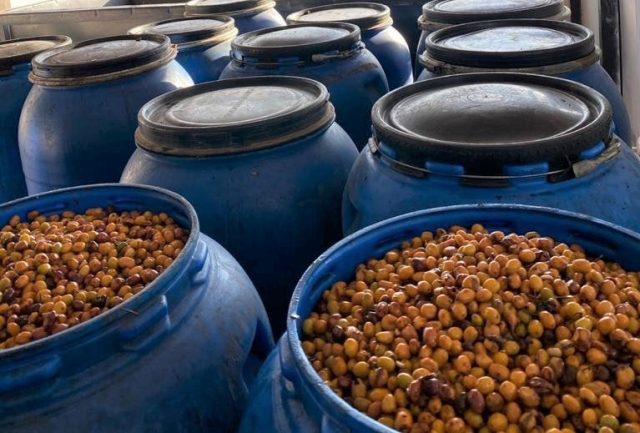
Excerpt: Additive Fermentation: “Infused” Coffee is Gaining Popularity and Sparking Industry Debate”
Co-fermented coffee is a new processing approach where producers add natural ingredients like fruit, hops, or spices during fermentation to enhance flavor complexity. Unlike flavored coffee, these additives interact with...
Are All Green Coffees the Same? Factors That Affect Their Flavor
Explore July 2025 Crown Jewel coffee arrivals from Sumatra, Ethiopia, Tanzania, and more. Bold flavors, innovative processing, and standout producers.
In this old timers opinion, the fact that someone would even pay $4,500 for a pound of coffee that the average daily coffee drinker could probably only describe as “good,” is indicative of the insatiable push to make everything ultra hip and exclusive. Our industry has become riddled with a snobbery not seen in a long time and the ones who suffer the most, as per usual, are the least among us. Peace.