
Crown Jewel Tanzania Natural Gesha Neel & Kavita Vohora Karatu District
36528-1 – SPOT RCWHSE
Boxes 0
Warehouses Oakland
Flavor Profile Mango, jasmine, raspberry soda, peaches, and rose jam
Out of stock


Overview
Overview
This is a fermented natural Gesha variety coffee from Karatu, Tanzania, produced by siblings Neel and Kavita Vohora on their Gaia Farm.
The flavor profile is vibrantly floral and fruity, with an uncommon elegance even for Gesha cultivars. We tasted raspberry soda, concord grape jelly, peach gummies, mango, and of course jasmine, rose, and hibiscus. Our roasters favored a low charge temperature and a gentle approach to first crack.
When brewed our baristas found the coffee easy to dial despite lower than average solubility and liked up-dosed pour-overs and longer espresso extractions.
Taste
Taste Analysis by Isabella Vitaliano
We say this every year, but this is probably the best thing we could ever have to repeat; it gets better every year. This stands out as the highest quality of every coffee we were offered by the Vahora family. Known for their longstanding history, coupled with innovation you really can’t beat this powerhouse brother-sister duo.
It’s a Gesha coffee, so naturally there are floral notes like rose, jasmine, delicate black tea and orange blossom-esque flavors. It’s sweet and clean with fruit flavors of sour cherry, peach, lemon, concord grape and raspberry soda. There is also an element of anise to connect the dots between floral and fruit notes. In its final form it is round and shines delicately like newly adorned jewelry or light hitting ripples of water from waves. This is a natural processed coffee and you can tell the team has dialed in their techniques and skills. It almost feels like a restrained or pointed use of the natural process; the fruit flavors are emboldened and support the florals but do not overtake the cup. There are also notes of ginger, custard, lemon balm and honeycomb.
On the espresso analysis Alisha explored more flavor notes like butter popcorn, lemonheads, almond butter, passionfruit and candied soda. In other shots they discovered a more spice forward version of this coffee like banana bread, buttercream frosting, cardamom and gingerbread. There is an amalgamation of so many flavors that Kavita and Neel have nurtured in this Gesha lot. Their skills and experience have been gained over their entire familial coffee legacy and you can’t find anything else quite like it. Enjoy this natural Gesha while it lasts.
Source
Source Analysis by Chris Kornman
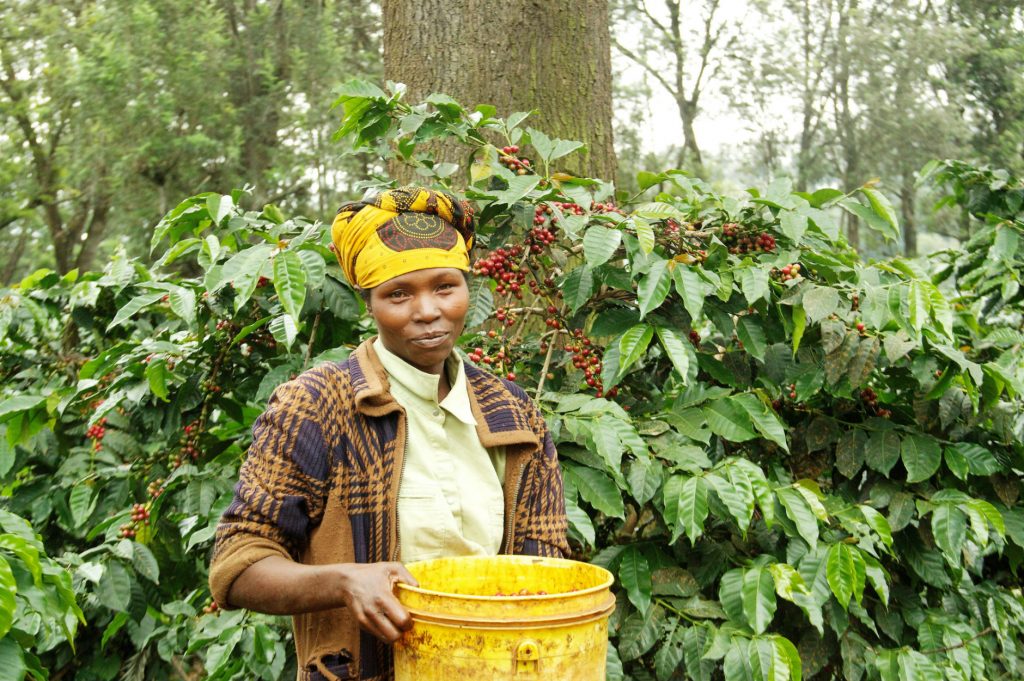
Under the watchful guidance of sibling team Neel and Kavita Vohora, the Edelweiss and Gaia farms have begun to blossom from well-managed estate farms, spanning 1000 acres across multiple ridges of the Ngorongoro caldera in northern Tanzania, into an innovative and genre-defying coffee enterprise. I’ve worked with Neel and Kavita, and the coffees from the farms for 15 years and I can definitively say that their most recent harvest is the most exciting I’ve ever tasted.
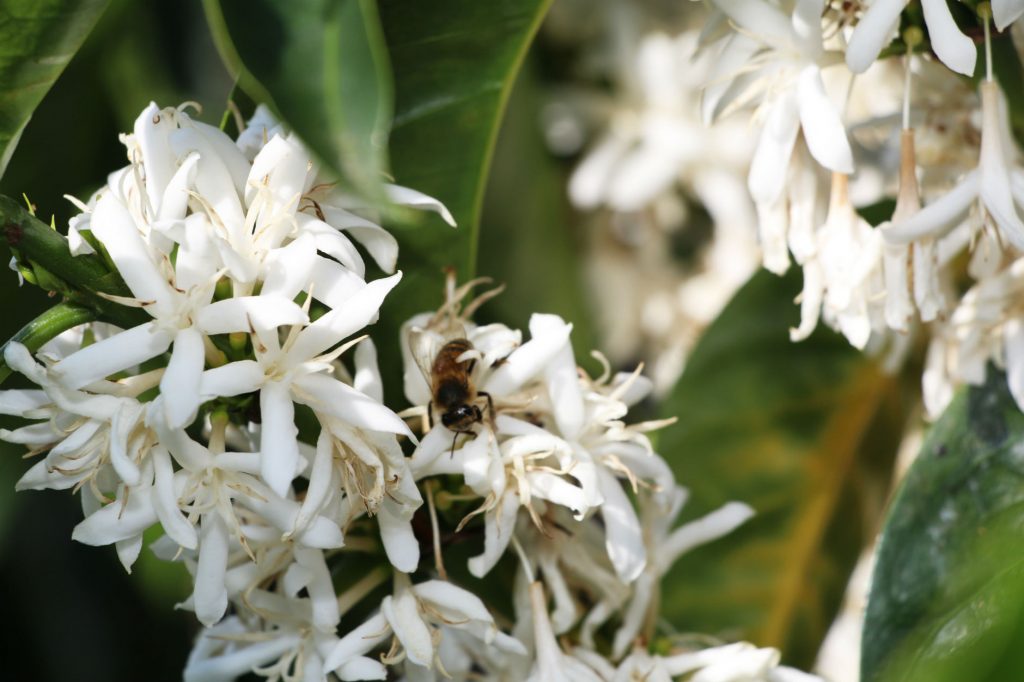
At the vanguard of the team’s efforts are their Gesha plantings, newly matured trees giving some of the first exportable harvests this year and stunning us with their deeply floral flavors and elegant nuance. The plants were grown from seed stock related to the New World’s initial Gesha trees, first noticed on the Peterson farm Hacienda la Esmeralda in Panama in the early aughts but brought to Costa Rica’s CIRAD facility as early as the 1960s from a research station in… wait for it… Tanzania. Neel’s befriended that research station’s current manager and has a vast trove of genetic information and historical records at his fingertips, and the data is fascinating. Needless to say, we’ll be keeping a close eye on some of the new seedlings I saw growing in the nursery at the farms on a recent visit.
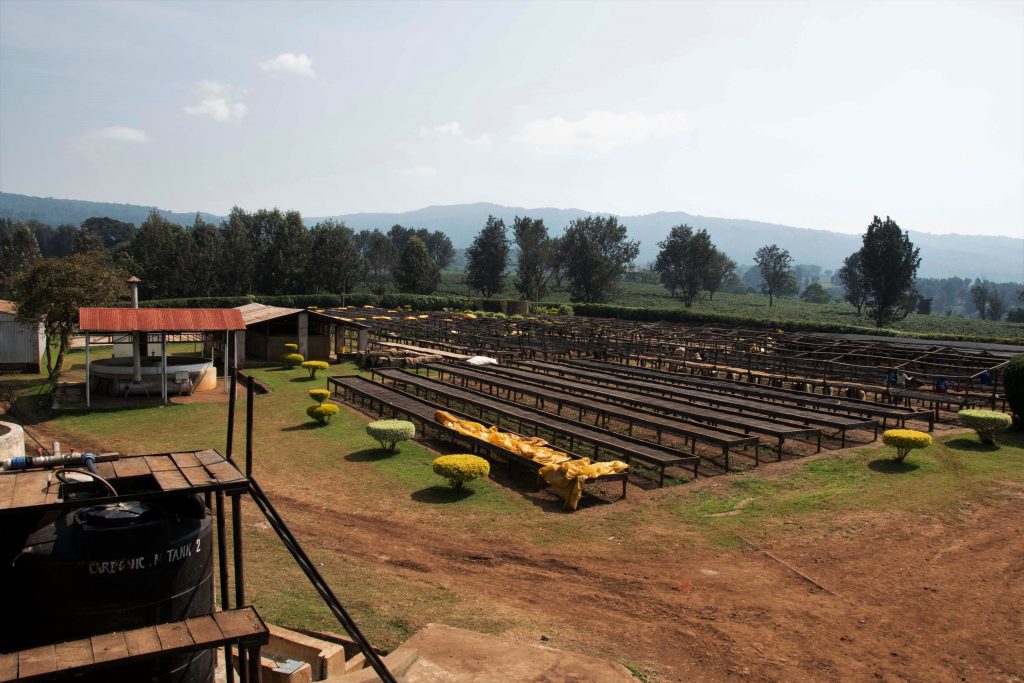
The Vohoras’ farms continue to innovate in processing methodology as well. Rather than resting on the laurels of tradition, nearly all of their coffee (including the commercial volumes of larger lots) goes through a cherry maceration period prior to processing. For microlots like this Gesha, the timeframe for whole cherry “pre-fermentation” is determined specifically by cultivar, through a trial-and-error process that’s been honed into precise protocols to bring out the best in each variety. In this case, the Gesha harvest will macerate in whole cherry on raised beds under protective tarps for four days prior to completing the nearly 4-week drying process on raised beds in whole cherry. After this is finished, the dried coffee is stored in GrainPro until it can be milled in Vohora’s facility back in Arusha.
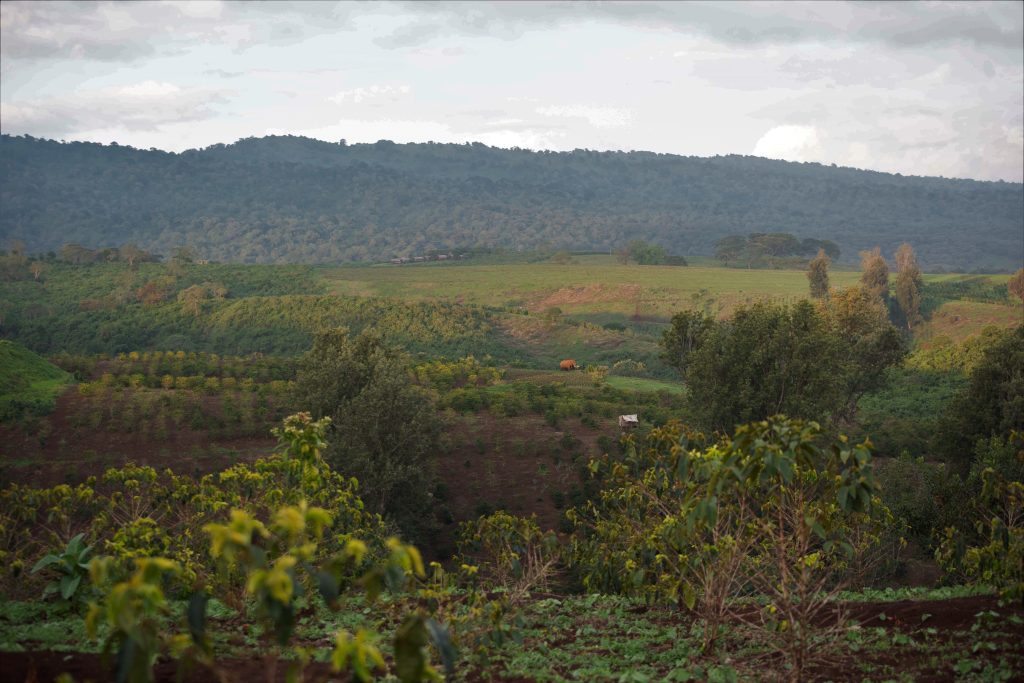
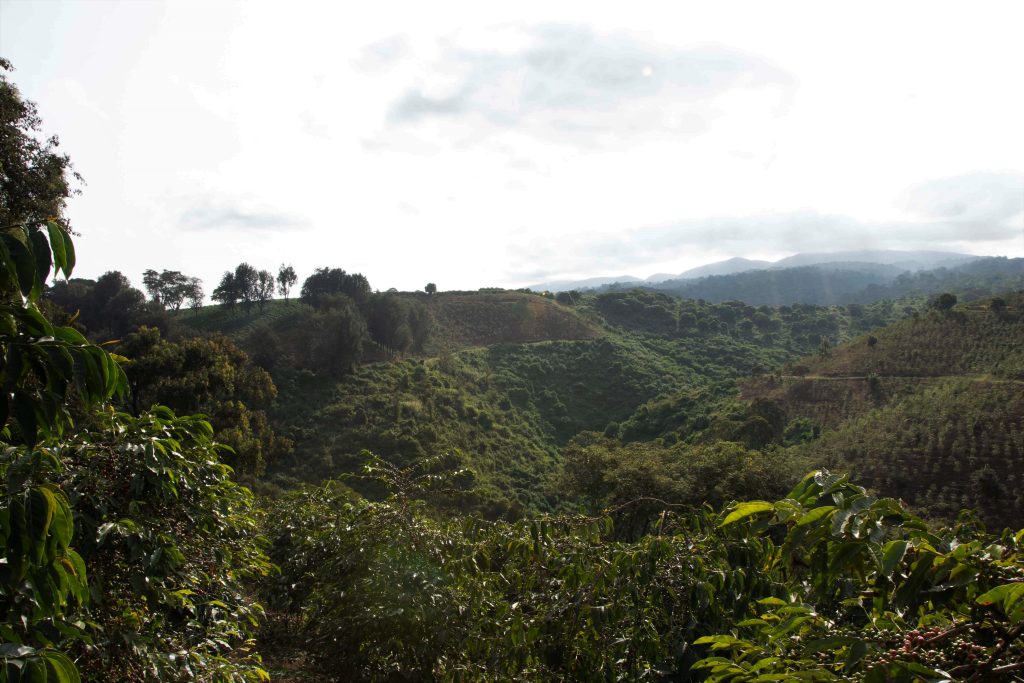
Ngorongoro, the world’s largest unbroken caldera, looms over a verdant landscape, the shell of an ancient, ruptured volcano. Inside its walls, a wildlife conservation area cut off from much access to the outside world, is home to hordes of zebra, eland, gazelles, wildebeests, two prides of lions, hyenas, hippopotami, and scores of other local birds and mammals, including a small population of black rhino. The Maasai, among the region’s more visible residents with distinctive red flannel robes and unchanged traditions of nomadism, are frequent visitors, passing through the crater with their goat and cattle herds in tow. The caldera’s wildlife are no strangers to the farms, either. Native forest corridors on the estates allow freedom of movement for the animals as they migrate, but it’s fairly common to find damage to the coffee trees; the most frequent offenders being elephants and water buffalo.
The Vohora’s estates are nestled into the caldera’s outer ridges, bordering the park. Since 1971, the Vohoras have owned about 1000 acres of farmland on the southern exterior slopes near the town of Karatu. The siblings’ grandfather arrived from India, first working for the British colonists as a farm manager prior to the nation’s independence, and their father founded and ran the export business from nearby Nairobi.
Today, Neel manages the farms, including overseeing more than fifty full-time employees and nearly eight hundred seasonal workers during the peak of harvest. He’s also at the forefront of processing innovations and cultivar selections. Kavita helms the export business from Arusha, and is the lead cupper and licensed Q Grader at the dry mill. Her daughter, Nicolene, is learning to taste coffee… the family’s fourth generation, now in training.
You can read more about the farms in a recent blog.
Green
Green Analysis by Isabella Vitaliano
Below average density, below average moisture content, water activity is a little bit below average. The screen size is a slightly wider spread with 75% in the 19-16 range. These larger beans have an ideal moisture content and a slightly lower density. The larger beans with lighter density are to be expected from the Gesha cultivar.
Diedrich
Diedrich IR5 Analysis by Doris Garrido
Coffee cultivars are endlessly fascinating, but the history of Gesha cultivars is particularly intriguing. It’s especially captivating to learn that their unique journey has a significant origin point in Tanzania.
I’m sure Chris Kornman will share his insights on this. Personally, I find them beautiful and captivating cultivars, and as a roaster, I believe they demand respect, precision, and perhaps a touch of obsession to highlight their delicate aromatics and vibrant florals.
This specific lot came from the Vohora siblings with whom Chris has worked for years, and I got the privilege to have been tasting their coffees for a few years and it’s amazing to experience harvest by harvest. This year in particular, I’m thrilled by its high aromas and perfect sweetness.
Given this coffee’s medium density of 677g/l and slightly low moisture of 9%, I preheated the drum to 400F before charging the coffee. I applied heat immediately after charging, then added a bit more -85% in this case-after turning point. At the 5-minute mark, I dropped the gas to 30% and opened the airflow to full. In the final phase of the roast, I lowered the pilot flame, and smoothly finished development with the accumulated energy. The end temperature was 390F, with a development time of 1:29 minutes. I’m beyond happy with the results: the coffee was very delicate, with jasmine florals, a subtle tanginess, incredible cleanliness, peach tea, and pomegranate notes.
Aillio
Aillio Bullet R1 IBTS Analysis by Evan Gilman
We use the RoasTime app and roast.world site to document our roasts on the Bullet. You can find our roast documentation below by searching on roast.world, or by clicking on the link below. Take a look at our roast profiles below, as they are constantly changing!
I don’t get a ton of opportunities to roast Gesha coffee, so when I do I like to be as careful and gentle as possible. Seeing the green metrics on this coffee reinforced my penchant for cultivar-related caution, as the coffee comes in fairly low in density, moisture content, and water activity. All of this led me to use a low-ish charge temperature of 455F for this 500g roast, with P6 power and F3 fan at the outset, which is lower power and more airflow than usual.
As the roast progressed, I did add heat back to P8 after turning point and ramped down from there. First P7 at 300F / 2:55, then P6 at 333F / 4:35, and finally P5 at 370F / 7:14. My airflow adjustments were fairly simple as well. I adjusted to F4 at 315F / 3:35 and to F5 at 370F / 7:08. Despite the simplicity, this roast did everything I wanted it to and is perhaps my favorite roast in recent memory. I dropped the coffee at 394F / 10:09 with 36% / 43% / 19% in Green, Maillard, and Post-Crack development respectively.
In the cup, I tasted plenty of tropical fruits like bunch-ripened Lady Finger banana, mango, and classic fruitiness like strawberry compote and sparkling mixed-berry soda. Doris was tasting alongside me and also got strawberry jamminess, along with delicate palm sugar notes and creamy texture.
This is a phenomenal coffee and will turn heads no matter how you brew it. We’re going to be having it on our espresso bar, because we’re just plumb loco. Plum loco, even.
You can follow along with my roast here at roast.world: https://roast.world/egilman/roasts/sSx9m9-BtqBKqfkjlJo2p
IKAWA
Ikawa Pro V3 Analysis by Isabella Vitaliano
Our current Ikawa practice compares two sample roast profiles, originally designed for different densities of green coffee. The two roasts differ slightly in total length, charge temperature, and time spent between color change in first crack. You can learn more about the profiles here.
As a Gesha cultivar this lot will naturally have higher screen size and lower density than some other cultivars. The beans are larger than some other cultivars and are obviously well known for their floral notes. On the low density roast of this coffee it was zippy with lots of lime zest and lemon. There were some florals in the coffee but felt slightly overtaken by the citrus notes. On the high density roast I found his coffee to feel really full and complete with pronounced floral notes like jasmine and rose.
I recommend trying the high density roast of this coffee to see what the florals have to offer. If you are looking for something a little bit zippier, you will not be disappointed by the low density roast. Cheers!
You can roast your own by linking to our profiles in the Ikawa Pro app here:
- Roast 1: Low Density Sample Roast
- Roast 2: High Density Sample Roast
Brew
Brew Analysis by Katie Briggs
Another exciting Gesha here in the tasting room! We have had some coffees from Vohora on our bar for the last couple of years, and I must say, every time it is quite a pleasure. I wanted to recreate the tasty brews from years past, and it honestly was quite a breeze. These coffees are so great every brew was a good one.
I started out on a V60 cone brewer, with a dose of 19g and the grind at 9.5. I did an initial pulse of 50g of water and let it bloom for 40s. I then did the last two pulses first up to 200g of water, then to 300g. I would say I was surprised at how good this first brew was, but given the coffee, it makes so much sense. It was soft and floral with notes of jasmine and soft lemon, but also fruity with notes of mango, peach and ginger. Sometimes it’s a bit difficult to decide what to do next when the first brew is so tasty, but I just decided to keep things the same but do a grind of 10 for the next brew.
I recreated the last brew but at a grind of 10, as I previously mentioned, and surprise surprise! This brew was super tasty as well. A little sweeter with notes of pomegranate, honey, hibiscus tea and nectarine. I decided to do one more brew, this time on the Kalita Wave flatbed brewer, just to see how this would change the taste.
I did the same brew as the last, and again, a very tasty brew! It really is hard to go wrong with this coffee. This brew had a bit more punch when it came to fruitiness. We got more notes of raspberries, fruit snacks, black tea, honey, and orange blossoms. A great option if you like a super fruity cup.
All in all, super fun to brew! This coffee seems to not be super soluble, so you can go for a higher dose and a bit of a finer grind and still get a great sweet, floral brew from this coffee. I would recommend the V60 cone brewer if you are looking for a softer more floral cup, and the Kalita wave if you want a bit more punch and fruitiness. Either way, you will be enjoying cup after cup!
Espresso
Espresso Analysis by Alisha Rajan
From Gaia farm located in the seemingly enchanted Ngorongoro caldera, we are presented with this sublime natural Gesha offering by Neel and Kavita Vohora. With the unique combination of rose syrup, panna cotta, and delicate black tea shining throughout the tasting arc, this one proved to be thoroughly nostalgic for me. From the first shot onwards, I was reminded of decadent South Asian sweets like gulab jamun and rasmalai that were staples of my childhood. Delicate rose florals are effortlessly woven through the weightier elements of creamy custard and figgy jam to combine the daintiness of a Gesha profile with the complexity of a natural process coffee. These folks sure know what they’re doing.
I began the analysis with a lower dose of 17.5 grams and a 1:2 ratio for the extraction as a starting point. This one was full of honeycomb sweetness, on-the-nose florals, and hibiscus brightness. We were off to a phenomenal start. I was curious about improving the mouthfeel and clarity of some of the tasting notes so dosed up accordingly for following extractions.
My favorite shot came in at an 18.3g dose, a 43.2g yield, and an extraction time of 34 seconds. This one had a pleasantly syrupy mouthfeel, near perfect acidity, and a clean mint-like finish. The rose syrup and luscious custard combination tasted just like my favorite treat gulab jamun (a deep fried milk dessert soaked in a rose simple syrup). Other notable flavor notes included fig, lemongrass, and a perfectly steeped assam black tea. I decided to coarsen the grind for the following extraction to further explore the flavor range.
Another favorite shot of mine came in at an 18.5g dose, a 37.0g yield, and an extraction time of 30 seconds. This one gave us the familiar rose syrup and custard, accompanied with lemon zest, green grape, cardamom, and saffron.
Ever-delectable and supremely approachable, this espresso makes our dessert dreams come true. I recommend a moderate dose (18-19 grams) and grind and an extraction time around 30-34 seconds for best results. Happy dialing and even happier tasting!
Related Coffee

Orange, lemon, cranberry, vanilla, pear
Oakland 45 Boxes
Crown Jewel Rwanda Washed Jarama Kivubelt Estate
Lot 50 – 37912-1 – SPOT RCWHSE
Orange, lemon, cranberry, vanilla, pear
Spot
45 Boxes
$189.33 per box
Hops, lime, botanical, floral, and pink grapefruit
Oakland 27 Boxes
Crown Jewel Colombia Carbonic Honey Cascade Hop Co-Fermented Pink Bourbon Edwin Noreña
37702-1 – SPOT RCWHSE
Hops, lime, botanical, floral, and pink grapefruit
Spot
27 Boxes
$376.84 per box
Caramel, grape, jasmine tea, biscoff cookies, and melon
Oakland 7 Boxes
Crown Jewel Yemen Anaerobic Natural Sharqi Haraz Cooperative
37919-1 – SPOT RCWHSE
Caramel, grape, jasmine tea, biscoff cookies, and melon
Spot
7 Boxes
$685.69 per box
Green apple, jolly rancher, apple, mojito, apple cider
Oakland 21 Boxes
Crown Jewel Colombia Carbonic Honey Green Apple Co-Ferment Edwin Noreña
37710-1 – SPOT RCWHSE
Green apple, jolly rancher, apple, mojito, apple cider
Spot
21 Boxes
$434.39 per box