
Crown Jewel Ethiopia Washed Faysel Abdosh Duwancho Village
35993-1 – SPOT RCWHSE
Boxes 0
Warehouses Oakland
Flavor Profile Hibiscus, pomegranate, plum, maple syrup, and oolong tea
Check out our Guide to Ethiopian Coffee Grades
Out of stock


Overview
Overview
This is a low intervention washed coffee from Sidama, Ethiopia, produced by smallholder farmers organized around Faysel Abdosh’s Duwancho coffee processing station.
The flavor profile is floral, bright, sweet, and super fresh. We tasted hibiscus, pomegranate, plum, maple syrup, and oolong tea.
Our roasters agreed – hit the gas and take the coffee for a quick, hot spin without fear. Watch for a post-crack dip in your heat rate of change.
When brewed… listen, this coffee is great. We enjoyed coarsely ground flat bottomed pour-overs and longer, high yield espresso shots but honestly, it’s near-impossible to screw up.
Taste
Taste Analysis by Isabella Vitaliano
A stunning start to Ethiopian season, this lot is ringing bells and snagging hearts. It traveled via air freight to make such quick time, and not only is it fresh, but it is also one of the most delicious coffees the team has tasted thus far this year. Delicious florals, sharp acidity, and syrupy sweetness make for a delightful experience.
Obviously floral, with rose, jasmine and lilac, there is also a subtle and silky body akin to oolong tea. This is contrasted by sweetness in the cup with notes like maple syrup, sweet brandy, pomegranate, orange liqueur and mulberry, accompanied by flavors of hibiscus and sharp plum. All of these components meld together in such a succinct way, it gives you a pronounced, clean and unforgettable cup.
On the cupping table I almost mistook this for a Gesha, a truly excellent sign of the work and effort put into this lot by Testi Trading. Fondly called ‘especial’ by The Crown team, this coffee has taken a special place in our heart and one we won’t forget anytime soon. Get your hands on some of the freshest Ethiopian coffee available at the moment, this won’t last long
First class flight for a first-class coffee.
Source
Source Analysis by Charlie Habegger
Over the last six years, independent processors in Sidama have created a new generation of profile diversity, from small lot naturals to single farmer separations, anaerobics, and custom sorting that goes beyond Grade 1 export requirements. Much of this is new to the world, and for many roasters it’s a developmental stage long overdue for such a naturally gifted coffee growing region.
This single day lot from Testi Trading is one such coffee: a single picking day’s worth of cherry picked in the Arbegona district, one of Sidama’s highest possible elevations, processed separately with extra attention to eliminating imperfections. A “premium” version of the best that Sidama offers, indeed.
Arbegona District, Sidama
The Sidama Zone has long been considered a kind of gateway to Ethiopia’s southern coffees. This is geographically true, as Sidama is the first producing zone on the way south from Addis Ababa. It has also been true in the cup: for decades Sidama has been known for having a robust and stable export union of more than 50 coops that turn out predictably honey-like, herbaceous fully washed coffee year after year, and almost always with earlier availability and lower prices than neighboring Gedeo (a.k.a. “Yirgacheffe”).
Perhaps because of its stability, the sprawling zone has also seen little disruption to its union presence and hallmark washed profiles.
But that is certainly not all that Sidama has to offer. More and more we are seeing younger producer groups set themselves up outside the union infrastructure and offer new, more ambitiously-produced coffees to the market. Private processors like Testi Trading see themselves as the vanguard for Sidama’s new generation of coffee makers.
Coffees this good wouldn’t be possible without a divine terroir to begin with. Eastern Sidama runs up against the mighty Harenna Forest National Park, Ethiopia’s largest indigenous forest. Elevations here surpass 3,000 meters and old growth tree species here boost natural shade and soil health. Were this not enough, eastern Sidama coffee farm altitude alone is enough to make a coffee buyer’s eyes water, reaching as high as 2300 meters above sea level. Harvest here pushes past the end of the calendar year.
“Faysel Abdosh” Namesake Day Lot
Faysel Abdosh is the founder of Testi Trading. Faysel was raised in the coffee industry in Ethiopia. He manages a personal farm of his own in the Bensa district, east of Arbegona, which he purchased in 2020 (and regularly produces some of the best coffee we taste from Ethiopia each year).
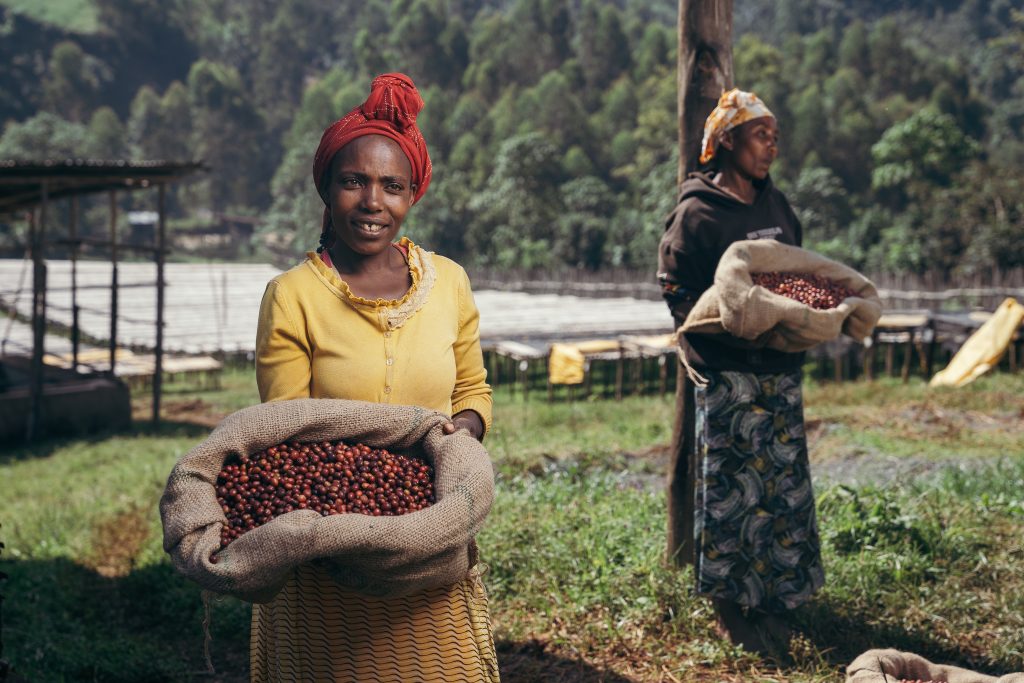
In addition to his personal farm, Faysel and Testi Trading manage a number of central processing sites in eastern Sidama servicing smallholder producers. The Duwancho station is one such site. Here, thanks to the available elevation and overall cherry quality potential, Faysel decided to implement a day lot project, bearing his name. While the processing itself is only slightly more perfectionistic than is common in Sidama, the timing of such a specific window of cherry collection, and the attention to detail required to isolate the lot through processing and export, is indeed a “premium” level of effort.
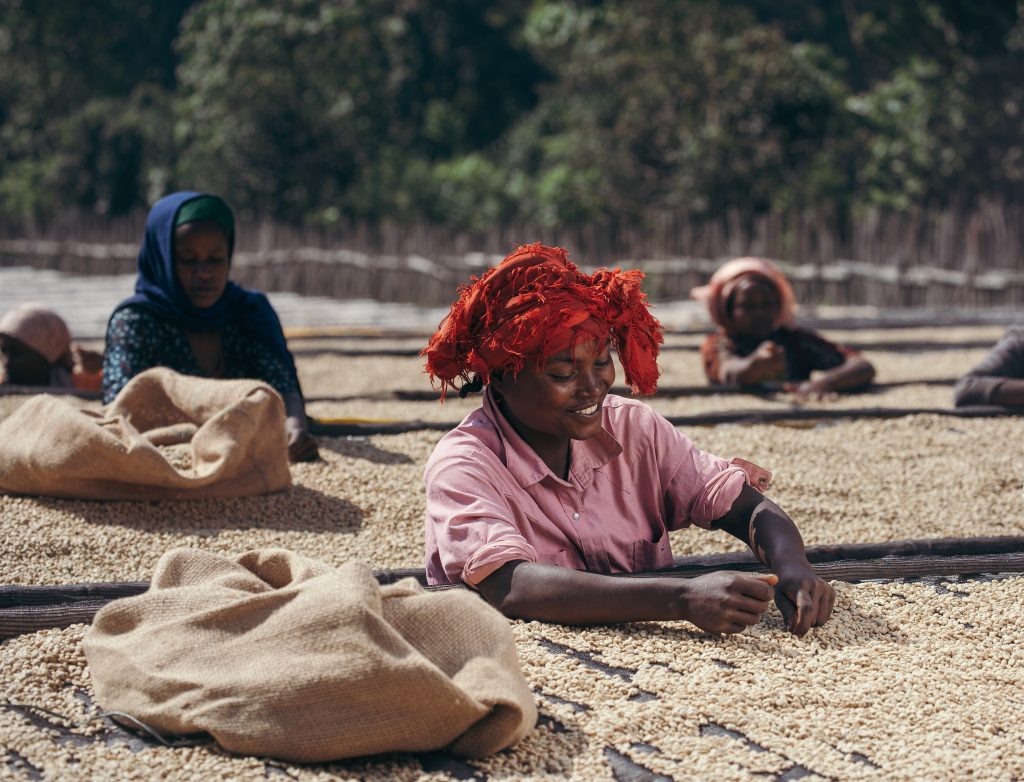
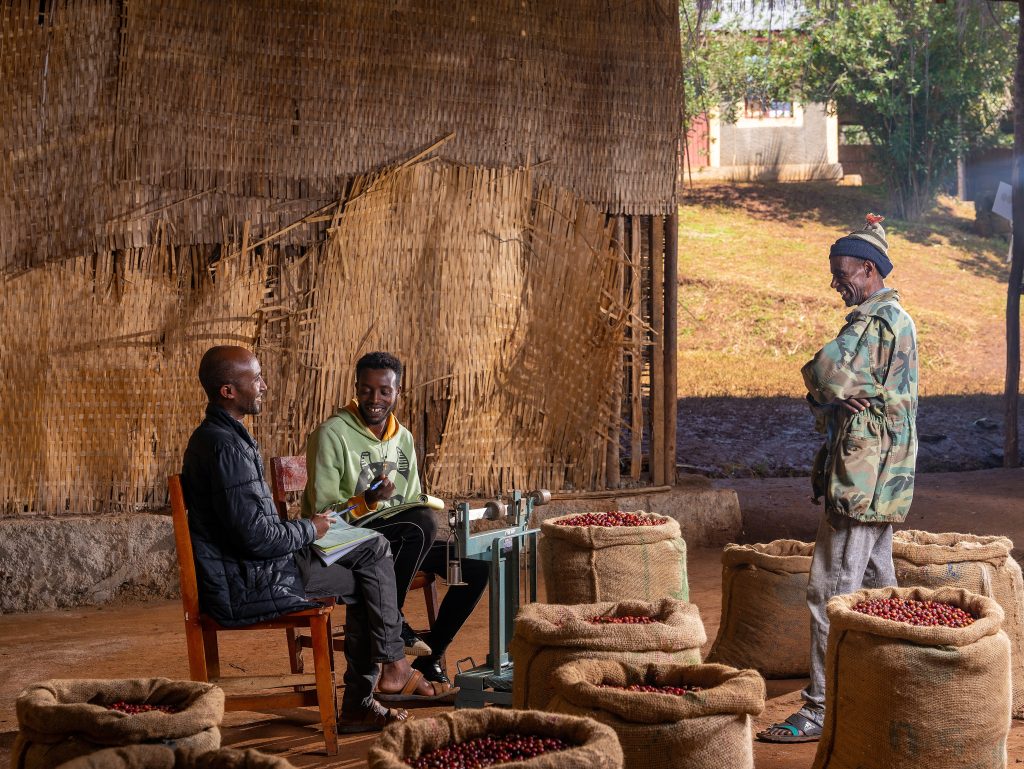
This particular lot uses only cherry from Duwancho farmers 2100-2200 meters in altitude, harvested on a single day. Cherry was brought to the station by the farmers and hand-sorted upon arrival. Within 6-8 hours of harvest the cherry was depulped and then fermented in an open tank for 48 hours. Once fermentation was complete the parchment was washed completely clean of its mucilage by raking it in a long open channel with fresh running water. Drying took place on rasied beds under a parabolic shade net, to allow for slow, even moisture removal and utmost protection of the coffee’s parchment.
Green
Green Analysis by Isabella Vitaliano and Chris Kornman
The first of the Ethiopian coffees to arrive, the specs on this coffee are pristine and set for easy roasting. Screen size is condensed in the 16-17 range, ideal for an even roast. Water activity and moisture content are a little bit below average, and density is a little bit below average range. Check out the roasters’ notes for more details!
Testi, our export partner for this coffee, was kind enough to supply the exact cultivars – the romantically named 74118, 74110, and 74158. Pull out your copy of Getu Bekele and Tim Hill’s A Reference Guide to Ethiopian Coffee Varieties if you want the full scoop, but the short story is that these numerical designations refer to the Jimma Agricultural Research Center (JARC) and its massive cataloging and distribution program from 1974. Coffees were selected (often from minimally cultivated indigenous forest populations in western Ethiopia) and planted regionally based on desirable cup characteristics and plant hardiness.
Diedrich
Diedrich IR5 Analysis by Doris Garrido
I thought writing this analysis would be a piece of cake. The truth is this coffee is like my mom’s amazing three-leches cake – she just takes everything to another level! I know it sounds like a lot, but this coffee has a lot of flavors, a lot of fruitiness, and a lot of aromas. I’m in that phase of my coffee journey when I feel the dance on the cupping table as soon as my nose picks up those sweet floral notes. I just can’t hold it to the end and have to exclaim Approve 100%! It almost made me write a poem, but let’s just stick to this analysis for now.
Seriously though, this was a truly pleasant coffee to roast. It had a short drying, fast initial yellowing, and held nicely during caramelization – in this case, I let the stage go a bit longer than usual and finished it smoothly. I recommend using a small batch, as the density of the coffee will require some power from your roaster.
For this exercise, I only had 4 lbs. I started the roast with a relatively high temperature, 451F, and had the gas on almost from the beginning, reaching 100% in 24 seconds. As a result, I got a high turning point and faster pace heading into yellowing. It was one of those days when the needle on the roaster gauge was acting a bit crazy (probably needs calibration or something). Anyway, I didn’t want to fight it, as I always seem to lose those battles with the diedrich, so I lowered the gas to the minimum, 30%. Then, I briefly cut the burner to 0% because I was worried about the roast progressing too quickly. I then realized it was slowing down too much and turned the gas back on. Those 3 minutes and 55 seconds spent on an Ethiopian coffee during caramelization felt like an eternity -not entirely intentional, but the result was amazing. First crack started at 382F and finished in one minute and 25 seconds, with and end temperature of 397F
The final result? Amazing! Floral, Jazmine-like, sweet, with notes of green apple and raspberry. It’s tangy, very sweet, and intensely fruity – a flavor bomb in your mouth. We took it to the SCA Expo in Houston, and someone thought it was a Gesha. I told them, “No, Geshas want to be this coffee!” Soon, it’ll be available as a pour over at the crown here in Oakland, if you visit, be sure to ask for it.
Aillio
Aillio Bullet R1 IBTS Analysis by Evan Gilman
We use the RoasTime app and roast.world site to document our roasts on the Bullet. You can find our roast documentation below by searching on roast.world, or by clicking on the link below.
Take a look at our roast profiles below, as they are constantly changing!
In this era of wildly unique and flavorful ferments, sometimes a ringer makes an appearance from out of the mist. Moseying into town on a black horse is this washed Sidama coffee from Faysel Abdosh of Duwancho Village. What’s that? No lemon verbena roasted chicken dinner coferments? Prepare to be astonished.
Using high heat and rendering this roast a short one seemed to be the best option. I wanted to preserve the acids in this coffee and to have enough momentum at the end of roast for some serious airflow. Starting with 473F charge temperature, P9 power, and F2 fan got this coffee cooking, but I switched tactics and reduced fan speed to F1 at turning point to really get this coffee cooking through green/drying stage. At peak rate of change, I engaged fan to F3 and reduced heat to P8 to begin slowing the roast down. As rate of change began to flatten out a bit after yellowing, I reduced heat to P7, then increased fan to F4 shortly afterwards. A touch longer, and I reduced heat again, to P6. The rate of change really dropped after first crack’s release of moisture, but I had enough push to get through 1:37 of post-crack development, dropping at 7:23 / 396F.
This roast was neither dark nor light, a true medium to my eyes. Plenty of sugar developed in the later stages of roast, and bright, lemony acidity persisted in the cup. What I wasn’t expecting from looking at my roast was the luxurious texture of this coffee. Velvety and custardy, this coffee is both a rich and bright experience simultaneously. If you’re looking for the classic Sidama profile done perfectly, this just may be the candidate of the year.
Drink responsibly. You’re going to be tempted for that fifth cup.
You can follow along with my roast here at roast.world: https://roast.world/egilman/roasts/k5K5s7mh-AtIeDYu3A-H7
Brew
Brew Analysis by Joshua Wismans
It shouldn’t come as a surprise that a coffee this good contains multitudes. One thing to keep in mind with this coffee from Duwancho Village, and Ethiopia in general, is that these tend to be high solubility coffees – meaning they give off their goodness easily, so grind coarse as to not over extract. The best brews of this coffee bring out a tremendous mouthfeel, stonefruit and citrus sweetness and acidity, and a rich floral character.
If you’re looking for a more robust cup that still embodies the character of Ethiopian specialty coffee, we recommend a brew with just a slightly coarse grind brewed on a conical brewer. With a TDS of 1.4 and an extraction percentage of 20.3, expect to find notes of tres leches cake, hops, blackberry, and pluot.
If you’re looking for a delicate nuanced cup that relishes in the subtleties of fine Sidamas, look to use a very coarse grind and pair with a flat bottom brewer. We also recommend dosing down slightly. Try for a TDS of 1.29 and an extraction percentage of 18.56. In this expression, we found a grapefruit acidity humming with lavender, black tea, and brown sugar. This profile was a favorite among the baristas.
To recap, if you’re looking for a nuanced and full expression of this coffee, we recommend a coarse grind and a flat bottom brewer. If you want something a bit fuller, grind a touch finer and brew on a V60. Either way, you’ll be in love with this coffee.
Espresso
Espresso Analysis by Alisha Rajan
Affectionately and aptly labeled “the Mother” of the Geshas by our head roaster Doris, we welcome this vivacious yet superbly refined Ethiopian coffee from Sidama. As the first Ethiopia of the season here at the Crown, we could not hope to ask for a more elegant reflection of heavenly terroir or painstaking detail by the producers, especially for a single day harvest!
Considering the very classic profile of this coffee, I remained within conservative limits for my specs while dialing this in. I began my analysis with an 18.0g dose with a roughly 1:2 ratio for the extraction in just under 30 seconds. I noticed that the extraction was a bit slow at first, so accordingly coarsened my grind to achieve the desired range. I was stunned by the overwhelming florality immediately. This coffee was so accommodating with minimal adjustments that I came to my desired dial in no time at all.
My favorite shot of espresso came in at an 18.5g dose, a 40.4g yield, extracted in 29 seconds. With orange blossom and jasmine on the nose, the predominant flavors were juniper berry, ume plum, and tart apricots, rounded out by a toasty salted caramel and a hint of basil on the finish. Custard-like and absolutely luscious, I could not ask for anything more.
My other favorite shot came in at a 19.0g dose and a 41.1g yield extracted in 34 seconds. This one contained most of the lovely fruit notes of the previous shots yet also carried with it the subtle essence of spices such as cinnamon and clove.
Overall, this coffee was delightful in all its iterations. Supremely sweet and balanced, it carries with it the quiet elegance and wisdom of “the Mother” in all her beauty. I hope you enjoy it as much as I do.
Related Coffee

Orange, lemon, cranberry, vanilla, pear
Oakland 45 Boxes
Crown Jewel Rwanda Washed Jarama Kivubelt Estate
Lot 50 – 37912-1 – SPOT RCWHSE
Orange, lemon, cranberry, vanilla, pear
Spot
45 Boxes
$189.33 per box
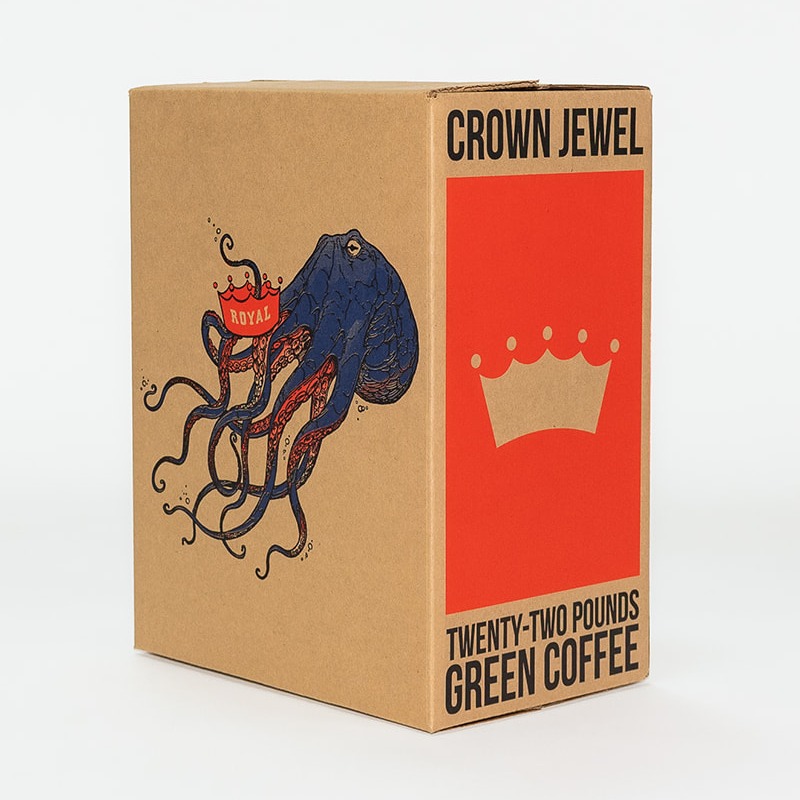
Hops, lime, botanical, floral, and pink grapefruit
Oakland 27 Boxes
Crown Jewel Colombia Carbonic Honey Cascade Hop Co-Fermented Pink Bourbon Edwin Noreña
37702-1 – SPOT RCWHSE
Hops, lime, botanical, floral, and pink grapefruit
Spot
27 Boxes
$376.84 per box
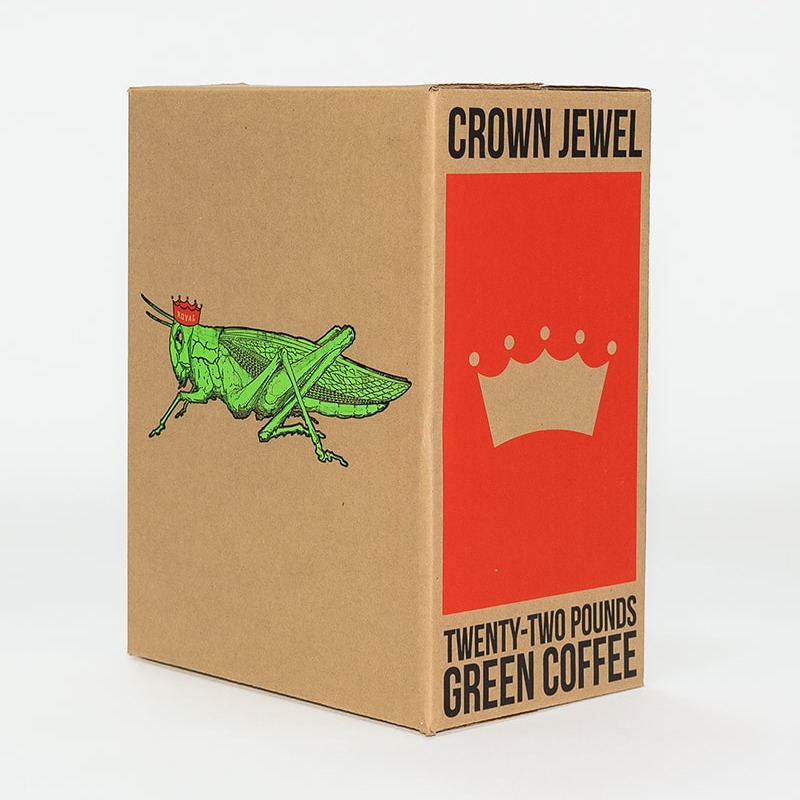
Caramel, grape, jasmine tea, biscoff cookies, and melon
Oakland 7 Boxes
Crown Jewel Yemen Anaerobic Natural Sharqi Haraz Cooperative
37919-1 – SPOT RCWHSE
Caramel, grape, jasmine tea, biscoff cookies, and melon
Spot
7 Boxes
$685.69 per box
Green apple, jolly rancher, apple, mojito, apple cider
Oakland 21 Boxes
Crown Jewel Colombia Carbonic Honey Green Apple Co-Ferment Edwin Noreña
37710-1 – SPOT RCWHSE
Green apple, jolly rancher, apple, mojito, apple cider
Spot
21 Boxes
$434.39 per box