
Crown Jewel Ethiopia Red Honey Danche
36828-1 – SPOT RCWHSE
Boxes 0
Warehouses Oakland
Flavor Profile Caramel, lime, floral, vanilla, and marigold
Check out our Guide to Ethiopian Coffee Grades
Out of stock


Overview
Overview
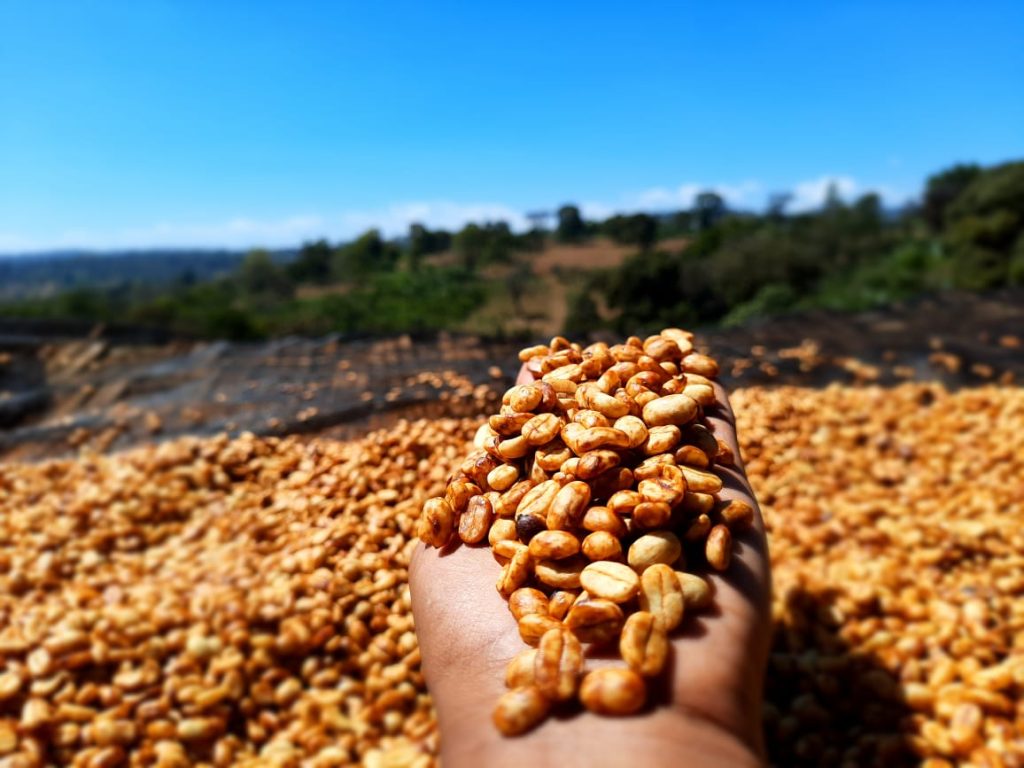
This is a moderate intervention white honey processed coffee from Gedeo, Ethiopia, produced by smallholders organized around our processing and export partner, Tracon Coffee.
The flavor profile is floral and effervescent, but with a delightfully silky viscosity and strong citrus and stone-fruit characteristics. We tasted honeysuckle, hibiscus, and marigold, orange-infused chocolate, lime, and berry compote.
Our roasters found the high-density green could take heat, and noted unusually low temperatures for first crack, and especially color change.
When brewed, our team emphasized the choose-your-own-adventure nature of this coffee, with bold, syrupy-sweet brews or delicate, floral-forward tinctures all possible depending on your favorite style and a few small adjustments to extraction parameters.
Taste
Taste Analysis by Isabella Vitaliano
As a whole, this coffee is a decadent treat made to sip all through until the afternoon. Whipped cream, florals and plum take the cake, literally. With accents of honeysuckle, lime, orange-infused chocolate, cannabis and berry compote. Effervescent and decedent, two contrasting feelings that come together through this red honey Ethiopian coffee. The most resonant note among the team was marigold, and we love how dynamic the florals play into hibiscus and dense cake.
Comprised of a combination of cultivars that are very new to me, paired with the processing, you have a one of a kind coffee with lots to talk about to your customers. There are limited quantities of this exclusive coffee from Tracon, be sure to grab it while it lasts.
Source
Source Analysis by Chris Kornman and Joshua Wismans
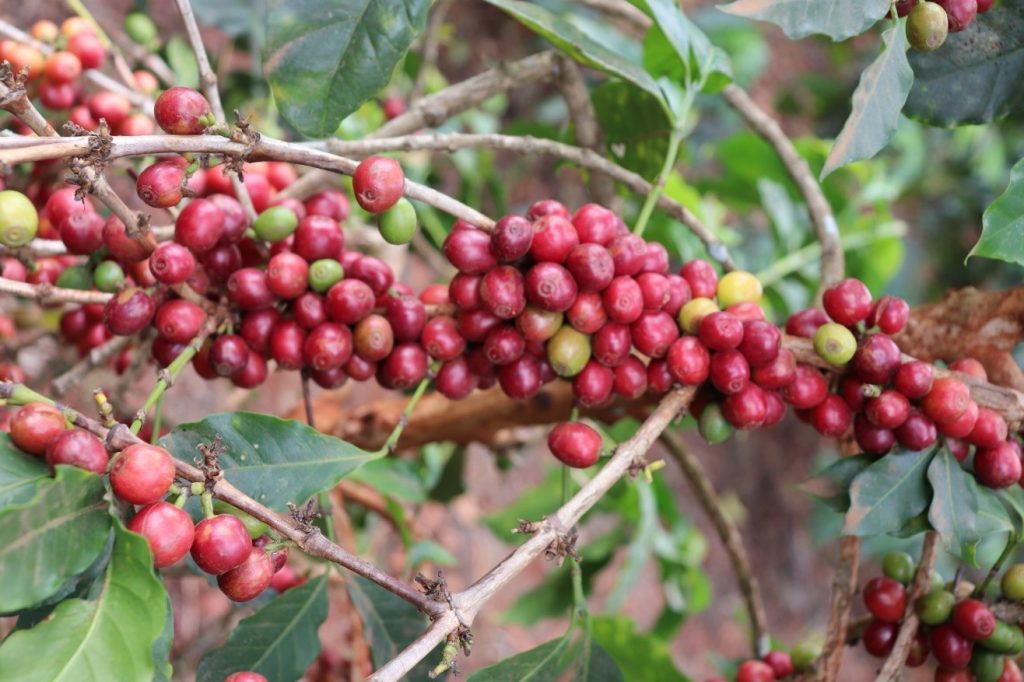
Sourcing coffee from Ethiopia, perhaps more so than anywhere else in the world, is a collaborative effort. With something like 95% of the coffee trees cultivated in the country under the husbandry of smallholder farmers, it literally takes a village to raise enough coffee cherry to export. The washing station (even in the case of minimal intervention naturals) is the local hub for most specialty coffee in the country. While farming families may dry coffee cherries on their patios or lawns to be roasted and enjoyed at home, export grade specialty coffee almost always requires centralized infrastructure.
In this case, that infrastructure—including logistics and farmer support strategies—is provided by Tracon Coffee, a 30+ year veteran organization of the coffee industry, and our trusted supply partner. Tracon’s interests extend from farm and washing station ownership and management to running a dedicated cupping lab and a 30,000 square foot coffee processing facility that allows them to mill and finish coffee for export on-demand.
This year, in addition to our usual business of classic washed and natural coffees, we asked if Tracon had anything special in the works, and you better believe they delivered, sending us four of the most exciting coffees we’ve tasted this season.
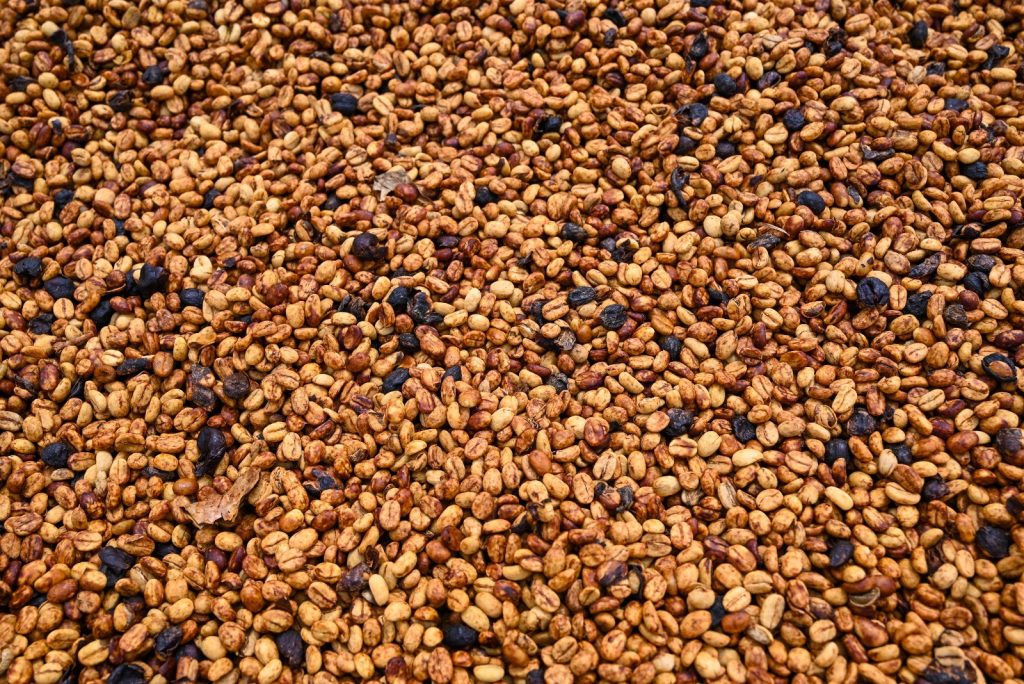
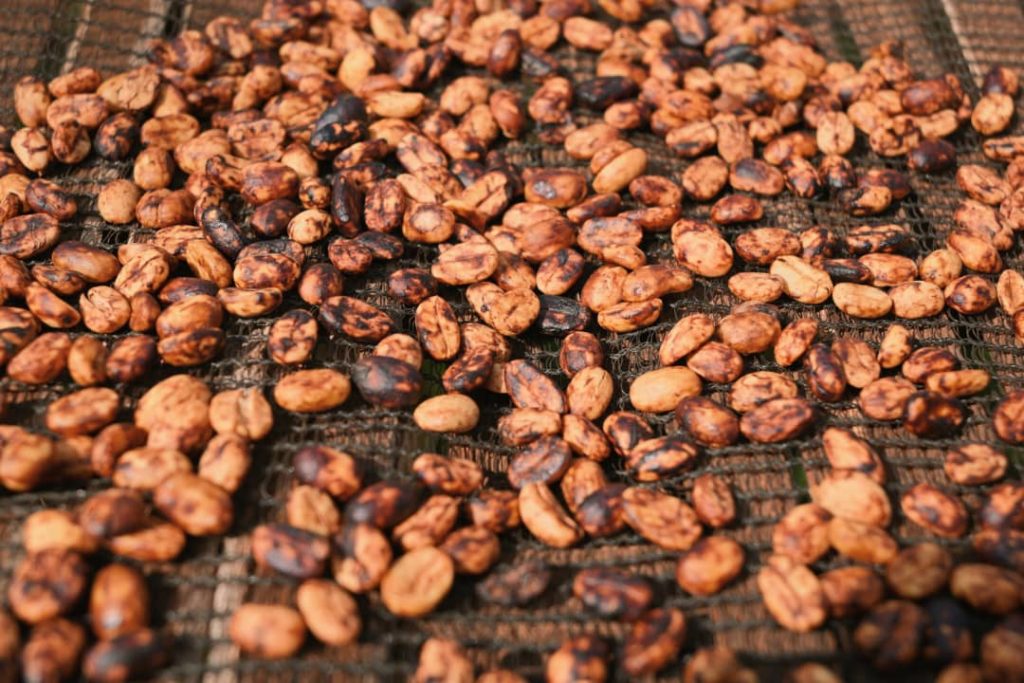
This red honey process coffee from Danche in the Gedeo zone is a tantalizing alternative process Ethiopia that brings together the floral and citrus of washed coffee and with a voluminous in-season stone fruit juiciness. Not quite the berry bombs we associate with natural processed coffees, nor the punchy funkiness of anaerobic coffees, this red honey hits the sweet spot of a coffee with heaps of both fruit and florals. In contrast to the white honey process, this red honey sees a larger percentage of mucilage remain on the seed after de-pulping, with less frequent turning and slower drying times.
From Royal’s vantage point, there are at least three distinct locations and teams responsible for the decision making and sourcing strategy.
The first is Haile Andualem and the team in Addis. The cupping lab there is our first look at quality, and our first point of contact with suppliers like Tracon Coffee, the processor and exporter of this lot. Not only is the lab a quality filter, but it’s also a means of communication and a physical representation of the trust that is requisite in a complex trade relationship. Haile is our first contact, our inveterate initiator of relationships and, in this case, our gateway to extraordinary coffees.
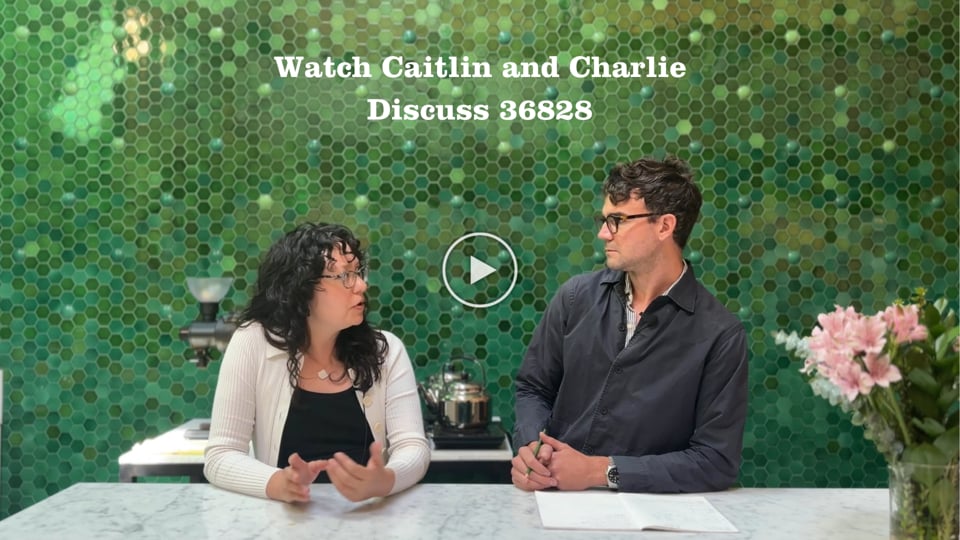
The second is our trading team, specifically Caitlin McCarthy-García, Peter Radosevich, and Max Nicholas-Fulmer, who manage the bulk of our Ethiopian selections. In this case, Caitlin did the work of container-building, solicitation of samples, and general guidance and council through the process of selection and approval.
The last, for Crown Jewels, is of course the team here at The Crown. We’re a collective, and decisions are usually semi-democratic, weighing various preferences while maintaining a high level of quality and considerations for menu variety, relationship loyalty, and more. For the 2024-25 sourcing season, Josh Wismans, our Tasting Room manager, took the lead on Ethiopia approvals.
The Tracon coffees we’ve secured this year, two honey processed selections and two low-oxygen naturals, are some of our favorites. This coffee is an ode to the complexity of coffee sourcing, a celebration of collaboration, and a delicious reminder of possibilities—both traditional and experimental—still latent in the fields of one of the world’s most important producers of coffee, first in our hearts for its history and culture, its gift to the world.
Green
Green Analysis by Isabella Vitaliano and Chris Kornman
Density is high with screen size largely between 15-18 screen size. Moisture content and water activity sit in normal ranges. Make sure to watch if the coffee takes off after first crack on this one. All specs indicate you’ll have a breezy time roasting.
Tracon have kindly shared with us the cultivars for this lot, a combination of the usual local landraces from the region. In this case, Kurume (Kudhume) is known for small fruit and compact size, while Dega (Amharic for a “high, cool place”) is a medium-sized tree that unsurprisingly prefers planting at higher elevations, and Wolisho (Walichu) is a tall tree with large fruits but inconsistent seasonal yields. (Credit to Getu Bekele and Tim Hill for their research and documentation in A Reference Guide to Ethiopian Coffee Varieties.)
Diedrich
Diedrich IR-5 Analysis by Chris Kornman
This was a fun coffee to roast, and easy to manage despite a smaller than usual batch size. Delicious coffees like this make the work of perfectly browning coffee seeds seem easy.
With a high green density and modestly dry moisture content, I knew I could press the heat early in the roast with minimal consequences, allowing me a bit more flexibility during Maillard reactions and in sugar browning. I used a moderate 400F charge temperature so as not to overaccelerate the small batch size (4lbs in an 11lb capacity machine) and a closed airflow with a short soak before turning the heat up to 70%.
Color change occurred at an unusually low 286F, and I went ahead and opened the airflow to 50% and shortly after dropped the burners back to minimum. With a decent amount of roast momentum built up from the short drying stage, I opted to open the airflow to fully open at about a minute into color change, 336F on the bean probe.
With a rate of rise in steady decline, I began to hear a few surprising early pops at as low a temperature as 350F. Concerned that things were moving too quickly, I cut the burners entirely for about 30 seconds, until the exhaust temperature fell from 425F to about 400F, just as first crack began in earnest, at a slightly low temperature of 378F on the bean probe.
The rest of the roast just coasted, open airflow and minimum burner setting with ROR slowly dropping from about 15F/min at first crack’s onset to single-digits by 1:30 of development. I held on a few extra seconds as I watched for the very first glossy reflections on the surface of the roasting beans and pulled the drum door handle at 1:45 of development, a roast just a touch over 9 minutes in total duration. Colortracking the whole bean sample first, I was shocked at the 64.24 reading… much darker than I’d anticipated… but the ground color score was a nice light 54.93, about the usual for our pour-over bar.
On the cupping table, we loved the floral flavor and silky mouthfeel. The coffee has a delightful sweetness and very solid structure, I’m really pleased that I was able to slow Maillard reactions a bit during roasting as it gave the delicate botanical notes (both Evan and I tasted Marigold, an unusual but not unwelcome characteristic!) and jammy peach preserve flavors a solid structure to shine on. The juicy nature of the coffee shone through admirably and I’m quite happy with the results.
Keep an eye on those low color change and first crack temperatures, and don’t be fooled by a few early, overly eager beans reaching first crack at extraordinarily low temperatures. Roast with a steady hand and enjoy!
Aillio
Aillio Bullet R1 IBTS Analysis by Evan Gilman
We use the RoasTime app and roast.world site to document our roasts on the Bullet. You can find our roast documentation below by searching on roast.world, or by clicking on the link below. Take a look at our roast profiles below, as they are constantly changing!
A 500g roast of pure joy, this one. I haven’t had many honey process coffees from Ethiopia, but this was an excellent place to take another dive.
I started with a charge temperature of 464F, P8 power, and F2 fan as is my usual lately. This dense and sweet coffee could handle the heat. This one also got extra airflow, as I increased fan speed to F3 at peak rate of change, then reduced heat to P7 shortly afterward. Well before my usual adjustments to avoid spike in rate of change, I reduced heat application further to P6 and F4, perhaps a bit ambitious in expecting the coffee to continue rolling apace. When the coffee went ahead and kept cooking faster than expected, I hit F5 and nearly crashed the coffee going into first crack. I did reduce power to P5, but also reduced airflow after first crack so that it would continue to color until 390F (quite a low drop temperature for me).
The result was still phenomenal in the cup, despite the lower finishing temperature and near crash. Big chocolate, candied dried cherry, lime acidity in the finish, and a curious herbal note that could only be described accurately by fans of Cypress Hill.
Dear roasters, if I could nearly crash out and not destroy this coffee, you’re going to have a phenomenal time roasting. My biggest point of advice would be to keep the heat on this coffee. If you expect it to take off like a natural, you’re mistaken. Regardless, it’s a very, very rewarding and desserty coffee that will fit any niche on the menu. Chug appropriately.
You can follow along with my roast here at roast.world: https://roast.world/egilman/roasts/TqfnuasXv-BCw_2EQOtAG
brew
Brew Analysis by Joshua Wismans
Tracon is a seasoned exporter who Royal has long imported from. This relationship has evolved with both the larger landscape in specialty coffee and our own capacity in Ethiopia. Earlier this year, we opened a lab and Addis, allowing for deeper relationships with long standing partners. This red honey from Danche is the product of these ingredients. Bursting with fruit and florals, this coffee is a brilliant example of what honey process coffees can be. The V60 was the key to unlocking what this coffee is capable of, bringing out both ripe fruit sweetness and depth with clarity that allows the inherent character of Ethiopian coffees to flourish. This coffee is incredibly flexible and can be brewed in a wide variety of profiles.
The first profile we want to highlight follows a fairly traditional recipe, with a ration of 1 to 15.79, and a moderately course grind. This coffee is very soluble, so even with a course grind, we ended up with a higher TDS of 1.44. This gave the cup tons of fruit candy sweetness, but with the florality of hibiscus and rose jam. If you prefer a big juicy cup, this is the profile we recommend.
For our second recommended profile, we coarsened the grind even further and lowered our dose, using a ration of 1 to 17.14. We balanced these elements by giving the coffee a bit longer bloom to increase the solubility of the brew. This gave us a TDS of 1.32 and a cup that balanced a bright acidity of raspberry and lemon with a beautiful caramel and melon sweetness. We recommend this profile for those who like a profile that is soft, bright, and delicate.
Whether you enjoy a full bodied juicy cup, or something delicate and bright, this coffee can do it all, highlighting everything we love from Ethiopian coffee.
Espresso
Espresso Analysis by Alisha Rajan
Sometimes you really can have it all. Luscious yet ethereal, playful yet complex, two worlds come together in this fortuitous marriage of opposites. This exceptional Red Honey Ethiopian coffee from Gedeb is a collective triumph that we are delighted to celebrate here at the Crown. As an espresso, it presented as supremely versatile with on the nose floral aromatics intertwined with creamy citrus and lush honeycomb sweetness. Every shot I pulled was delicious and delicate in all the right ways.
I began the analysis at a 17.5g dose and found this extraction delicious from the get go, though I wanted a little more body from subsequent extractions. My favorite shot came in at an 18.5g dose, 40.5g yield, extracted in 31 seconds. The body was syrupy and sweet, with heavy cream/london fog vibes, caramel apple, blood orange, ripe grapefruit, and milk chocolate wrapped in delicate rose jam. Truly exceptional!
As an alternate brew for the final selection, I decided to dose up and coarsen the grind slightly to explore the full range of this coffee. I thoroughly enjoyed the shot with a 19.5g dose, 43.0g yield, extracted in 29 seconds. This one was a little more savory and tea like, with tangy smoked salt, grapefruit, Meyer lemon, oolong tea, and orange peel. Another fantastic iteration!
If we were to draw on architectural comparisons, this coffee would be akin to a cathedral- structurally imposing yet adorned with the most ornate and intricate details. For the optimal balance of fruit and florals, I recommend a moderate dose and roughly 1:2 ratio of dose to yield, with a grind neither too fine nor too coarse. For a more delicate and tea-like extraction, I recommend a higher dose and slightly coarser grind. All in all, this coffee was an absolute wonder. Happy tasting!
Related Coffee

Orange, lemon, cranberry, vanilla, pear
Oakland 45 Boxes
Crown Jewel Rwanda Washed Jarama Kivubelt Estate
Lot 50 – 37912-1 – SPOT RCWHSE
Orange, lemon, cranberry, vanilla, pear
Spot
45 Boxes
$189.33 per box
Hops, lime, botanical, floral, and pink grapefruit
Oakland 27 Boxes
Crown Jewel Colombia Carbonic Honey Cascade Hop Co-Fermented Pink Bourbon Edwin Noreña
37702-1 – SPOT RCWHSE
Hops, lime, botanical, floral, and pink grapefruit
Spot
27 Boxes
$376.84 per box
Caramel, grape, jasmine tea, biscoff cookies, and melon
Oakland 7 Boxes
Crown Jewel Yemen Anaerobic Natural Sharqi Haraz Cooperative
37919-1 – SPOT RCWHSE
Caramel, grape, jasmine tea, biscoff cookies, and melon
Spot
7 Boxes
$685.69 per box
Green apple, jolly rancher, apple, mojito, apple cider
Oakland 21 Boxes
Crown Jewel Colombia Carbonic Honey Green Apple Co-Ferment Edwin Noreña
37710-1 – SPOT RCWHSE
Green apple, jolly rancher, apple, mojito, apple cider
Spot
21 Boxes
$434.39 per box