
Crown Jewel Colombia Carbonic Natural Raspberry Co-Ferment Edwin Noreña
37711-1 – SPOT RCWHSE
Boxes 0
Warehouses Oakland
Flavor Profile Black cherry, cherry cola, mint, raspberry syrup, and hard candy
Out of stock


Overview
Overview
This is a high intervention carbonic natural process coffee, co-fermented with raspberries, by producer Edwin Noreña on his farm, Finca Campo Hermoso located in Quindío, Colombia.
The flavor profile is more cherry than raspberry, more syrupy macerated fruit than fresh. If you love red-fruit flavored natural coffees, this is exactly that, with the volume turned up so loud the neighbors will complain. Go ahead and rock out!
Our roasters sought to slow down the finish of the roast as much as possible, as the coffee takes on color quickly.
When brewed we enjoyed pour-overs in flat bottomed brewers with finer grind settings.
Taste
Taste Analysis by Chris Kornman
As straight-ahead as Edwin Noreña’s coffee flavor profiles, are this co-ferment was a bit of a surprise to us, as it came under the moniker “Cherry Madness,” and—in addition to being a delightful marketing tactic—the coffee does indeed taste like insane orchard cherries. However, the surprise underlying this delightfully decadent flavor was that Edwin achieved the profile using raspberries as a co-fermentation ingredient, plus of course all the usual twists and turns of multi-stage fermentation and back-slopping mossto technique. The fact that it is a carbonic natural, not a honey like most of his other co-ferments, sets it apart in the cup as well.
It is a bombastic, unashamedly fruity coffee, more like cherry pie filling or raspberry syrup than fresh fruit. In fact, the flavor profile is so precise that it’s a little hard for me to come up with further synonyms to describe it. If you love coffees with strong cherry/berry flavor, natural process coffees that showcase red fruit tastes and aromas, then this is for you. The wonderful thing about Edwin Noreña’s co-ferments is that there’s rarely much guesswork involved. He says “Cherry Madness,” you better believe that’s what’s in the cup.
Source
Source Analysis by Charlie Habegger
Edwin Noreño is one of Colombia’s true processing obsessives. Known among friends as “El Alquimista” (the alchemist), Edwin has dialed in a wide repertoire of fermentation profiles, often using multiple fermentations in sequence to achieve a desired expression. This natural process microlot was made possible using two careful and distinct full cherry fermentations, the second of which was heavily fortified and infused. The result is a heavy, syrupy cup with flavors of fruit punch, black cherry, and rose jelly. It is intense but still crisp, with candy-like sweetness and the energizing top notes of licorice or sarsaparilla root.
Quindío Department and Finca Campo Hermoso
For such a naturally gifted department as Quindío, it tends to receive less recognition than others for its coffee. Quindío is Colombia’s second-smallest department by size, making up only about 0.2% of the national territory. It’s location, however, right on the central cordillera of Colombia’s vast Andes divide, and centrally between the country’s largest and most influential cities (Bogotá, Medellín, and Cali), give it a high volume of tourist traffic, coffee industry, airline commuters, and idyllic getaways in the form of brightly painted mountain towns, natural reserves, and high elevation tropical landscapes throughout. Almost the entire department is mountainous, its lowest elevations still over 1000 meters, and many parts are dense with coffee plantations, from the small to the large and ambitious.
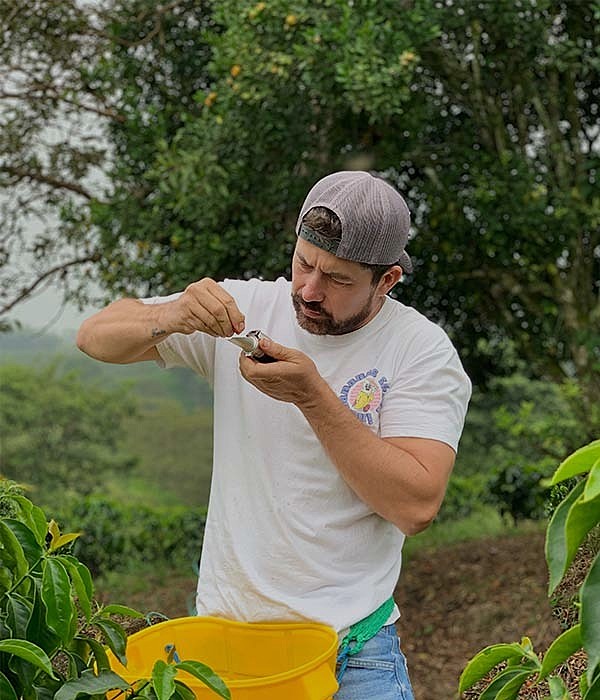
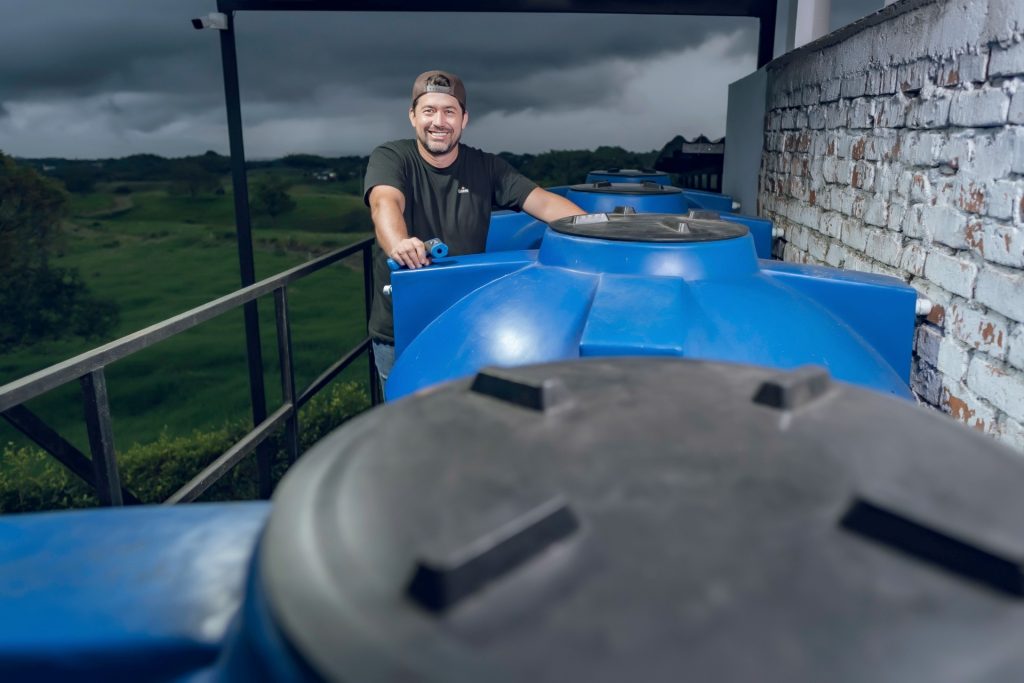
Finca Campo Hermoso is a 15-hectare farm outside of Circasia, only a few kilometers north of Quindío’s capital city, Armenia. Its owner, Edwin Noreña, is an agroindustrial engineer by trade with graduate-level studies in biotechnology. Edwin is a well-connected and highly aspirational coffee producer who focuses on pairing very specific cultivars with very specific processing methods designed to express the most surprising, memorable, and delicious coffees possible within his resources. Finca Campo Hermoso concentrates on growing a wide variety of coffee genetics, including pink bourbon, yellow bourbon, yellow caturra, bourbon sidra, gesha, and Cenicafé 1, a resistant hybrid developed by Cenicafé, Colombia’s national coffee research institute. The resulting coffees are often marketed under “El Alquimista”, Edwin’s personal brand for his microlots, which have featured in barista competitions and choosy roasters around the world (and Royal Coffee’s own inventory on an annual basis).
Processing, particularly the fermentation step, always interested Edwin because of its potential to transform raw coffee seeds into a remarkably unique sensory experience for coffee drinkers. A breakthrough moment for him was realizing that the sugary, residual liquid produced during the fruit fermentation (known as the must in winemaking) could be used again in subsequent fermentations to add natural sugars, and also serve as a solvent for flavoring agents. Over the years Edwin has co-fermented with chilis, ginger, brewers hops, and, in this case dehydrated fruit, to develop unique flavors in his microlots.
Raspberry Co-Fermented Process
You know you’re writing about a complicated process when you need to start with an abstract. Here goes. Edwin’s processing for this particular lot involved two distinct whole coffee cherry fermentations, both of which were oxygen-deprived to different degrees. The second fermentation was very long and included the use of a complex formulation of coffee cherry must (a biproduct of the first fermentation) pure glucose, dehydrated fruit and fresh raspberry pulp, all of which was blended into a solution and circulated through the coffee cherry as it sat. Finally, the coffee cherry was moved directly to raised screen beds to dry as a full natural. Each stage adds a particular bit of uniqueness to the final coffee, so that by the end the coffee is truly one of a kind in the world.
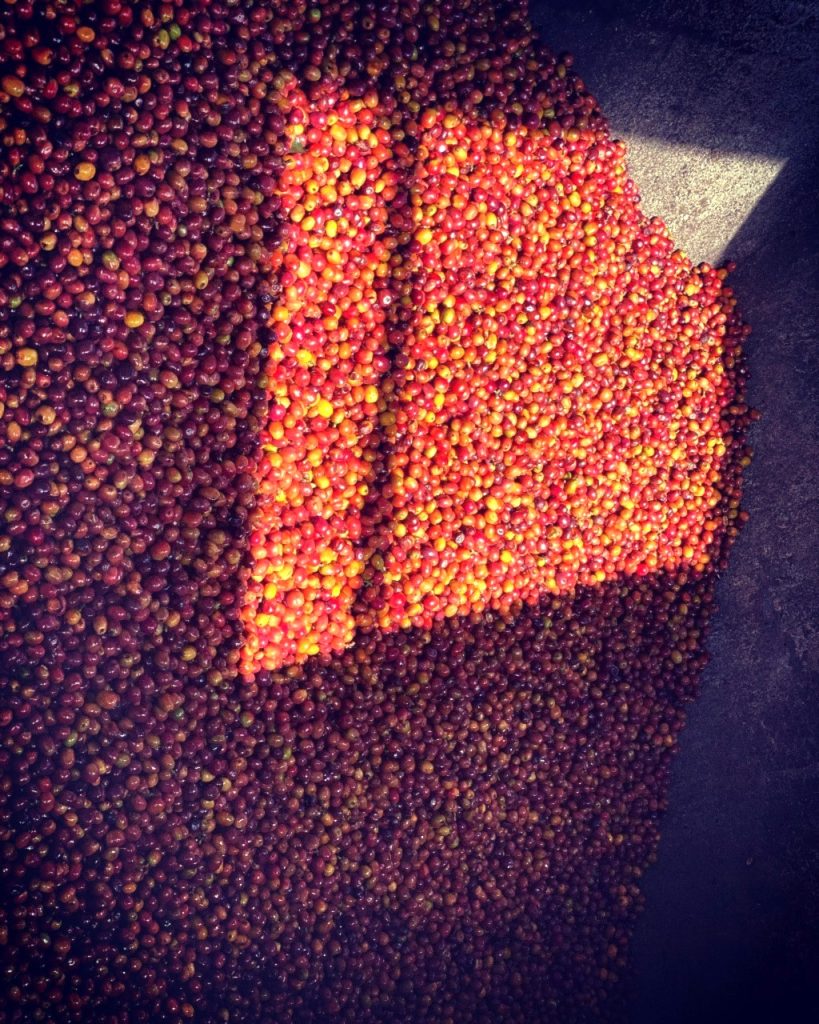
The first fermentation was a simple anerobic fermentation of fresh coffee cherry only, carefully hand-sorted for ripeness and consistency, and washed clean. This stage lasted 24 hours. During fermentations like these, even when short, the coffee fruit becomes softer, sweeter, and more acetic, while also leaching out a concentrated sticky, sugary runoff—the mossto or “must”, not unlike the must from freshly smashed grapes and skins in winemaking.
After the first coffee cherry fermentation was complete, the fermented coffee was separated from its must and packed into the fermentation tanks again. The must was then fermented on its own, along with brewer’s yeast to inoculate the process and ample quantities of both pure glucose (sugar solution) and dehydrated fruits, and fresh raspberry. The coffee spent 120 hours in oxygen-deprived fermentation, during which this fermented and flavored must was circulated through the coffee cherry every 24 hours, for 5 total circulations.
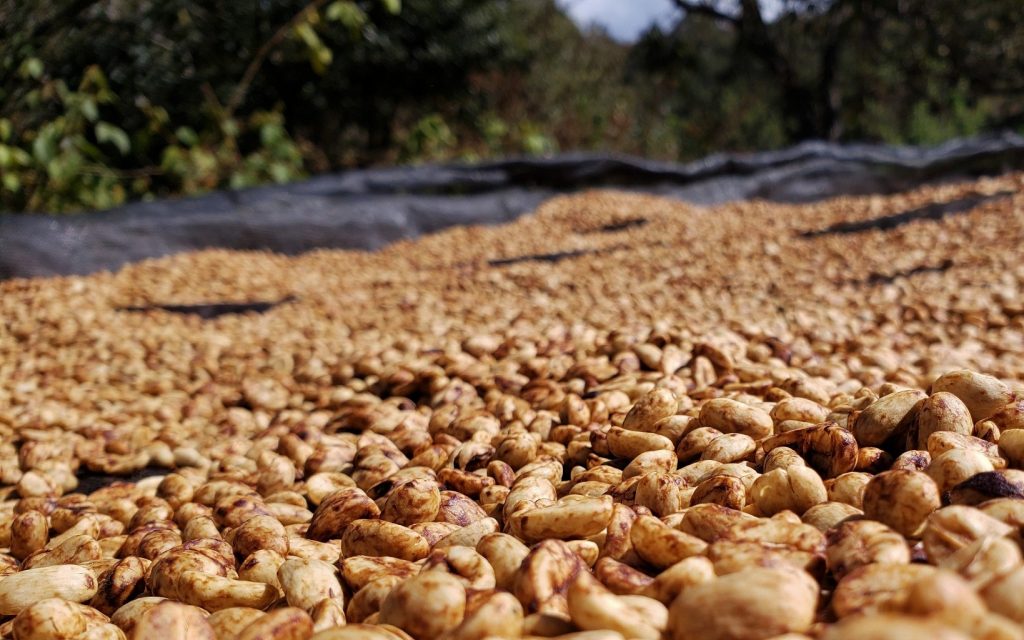
In the final step the co-fermented coffee cherry was moved, unwashed, directly to Edwin’s greenhouse to dry on raised screen beds, where it dried for 10 days as a traditional natural process coffee—with the mucilage still clinging to the parchment.
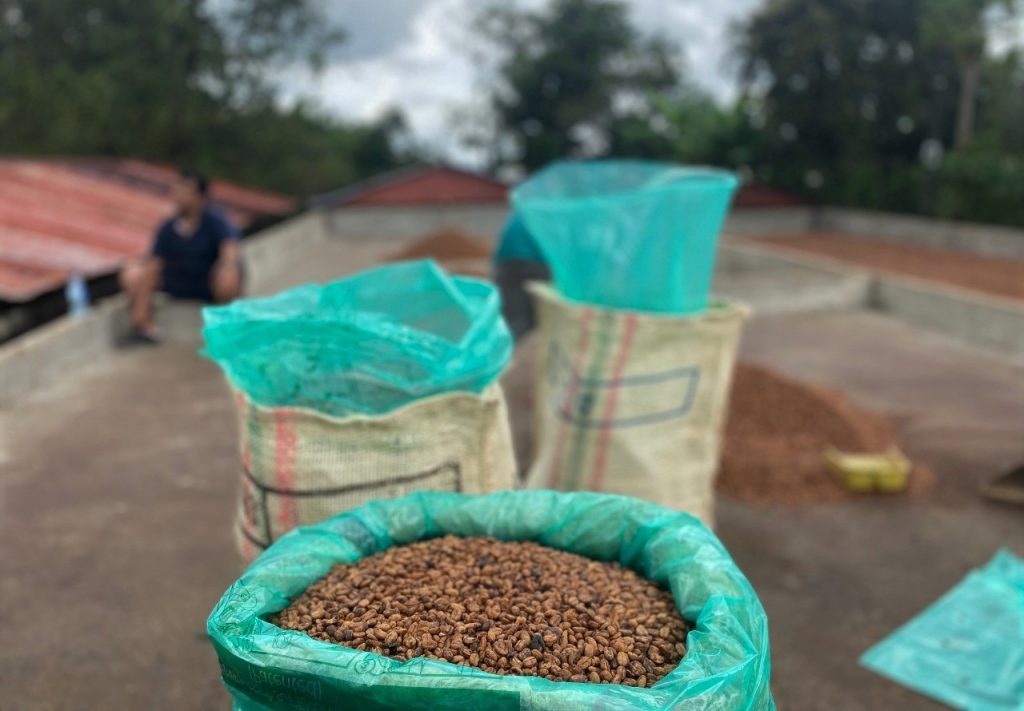
The fully dried coffee was then conditioned for 8 days in a warehouse, allowing for humidity to stabilize inside the seeds, and then moved into GrainPro bags for long-term storage, where it was cupped numerous times over the next few weeks for quality analysis.
Edwin used a high-quality cultivar here but still a very common one: caturra is considered a “classic” Colombia genetic, having dominated much of the landscape prior to the coffee rust outbreaks of the 2010s. In other words, the arabica genetics themselves are not exotic to Colombia. Rather, the achievement is in the husbandry of the trees, the harvesting, precise blend of the different cherries, and of course the very exacting processing approach created entirely by Edwin. Some “experimental” coffees scream their processes crudely in the cup; the best ones are so symphonic as to seem effortless, the way a well-made bonsai tree can be both a specimen of nature and a monument to an extraordinary amount of work, study, and concentration.
Green
Green Analysis by Chris Kornman
Wow this is not only an incredibly intense tasting coffee when it’s roasted, but insanely aromatic green as well, like pickled strawberries!
These beans are on the larger side with most falling in the 17+ range and substantial proportion at 20+, with a low density, modest moisture content, and fairly high water activity. As always, keeping the beans in the Ecotact bags and re-sinching the sack if you don’t use the whole thing is a good idea, though I don’t expect coferments to fade the way regular coffees can. A gentle touch in the roaster won’t hurt, either.
Diedrich
Diedrich IR5 Analysis by Doris Garrido
After roasting a couple of co-fermented coffees over the past days, I felt confident in my approach to this next one: a Carbonic Maceration, Raspberry Co-fermented Colombia from Edwin Norena. And I would say, it ended like a true cherry bomb in a cup.
I started the roast with a slightly low charge temperature (390F), adding gas at 100% within the first minute. From there, simply observe the coffee absorbing the heat and maintaining full gas for four minutes, dropping it at the five minutes mark. At that point, the coffee was beginning to change color, so I marked it and turned off the burners leaving only the pilot for about a minute. I wanted to slow things down and allow the sugars to caramelize gently. For this co-fermented Caturra, I looked to slow down the finish as I was afraid to take over abruptly, so I immediately added the full airflow.
I marked the first crack at 378F, although I started noticing changes in the coffee about 10 seconds earlier (without any audible pops), so I took that time into account to avoid overdevelopment. After 30 seconds of post-crack development, the cracking became livelier, and I dropped the coffee once I saw the perfect brown color I was aiming for, and with 1:25 seconds I thought it was enough.
ColorTrack readings showed a ground value of 56. My usual target is 54 or under, but conjuring this coffee’s intense processing, I was hopeful the cup would land beautifully.
The roast resulted in the cupping table in a silky and deliciously sweet profile. Although it’s a Raspberry co-fermented, the flavor leaned entirely toward cherry cola, with sweet notes of vanilla, a touch of buttery molasses, cherry jam, and bubble gum. It did not taste overdeveloped as it maintained a fresh cherry taste with extremely high aromatics.
Brew
Brew Analysis by Tim Tran
Digging into fun co-fermented coffees across a multitude of brews is always a fun delight in minutiae. The strong flavor-forward backbone of the co-ferment provides an interesting constant to contrast with the more slight shifts in flavor profile as the different brew parameters shift. From the aroma of the dry coffee alone, I already had high hopes for how fun this coffee would be to brew and even with high hopes in mind, this coffee exceeded expectations.
My brew analysis started with a low dose on a fine grind, with a fairly high ratio of coffee-to-water on a conical brewer. This proved to be an exceptionally balanced brew, providing a lot of clarity and highlighted notes of peach, black tea, and macerated cherries against the very dominant flavor of chocolate-covered raspberries. As far as clarity and depth of flavor, this brew was a strong standout, and was a testament to this coffee brewing very well at higher extraction percentages.
My favorite brew, though, was a low dose of coffee on a fine grind made on a flat-bottomed brewer. This brew came out with a lower TDS and extraction percentage of 1.23 and 18.45% respectively. This brew provided incredibly flavorful sweetness that was well balanced and rounded as far as intensity of flavors. I tasted peaches and cream, dark chocolate, basil, and of course, notes of freeze-dried raspberries.
The fun domineering flavors of dark chocolate and raspberries were an incredibly flavorful backdrop across for which other notes were able to express themselves. Across different brews, we also tasted notes of tobacco, kool-aid, and candied berries in different amounts of intensities.
This is an excellent exemplar coffee of balancing elastic flavors across strong notable flavor constants. Ultimately, I recommend brewing at a lower dose with a finer grind on a flat-bottomed brewer. We hope you have as much fun getting into this funky coffee as we did!
Related Coffee
Hops, lime, botanical, floral, and pink grapefruit
Oakland 27 Boxes
Crown Jewel Colombia Carbonic Honey Cascade Hop Co-Fermented Pink Bourbon Edwin Noreña
37702-1 – SPOT RCWHSE
Hops, lime, botanical, floral, and pink grapefruit
Spot
27 Boxes
$376.84 per box

Green apple, jolly rancher, apple, mojito, apple cider
Oakland 21 Boxes
Crown Jewel Colombia Carbonic Honey Green Apple Co-Ferment Edwin Noreña
37710-1 – SPOT RCWHSE
Green apple, jolly rancher, apple, mojito, apple cider
Spot
21 Boxes
$434.39 per box

Peach, jasmine, peach black tea, grapefruit, and peach nectar
Oakland 49 Boxes
Crown Jewel Colombia Carbonic Honey Peach Co-Ferment Edwin Noreña
37701-1 – SPOT RCWHSE
Peach, jasmine, peach black tea, grapefruit, and peach nectar
Spot
49 Boxes
$376.84 per box
Caramel, grape, jasmine tea, biscoff cookies, and melon
Oakland 7 Boxes
Crown Jewel Yemen Anaerobic Natural Sharqi Haraz Cooperative
37919-1 – SPOT RCWHSE
Caramel, grape, jasmine tea, biscoff cookies, and melon
Spot
7 Boxes
$685.69 per box