
Crown Jewel Rwanda Cyiya Murundo Washed
Lot 200 – 34736-1 – SPOT RCWHSE
Boxes 0
Warehouses Oakland
Flavor Profile Raspberry, lemonade, chocolate
Out of stock


Overview
Overview
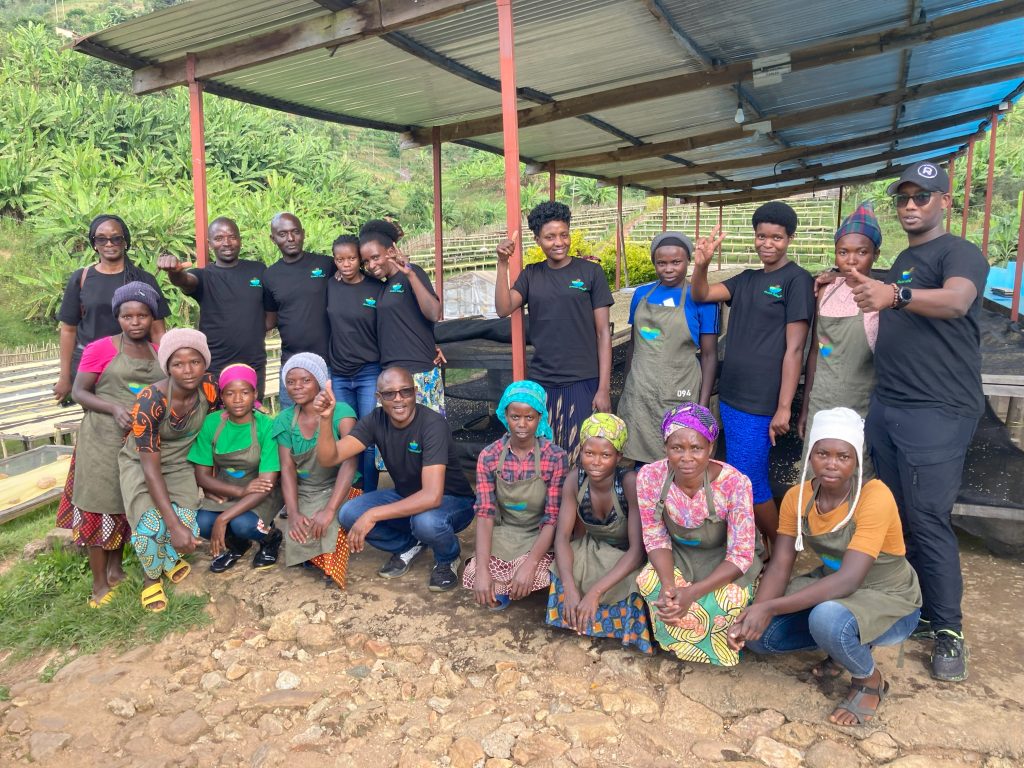
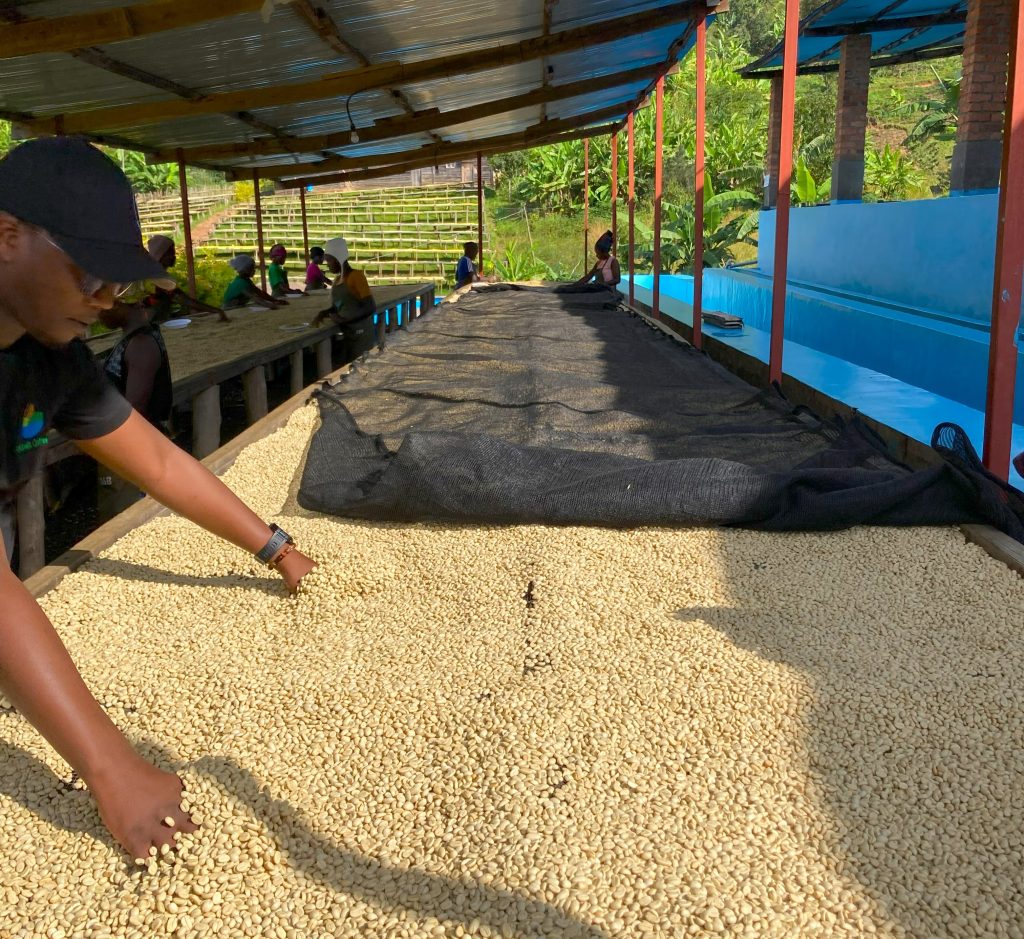
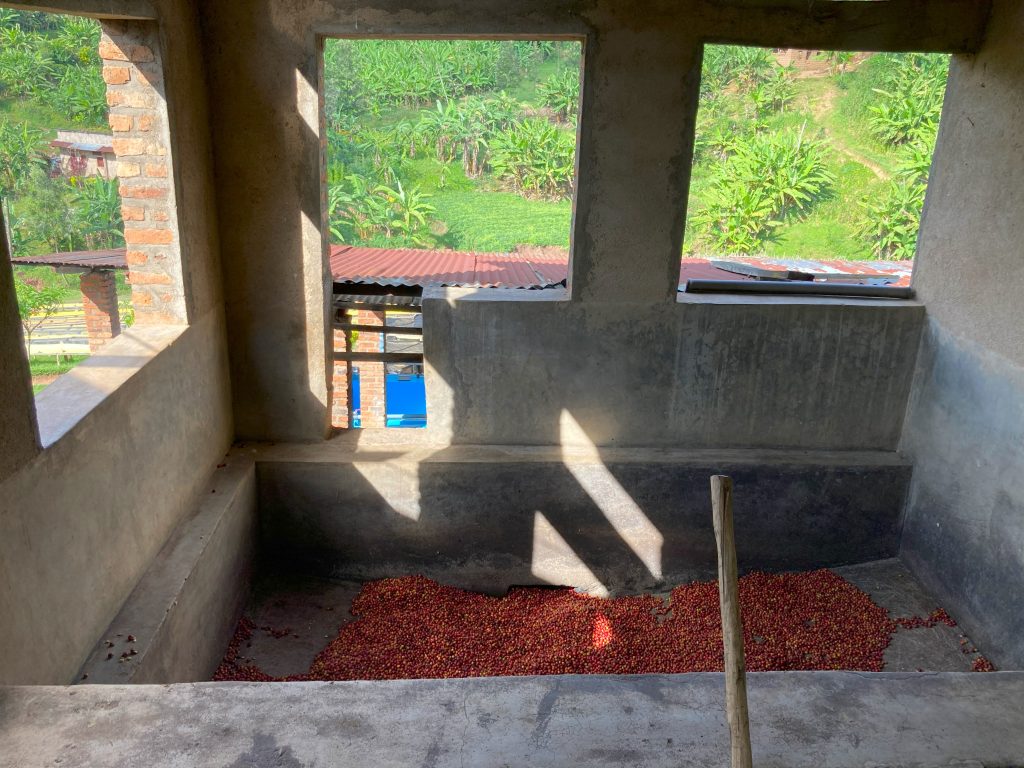
This is a triple-washed coffee from the Cyiya Community in Nyamasheke District, Western Province, Rwanda, produced by smallholders organized around Furaha Umwizeye’s farm and organization called Kivubelt.
The flavor profile is full and sweet, with prevailing notes of plum, mandarin orange, oolong tea, and browned sugar sweetness like crème brûlée.
Our roasters found the dense coffee can benefit from higher/open airflow settings and noted the loud, compact nature of first crack.
When brewed, the team found it most enjoyable at a moderate dose, with a moderately coarse grind on a conical brewer.
Taste
Taste Analysis by Isabella Vitaliano
The anticipation of tasting coffee after you have purchased it is likely a feeling you are familiar with. Will it taste the same as the offer samples? The preship samples? Months and months of waiting and a lengthy distance coffee must travel to get to origin to the appropriate warehouse. So many variables at play can impact taste upon arrival.
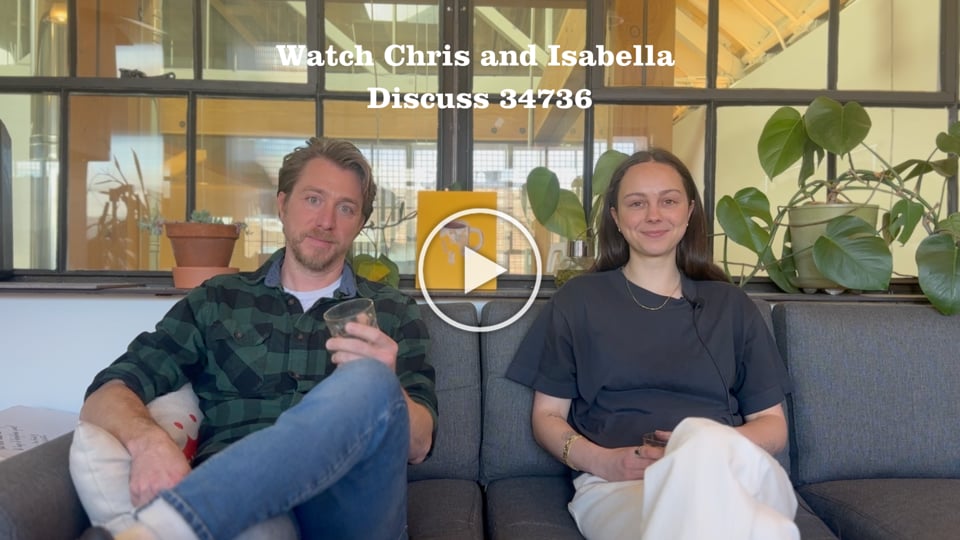
The team was working to get this coffee released asap; Chris and I were the first to taste the arrival selections. Once the discussion began about the coffees, it was clear we excited about all of these coffees, but practically giddy about one lot in particular – Cyiya Murundo
A melody of sweet plum, orange, mandarin, tart cherry and red wine make up the bulk of the flavor profile. Full and sweet, both typical for a profile from this group. The sweet fruit notes are supported by dark chocolate and a decedent crème brûlée. In the finish you’ll find notes like allspice, oolong tea and rosemary.
The team was so excited by the intricacy and the clarity of all these flavors combined. The team at Kivulbelt group have done it again. Tasting this coffee, you’ll realize why this producing group is a Crown Jewel legacy year after year.
Source
Source Analysis by Charlie Habegger & Chris Kornman
One of this year’s suite of coffees from the boutique Kivubelt group in western Rwanda, this lot comes from the Murundo Coffee Washing Station (CWS), one of two processing sites the Kivubelt company operates. Cyiya is a small community with a high elevation and distinct forest influence that contributes great potential to the coffee. Thanks to the farmers making the most of this potential, Cyiya’s coffee is annually among the top lots processed by Kivubelt.
Kivubelt was established in 2011 by Furaha Umwizeye, after returning to Rwanda with a master’s degree in economics from Switzerland. Born and raised in Rwanda, Umwizeye’s goal with Kivubelt is to create a model coffee plantation, as sustainable in agriculture as it is impactful in local employment and empowerment. The company began with 200 scattered acres of farmland in Gihombo, a community in Rwanda’s coffee-famous Nyamasheke district that runs along the breathtaking central shoreline of Lake Kivu.
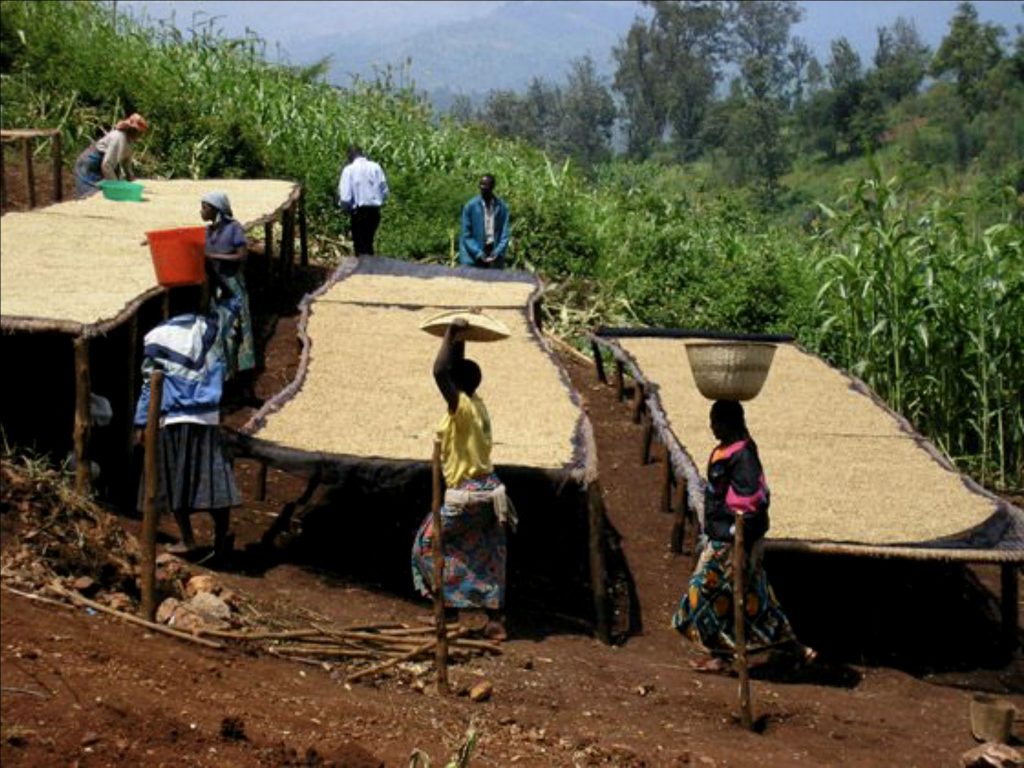
Under Umwizeye’s leadership, Kivubelt has planted 90,000 coffee trees on their estates, which now employ more than 400 people during harvest months and is a kind of coffee vocational school for local smallholders interested in improving their farming. Kivubelt has also acquired two washing stations, Murundo and Jarama, which combined not only process coffee from the company’s estates, but also that of more than 500 smallholders in the region, offering quality premiums and training programs for participating farming families. This lot from Murundo CWS was picked across March, April, and May by the station’s participating 100 local smallholders from Cyiya. Cyiya sits inland from the lake on the outskirts of Nyungwe National Forest Park, a rainforest preserve known for its gorillas, virgin canopy, and chilly, oxygen-abundant biosphere. Because Cyiya’s coffee tends to perform so well, contributing farms regularly receive 50% over the local market price for their cherry.
The Nyamasheke district in Rwanda is gifted in terroir. The cool, humid climates of both Lake Kivu and the Nyungwe Forest National Park keep groundwater abundant throughout the uniquely hilly region. Kivu itself is part of the East African Rift whose consistent drift creates volcanic seepage from the lake’s bottom and enriches the surrounding soils. Coffees from this region are often jammier and heavier than in the rest of the country. Coffee from Cyiya’s farmers in particular are honey-sweet and tend to be delicately floral, with lychee, citrus, and sweet tobacco flavors.
The history of coffee in Rwanda is complex, at times tragic, at others triumphant. Commercial arabica coffee cultivation was introduced to the region under German colonial influence as early as 1905. After WWI the Belgians had replaced the Germans, and by 1927 were “aggressively promoting coffee production.” In 1931 they formally legitimized its forced cultivation. After independence and civil war in the early 1960s, coffee had become Rwanda’s primary source of foreign currency by the middle of the twentieth century.
Overreliance on coffee caused a massive crisis with devastating consequences in the years following 1989’s dissolution of the International Coffee Agreement and resulting devaluation of the crop on global markets. Faced with a cratering economy, a foreign-backed military incursion, and sparked by the death of the country’s president and the president of Burundi when their plane was shot down over Kigali, civil war and violence once again beset the country in April of 1994. Atrocities were enacted asymmetrically along ethno-political lines. 800,000 people died in less than 100 days.
In the wake of such violence there’s little that can be said that somehow doesn’t cheapen or diminish the unmitigated tragedy of the loss of life. Yet if there’s a motif that can be held as hope in such circumstances, it’s the resilience of humanity. In the case of Rwanda, its revival happened to be aided, somewhat unexpectedly, by the very crop which had catalyzed its crisis: coffee.
Interest in the coffee sector both locally and internationally has helped propel the country into a coffee renaissance. Rwanda, one of the most rapidly modernizing countries on the continent, has rebuilt a quality-focused coffee industry by investing in training and infrastructure, and we as buyers now have an awe-inspiring reference for how snappy, mouth-watering, and kaleidoscopic the Bourbon lineage can be. Kivubelt is one example of focused entrepreneurship aimed at a very specific landscape.
You can read more about Chris’s visit to Rwanda, Kivubelt and the Murundo and Jarama washing stations on our blog.
Green
Green Analysis by Isabella Vitaliano
Rwanda typically has exaggerated on/off cycles in terms of harvest yield. This is a biannual occurrence with 2024 being another low yield year. Because there is less sorting to do, cup quality sees a slight improvement. This can be attributed to more space on drying tables and in fermentation tanks.
Density is a little bit above average at 717 Sinar and 691 free settled. Water activity and moisture content in the below average ranges. Slightly condensed at 16-17 screen size, all metrics indicate this coffee will perform well in the roaster.
Local Bourbon cultivars made their way to Rwanda in the early 20th century via German missionaries. Coffee cultivation spread to Lake Kivu and later, the rest of the Rwanda by the 1930s.
Diedrich
Diedrich IR5 Analysis by Doris Garrido
After a roller coaster of flavors and different roast styles due to the fermented coffees we received lately, I ended the year with a delightful surprise, a triple wash coffee from Rwanda. A sweet treat for the soul to start in 2025.
In this coffee we found a delightful tanginess in the first sample we tasted, and I wanted to highlight it during roasting. I thought it would make an excellent filter coffee. That’s how I’ve been preferring my coffee lately, and I secretly roast on the Diedrich for it, aiming to extract the juiciness. However, something unexpected happened, I made my gas adjustments later in the roast, closer to the caramelization stage, which altered my plans. The heat worked its magic during the Maillard reaction, and I found myself appreciating the great sweetness this coffee offered. I didn’t erase the tangy plum taste, but the crème brûlée flavor turned out just delicious, as if the sugars stopped caramelizing at the perfect point.
Being a small batch, I was careful with my charge temperature, starting at 395.8F with the lowest gas setting (30%) and observing how the turning point would push the roast. At one minute the roast was progressing faster than I envisioned, so I added just 85% of gas. A minute later I noted this wasn’t enough and increased it to 100%.
At 4:30, I lowered to 60%, and 30 seconds later, to the lowest setting of 30% again.
At cracking, the coffee was progressing a little fast, with a rate of change of 28F per minute, but it started to slow down after I initiated 100% airflow. I finished the roast, turning the pilot off a few seconds before dropping the coffee, finalizing with a temperature of 407F. I rushed to the color track since 407F was kind of a high-end temperature for a Diedrich roast. The whole bean measured 62.7, and the ground measured 57.6. Yes it was a bit dark, and I crossed my fingers, hoping I didn’t mess up the coffee. As I suspected it was a little toasty not as much as I was afraid, and at the same, I was very pleased with the complex caramelization! On the cupping table: mandarins, orange, red wine, plum, tartness, but more than anything, a very delicate and well-done caramelized sugar, a remarkable sweet cup of coffee.
This is without doubt a very balanced coffee; you can take it in any direction during roasting, and it will shine. However, I am very satisfied with the very sweet dessert-like profile I achieved in this roast.
Aillio
Aillio Bullet R1 IBTS Analysis by Evan Gilman
Unless otherwise noted, we use both the roast.world site and Artisan software to document our roasts on the Bullet. You can find our roast documentation below, by searching on roast.world, or by clicking on the Artisan links below.
Take a look at our roast profiles below, as they are constantly changing!
My introduction to Rwandan coffee was from an experienced coffee buyer, a former colleague of mine who had been in the industry for a good 15 years at the time, when I was still only beginning. At the time, Rwandan coffee was a risky proposition due to preponderance of potato, but over time it seems that producers have had their eyes on trouncing the taters. The spuds are scarce these days, and we see even more of the delicious potential that my coworker first pointed out to me back in 2010 or so.
This coffee is a dense one, and fun to roast. I started off with high heat to penetrate the dense seed, and a charge temperature of 464F to accompany my P9 power and F2 fan. A little past turning point, I increased fan to F3, then dropped power from P8 to P7 to begin slowing the roll of this roast. At 4:00 / 333F, I increased fan further to F4 since I really wanted to spend a good amount of time in Maillard. Anticipating the usual spike in rate of rise, I lowered power to P6 at 5:20 / 355F. A little before first crack, as the roast was rolling along, I thought this dense coffee could handle a good amount of airflow as its heavy structure was holding quite a bit of heat – I made the decision to increase fan speed to F5 at 6:50 / 377F. Shortly afterwards first crack started up loud and compact, with most of the drum cracking at the same time. My only other move was to increase fan to F6 and drop power to P5, which strangely enough caused a small spike in rate of change. Regardless, the roast came out delectable.
I generally get a good deal of dark dried fruit flavors from Rwandan coffees, and this one was no different. Fig and date came through sweetly and were accompanied by a creamy texture that I found to be comparable to a date shake (anyone here been to Palm Springs?). Lemon top notes and a plum or red grape-like sort of crisp acidity played well with the deeper/sweeter notes. Chris noted a touch of orange marmalade, and I couldn’t agree more.
Anticipate this coffee to play well in filter drip but also check out porous-filter or full immersion options to maintain some of the delectable texture in this coffee. No doubt this will also make a splendid espresso!
Follow along with my roast here at roast.world: https://roast.world/egilman/roasts/lMvknIawXd1ctgfRVKleT
Brew
Brew Analysis by Tim Tran
Exploring this coffee was a flavorful adventure in what ended up being a very soluble coffee. After reading of Chris’s trip to Lake Kivu in Rwanda, I was excited to dig into a coffee from such a beautiful and lush region.
To start our brew analysis, I made a 1:16.22 brew with a moderate dose of coffee at a medium grind setting on a flat-bottom brewer. This initial brew packed quite the extraction punch, clocking in a 1.5 TDS and 20.84% extraction percent. The brew yielded a very flavor-dense brew showcasing a lot of herbal and root-like notes that seemed to strongly overshadow the brew.
In a similarly moderate dose, medium grind, on conical brewer, I found a similarly high TDS of 1.47 and extraction percentage. These two brews were a good demonstration of how soluble this coffee is, with both brews completing in a fairly average drawdown time and still clocking in with fairly flavor dense brews. However, I found a better roundness of body and balancing of sweetness with the citrus acidity on the conical brewer.
Adjusting the coffee-to-water ratio in a conical brewer to 1:16.67 saw an expected increase in extraction that heightened some of the herbal elements and brought forward some softer citrus notes. While the coffee flavor was more balanced here, the density of flavor made it hard to appreciate some of the more delicate notes in the coffee.
In order to explore the more delicate notes of this coffee, I moved the grind to a fairly coarse grind while maintaining the 1:16.67 ratio and found this brew to strike a resounding balance between the sweet cherry, plum, mild citrus zest with the herbal tea florals, lemongrass and chicory notes against a silky, medium weight body. The expression of this coffee in this brew proved to be my favorite brew of the different brews I made across this coffee.
This coffee is an exploration in balancing flavor density in high solubility. Ultimately, I found the coffee to be most enjoyable at a moderate dose, with a coarse grind on a conical brewer.
Related Coffee

Orange, lemon, cranberry, vanilla, pear
Oakland 45 Boxes
Crown Jewel Rwanda Washed Jarama Kivubelt Estate
Lot 50 – 37912-1 – SPOT RCWHSE
Orange, lemon, cranberry, vanilla, pear
Spot
45 Boxes
$189.33 per box
Hops, lime, botanical, floral, and pink grapefruit
Oakland 27 Boxes
Crown Jewel Colombia Carbonic Honey Cascade Hop Co-Fermented Pink Bourbon Edwin Noreña
37702-1 – SPOT RCWHSE
Hops, lime, botanical, floral, and pink grapefruit
Spot
27 Boxes
$376.84 per box
Caramel, grape, jasmine tea, biscoff cookies, and melon
Oakland 7 Boxes
Crown Jewel Yemen Anaerobic Natural Sharqi Haraz Cooperative
37919-1 – SPOT RCWHSE
Caramel, grape, jasmine tea, biscoff cookies, and melon
Spot
7 Boxes
$685.69 per box

Green apple, jolly rancher, apple, mojito, apple cider
Oakland 21 Boxes
Crown Jewel Colombia Carbonic Honey Green Apple Co-Ferment Edwin Noreña
37710-1 – SPOT RCWHSE
Green apple, jolly rancher, apple, mojito, apple cider
Spot
21 Boxes
$434.39 per box