
Crown Jewel Sulawesi Organic Bolokan Sulotco Jaya Abadi Natural
35092-1 – SPOT RCWHSE
Boxes 0
Warehouses Oakland
Flavor Profile Raspberry, black tea, lemongrass, and cola
Out of stock

Overview
Overview
This is a minimal intervention fruit-dried “natural” coffee from Bolokan Valley in Tana Toraja region, on the island of Sulawesi, Indonesia produced by farmers organized around Rantekarua Estate managed by PT Sulotco Jaya Abadi. It is certified organic
The flavor profile is fruit-forward without being overwhelming: we tasted raspberry, black tea, lemongrass, and cola.
Our roasters found this coffee to be very versatile. It can be roasted to bring out a winey, funky profile, or kept clean and fruit-forward, depending on preference.
When brewed, the team recommends moderately high dose with a moderately finer grind on a conical dripper.
Taste
Taste Analysis
Crown Jewels sourced from Sulawesi are far and few in-between. Royal was lucky to get our hands on this lot from a group of growers organized around Rantekarua Estate managed by PT Sulotco Jaya Abadi.
You’ll notice this is a fruity cup with lots of structural depth to it. I had to keep going back to this coffee to sort out what was going on in the cup. There is an interesting weight to this coffee that comes out in the form of rum, tootsie roll and tamari. Accompanied by lots of fruit notes like blueberry pie, mango, raspberry, hard candy and tart cranberry. The contrast of the depth this coffee is capable of, along with the fruit notes make for an intriguing experience.
Doris’ analysis roast wasn’t overwhelming in its fruit notes. We did notice on the initial sample roast, it has the potential to go into the realm of boozy if you take it a little bit darker if that is what you are looking for out of a coffee.
An ideal coffee for those that want to explore what a natural coffee has to offer but are a little bit nervous to try something crazy. In further brews, the team got notes like roasted beet, chocolate mousse and whiskey-soaked cherry. We love the depth and texture of this natural Sulawesi.
It’s difficult to source from Sulawesi, mostly because logistics is such a difficult aspect to navigate. Transits that are tumultuous for coffee can lower the cup quality due to storage practices or lack of care. Because of the streamlined process from estate to export, this provides worry-free delivery and allows for even more focus on cup quality. You can tell there is an extreme amount of care taken to make sure the cup quality is up to par. Although Indonesia is one of the oldest coffee growing regions, Sulawesi is considered a niche coffee growing region sourced by specialty coffee roasters.
Source
Source Analysis by Evan Gilman
When the Dutch first brought coffee to Indonesia it was cultivated on large estates that would later become government owned after independence. The estate that occupied this land previously was built before 1928 by a certain H.J. Stock Van Dykk, and abandoned sometime during the advent of Indonesian independence (1945-1949). The Rantekarua Estate, located in the Bittuang district of Tana Toraja Regency, South Sulawesi province on the island of Sulawesi, remained mostly abandoned until Samuel Karundeng, the current Director at the mill, found the old Dutch house and coffee trees at the site in 1986. Subsequently, the government gave cultivation rights to PT Sulotco Jaya Abadi in 1987.
Since that time, the 3000-acre estate has undergone substantial renovation and become a beacon of innovation particularly in matters of land conservation. More than 500 acres have been converted into natural forest and coffee cultivation is managed with organic inputs. Manure from more than 2000 sheep grazing on the estate, and provided to local smallholders, is used as a major source of organic fertilizer. Further, Sulotco has become the site of testing for various coffee variety trials, where standout cultivars will be chosen for introduction around the estate and provided to local farmers through their nursery system. What was once overgrown and abandoned is now one of the region’s most notable coffee production facilities.
Contrary to popular belief, the original processing method for coffee throughout Indonesia, including Sulawesi, was the fully washed processing introduced by the Dutch. This makes wet hulling a uniquely Indonesian processing method, and dry processing a very new exploration for coffee producers across this archipelagic nation.
During the harvest, cherries are picked and transported to the Sulotco processing facility in the Bolokan valley. There, the cherries are floated for selection and washed. After washing, the coffee is moved to covered, raised beds and dried in successively thicker piles as the drying process proceeds. After a period of 20 days or more the internal moisture reaches 11 percent, a moisture percentage acceptable for export. The coffee is then rested as dried pods in containers for a few weeks more before hulling in order to ensure proper distribution of moisture throughout the mass of coffee. The resulting coffee is hulled and packaged for export at what we have found to be remarkably steady numbers for both moisture content and water activity. At Sulotco, all drying is done on raised beds with covers, ensuring consistent and reliable drying practices, something incredibly important for a fruit-dried coffee like this one.
With Indonesian coffees, half the battle is overcoming logistical challenges like rugged roads and unpredictable torrents of rain. The integrated process from the estate to export provides a tremendous advantage in managing quality and traceability. Sulotco’s management team is also to be credited for running a tight ship and moving coffee through what can be an incredibly demanding supply chain. In particular, Pak Immanuel for Production, Pak Darlan and Agnes Briliana for Quality Control, and Yenny Tanri for Export Management, should all be recognized for their efforts!
These efforts have paid off, as well; Sulotco placed #12 in the Inaugural Indonesia Cup of Excellence 2021 with their washed coffee. We are looking forward to seeing Sulotco rise to even greater heights in the coming years.
Green
Green Analysis
S795 was bred by the Balehonur coffee research station in India and is widely planted throughout India and Indonesia. You may not think of India as a massive coffee producing region, but they do produce a lot of coffee and there are research stations there that have bred and selected for many cultivar types over the years. This was one of the first strains found to be resistant to coffee leaf rust and was pivotal in rebuilding after the disease wiped out many arabica plants. Uniquely, it contains Liberica genetics instead of Robusta.
Catimor, another component of this blend, were first planted in Brazil in the 60’s after it was developed in Portugal. It was initially developed to create hardiness in the plant while maintaining good cup quality. Typica is also a part of this blend as it one of the first cultivar types to make it into commercial cultivation during the colonization of coffee growing region in most of the 17th and 18th centuries.
On the green alone, you’ll notice this coffee is exceptionally fruity smelling. Green specs are ideal with a moisture content at 10.7% and free settled and sinar density in the below average ranges. The water activity is slightly above average at 0.606 @ 19.68. The screen size spread is in the larger range, mostly spanning between 17-19 screen size. With this in mind, it might be good to keep an eye on the heat to help develop more sweetness. There are so many great flavors to explore. If you want something boozy, you can push the heat a bit to start but if you want a more subtle, complex, and fruity coffee, you can get that too.
Diedrich
Diedrich IR5 Analysis by Doris Garrido
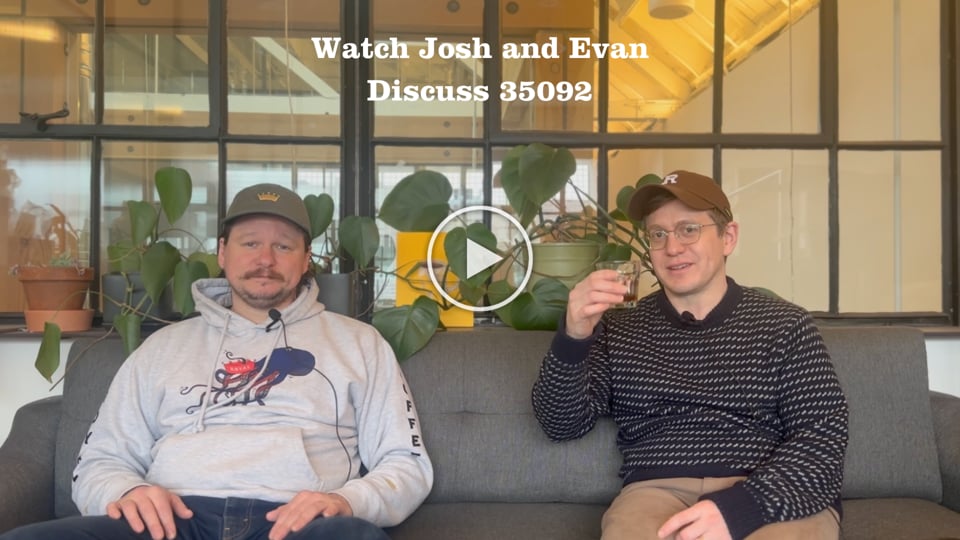
If you have taken the time to check our previous analysis of the Timor Hybrid, then you’re going to like this!
Coffee varieties are truly captivating. The family expanded so much, both naturally and with human intervention. On Timor, we saw that natural cross between Arabica and Robusta. And now, this great Arabica was crossed with Liberica, creating S288, which then became a parent of S795, popular cultivar in India and Indonesia. This coffee lineage boasts all the wonderful qualities -rust resistant, high yield, great taste – and possibly even less caffeine? In theory it seems likely, but we haven’t tested it, so I can’t say for certain. I’m hoping it does, though, because we’ve got a great one – with the help of Evan Gilman on the sourcing – that is going on the menu, and I’ll be drinking it all day without worrying about the caffeine jitters.
Anyway, I’m thrilled to introduce you to Sulawesi Organic Bolokan Sulotco Jaya Abadi Natural. It’s a blend of Catimor, Typica and of course S795. I roasted it, and it resulted in a very enjoyable cup. Now let me share how I have approached the roast.
The density reading was quite low, so I opted for a gentle approach. I wanted to concentrate all the heat at the beginning of Maillard and then gradually ease off as we approached caramelization very simple approach, but here’s the numbers:
Using only 40% of the roaster capacity, I began at 382F with 30% gas. With this the turning point was reached at 173F at 1 minute 31 seconds. After 2 minutes, I increased the gas to 70%, then to a full 100% at 3:41 minutes. Held it there for a minute and a half, then gradually reduced it back to 70%, then to 60% a minute later, and finally down to 30%.
The color change was noticeable early on around 390F. As for airflow I have opened full at 361F to help at the beginning of the smog to keep it clean. The first crack I marked at 386.7F when I heard the beans start to pop, but I noticed by eye the starting about 30 seconds earlier, which I took into consideration for the development. The development time was 1:14 minutes but with the previous 30 seconds, maybe 1:44 minutes in total. The end temperature was 412F. That’s a rather high drop temperature for my diedrich but given it is a natural process; I was just a little concerned. At the end it worked on the cupping table. The roast level was perfect!
I’ve had the opportunity of tasting this coffee a few times before, at the traders table and at the crown, and it’s incredibly versatile. You can roast it in various ways, achieving a winey, funky profile, or, as I did, aiming for a clean cup with lots of fruit flavor and just a touch of funk. With the rest of the team, I have collected the following notes during cupping: Raspberry, root beer, sarsaparilla, tamarind, tootsie roll, blueberry pie, compote, rhubarb, fresh herbs, and mango chutney. It is a very interesting coffee to enjoy and read about!
Brew
Brew Analysis by Tim Tran
Naturally processed coffee from Indonesia is exciting given the logistic challenges the environment poses, and so it’s with an excitement for fun natural coffees that I dove into this brew. And this coffee packs quite the fun punch with several nuances to flavor perfect for those looking for a complex natural coffee. As far as brewing goes, if you are someone looking to stretch extraction as far as possible, this is the coffee for you.
I started the brew analysis with a moderately high dose at a moderately coarse grind setting on a conical brewer. These brew parameters yielded a coffee with an 18.06% extraction, showcasing notes of cherry, cola, and lemon tea. Fairly delicate and light, this brew gave me an idea of the fruit-forward punch this coffee could pack.
For the next brew, I tightened the grind setting to a moderately fine grind setting, while still brewing on a conical brewer. These brew parameters bolstered the sweetness tremendously, bringing more prominently forward the notes of cherry, with underlying raspberry tea, lemongrass, and chocolate notes. Clocking in at a 21.21% extraction, this coffee packed an abundance of flavor while still preserving a balanced yet complex flavor profile.
To contrast this brew, I then moved to a flat-bottomed brewer. This brew showed a drop in the extraction percentage but still maintained a rich mouthfeel. Moreover, the brew had a touch more of a muted sweetness and brought out more cola and herbal flavor notes.
In exploring extraction further, I sought to test a brew that pushed extraction through modifying the coffee-to-water ratio. At a ratio of 17 grams of coffee to 330 grams of water, this coffee pushed towards a 20.75% extraction. This brew proved markedly lighter while still preserving a lot of the nice flavor balance found in the higher TDS brews. As a lighter, more delicate brew, the coffee took on a nice perfume note to complement the herbal characteristics.
This was a fun coffee to explore through extraction percentage. My recommendation for this coffee is at a moderately high dose with a moderately finer grind on a conical dripper. This coffee served best to me at higher extraction percentages and is best showcased targeting a higher TDS brew.
Related Coffee
Hops, lime, botanical, floral, and pink grapefruit
Oakland 27 Boxes
Crown Jewel Colombia Carbonic Honey Cascade Hop Co-Fermented Pink Bourbon Edwin Noreña
37702-1 – SPOT RCWHSE
Hops, lime, botanical, floral, and pink grapefruit
Spot
27 Boxes
$376.84 per box
Caramel, grape, jasmine tea, biscoff cookies, and melon
Oakland 7 Boxes
Crown Jewel Yemen Anaerobic Natural Sharqi Haraz Cooperative
37919-1 – SPOT RCWHSE
Caramel, grape, jasmine tea, biscoff cookies, and melon
Spot
7 Boxes
$685.69 per box

Green apple, jolly rancher, apple, mojito, apple cider
Oakland 21 Boxes
Crown Jewel Colombia Carbonic Honey Green Apple Co-Ferment Edwin Noreña
37710-1 – SPOT RCWHSE
Green apple, jolly rancher, apple, mojito, apple cider
Spot
21 Boxes
$434.39 per box

Orange, lemon, cranberry, vanilla, pear
Oakland 45 Boxes
Crown Jewel Rwanda Washed Jarama Kivubelt Estate
Lot 50 – 37912-1 – SPOT RCWHSE
Orange, lemon, cranberry, vanilla, pear
Spot
45 Boxes
$189.33 per box