
Crown Jewel Ecuador Pichincha Galo Morales Washed Sidra
Lot 1091 – 35843-1 – SPOT RCWHSE
Boxes 0
Warehouses Oakland
Flavor Profile Lemon, caramel, orange, apple, and peach
Out of stock

Overview
Overview
This is a low intervention washed Sidra cultivar coffee from Pichincha, Ecuador, produced by Galo Morales Flores and Maria Alexandra Rivera on their farm, Finca Cruz Loma.
The flavor profile is sweet, delicate, and effervescently floral. We taste rose, orange tea, coriander, custard, and strawberries.
Our roasters found the coffee surprisingly took to faster roasting styles, and encourage a steady heat application throughout the roast.
When brewed we enjoyed many recipes, but were particularly taken with coarsely ground pour-overs in flat bottomed brewers, and quick espresso extractions. The coffee has a lot to offer, and varying dosages will result in a wide variety of delicious flavors.
Taste
Taste Analysis by Isabella Vitaliano
Galo Morales is a pioneer of great coffee in many ways and one of the only producers that can consistently sell a Gesha to Royal Coffee. The farm itself is close to a century old with expertise passed down from generation to generation. A culmination of hard work, familial support and experimentation has created a legacy for Galo Morales and his family in the coffee industry.
Sidra cultivars can be hard to get your hands on in commercial cultivation. Often used in barista competitions, its distinct profile is memorable on the judging table and beyond.
A romantic feel emanates from this washed Sidra with sweet rose, ripe strawberries and orange tea notes that make up the bulk of the profile. A sprinkle of Ceylon cinnamon and coriander support those sweet notes. And to top it all off, it’s paired with flavors like laffy taffy, plum, lilac, custard and jasmine. It’s an eclectic mix of flavors that blend together beautifully.
Maybe it’s because this coffee is being released on Valentine’s day or maybe there truly is a romantic essence to this coffee. I feel some love in the air when brewing up this coffee. The red tones of strawberry, rose and raisin create the perfect mixture of tasting notes. Although the sweetness is distinct, the acidity that lingers throughout the experience is not missed; think passionfruit and kiwi.
Not one, not two, but three coffees are available from Galo Morales this year. Two Siras in different processing styles and a highly coveted Gesha. I highly recommend picking up both the honey sidra and the washed sidra to give your customer base a chance to discover what this cultivar has to offer in these different processing methods.
Source
Source Analysis by Mayra Orellana-Powell & Charlie Habegger
Sidra may have mythical origins as a cultivar, but that doesn’t make it any less incredible in the cup when produced well. For many cuppers, Sidra’s ability to express Ethiopia-like aromatics and fresh tropical fruits and herbs is what endears them to Ecuador’s coffee sector as a whole; Sidra after all was discovered here, the way Gesha was discovered in Panama, and by now the cultivar as grown in Pichincha is considered one of the best washed terroirs in the world.
The Crown was made for coffees like this one: rare and difficult to source but something of a benchmark for arabica’s potential at the same time. It’s familiar but startlingly good and immediately evokes a sense of place, the way a great Nyeri does, the fun of it being that for many this place is brand new.
Finca Cruz Loma
Galo Fernando Morales Flores, along with his wife Maria Alexandra Rivera and his extended family, grow coffee on their 350-hectare plot in the community of San José de Minas, a small town in the northwestern part of Pichincha, a short trip north of Quito. They describe their farm, Finca Cruz Loma, as a marvelous paradise whose temperate, tropical climate allows for a huge variety of flora to thrive. The family grows guanábana (soursop), corn, beans, and a plethora of citrus, all in addition to coffee.
The principal harvest months in northern Pichincha are June to September, but Galo and his family continue picking through December. Ecuador’s namesake position on the Earth’s equator means that medium-altitude coffee enjoys practically a perfect year-round growing season, often with flowering and ripe cherry sharing the same branch most months.
Coffee, though always a source of income, has recently brought a lot of recognition for Galo, Maria Alexandra, and the whole family, as winners of Pichincha’s regional quality competition and as featured producers in Ecuador’s national barista competition, both in 2019. In 2020, Cruz Loma took third place in the national “Taza Dorada” quality competition. Across residents and tourists alike Ecuador has a strong domestic market for roasted coffee (part of the reason so little is exported), which means honors such as these have no small impact on a farm’s brand.
Finca Cruz Loma has been in Galo’s family going back 80 years. His grandparents were the first owners, who passed the property to their children, and now he and his four brothers are in charge. Galo’s experience in coffee began 20 years ago working alongside his mother on the farm; he would go on to work professionally in the coffee sector, for exporters and as a project manager, before returning to full-time farming. In Galo’s words, “cultivating my coffee is an activity that allows me to apply and develop the skills and habits I’ve learned over the years; it’s also an essential resource for my family, since my wife, my daughters, and myself are all involved with the production and marketing of our coffee. Everybody in the family has a critical role in the coffee’s success.”
Processing at Cruz Loma
Together, the family oversees four unique processes for their coffee: fully washed; “anaerobic” washed, honey, and natural. This sidra separation was processed as a standard fully washed coffee: cherry was hand-picked and selectively sorted for ripeness and consistency in the field; after depulping the cherry, the parchment was fermented in open tanks for 48 hours, washed clean with fresh water, and then moved to Cruz Loma’s solar dryer where it spent 18-25 days on raised screen beds.
Many times we look to processing to help us identify attributes in the cup, or make sense of what we’re tasting. Extra fermentations, oxygen deprivation, short or long drying times—these will all suggest certain influences on the final coffee. In this case, Galo’s washed process is such a straightforward, unremarkable procedure that, delightfully, we really have no choice but to credit the powerful sidra genetics and Cruz Loma’s terroir for such a result.
Sidra’s Origins
Sidra, or “bourbon sidra” is believed to be some kind of hybrid of bourbon and typica—more specifically bourbon and an “Ethiopian landrace”, which in genetic testing unfortunately just refers to any unspecified group of arabicas believed to originate in East Africa. It’s also widely believed that Sidra was developed on Nestlé’s research estate in northern Ecuador, and then somehow disseminated after the research estate’s closure. Some still believe it was first discovered by Pichincha farmers, noticing the plant’s unique upright stature, much in the same way Gesha was first identified in Panama in the early 2000s.
Today almost all the world’s Sidra is still only grown in northern Ecuador and Colombia. The narrow growing region for Sidra, combined with its strong personality in the cup and limited terroir, has helped Sidra maintain a kind of marketplace all to itself. It doesn’t hurt that it can be this good, either.
Green
Green Analysis by Isabella Vitaliano
Sidra is not often found in commercial cultivation, but you can see it in circulation at barista championship competitions. A mix of Ecuador’s bourbon and an Ethiopian landrace hybrid, this cultivar is rare and expresses coveted flavors like botanicals and mint.
We were lucky this year to get our hands on both the washed and honey version of this coffee. Elements of cardamom, carraway, Laffy Taffy, and honey are at play here. Good things often come in pairs, and the washed and honey Sidras from Galo Morales are one of them. Be sure to pick up not just one, but both, on your way to checkout.
Diedrich
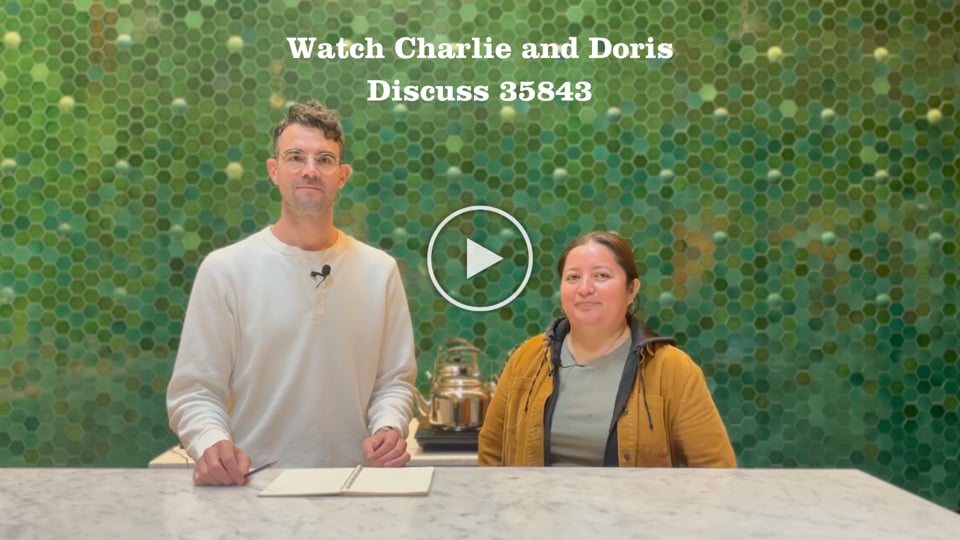
Diedrich IR5 Analysis by Doris Garrido
It’s impossible to work near Chris Kornman and not get hooked by his curiosity on coffee genetics. I’ve been getting more and more into how unique cultivars are lately. A few have really blown me away, but then I get to taste this Sidra, and it is probably not just any Sidra. Ever since I tried it, my dream coffee farm would be full of Sidra trees, to make Sidra washed, honeys, naturals, Sidra everything! And it probably already exists and is called “Finca Cruz Loma” – Galo Morales farm.
Isn’t it intriguing as a roaster when you taste something, and you keep wanting to learn more? Galo Morales’ Sidra evokes flavors I’ve tasted in Ethiopian heirlooms or Geshas. I don’t usually throw around notes like “orange blossom” and “jasmine” just like that, I’m not an easy woman! But this Sidra truly embodies them.
The good news in this roast analysis is that this coffee is incredible. The bad news is that my Diedrich roast didn’t fully reveal its beauty. Regardless of that, I’ll share the tasting notes I got, and they included: Meyer lemon, mandarin orange, mild orange blossom, orange tea, plum, pomegranate, rose, strawberry. Coriander seeds, cardamom, nougat, raisin, and caramel.
Sounds tasty right? Well let me assure you, there’s even more to showcase, more sweetness, more florals, more berries!
Here’s my approach: I used a low charge temperature with 50% airflow and waited a minute and a half before adding gas. I ran the roast at 100% gas for 2 and half minutes, then dropped to 30%. The rate of rise gradually decreased until the first crack reaching 14.4F degrees per minute at this point. I then opened the airflow fully, developed the coffee, and dropped it at 394F.
What would I do differently? Probably apply gas from the beginning, using less intensity, but for a longer time, this would likely result in a slightly shorter drying phase and faster caramelization, shortening the overall roast time and achieving a slightly higher drop temperature.
Aillio
Aillio Bullet R1 IBTS Analysis by Evan Gilman
Unless otherwise noted, we use both the roast.world site and Artisan software to document our roasts on the Bullet. You can find our roast documentation below, by searching on roast.world, or by clicking on the Artisan links below.
Take a look at our roast profiles below, as they are constantly changing!
Sidra fans, your time has come. I think I’ve only had Sidra two or three times in my life, so getting my hands on this coffee was a real treat. Dear reader, I didn’t know exactly what to expect, so I was able to maintain my sense of suspense and drama right up until the first sip. I won’t put you through the same ordeal, though, however pleasant it might have been.
I was rather aggressive with this coffee in the beginning, wanting to maintain any acids inherent in this coffee. Starting with 464F charge temperature, P9 power, and F2 fan, I only lowered to P8 at turning point. My feeling was that my adjustment to F3 fan was a touch late, at 309F / 2:55, so I took power to P7 and fan to F4 a little earlier than usual at 345F / 4:30. This wasn’t enough to quell the speedy Sidra, which kept cooking right along, not losing much rate of change. I reduced heat to P6 at 368F / 5:45, and F5 shortly afterward, just before a somewhat-early first crack at 380F / 6:38. I was able to get 18% post-crack development in this coffee, and dropped it at 395F / 8:09, a fairly quick roast that looked darker coming out of the roaster than I was expecting. The early crack and the color of the coffee even reminded me a bit of a Kenyan coffee. But what of the cup?
This coffee has the clearest expression of dried fig and date that I’ve ever experienced. Super sugary dried fruits, with all the tartness of a bourbon-soaked cherry. Lasting and curiously herbal finish laced with a peachy mango top note. I found myself with a 1000-yard stare, thinking about how this coffee should complement the pastry I was eating it with, and how the Sidra just put the pastry to shame. And a raspberry-filled cinnamon donut bundt cake isn’t anything to scoff at, either.
Drink this coffee by itself, made with whatever preparation you enjoy most. Pairing this coffee with something is just a recipe for making the other thing look bad, however good it might be in actuality.
Ikawa
Ikawa analysis by Isabella Vitaliano
Our current Ikawa practice compares two sample roast profiles, originally designed for different densities of green coffee. The two roasts differ slightly in total length, charge temperature, and time spent between color change in first crack. You can learn more about the profiles here.
This Sidra represents a seamless execution of cultivar and processing method by Galor Morales and his team.
The light density roast was creamy with notes of chamomile and sweet tea. A touch subdued, but enjoyable nonetheless. On the high density roast it was sweet, crisp with notes like tart cranberry and cherry.
Be sure to try out the high density roast profile on the ikawa for this coffee. Sweet, crisp and soft: an amalgamation of all of the best things in a coffee.
Brew
Brew Analysis by Marie de Courcy
There’s a lot of excitement around the Sidra variety from Ecuador. Galo Morales has produced an excellent coffee that is very pleasant and flavorful in the cup. This washed process coffee yields rich sweetness, citric acidity and mild savory/creamy notes. This coffee performs well with a couple different recipes. With coarser grinds one gets more nuanced flavors and finer grinds for something that can pack more of a punch.
I started on the V60, using a moderate grind with a dose of 19g and a 15.79 ratio of coffee to water. This resulted in a very flavorful, robust cup, giving notes of caramel, milk chocolate, lemon zest and green grape. A perfectly sippable cup, but the extraction was on the higher side and with a bit of muddiness. The coffee still retained a delicate mouthfeel.
After a few tests I switched to the Kalita Wave, using a coarser grind with the same ratio of coffee to water as before. The brew resulted in a lighter extraction, bringing the more subtle flavors of this cup to life in a delightful way. Some violet-like floral notes started to shine through with a beautiful full mouthfeel. The citrus remained while also developing those sweeter notes of caramel and milk chocolate into something more akin to toffee and almond butter.
I recommend a coarse grind with a flat bottom brewer for this coffee to highlight the fruit and florals of Sidra, but feel free to play with something conical at a tighter grind for a bit more punch, highlighting the depth and sweetness of this coffee.
Espresso
Espresso Analysis by Joshua Wismans
Some might call Sidra the crown jewel of Ecuadorian coffee varietals. I’d call this coffee the crown jewel of my espresso-loving heart. This washed Sidra from the legendary producer Galo Morales captures everything we love about a refined washed espresso – great sweetness, crisp acidity, and a complementary florality. Both of our recommended brews utilize a faster brew time, as longer brew times bring out more black tea tannins than we prefer.
Our first profile utilized a higher dose and yield. At these parameters, we found a great cherry-lime acidity balanced by a great sugar cane sweetness. Also in the shot was a wonderful Jamaica tea note that added a wonderful complexity. We’d recommend this profile who like their espressos a touch lighter, delicate, and bright.
Our second profile highlights the effect of a finer grind and lower dose at 18 grams, with a reduced yield to match. At 18 grams in and 37 grams out, with a wildly fast brew time of 22 seconds, we had our favorite shot of this coffee. The finer grind brought out a more complex and rounder sweetness highlighting fig jam and brownie, along with lemon curd and lavender. A truly exceptional shot of espresso
Overall, this coffee is not withholding. You can keep your espresso times quick and explore various doses to bring out different attributes in the coffee.
Related Coffee
Hops, lime, botanical, floral, and pink grapefruit
Oakland 27 Boxes
Crown Jewel Colombia Carbonic Honey Cascade Hop Co-Fermented Pink Bourbon Edwin Noreña
37702-1 – SPOT RCWHSE
Hops, lime, botanical, floral, and pink grapefruit
Spot
27 Boxes
$376.84 per box
Green apple, jolly rancher, apple, mojito, apple cider
Oakland 21 Boxes
Crown Jewel Colombia Carbonic Honey Green Apple Co-Ferment Edwin Noreña
37710-1 – SPOT RCWHSE
Green apple, jolly rancher, apple, mojito, apple cider
Spot
21 Boxes
$434.39 per box

Peach, jasmine, peach black tea, grapefruit, and peach nectar
Oakland 49 Boxes
Crown Jewel Colombia Carbonic Honey Peach Co-Ferment Edwin Noreña
37701-1 – SPOT RCWHSE
Peach, jasmine, peach black tea, grapefruit, and peach nectar
Spot
49 Boxes
$376.84 per box
Caramel, grape, jasmine tea, biscoff cookies, and melon
Oakland 7 Boxes
Crown Jewel Yemen Anaerobic Natural Sharqi Haraz Cooperative
37919-1 – SPOT RCWHSE
Caramel, grape, jasmine tea, biscoff cookies, and melon
Spot
7 Boxes
$685.69 per box