
Crown Jewel El Salvador Natural Sudan Rume Eduardo Figueroa
37102-1 – SPOT RCWHSE
Boxes 0
Warehouses Oakland
Flavor Profile Apple, cola, sweet basil, cherry, and pomegranate
Out of stock

Overview
Overview
This is a minimal intervention natural Sudan Rume variety coffee from Santa Ana, El Salvador, produced by farm manager Eduardo Figueroa on the Pacas family’s farm, El Retiro.
The flavor profile is sublimely sweet and satisfyingly seasonal with a creamy body. We taste pomegranate and persimmon, sweet basil, and cocoa powder.
Our roasters found that a soft, gentle approach works best for this coffee but don’t hesitate to push for caramelization.
When brewed, this coffee shows impressive versatility across brewers and profiles. With a flat-bottom brewer, use a finer grind for a full-bodied, sweet cup. With a conical brewer, use a coarser grind to highlight the fruit and delicate acidity characteristic of the Sudan Rume varietal.
Taste
Taste Analysis by Isabella Vitaliano
In such a tumultuous time to be a green coffee buyer, this coffee will soothe all your fears away.
Sudan Rume has grown quite the reputation over the years, known for its complex savory and equally sweet elements, the people just seem to be coming back for more. Initially only seen in coffee competitions, the growth of small commercial cultivation is evident; we see this type offered more from producers and coffee roasters alike.
Sublimely sweet, there are flavors like sweet basil, persimmon, pear and orange marmalade. It edges on the more subdued side in some roasts but also has the potential to bring out delicious flavors of pomegranate, umami, rose hip, cocoa powder and rosemary. Sounds like the perfect ingredients to make a delicious seasonal pastry? I know it’s easy to get caught up in flavors of the season, but these flavors do feel prominent and pair perfectly with any winter or fall recipe. Creamy, tea-like, and decedent all in one go, this coffee brings us a delicious experience of a washed, specialized cultivar from Central America.
It’s been quite a while since we have had an El Salvadoran coffee on the menu, and the team is excited to welcome this to the list. It has the origin, it has the arguably trendy cultivar and the cup profile to match. Sounds like a trifecta to me. Coffees like these need little marketing, you just have to taste the amalgamation of mulberry, lime and cola to know what I’m talking about.
Source
Source Analysis by Chris Kornman
This is the first Salvadoran Crown Jewel we’ve featured in many years, and the country’s exuberant return to the menu was not without a little drama… a November release, you might’ve noticed, is a tad bit late in the year for a coffee which was harvested in February. Consolidating small lots of fancy coffee from a new-to-us producer, into an exportable quantity, from a region Royal only secures a small amount of coffee annually, ended up taking us a little longer than expected to move. Fortunately, vacuum packed at the dry mill, the coffee is no worse for the wear.
Sudan Rume
I’m always excited at the prospect of tasting Sudan Rume, it’s an especially thrilling variety selection for the history/botany enthusiasts in the crowd, even more so as when it’s carefully harvested and processed it is extremely delicious. Some folks like to compare the cultivar to Gesha, which I think sets some unfortunate expectations… it’s not that the variety can’t be floral—it certainly can—it’s just not always the primary defining characteristic.
The origins of the variety are, as the name suggests, Sudanese—South Sudanese to be specific. In 1941, in the Boma Plateau of what is now South Sudan, an economic botanist named A. S. Thomas documented the selection of coffee trees from the Rume area from the remnants of a wild population (one of the only wild populations outside Ethiopia’s modern boundaries and now a dwindling but still relevant region of intense genetic diversity, making it one of the presumed evolutionary origins of the entire Arabica species). These trees were taken to research stations in Uganda, Tanzania, and to Scott Labs in Kenya, and eventually to Costa Rica. Rarely grown in commercial practice, informally documented descendants of Sudan Rume (or Rume Sudan as it’s often written) are used to varying degrees as “ingredients” in hybrids, such as Kenya’s Ruiru 11 and Batian, and Central America’s Centroamericano.
Like Gesha, Sudan Rume hid under our noses for decades. Unlike Gesha, it got early recognition as a delicious variety, and instead of targeting it for high profile auctions of fancy tiers of bespoke coffee—which didn’t really exist at the time of Ruiru’s development in the 1970’s and 80’s — it was hybridized with more productive varieties to add flavor, the genetic equivalent to adding a sprinkle of natural Ethiopia to a Brazil-based espresso blend.
So, when we were offered this miniscule harvest, just 264 pounds of finished green coffee, and tasted it, we were very excited. The variety doesn’t come across our cupping tables very often, and to pair that with its iconic Salvadoran origins gave us two extraordinary reasons to secure it for our Crown Jewel customers. Also, importantly, it is delicious.
Santa Ana, The Pacas Family, and El Retiro
Santa Ana is by far the most recognizable and coveted coffee growing region in the country of El Salvador, with fields planted and harvested on and in the shadow of a sporadically active stratovolcano of the same name. Coffee has been planted in the region for well over two centuries, though coffee’s importance to El Salvador’s economy has waned in the years since its heyday in the early 20th century. (An excellent recent book on the history of coffee in the country, Coffeeland: One Man’s Dark Empire and the Making of Our Favorite Drug, is well worth the read, if you’re interested in learning more.)
Here in Santa Ana, Finca El Retiro was founded in 1927 by Fernando Alberto Pacas. El Retiro is now in its fourth generation of Pacas family ownership. It is not a big property, just under 19 hectares, but is intensely focused on quality, and specializes in Sudan Rume production.
That name—Pacas—probably rings a bell for some of you. It is also the name of El Salvador’s first major, unique contribution to Arabica genetics, in the form of a dwarf Bourbon mutation that occurred on the family’s farms in the 1940s (coincidentally around the same time as Sudan Rume’s discovery half a world away). While Pacas now counts for purportedly nearly a quarter of the coffee plants in the country, the cultivar’s giganto-hybrid progeny Pacamara usually gets all the attention despite its smaller agronomic impact.
El Retiro farm manager Eduardo Figueroa was responsible for the production of this tiny lot of coffee, and chose to process it in the most traditional, lowest-intervention method possible, perhaps a nod to the ancient genetics and original methods of preparation (predating its documented “discovery”) undertaken by the original denizens of Arabica’s origins.
Green
Green Analysis by Isabella Vitaliano
Sudan Rume is typically an ingredient in making hybrids and traditionally has not been used in commercial cultivation. It has been slowly gaining traction in the specialty world, and increasingly we have had the opportunity to release this cultivar as a Crown Jewel.
The majority of the coffee screen size is between 18-16. Slightly smaller beans, with a little bit above average density. Moisture content and water activity are both ideal, though slightly above average ranges. We love this coffee for its range. It can be a complex and subdued coffee or something that is bright, aromatic, and a bit shinier.
Diedrich
Diedrich IR5 Analysis by Doris Garrido
I am very pleased to have the opportunity to roast this exceptional variety from El Salvador: Sudan Rume.
The first thing to note is that this is a very soft and delicate bean. I mentally compared the roasting approach (at least the drying phase) to how I handle the Gesha coffee, since this coffee has had a similar journey as Geshas and is a delicate bean too. Having a single Variety lot is a rare treat, last time I got to have a Sudan Rume was from Brazil. Another important factor was its processing: this is a Natural process coffee.
The resulting green bean density measured, Sinar 666 grams per litter, which I flagged as low.
Knowing this is a soft bean and having observed that my arrival sample had a tendency to run away from me (ending up a bit darker than intended, but showing great caramelization potential), I developed a cautious plan for the production batch.
I preheated the Diedrich Drum to 390F and charged the batch. Anticipating the softness of the beans, I closely monitored the temperature leading up to the turning point (TP). Since the TP ended a bit high, I decided on a low initial heat application: 70% gas. After 4 minutes into the roast, I realized I didn’t have enough energy, and my drying phase was going to stall. Immediately ramped up the gas to 100% for only 30 seconds, then cut it back to the lowest 30% gas at 291F just before the color changes. I engaged in full airflow at the 6:00 minute mark and just waited for the first crack.
The first crack occurred at 381F. I developed the coffee for 1 minute and 39 seconds, with an end temperature of 394F.
Based on my sample roast, I was expecting a hint of funkiness in the finish. Instead, the initial flavors for me were more like milk chocolate, chamomile, orange marmalade, and I was expecting a bit more intense and complex flavors. As a roaster, I was momentarily disappointed with my approach -I thought I had baked the natural (I was exaggerating but I know I was 100% my fault!) I personally prefer elegant delicate fine chocolate over heavenly funky profiles, but I was fearing I had washed some flavors.
However, a couple of days later, I tasted a batch brew of this coffee prepared by Chris Cornman and my fears were gone! The flavors were incredibly open and vibrant! I could now distinctly taste dried date, caramel, hazelnut chocolate, butter and milk-like texture, along with notes of pear, persimmon and grapefruit I hadn’t perceived initially.
My final suggestion for this coffee is to opt for a soft and gentle approach, but don’t hesitate to push for caramelization. Just keep a close eye on the roast so it doesn’t run away from you.
Aillio
Aillio Bullet R1 IBTS Analysis by Evan Gilman
We use the RoasTime app and roast.world site to document our roasts on the Bullet. You can find our roast documentation below by searching on roast.world, or by clicking on the link below. Take a look at our roast profiles below, as they are constantly changing!
It’s not so often that we get a Sudan Rume coffee in house, so I was enthusiatic to try this one out on the Bullet. On Doris’ recommendation, I took this coffee gently through its first stages, and focused on trying to get some decent post-crack development.
This coffee is not as dense as some of our other offerings, but don’t let that turn you off to roasting it up on a smaller roaster. With gentle heat application and attention to this coffee as it heads past Maillard and into first crack, you’ll get a tasty roast.
I started off with 455F charge temperature, which is a bit lower than my current standard. I even gave a bit of soak time by starting off with P1 heat application, and only increasing once I saw the IBTS temperature begin to be measured on the graph. I began with F2 airflow, and increased to F3 at turning point, holding P8 a bit further and engaging P7 for a touch at peak rate of change, then revising quickly to P6 as I recalled Doris’ suggestion to take it easy with this coffee. I allowed the coffee to roll through yellowing and slowly gain heat, only engaging F4 once I could see the coffee really coasting gently into late Maillard. Crack was super soft on this coffee, so keep your ear to the roaster. I nearly missed it!
Post-crack, I increased airflow to P5 and really let this coffee coast through development.
All in all, I felt like I may have dragged this roast out a bit longer than it needed to go, but the flavors in the cup were nice regardless. Plenty of dark chocolate, date, and dried cherry notes came through, and while this isn’t your typical Sudan Rume profile, there’s tons of sweetness here. I want to brew this coffee with a French press and eat a donut alongside, preferably a maple-glazed old fashioned.
One last addendum: be sure to clean your chaff canister after roasting this coffee! It’s very chaffy, and this will add up quickly over the course of only two or three roasts. Happy Roasting!
You can follow along with my roast here at roast.world: https://roast.world/egilman/roasts/vbcVfSg1Juhhnynmp_CuM
IKAWA
Ikawa Pro V3 Analysis by Isabella Vitaliano
Our current Ikawa practice compares two sample roast profiles, originally designed for different densities of green coffee. The two roasts differ slightly in total length, charge temperature, and time spent between color change in first crack. You can learn more about the profiles here.
This coffee can be a bit delicate, and I was curious to see how it performed with these two roasts. On the high density roast it was sharp with key lime flavors but a bit empty overall for the profile. The low density roast felt full, delicate, and with a decadent texture. I got flavors of plum, rose, hibiscus, soft chamomile, and cashew butter. Intricate layers of flavor in this coffee create a beautiful painting of the type of high quality coffees available from El Salvador.
You can roast your own by linking to our profiles in the Ikawa Pro app here:
- Roast 1: Low Density Sample Roast
- Roast 2: High Density Sample Roast
Brew
Brew Analysis by Joshua Wismans
As much as we enjoy bringing new and exciting producers to the Crown Jewel menu, it’s always a pleasure to bring some classics to the menu. The Pacas family are legends in El Salvadoran coffee, and we’re honored to finally feature one of their coffees. This Sudan Rume offers a beautiful combination of terroir and varietal, showing versatility with a number of brew styles.
The first brew we found to really showcase what this coffee has to offer was brewed on a flat bottom brewer, with a slightly finer grind and a moderate dose. The TDS came in a touch higher at 1.41, with a flavor profile of raspberry, sweet basil, and creme brulee. It was a beautiful cup, that was full in body yet kept some really wonderful fruit sweetness and acidity.
The second brew we enjoyed was on a conical brewer, utilizing a coarse grind and maintaining the moderate dose (a ratio of 1:15.79). Intriguingly, the TDS came in only slightly lower than our first brew with 1.39. With this recipe, the cup was more delicate, with more pomegranate, melon, and maple syrup.
Having a more soluble coffee like this can lend to it’s versatility in brewers and profiles. When using a flat bottom brewer, use a finer grind for a nice full-bodied cup with tons of sweetness. When using a conical brewer, utilize a coarser grind to highlight the fruit and delicate acidity that comes with the Sudan Rume varietal.
Espresso
Espresso Analysis by Tim Tran
This coffee is a rare intersection of a number of different touchpoints, and it’s exciting to dig into a Sudan Rume coming out of El Salvador for the fun cross-section of flavor in terroir and cultivar. And of course, that’s before digging into processing impacts on flavor!
I found that I enjoyed this coffee as espresso most with recipes that pushed for higher extraction. From just opening the bag, I was already overwhelmed with pleasant nutty aromas that I was hoping to find in the cup. This coffee did not disappoint in highlighting some of the defining characteristics associated with Sudan Rume and natural-processed coffees.
My favorite recipe was brewed at a recipe with 20 grams of coffee to 44 grams of espresso, in 34 seconds. This espresso showcased notes of nutmeg, hazelnut, cranberry and dates. The intensity of the dose gave it a rich textural body. All-in-all, it was like a fruity Ferrero Rocher in espresso form, a scrumptious treat!
My second favorite recipe was a dose of 17 grams of coffee to 40 grams of espresso, in 23 seconds. This recipe opted to extend extraction by ratio, rather than by fineness of the grind, and while the flavors balanced differently, the espresso was nonetheless delicious! I tasted notes of lemongrass, cacao, berries, and hazelnut.
The espresso proved to have quite a bit of zip and brightness that really came into striking balance at the more heavily extracted profiles. Overall, the flavors really meshed together and were a treat to brew. Ultimately, my recommendation is to opt for recipes that push extraction. I found delicious recipes at both ends in terms of coffee yield, but it was really focusing on pushing extraction either through grind or ratio that I landed on flavor profiles that presented, in my opinion, as the tastiest. We hope you enjoy this treat of a coffee!
Related Coffee
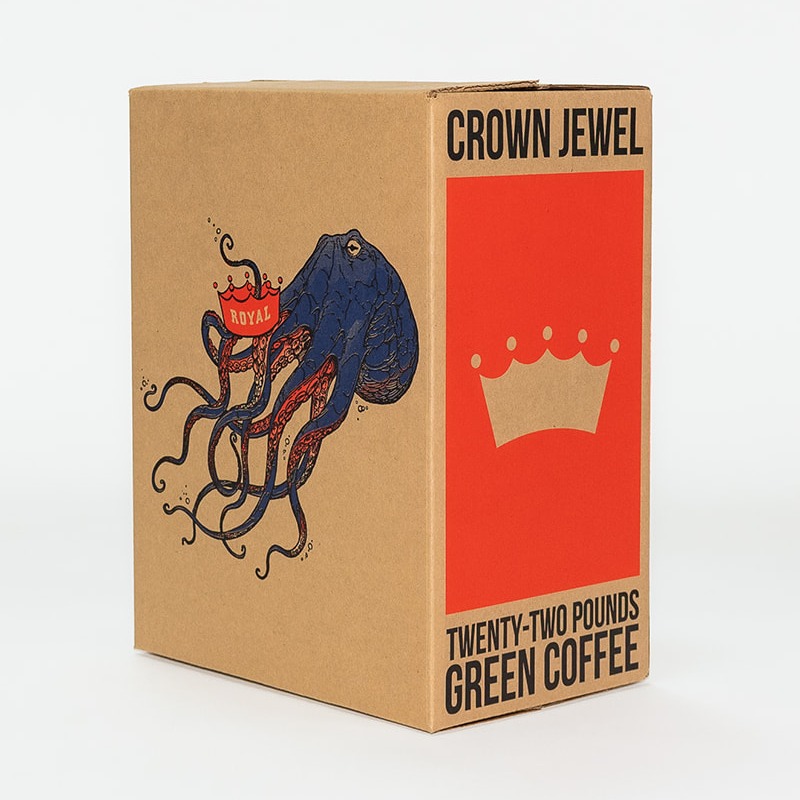
Hops, lime, botanical, floral, and pink grapefruit
Oakland 27 Boxes
Crown Jewel Colombia Carbonic Honey Cascade Hop Co-Fermented Pink Bourbon Edwin Noreña
37702-1 – SPOT RCWHSE
Hops, lime, botanical, floral, and pink grapefruit
Spot
27 Boxes
$376.84 per box
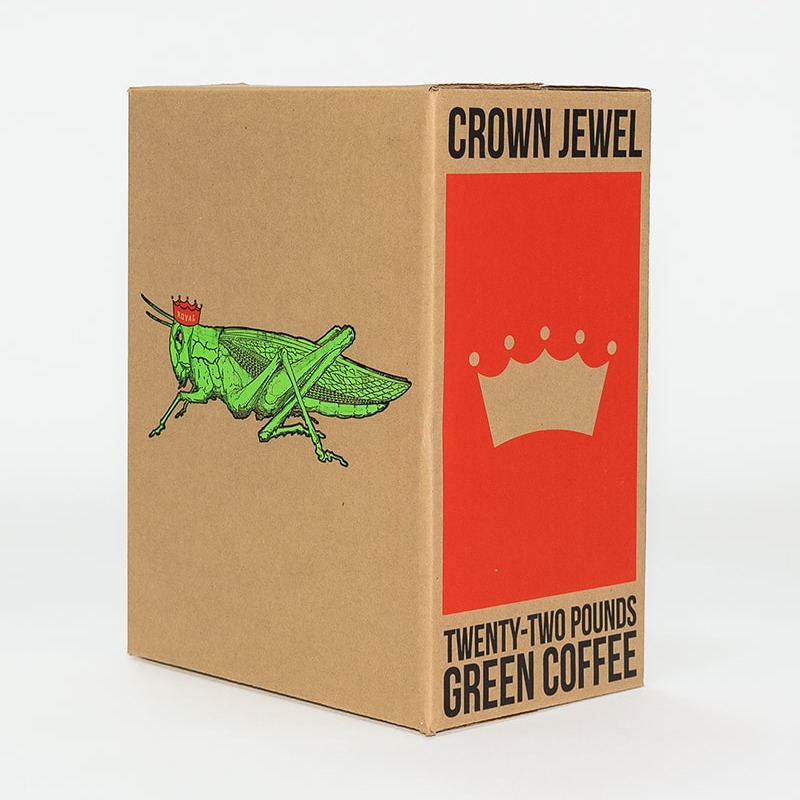
Caramel, grape, jasmine tea, biscoff cookies, and melon
Oakland 7 Boxes
Crown Jewel Yemen Anaerobic Natural Sharqi Haraz Cooperative
37919-1 – SPOT RCWHSE
Caramel, grape, jasmine tea, biscoff cookies, and melon
Spot
7 Boxes
$685.69 per box
Green apple, jolly rancher, apple, mojito, apple cider
Oakland 21 Boxes
Crown Jewel Colombia Carbonic Honey Green Apple Co-Ferment Edwin Noreña
37710-1 – SPOT RCWHSE
Green apple, jolly rancher, apple, mojito, apple cider
Spot
21 Boxes
$434.39 per box

Orange, lemon, cranberry, vanilla, pear
Oakland 45 Boxes
Crown Jewel Rwanda Washed Jarama Kivubelt Estate
Lot 50 – 37912-1 – SPOT RCWHSE
Orange, lemon, cranberry, vanilla, pear
Spot
45 Boxes
$189.33 per box