
Crown Jewel Tanzania Natural Simba Neel & Kavita Vohora Karatu District
36522-1 – SPOT RCWHSE
Boxes 0
Warehouses Oakland
Flavor Profile Plum, black tea, nectarines, Milky way bar, and chocolate
Out of stock

Overview
Overview
This is a fermented natural “Simba” variety coffee from Karatu, Tanzania, produced by siblings Neel and Kavita Vohora on their Gaia Farm.
The flavor profile alludes to the Ethiopian origin of the cultivar, with a plethora of stone fruit sweetness and hints of sweet florality and pleasant herbaceousness. It’s dessert-like with “main character energy.” We taste plum, black tea, nectarines, and Milky Way and chocolate.
Our roasters preferred the cleanliness of profiles with lower charge temperatures and gentle development after first crack.
When brewed, we liked low extraction percentages obtained with high-dose and coarsely ground pour-overs, translating similarly to up-dosed and high-yield espresso shots.
Taste
Taste Analysis by Isabella Vitaliano
The brother and sister duo Neel and Kavita Vahora have done it again with their highly skilled team to bring you another fantastic micolot. This will one the last releases from the Gaia farms and if you don’t get this one, you’ll have to wait a whole other year! Simba is a new cultivar coined by the estate to identify the indigenous Ethiopian landrace they grow on their farm. The name is reminiscent of lion king and in Swahili means ‘lion’.
From plum to blackberries and peaches there is a plethora of stone fruit in this coffee. Sweet Werther’s caramel and berry gummy bears make up a bulk of the sweet tones of this coffee. Something I especially enjoyed about this cup is it’s slight savory quality, it’s not quite as savory as say a Kenyan coffee but it does have an element of peppercorn or bay leaf that sort of reminds me of a the Sidra cultivar. If you are unfamiliar with that profile, it is explicitly dynamic in its savory elements, depth but acute brightness. The contrasting elements make it intriguing and kind of gives me a similar feeling to this cup.
I would watch out for roasts that are a little bit on the longer side as it can tend to dry out the flavor profile of this coffee. There are also some brews that Tim ran in the brew analysis that dried out the coffee a little bit but this can be avoided with a little attention and a flat bottom brewer.
I am not sure if its just because both of the names start with ‘S’ or if there is really something here but I do find this coffee reminding me of a Sidra in a way. To me, Sidras are highly complex with really deep flavor tones that don’t go anywhere near your classic tomato notes but rather in the field of caramelized fennel or roasted carrots. This paired with a complex sweetness makes such an interesting cup to taste but not necessarily a crowd pleaser. I think this coffee is one step over into the crowd pleasing territory in that it is reminiscent of those flavors but less savory and contains more plum and custard like sweetness.
Source
Source Analysis by Chris Kornman
Under the watchful guidance of sibling team Neel and Kavita Vohora, the Edelweiss and Gaia farms have begun to blossom from well-managed estate farms, spanning 1000 acres across multiple ridges of the Ngorongoro caldera in northern Tanzania, into an innovative and genre-defying coffee enterprise. I’ve worked with Neel and Kavita, and the coffees from the farms for 15 years and I can definitively say that their most recent harvest is the most exciting I’ve ever tasted.
You’ve probably never heard of, or tasted for that matter, the coffee variety “Simba.” Neel has been secretively cultivating small groves of Ethiopian landrace trees for some years now, and we’ve purchased a few of these microlots in years past. Recently, he’s begun giving them unique names — “Yanga” for the Yirgacheffe (named after a popular Tanzanian soccer team), “Simba” for the Sidama (the Swahili word for “lion”), etc. Much like the other variety selections on the farms, each has its own processing idiosyncrasies as well, but regardless of style the Ethiopian coffees always manage to allude to their genetic and geographical origin in the cup.
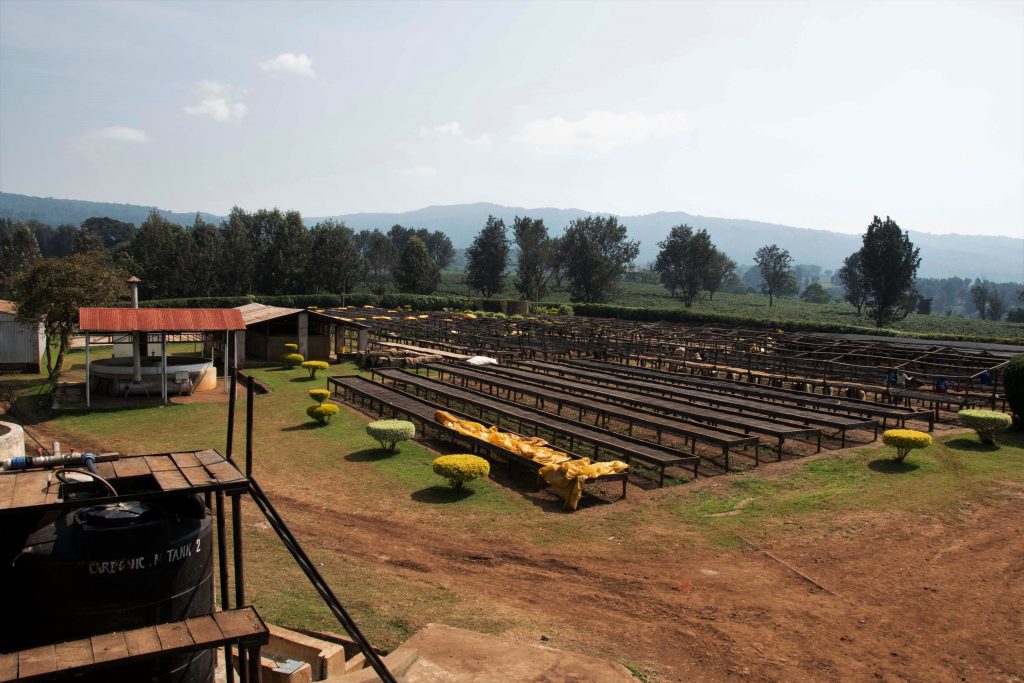
The Vohoras’ farms continue to innovate in processing methodology as well. Rather than resting on the laurels of tradition, nearly all of their coffee (including the commercial volumes of larger lots) goes through a cherry maceration period prior to processing. For microlots like this Simba, the timeframe for whole cherry “pre-fermentation” is determined specifically by cultivar, through a trial-and-error process that’s been honed into precise protocols to bring out the best in each variety. In this case, the Simba harvest will macerate in whole cherry on raised beds under protective tarps for three days prior to completing the nearly 4-week drying process on raised beds in whole cherry. After this is finished, the dried coffee is stored in GrainPro until it can be milled in Vohora’s facility back in Arusha.
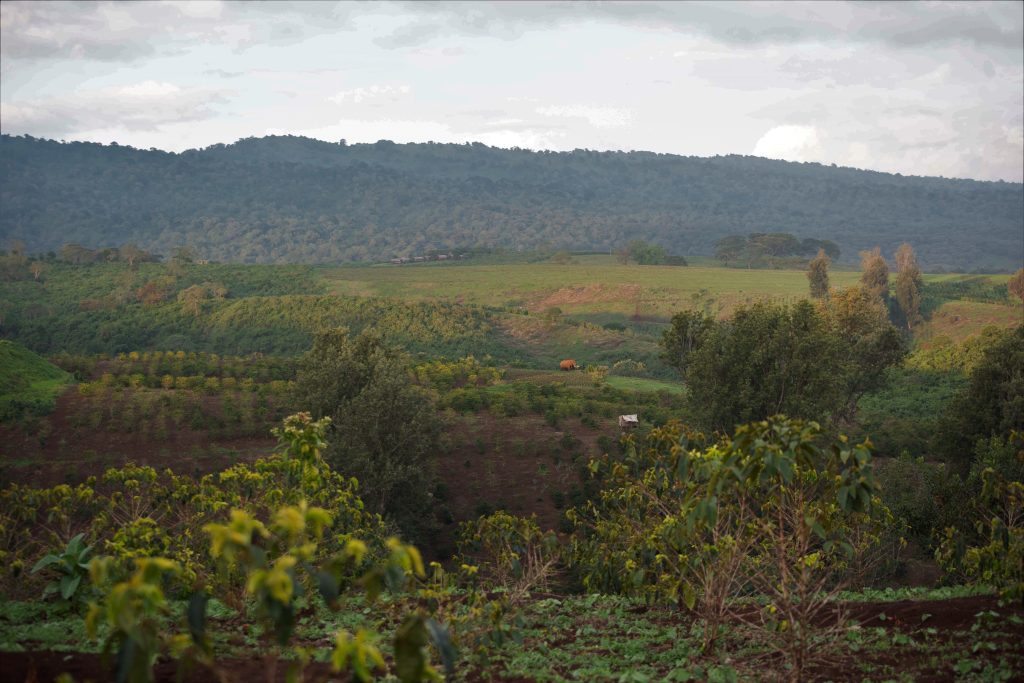
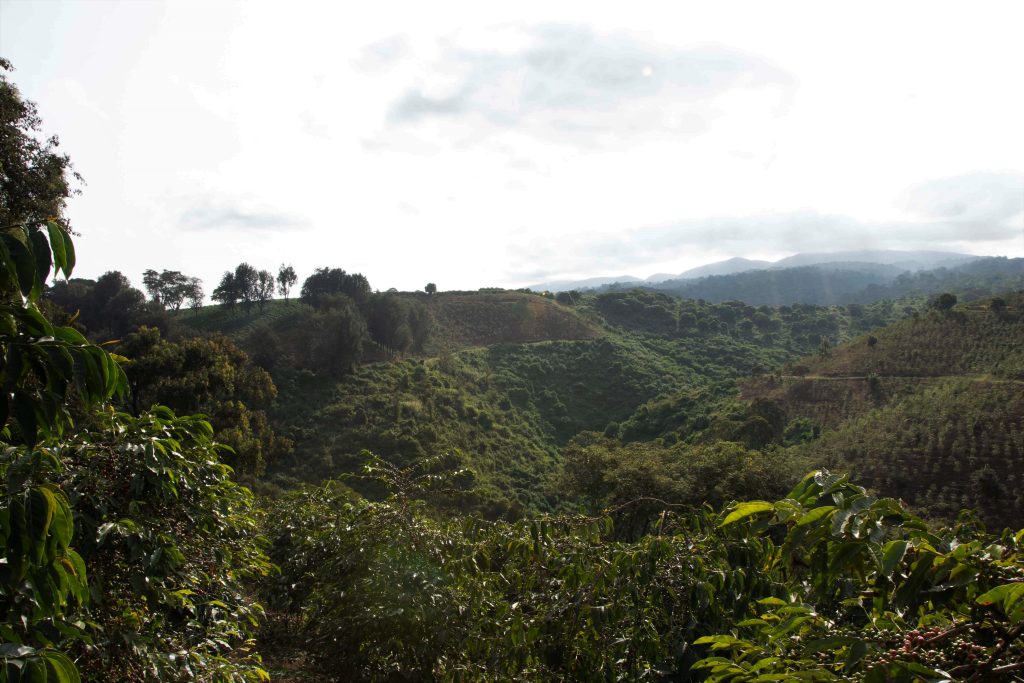
Ngorongoro, the world’s largest unbroken caldera, looms over a verdant landscape, the shell of an ancient, ruptured volcano. Inside its walls, a wildlife conservation area cut off from much access to the outside world, is home to hordes of zebra, eland, gazelles, wildebeests, two prides of lions, hyenas, hippopotami, and scores of other local birds and mammals, including a small population of black rhino. The Maasai, among the region’s more visible residents with distinctive red flannel robes and unchanged traditions of nomadism, are frequent visitors, passing through the crater with their goat and cattle herds in tow. The caldera’s wildlife are no strangers to the farms, either. Native forest corridors on the estates allow freedom of movement for the animals as they migrate, but it’s fairly common to find damage to the coffee trees; the most frequent offenders being elephants and water buffalo.
The Vohora’s estates are nestled into the caldera’s outer ridges, bordering the park. Since 1971, the Vohoras have owned about 1000 acres of farmland on the southern exterior slopes near the town of Karatu. The siblings’ grandfather arrived from India, first working for the British colonists as a farm manager prior to the nation’s independence, and their father founded and ran the export business from nearby Nairobi.
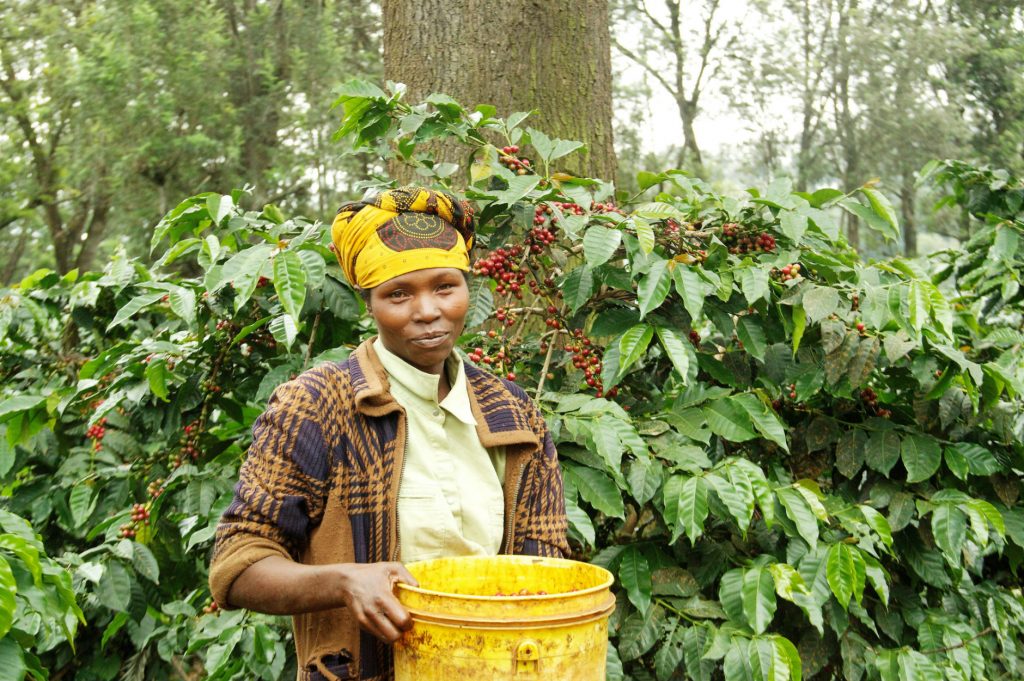
Today, Neel manages the farms, including overseeing more than fifty full-time employees and nearly eight hundred seasonal workers during the peak of harvest. He’s also at the forefront of processing innovations and cultivar selections. Kavita helms the export business from Arusha, and is the lead cupper and licensed Q Grader at the dry mill. Her daughter, Nicolene, is learning to taste coffee… the family’s fourth generation, now in training.
You can read more about the farms in a recent blog.
Green
Green Analysis by Isabella Vitaliano
Simba, a name coined by the Vaohra family is probably one of the cutest cultivar names ever and is marketing at its finest. Along with being adorable, this lot has great specs with a slightly elevated density an average moisture content and slightly above average water activity. A pretty widespread on screen size could indicate susceptibility to uneven roasting but be sure to check out the production analyses for more details.
Diedrich
Diedrich IR5 Analysis by Doris Garrido
What a perfect name for a cultivar: Simba! It truly symbolizes this coffee heritage. This is yet another amazing offering from the Vohora family, who this year haven’t stopped giving us incredible coffees. On this occasion they not only gave us a coffee with the coolest name but also applied a clean and cool natural process to these beans, making it truly sensational.
This is a clean coffee with a soft, buttery, and creamy mouthfeel with its acidity touch. On this roast we got notes of candied peach, with a soft milk chocolate undertone, candy-like sweetness, combined with tart plum acidity, and blackberries.
I’ve roasted this coffee a couple times, but for this analysis I am using my most recent roast as in this one I have ended up shortening the yellowing just a bit and stretching post development, also just for a bit, finishing the roast just seconds shorter and the difference between the two reside on the cleanness of the cup allowing the sweetness to really shine alongside its crisp acidity.
I roasted this coffee similarly to how I roasted the Tanzania Gesha natural. I used a sightly low charge temperature of 401F, adding gas between the first one and half minutes of roasting (70% first, then 85% seconds later). I dropped the gas to its lowest setting just as i marked the color change. This coffee retained a lot of energy, which means I have only spent 3 minutes and 14 seconds yellowing, marking first crack at 383F. During development I needed to kill the burner halfway as the coffee wanted to take off, and I was looking to caramelize the sugars just a bit longer. Finally, I dropped the coffee at 401F after 1-minute and 37 seconds of development.
Overall, I am very pleased with this roast; all the fruitiness was on the sweet side, well done on the caramelized sugars. It reminded me of a creamy flan with crisp plum acidity.
IKAWA
Ikawa Pro V3 Analysis by Isabella Vitaliano
Our current Ikawa practice compares two sample roast profiles, originally designed for different densities of green coffee. The two roasts differ slightly in total length, charge temperature, and time spent between color change in first crack. You can learn more about the profiles here.
This Simba lot from the Vahora family is such a treat to behold. I was curious about how this newly branded cultivar would compare in the two different roast profiles.
On the high density roast this coffee was a little bit flat with lots of notes of lemon water and black tea. On the light density roast I found this coffee to be bright with notes like pomegranate, little florals and mint notes. Because of the longer roast profile I this coffee was much sweeter but without sacrificing any of the expressiveness of the coffee.
You can roast your own by linking to our profiles in the Ikawa Pro app here:
- Roast 1: Low Density Sample Roast
- Roast 2: High Density Sample Roast
Brew
Brew Analysis by Tim Tran
Not the most frequent occurrence where a variety name is what draws you to a coffee, but that’s exactly what we have here with this Simba, produced by the Vohora estate. When Chris was giving us a heads up of the incoming coffee lots, my curiosity was piqued from the name alone; the resulting coffee was exciting and lived up to my initial appeal from namesake – a coffee to have a lot of pride in.
Our brew analysis started with a moderate dose of coffee, ground at a moderately coarse setting and brewed on a conical brewer. This coffee responded quite well to these settings, yielding a pleasant plum-forward sweetness backed by black tea florals and some herbaceousness to round out the flavor profile. This brew was a fairly silky brew with a pretty unique lasting finish.
Our favorite brew was made on a flat bottom brewer with a fairly high dose of coffee and a fairly coarse grind setting. These brew parameters really elevated the sweetness to a custard-dessert-like note, while still carrying the fruity goodness of sugarplums. The coffee still carried a florality and notes of lemongrass to create a delicious, complex flavor profile.
A trend we noticed with this coffee is enjoying this brewed at slightly lower extraction percentages. Our favorite brews yielded 18.73% on the conical brewer and 17.33% on the flat bottom brewer. While other brews still proved delicious, we enjoyed the balance and harmony of flavors the most at lower percentages. This coffee proves to be highly flexible in its brew style though. While not a favorite, we did find brews that boasted a bright flash of tart citrus zest acidity, some savory juniper and licorice notes.
While we recognize taste is subject, ultimately, we do wish to provide some brew guidance. Our recommendation is to brew this coffee at a high dose with a fairly coarse grind setting on a flat bottom brewer.
Espresso
Espresso Analysis by Asha Wells
Such a treat to work with a coffee that puts dessert first! Upon sipping each dial I was struck at just how sweet this coffee was as an espresso, audacious and syrupy, with an underpinning of stone fruit and soft citrus. Nothing mild about this coffee, Simba has main character energy, my first impressions were that of marmalade, deep vanilla, and bananas foster. But just below the surface there was a delightful savory story to be told akin to roasted serrano peppers, or hoisin.
For our first recipe I started with a hearty dose of 19g, and a yield of 42g, running 29 seconds total. This coffee had a beautifully prominent crema, and smelled of cocoa and sangria. The taste was not disappointing in the least. I found that this recipe really lived and lingered at the front of the palate, with lavish notes of ripe peach, maraschino cherry, and molasses.
Up next, at a more moderate dose of 18g, yielding 38g, which took 28 seconds. This shot definitely had more to say than just “I’m sweet”, together we took a slight side quest to roads less traveled. This dial was dusted in a savory essence that had me considering such flavors as goat cheese and pomegranate reduction. Really delicious, also present was a custardy/nougat-ness that reminded me of a Big Hunk, but after you put it in the microwave for 10 seconds. 😉
This coffee is tasty and not shy about it, relatively user-friendly, Once I was in a range it liked, it seemed consistent and versatile.
Related Coffee

Orange, lemon, cranberry, vanilla, pear
Oakland 45 Boxes
Crown Jewel Rwanda Washed Jarama Kivubelt Estate
Lot 50 – 37912-1 – SPOT RCWHSE
Orange, lemon, cranberry, vanilla, pear
Spot
45 Boxes
$189.33 per box
Hops, lime, botanical, floral, and pink grapefruit
Oakland 27 Boxes
Crown Jewel Colombia Carbonic Honey Cascade Hop Co-Fermented Pink Bourbon Edwin Noreña
37702-1 – SPOT RCWHSE
Hops, lime, botanical, floral, and pink grapefruit
Spot
27 Boxes
$376.84 per box
Caramel, grape, jasmine tea, biscoff cookies, and melon
Oakland 7 Boxes
Crown Jewel Yemen Anaerobic Natural Sharqi Haraz Cooperative
37919-1 – SPOT RCWHSE
Caramel, grape, jasmine tea, biscoff cookies, and melon
Spot
7 Boxes
$685.69 per box

Green apple, jolly rancher, apple, mojito, apple cider
Oakland 21 Boxes
Crown Jewel Colombia Carbonic Honey Green Apple Co-Ferment Edwin Noreña
37710-1 – SPOT RCWHSE
Green apple, jolly rancher, apple, mojito, apple cider
Spot
21 Boxes
$434.39 per box