
Crown Jewel Ethiopia Anaerobic Natural Rue Coferment Banko Chelchele
36457-1 – SPOT RCWHSE
Boxes 0
Warehouses Oakland
Flavor Profile Orange, dried fruit, pomegranate, chocolate cherry, and rooibos
Check out our Guide to Ethiopian Coffee Grades
Out of stock

Overview
Overview
This is a high intervention, anaerobically cofermented coffee with the locally grown herb rue (frequently used as an aromatic garnish in the coffee ceremony) from the Chelchele district of Gedeo, Ethiopia, produced by smallholder famers in association with the Banko Chelchele washing station and EDN Coffee Export Group.
The flavor profile is unique and distinctive, pairing gin-like botanicals with the intensely fruity flavors of anaerobically fermented natural process coffee. We taste lavender, natural wine, banana, and cranberry juice.
Our roasters found few surprises, noting a soft first crack and a similar development time and temperature as standard natural Ethiopian coffees.
When brewed, both as an espresso and pour-over, our barista team favored coarse grind settings, high doses, and quick extraction times.
Taste
Taste Analysis by Isabella Vitaliano
The addition of rue, an herb that is used widely in Ethiopia across the country with usages in traditional Ethiopian medicine and as a garnish on top of coffee. Native to the Mediterranean, this plant has been used for upwards to a millennia in the country.
A really beautiful thought experiment has come to life, the addition of conferment creates a union between an herb and plant that has cultural and historical significance to Ethiopia, paired with cutting edge technology of the specialty coffee world. The duo of rue and coffee is used in traditional coffee ceremonies and the reinvention of a very classic pair is a great display of creativity and Ethiopian culture. The fermentation coupled with the fresh herbs support the development of the exciting profile executed by the brilliant team behind EDN coffee.
Floating between a thought form and grounding it into practical reality, the coffee itself has remnants of this feeling in the cup. Lavender, gin and tonic, cranberry juice, botanicals and natural wine create the height an the whimsical esc feeling. The herbal notes paired with tartness and boozy flavor notes from the natural wine give it a more grounding hue. Soft but not the most subdued, you can easily pick out different flavor notes and talk for hours about it.
Roasts have ranged quite a bit as we have tasted different profiles, so be sure to check out the roaster notes to be super intentional about what tasting notes you want to come through. Not only is this coffee delicious, there is a story to tell, and often coffee history is bleak and dark, but with this, it feels like its shining a light onto its history in a fascinating new narrative.
Source
Source Analysis by Charlie Habegger
This coffee comes from smallholders in the Chelchele area, part of the Gedeb district in southern Gedeo Zone, where some of Ethiopia’s most complex and aromatic naturals come from year after year. Gedeb is a unique area dense with coffee growers and processors. The coffee was processed at a central site in Banko Chelchele, one of the district’s most prolific coffee areas.
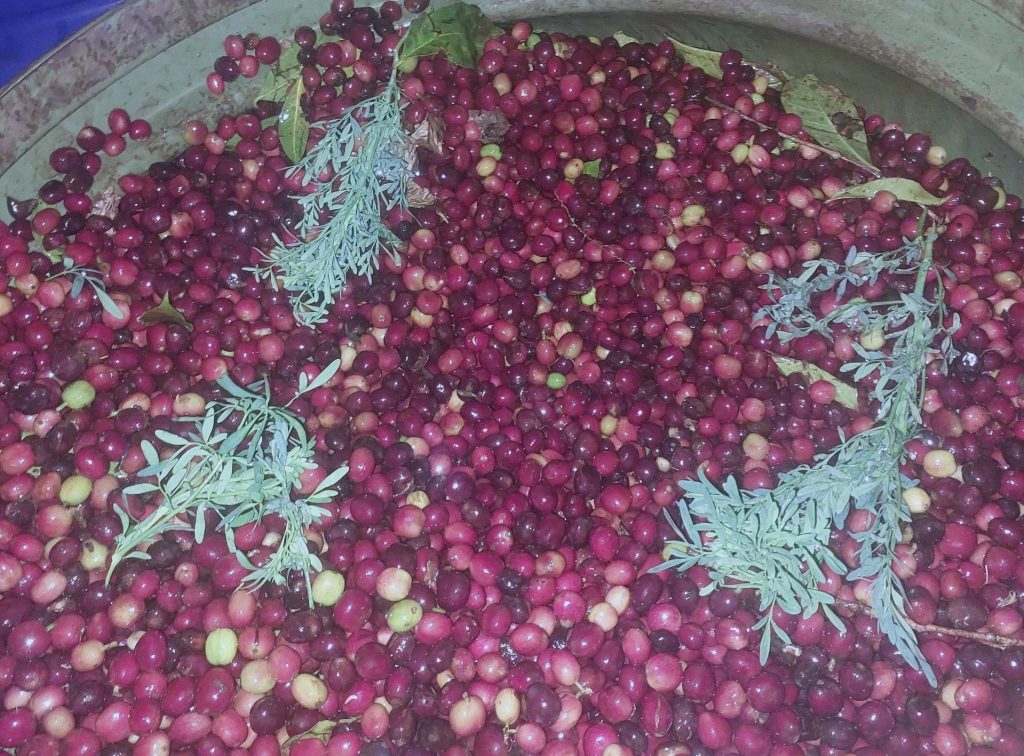
This very special process involves an anaerobic fermentation with added local rue, also known as tena adam, which is a widely appreciated herb in traditional Ethiopian medicine as well as a common garnish for coffee brewed in a traditional jebena. Both the fermentation and the added fresh herb are used to create a transformed cup profile.
Gedeb’s Significance and Coffee Profiles
The district of Gedeb takes up the south-eastern corner of Ethiopia’s Gedeo Zone—a narrow section of plateau dense with savvy farmers whose coffee is known as “Yirgacheffe”, after the zone’s most famous district. Gedeb, however, is a terroir, history, and community all its own that merits unique designation in our eyes. Coffees from this community, much closer to Guji Zone than the rest of Yirgacheffe, are often the most explosive cup profiles we see from anywhere in Ethiopia. Naturals tend to have perfume-like volatiles and fully washed lots are often sparklingly clean and fruit candy-like in structure.
The municipality of Gedeb itself is a is a bustling outpost that links commerce between the Guji and Gedeo Zones, with an expansive network of processing stations who buy cherries from across zone borders. These processors (and we would agree) would argue their coffee profiles are not exactly Yirgacheffe, but something of their own. The communities surrounding Gedeb reach some of the highest growing elevations for coffee in the world and are a truly enchanting part of the long drive into Guji. Banko Chelchele is one of the communities in eastern Gedeb and includes numerous local cooperatives, as well as independent processing stations of various types, like this one.
EDN Ethiopian Coffee
EDN Ethiopian Coffee is an independent processor and exporter of coffee with processing sites in Guji, southern Yirgacheffe, and Sidama. The coffee was processed at the group’s site in Banko Chelchele, one of Gedeb’s most prolific coffee producing areas.
The Banko Chelchele site employs over 200 people during harvest months to manage the continuous rotating and sorting of sundried cherry and parchment, as well as all other intake, payment, security, and inventory operations. Being a processor for EDN is much more than transactional—they prefinance all their contributing farmers, provide educational resources, daily meals and lodging for staff. Amenities like these are both a gesture of care and acknowledgment of the potential instability inherent to small-scale farming. They are also strategic, since many processors in the area compete for farmer loyalty, and important for the sustainability of coffee and its workforce in the area.
Processing at Banko Chelchele
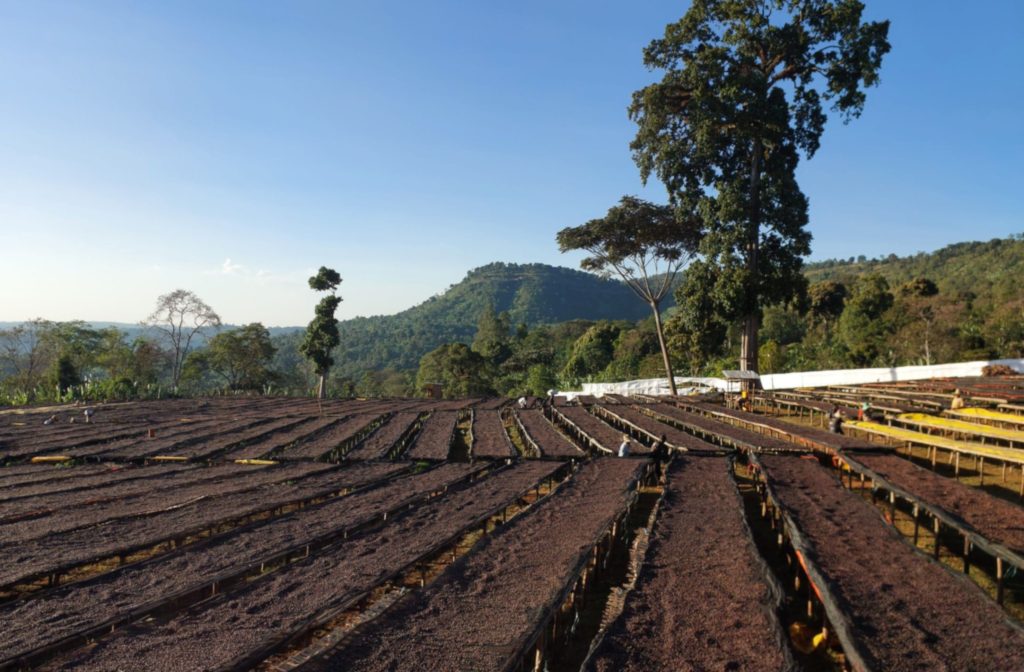
Normally, naturals at the Banko Chelchele station are hand-sorted upon delivery and moved directly to raised screen beds to sun-dry. In the case of this special microlot, fresh cherry is sealed into carbon fiber drums with fresh cuttings of local rue and left to ferment anaerobically (deprived of fresh oxygen) for 10 full days between 15-18 degrees Celsius. This stage allows the sugars in the fruit to develop far beyond where they would in a traditional natural without the risk of over fermenting. The addition of the local herb infuses the cherry must that surrounds the fruit and creates new aromatic esters in the fermentation that wouldn’t otherwise form.
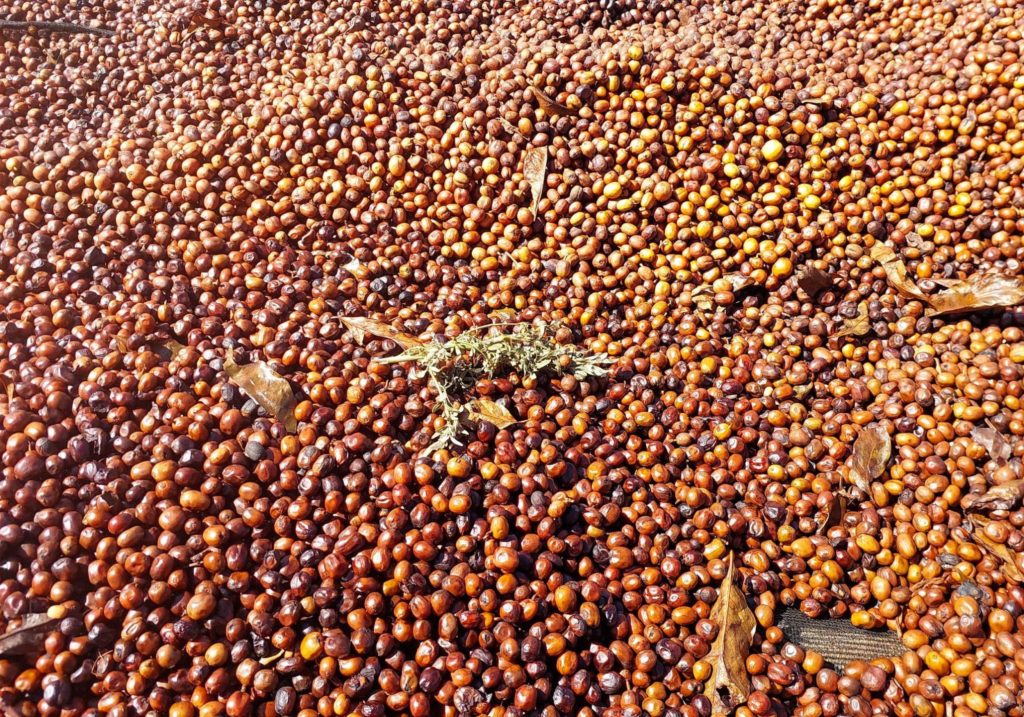
After the 10-day drum fermentation, the soft and syrupy cherry mixture is carefully moved to raised screen beds to dry, slowly and gradually, between 15-20 days. Once it reaches 11% moisture, the pods are moved to a cool warehouse where they are left to rest for a number of weeks. This last step allows the internal moisture to equilibrate and the water activity to settle, preparing the green coffee for a long shelf life of vibrant flavors.
Green
Green Analysis by Isabella Vitaliano
Regional cultivars make up this lot with selections including 74110 and 74112. The total moisture content is in the average range with water activity hitting a little bit above average range. Density is in the average range and the bulk of this coffee is in 15-16 screen size. A really small bean, typical for Ethiopia, check out Doris’ roast to uncover what would unlock this specialized co-ferment in the roaster.
74110 The JARC research center selected this tree in the 70’s. The cultivar is highly resistant to coffee berry disease and has high yield potential. This is one of the most popular propagated cultivars in Ethiopia.
74112 was selected in the forest of Metu-Bishari with signs of resistance to coffee berry disease. The tree was selected for breeding and found that it was a high yield plant as well. Once released this also became very popular in Ethiopia. It is compact for a plant which allows more trees to be planted closely together and contributes to higher yields.
Diedrich
Diedrich IR5 Analysis by Doris Garrido
A very clean, soft, creamy cup with tangy notes and subtle touches of herbs is what we experience in this Rue co-fermented coffee from Ethiopia. I love Ethiopian coffees, and often say they are beautiful in their simplicity -If I can use that word- washed or natural forms. But Ethiopia offers such a range of flavors that it has been fascinating to taste a coffee co-fermented with a native herb I have never encountered before – adding a bit more complexity to the cup.
I started the roast with a medium-plus heat on a 5.5 lb. batch, charging at 440F. I applied the highest flame -100% gas- starting 20 seconds into the roast and maintained it for about 2 minutes and 40 seconds only. Then I continued with the lowest gas setting until dropping the burners 15 seconds before the end of the roast. Essentially, I used the Diedrich to build all the energy during the drying phase, knowing the coffee could handle it. My goal was to shorten the drying time so I could slow down caramelization later. With that energy, I was able to use 100% airflow at the beginning of Maillard, resulting in a cleaner cup.
I developed the coffee for 1 minute and 18 seconds. The final temperature ended up higher than I typically aim for 410F but there was no toastiness on the cupping table nor the ColorTrack reading marked high. The roast finished at 55 on the ColorTrack for ground coffee with a weight loss of 11% very normal for my roast considering the starting moisture was 10%.
On the cupping table, the result was juicy, but I would describe it more as soft and creamy, with gently botanical notes, an herbal touch of basil, and a fruity pomegranate acidity. A very interesting co-fermented coffee to try.
Aillio
Aillio Bullet R1 IBTS Analysis by Evan Gilman
We use the RoasTime app and roast.world site to document our roasts on the Bullet. You can find our roast documentation below by searching on roast.world, or by clicking on the link below. Take a look at our roast profiles below, as they are constantly changing!
Banko Chelchele frequently produces some of my favorite coffees of the year, so seeing a new process from them featuring a local piece of flora as coferment is both atypical and refreshing. Roasting this coffee was just as forgiving and consistent as the other Ethiopian coffees I’ve roasted so far this year, so don’t expect a difficult time getting the best out of this coffee even though it may seem new and different.
I started with a slightly lower charge temperature of 455F, with P8 power and F2 fan. At turning point, I increased airflow to F3, then reduced power to P7 around peak rate of change. At yellowing, I increased airflow to F4 and left it there until after first crack. I kept P7 pretty far into the roast, only ramping down just before first crack as I wanted this to be a bright and sweet representation of what I expected to be an expressive coffee. No hiding the coferments!
This was indeed a faster roast as far as my catalog goes, finishing at 8:25 and 399F. I did want to keep the coffee in the roaster long enough to get some decent caramelization, but not so long as to negate the effects of the coferment. In retrospect, I couldn’t stop that if I tried, anyhow.
The coffee was super expressive in the cup. A bright pop of hibiscus-like tartness followed by aromatic herbals and deep banana sweetness. As it cooled, some cooked cherry notes came through – perhaps more like a cocktail cherry in syrup.
This is an incredible example of what a coferment can do for a coffee that’s already excellent. We’ve never doubted the quality of what this washing station produces, so the fact that they took it upon themselves to make yet another improvement to what is already delicious makes this a very special coffee.
You can follow along with my roast here at roast.world: https://roast.world/egilman/roasts/DfW-gKgQAq_IQlMnb879Z
IKAWA
Ikawa Pro V3 Analysis by Isabella Vitaliano
Our current Ikawa practice compares two sample roast profiles, originally designed for different densities of green coffee. The two roasts differ slightly in total length, charge temperature, and time spent between color change in first crack. You can learn more about the profiles here.
A new take on the historical narrative of Ethiopian culture and connection with coffee brings you this rue co-fermented coffee. Let’s explore what it tastes like on the ikawa.
The HD roast has lots of vantaloupe, chamomile, rose, hibiscus and as an anaerobic type edge to the finish. The anerobic flavor is not unappealing in anyway but an indicator of the intervention taking place during processing. The LD roast had a bit more green grape flavor, natural white wine and more of that processing style flavor.
I think the HD roast is a bit more easy sailing into your hearts and the heart of your customers. If you want to make a bold statement try out the LD roast and see what feelings you can illicit, it might be a little bit devisive. No matter the direction, there is a story to tell and for people to connect to. If you have any interest in educating consumers on the history of coffee, this is coffee is a great way to open the dialogue.
You can roast your own by linking to our profiles in the Ikawa Pro app here:
- Roast 1: Low Density Sample Roast
- Roast 2: High Density Sample Roast
Brew
Brew Analysis by Katie Briggs
Summer is in full swing, and we are getting a lot of fun coffees in! This Ethiopia fermented with the herb, rue, caught my attention and I was quick to snatch it up to analyze this week.
I started with a dose of 19 grams at a grind of 11, and I used a V60 cone brewer. I did an initial pulse of water that was 50 grams, and I let that bloom for 40 seconds. I did the second pulse of water up to 200 grams, and the final pulse put me at 300 at the end of the brew. We liked this brew; it was quite sweet with notes of chocolate covered cherries and orange zest. It did have some bitterness to it though, with notes of watermelon rind and asparagus. We already started at a pretty coarse grind, so I decided to switch my next brew to the Kalita Wave flatbed brewer to slow down the brew and bring a bit more of the sweetness out.
I did the same specs as the above brew as far as grind setting, dose and water pulses. But as I stated above I did this one on the Kalita Wave flatbed brewer. There was a big improvement in this brew! It was much sweeter with notes of cocoa nibs; candied orange and the fermented flavors were really coming out in this one with an effervescent note of sweet white wine. We really liked this brew, but I wanted to do one more just to see what else we could get out of this fun coffee.
We did one last brew, almost the same as the last one, but I down dosed to 18 grams of coffee. I did the same process for this last brew, but I wasn’t as happy with the results as the last one. It was a little more funky with notes of oregano, and basil, but still had some sweetness with notes of orange, pomegranate, and dark chocolate.
I would definitely recommend a higher dose and a coarser grind for this coffee. It seems to yield sweeter brews on the Kalita Wave flatbed brewer, but don’t be afraid to play around with it! If you’re into interesting co-fermented coffees this one is probably for you!
Espresso
Espresso Analysis by Alisha Rajan
Herbal coferments are a rare event for me, as this is the first I’ve tried. The age old and almost mystical element of rue merges with the fashionable processing method of anaerobic cofermentation to yield a highly intriguing and full-of-life coffee. Rue is often associated with medicinal bitterness and earthiness, and its use in this natural coffee pays tribute to its customary use in Ethiopian coffee traditions. As an espresso, it is notable in this case that bitterness is a desirable flavor and is well-balanced with toasty caramel sweetness and bright grapefruit citrus throughout.
I began the espresso analysis with a 17.5 gram dose and a 1:2 ratio for dose to yield and an extraction time of 24 seconds. This shot was intense with burnt caramel smokiness, cherry cola sweetness, and jasmine florals. I proceeded to increase the dose for the following extractions, keeping in mind that the high solubility of Ethiopian coffees would intensify the already powerful flavors.
My favorite shot came in at a 19.3 gram dose, 43.4g yield, and an extraction time of 23 seconds. The high dose and short extraction time was an effective strategy for maintaining a balance between sweet fruity notes and the herbal bitterness. This shot boasted sweet and spicy notes of star anise, rooibos tea, black cherry, and grapefruit citrus.
My second favorite shot came in at a 19.5 gram dose, 41.0 gram yield, and a 28 second extraction time. This one was fruitier than the rest, showcasing a lovely mango/guava sweetness, toasty caramel, and an abundance of earthy oregano mingling with citrus.
Accounting for the high solubility of this coffee, I would recommend a high dose and a coarser grind for the optimal balance of sweetness and bitterness. I noticed that longer extractions brought out some more fruit forward notes, and faster extractions were more herbal and savory. All in all, this coffee was a wonderfully complex and nuanced marriage of an ancient ingredient and contemporary processing to tell a story of terroir rich in tradition. I hope you enjoy the journey as much as I did.
Related Coffee

Orange, lemon, cranberry, vanilla, pear
Oakland 45 Boxes
Crown Jewel Rwanda Washed Jarama Kivubelt Estate
Lot 50 – 37912-1 – SPOT RCWHSE
Orange, lemon, cranberry, vanilla, pear
Spot
45 Boxes
$189.33 per box
Hops, lime, botanical, floral, and pink grapefruit
Oakland 27 Boxes
Crown Jewel Colombia Carbonic Honey Cascade Hop Co-Fermented Pink Bourbon Edwin Noreña
37702-1 – SPOT RCWHSE
Hops, lime, botanical, floral, and pink grapefruit
Spot
27 Boxes
$376.84 per box
Caramel, grape, jasmine tea, biscoff cookies, and melon
Oakland 7 Boxes
Crown Jewel Yemen Anaerobic Natural Sharqi Haraz Cooperative
37919-1 – SPOT RCWHSE
Caramel, grape, jasmine tea, biscoff cookies, and melon
Spot
7 Boxes
$685.69 per box

Green apple, jolly rancher, apple, mojito, apple cider
Oakland 21 Boxes
Crown Jewel Colombia Carbonic Honey Green Apple Co-Ferment Edwin Noreña
37710-1 – SPOT RCWHSE
Green apple, jolly rancher, apple, mojito, apple cider
Spot
21 Boxes
$434.39 per box