
Crown Jewel Costa Rica Anaerobic Washed Carlos Fernández Morera San Rafael de San Ramón
36180-1 – SPOT RCWHSE
Boxes 0
Warehouses Oakland
Flavor Profile Cinnamon, custard, peach, ginger bread, and pomegranate
Out of stock

Overview
This is a high intervention anaerobically fermented and washed Caturra cultivar coffee from Alajuela province, Costa Rica, produced by Carlos Morera on the El Diamante plot of his farm, Finca El Cerro.
The flavor profile is unique and completely distinctive, immediately evocative of gingerbread and cinnamon. We tasted supporting notes of peach galette and cobbler, fig, and acai berry.
Our roasters preferred a minimalist approach with lower charge temperatures.
When brewed, we liked a low TDS pour-over brewed with a coarse grind and low dose.
Taste
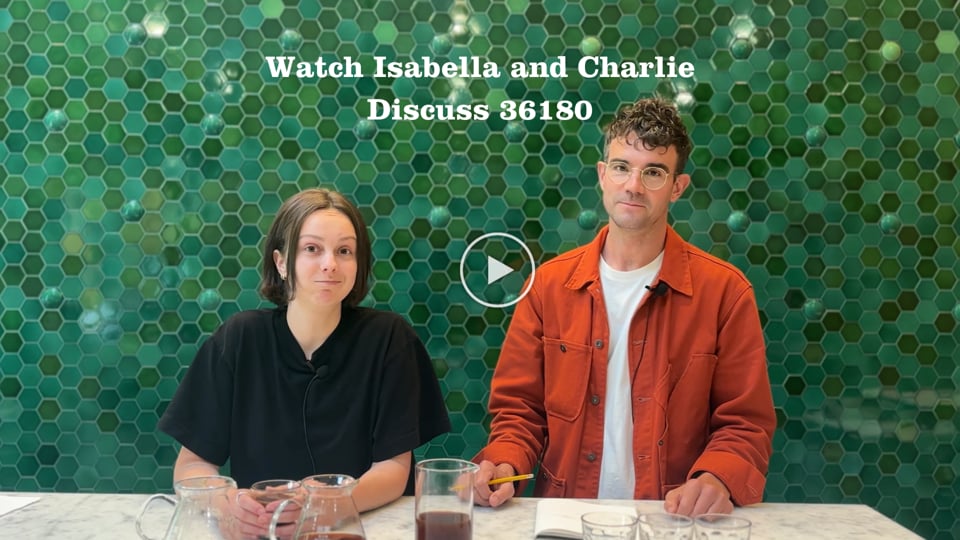
Taste Analysis by Isabella Vitaliano
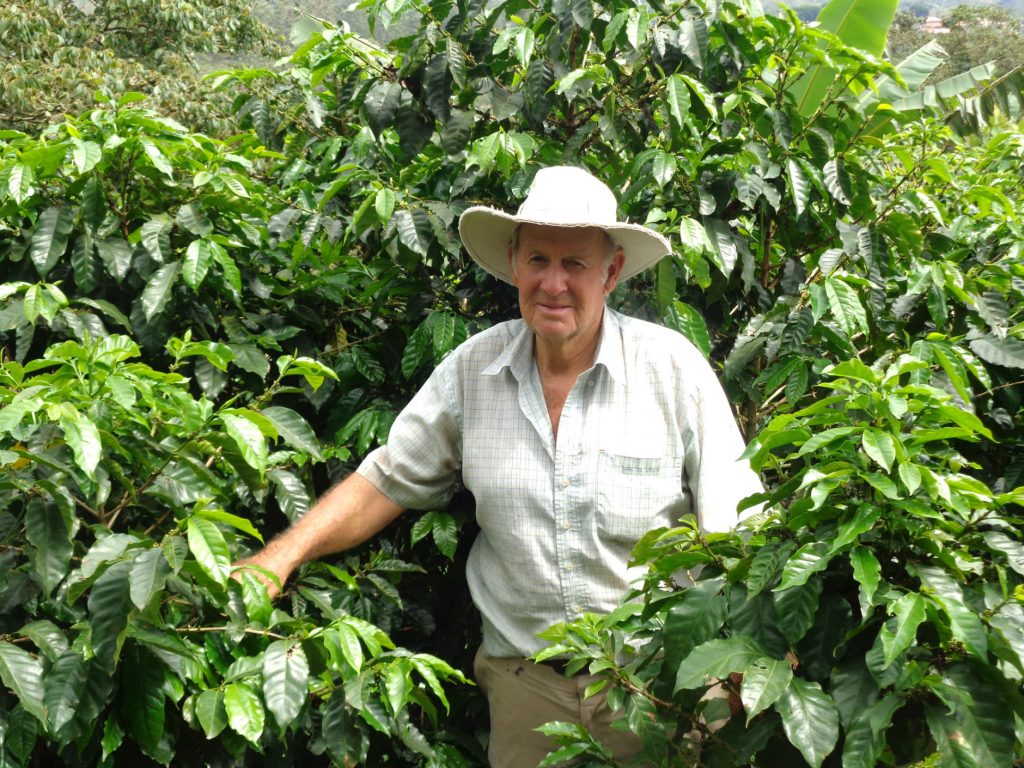
A bit silly, a bit wild, this Costa Rican Anerobic washed by Carlos Fernández Morera will take you on a journey and back. His farm is well known and was in the top five for the 2017 Costa Rica Cup of Excellence. Before this time and continuing afterwards, he has been consistent in his offerings and at such a high caliber; this is an impressive feat. The most notable flavor from this coffee is a distinct cinnamon note. So much so that the judges in 2017 wanted to inspect his farm to determine if cinnamon was being added into the processing in any way. Carlos is of the older generation of farmers, this being his 65th harvest, with much of his family helping support the business in different ways.
Caturra is common cultivar for Costa Rican and is known for its great flavor and good yield potential. Starting off in the land of peach cobber, pastry and gingerbread. We find a ton of light and fruity flavors. Coupled with coriander, fig, acai and tiramisu we get an amalgamation of lots of dense and lighter herbal flavors. Acai is a note I use when I get a lot of dark fruit flavors without a ton of sweetness. The sweetness in this coffee is more in the buttery and sugar sweetness of the pastry notes present.
Source
Source Analysis by Charlie Habegger
There’s so much about Carlos Fernández Morera’s coffee to discuss: farm and farmer history, processing methods, the prestige of a Cup of Excellence top 5 finish in 2017… but really the start of this conversation has to be about its flavor. It’s at once immensely unique, immediately delicious, and irrepressibly nostalgic. Undeniable notes of gingerbread and cinnamon toast are its hallmarks, eliciting nearly unanimous descriptors. These top notes are accented by a sugary sweetness and a fruitiness clean enough to integrate seamlessly and bold enough to stand out in a complex and thought-provoking sensory landscape. It’s an experience unlike anything I’ve had with a cup of coffee.
Carlos Fernández Morera is an experienced farmer. This is his 65th season growing coffee in San Rafael de San Ramón, where his family has lived since 1895. His deep connection to his trees and the soil he works with is evident in the way he talks. “Coffee is a very grateful crop,” he says. “If you dedicate a little love, it responds very well… The earth is a living element, we must take care of it, pamper it, so that it transmits to the coffee plant all its force.” Morera’s plot of earth is called Finca El Cerro. Many of his four grown children and nine grandchildren help on the estate, his eldest works directly with administration, his youngest works for the export brand, Café de Altura, and his oldest grandson is an agronomist.
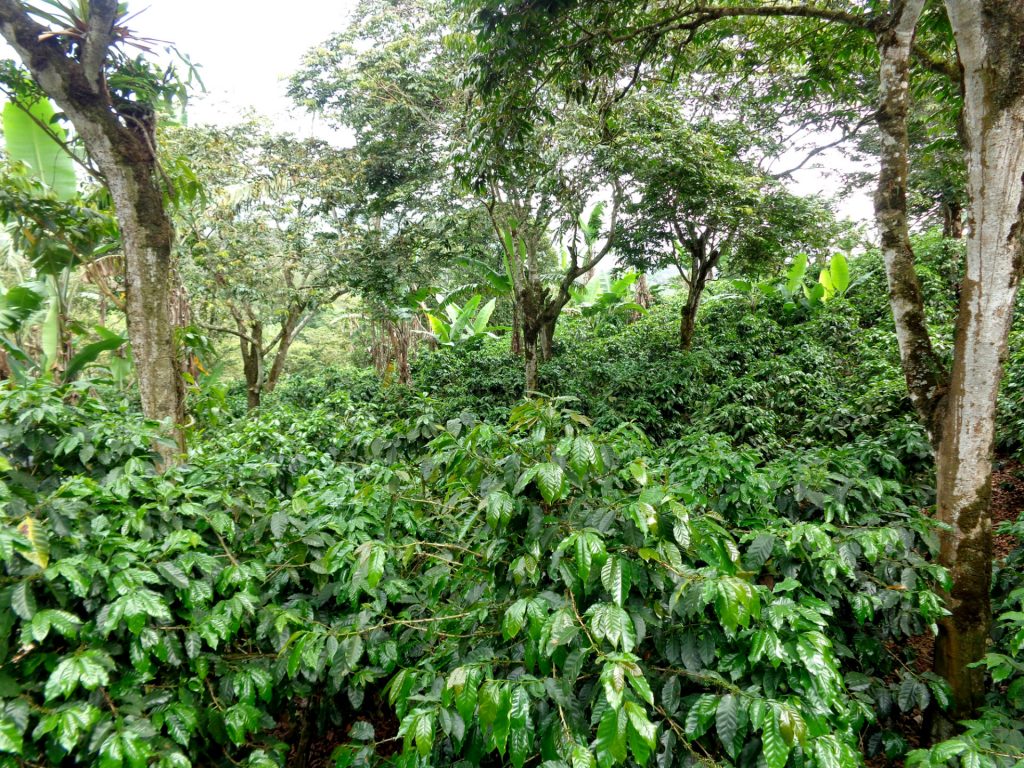
The plot of the farm where this award-winning lot originates is called Diamante (“the Diamond”). It contains Caturra and Catuaí cultivars, though other varieties more resistant to rust have been planted in recent years in other areas of El Cerro. After pulping the coffee undergoes a sealed-tank anaerobic fermentation process (learn more about anaerobic and carbonic fermentation methods here). A selection of mucilage and a little water are added to the mix, and the slurry is closely monitored for pH, temperature, brix, and a host of other variables. Under a watchful eye, the high degree of environmental control this allows contributes immeasurably to the coffee’s flavor. Thereafter the lot is dried for three days on a patio before moving to raised beds for another eighteen days of drying.
Green
Green Analysis by Isabella Vitaliano
Caturra, natural mutation of the Bourbon cultivar, is known for its good yield potential but also has high susceptibility to coffee leaf rust. First discovered in Brazil, a single gene mutation causes the plant to grow smaller. Due to its size, producers can plant more in one area and have an easier time spraying the plants with different treatments as needed.
Most of the coffee, approximately 78% is in the 16-18 screen size range. Water activity is in the average range and moisture is below average. Density is well above average! Be sure to check out the roasters’ notes for more details on how to handle it in the roaster.
Diedrich
Diedrich IR5 Analysis by Doris Garrido
Machine: Diedrich IR5
Batch Size: 5.5 lb.
Costa Rica El Diamante, is shining this year with its ginger-cinnamon taste that I remember being consistent through all the years I’ve roasted this coffee. This time it’s nothing less than the sweetest cinnamon roll you can imagine, pleasing all the staff and quickly becoming one of the newest favorite anaerobic coffees.
For this roast, I took a relatively minimalistic approach, making it as easy as possible. Based on my previous experience with this coffee, I followed my instinct and started with a low charge of 426F with 70% gas and kept it that way for 4.5 minutes before dropping the gas. From there, I added full airflow at 5:30 minutes. A very simple roast that gave me 4:40 minutes of drying, 3:36 minutes of yellowing, with first crack at 382F and a development time of 1:21 minutes, dropping the coffee at 395F. The total roast time was 9:44 minutes, and the results were without a doubt amazing.
Very soft and pastry-like, with notes of tiramisu chocolate, allspice, acai berry, figs, gingerbread, peach and my favorite tasting note: cinnamon rolls. With a soft, buttery, thick chocolate body, El Diamante it is a true jewel on our menu; a comforting and sweet delight of a coffee.
Aillio Bullet R1
Aillio Bullet R1 IBTS Analysis by Evan Gilman
We use the RoasTime app and roast.world site to document our roasts on the Bullet. You can find our roast documentation below by searching on roast.world, or by clicking on the link below.
Take a look at our roast profiles below, as they are constantly changing!
Every year around this time, the aromas of cinnamon and gingerbread fill the air. Is it an early Halloween or Thanksgiving display? Is it pure nostalgia creeping in from the edges of your memory, as leaves begin to senesce? No, dear roaster, it’s Carlos Fernández Morera’s Anaerobic Washed coffee!
Even straight out of the bag of green, you can tell this coffee is going to be something special. Into the roaster, and you’ll get whiffs of spiced cake filling up a building just after yellowing is visible through the sight glass, something of a spectral/aromatic determinism echoing the autumn leaves.
Anyhow, let’s tell you what I did with this coffee.
Starting with a low charge temperature of 437F (much akin to Doris, above), I wanted to bring this coffee gently and slowly through the roast. With P8 power and F2 fan, my roast started off on the good foot and I introduced F3 at peak rate of change, and lowered power to P7 shortly afterward, before yellowing. At 6:00 into the roast, I lowered heat to P6 and left it there for most of the rest of the roast. At 365F / 7:09 I increased fan speed to F4 and also left that in place until just before the end of the roast. The result was a very even and slow roast, ending at 397.2F / 10:30. This is in stark contrast to the roasts I performed for our prior set of releases – I’m just a slow roast kind of guy, it turns out.
Walloping cinnamon ginger notes came through in the cup, as expected, but there’s also some very nice palm sugar and brownie edge sort of sweetness coming through. While I didn’t find a ton of fruit in my particular cup, I could see milder cooked fruits like plum (hence everyone’s galette note) and nectarine.
This coffee is an absolute classic, and perfect for keeping in your pocket for the holiday season. This coffee has historically held up very well in storage, and with its lower moisture content, you’re sure to have a fine time holding this coffee in reserve. Serve with carrot cake or gingerbread, with a side of ice cream and you’re bound to have flavor memories for years to come.
You can follow along with my roast here at roast.world: https://roast.world/egilman/roasts/UaWVB7Fu_aEyTIsxpUPpo
IKAWA
Ikawa Pro V3 Analysis by Isabella Vitaliano
Our current Ikawa practice compares two sample roast profiles, originally designed for different densities of green coffee. The two roasts differ slightly in total length, charge temperature, and time spent between color change in first crack. You can learn more about the profiles here.
This Costa Rican is interesting in a few ways. One, how high the density is with it being a Costa Rican coffee and two the cup profile is bombastic and a little bit silly.
On the high-density roast Doris and I got lots of deep caramel, dolce cinnamon latte and cream cheese frosting. Although the flavors were good, the cup was a bit on the gritty side. The low-density roast had lots of dark chocolate cacao nib and was clean and hit the mark well.
Although the high-density roast had lots of flavor, the low-density roast kept most of the flavor and removed any of the bitterness present. It was interesting to see that such a high-density coffee performed better with the low-density profile. Doris mentioned that this sometimes happens with Costa Rican coffees and the general rule does not apply to all; there are always exceptions.
See for yourself which roast you prefer and happy cupping!
You can roast your own by linking to our profiles in the Ikawa Pro app here:
- Roast 1: Low Density Sample Roast
- Roast 2: High Density Sample Roast
Brew
Brew Analysis by Joshua Wismans
Carlos Morera is a master of what he does. To be able to grow and produce such a consistent coffee year over year while utilizing a wily processing method like anaerobic fermentation without cofermentation is actually bonkers – and it keeps getting better. This year’s crop from El Diamante is bursting with its classic baking spice and baked fruit profile. We found that the coffee itself doesn’t need as intense of an extraction as most traditionally processed coffees.
Our first recommended profile utilizes a slightly lower dose, but a finer grind and a conical brewer. With a ratio of 1:16.67, the TDS came in at 1.26. I was surprised, given the finer grind, and expected it to be almost tea like. I was wrong. The profile was bold, with ripe plum, tiramisu, and roasted carrot coming forward in the cup. even at an extraction percentage of 18.62, this cup was bold, spicy, and funky.
It feels funny saying this, but my inclination went to making the grind coarser. I kept the rest of the parameters the same. More of the spiced galette, baked good, custard flavors came forward, toning down on the funky fruit profile.
If you’re interested in the funk of an anaerobic, I recommend the finer grind profile. However, keep the dose low and shoot for a lower-than-normal TDS. If you want more of a subtle fruit and baking spice profile, make the grind coarser, but maintain a lower dose. It doesn’t feel right to have a TDS so low, but ultimately, trust your palette. My suspicion is that the anaerobic processing allows more flavor to be given off without having to extract as heavily. I’ve noticed it with other coffees and am not totally surprised to see the phenomena at work here with Carlos’ beautiful coffee.
Related Coffee
Hops, lime, botanical, floral, and pink grapefruit
Oakland 27 Boxes
Crown Jewel Colombia Carbonic Honey Cascade Hop Co-Fermented Pink Bourbon Edwin Noreña
37702-1 – SPOT RCWHSE
Hops, lime, botanical, floral, and pink grapefruit
Spot
27 Boxes
$376.84 per box
Caramel, grape, jasmine tea, biscoff cookies, and melon
Oakland 7 Boxes
Crown Jewel Yemen Anaerobic Natural Sharqi Haraz Cooperative
37919-1 – SPOT RCWHSE
Caramel, grape, jasmine tea, biscoff cookies, and melon
Spot
7 Boxes
$685.69 per box

Green apple, jolly rancher, apple, mojito, apple cider
Oakland 21 Boxes
Crown Jewel Colombia Carbonic Honey Green Apple Co-Ferment Edwin Noreña
37710-1 – SPOT RCWHSE
Green apple, jolly rancher, apple, mojito, apple cider
Spot
21 Boxes
$434.39 per box

Orange, lemon, cranberry, vanilla, pear
Oakland 45 Boxes
Crown Jewel Rwanda Washed Jarama Kivubelt Estate
Lot 50 – 37912-1 – SPOT RCWHSE
Orange, lemon, cranberry, vanilla, pear
Spot
45 Boxes
$189.33 per box