
Crown Jewel Ethiopia Carbonic Maceraton Guji
36825-1 – SPOT RCWHSE
Boxes 0
Warehouses Oakland
Flavor Profile Grape, blueberry, red wine, raspberry, and peach
Check out our Guide to Ethiopian Coffee Grades
Out of stock


Overview
Overview
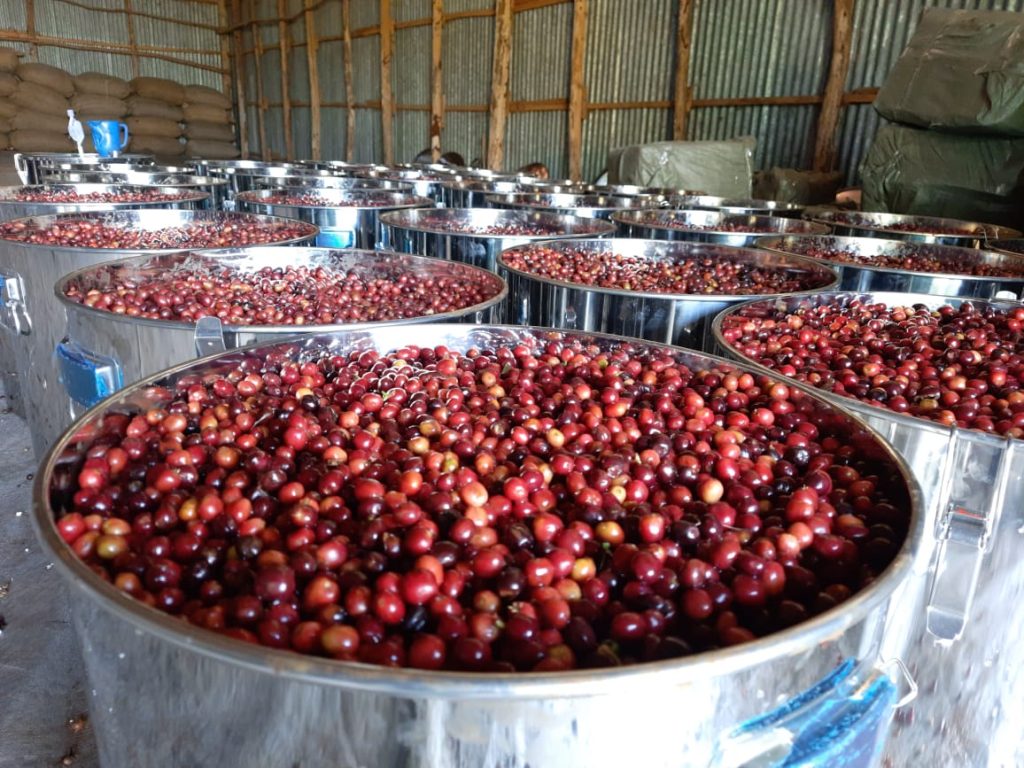
This is a high intervention carbonic maceration natural coffee from Guji, Ethiopia, produced by smallholders organized around our processing and export partner, Tracon Coffee.
The flavor profile is adventurous and lively; we tasted blueberry compote, spiced peach cobbler, fruited sour ale, and orange wine.
Our roasters found the combination of very low density green and carbonic processing to require a gentle touch with the heat.
When brewed, we preferred pour-overs with moderate doses, coarse grinds, and quick extraction times, regardless of brew device.
Taste
Taste Analysis by Isabella Vitaliano
With some of the best execution of this processing method we have seen, this coffee was imported in collaboration with the exporting group Tracon. With an arsenal of sour beer, blueberry compote and spiced peach cobbler notes in the cup, you’d better hit the ground when this comes your way! You’ll find an explosion of flavor with every sip, but with an extreme level of precision and accuracy.
Carbonic maceration is definitely not the new kid on the block. Co-fermentation can be all the rage, but carbonic maceration (along with anaerobic process) is one of the OGs of “new and weird” in the specialty coffee industry. Often used as marketing strategies in recent years, these processes have been around long before roasters have been putting these names on bags. Coffees with this profile can be a little bit rambunctious at times, and this one would almost hit the edge without its careful restraint.
From everything like skin contact orange wine, concord grape and marshmallow, the team has loads of notes from this coffee. Yogurt, grape skin, blood orange, marmalade all just scratch the surface of what this lot has to offer on the cupping table. Depending on the roasting style you go with, you can amp up the booziness or keep it sharp; you can choose what direction you want to go. An endless expedition, you and your customers will love exploring what this coffee has to offer.
Source
Source Analysis by Chris Kornman
Sourcing coffee from Ethiopia, perhaps more so than anywhere else in the world, is a collaborative effort. With something like 95% of the coffee trees cultivated in the country under the husbandry of smallholder farmers, it literally takes a village to raise enough coffee cherry to export. The washing station (even in the case of minimal intervention naturals) is the local hub for most specialty coffee in the country. While farming families may dry coffee cherries on their patios or lawns, to be roasted and enjoyed at home, export grade specialty coffee almost always requires centralized infrastructure.
In this case, that infrastructure—including logistics and farmer support strategies—is provided by Tracon Coffee, a 30+ year veteran organization of the coffee industry, and our trusted supply partner. Tracon’s interests extend from farm and washing station ownership and management to running a dedicated cupping lab and a 30,000 square foot coffee processing facility that allows them to mill and finish coffee for export on-demand.
This year, in addition to our usual business of classic washed and natural coffees, we asked if Tracon had anything special in the works, and you better believe they delivered, sending us four of the most exciting coffees we’ve tasted this season.
This carbonic maceration Guji is one of them. It’s an absolute banger, a full-force fruit bomb with enough edge to let you know it’s got that special processing—low oxygen, extended-duration whole coffee cherry fermentation, etc.—without losing the je ne sais quoi of southern Ethiopian terroir, the iconic combination of cultivar and place that makes the regions’ coffees distinctively floral and fruity, and time-honored as some of our favorites in the world.
From Royal’s vantage point, there are at least three distinct locations and teams responsible for the decision making and sourcing strategy.
The first is Haile Andualem and the team in Addis. The cupping lab there is our first look at quality, and our first point of contact with suppliers like Tracon Coffee, the processor and exporter of this lot. Not only is the lab a quality filter, but it’s also a means of communication and a physical representation of the trust that is requisite in a complex trade relationship. Haile is our first contact, our inveterate initiator of relationships and, in this case, our gateway to extraordinary coffees.
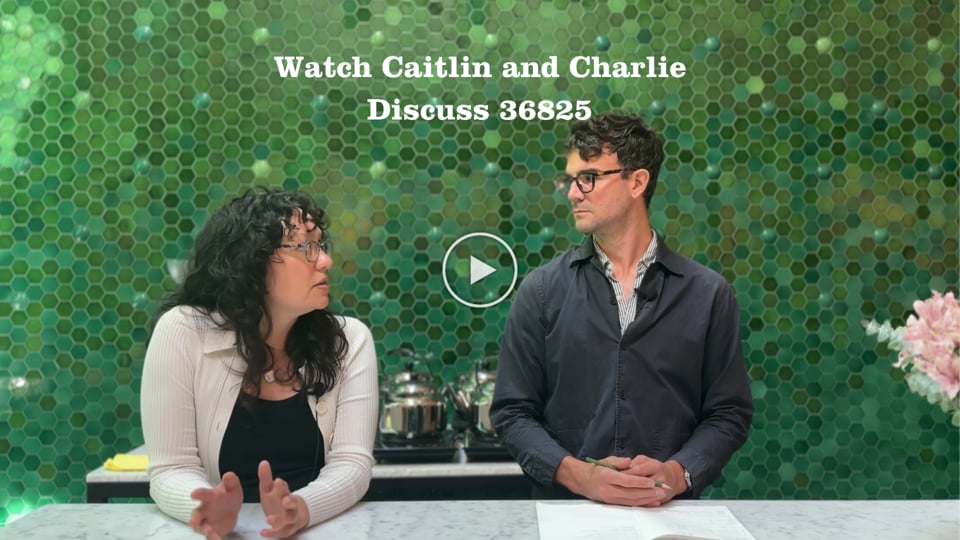
The second is our trading team, specifically Caitlin McCarthy-García, Peter Radosevich, and Max Nicholas-Fulmer, who manage the bulk of our Ethiopian selections. In this case, Caitlin did the work of container-building, solicitation of samples, and general guidance and council through the process of selection and approval.
The last, for Crown Jewels, is of course the team here at The Crown. We’re a collective, and decisions are usually semi-democratic, weighing various preferences while maintaining a high level of quality and considerations for menu variety, relationship loyalty, and more. For the 2024-25 sourcing season, Josh Wismans, our Tasting Room manager, took the lead on Ethiopia approvals.
The Tracon coffees we’ve secured this year, two honey processed selections and two low-oxygen naturals, are some of our favorites. This coffee is an ode to the complexity of coffee sourcing, a celebration of collaboration, and a delicious reminder of possibilities—both traditional and experimental—still latent in the fields of one of the world’s most important producers of coffee, first in our hearts for
its history and culture, its gift to the world.
Green
Green Analysis by Isabella Vitaliano & Chris Kornman
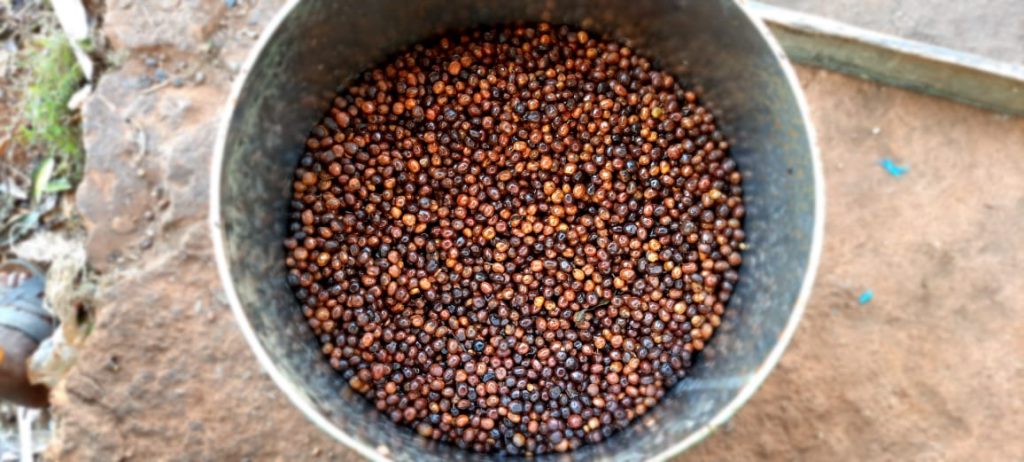
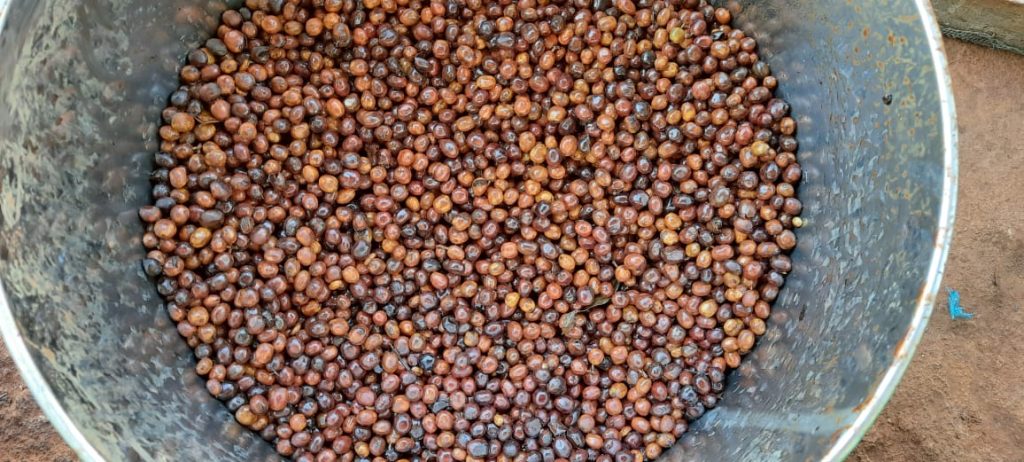
The green specs on this coffee are very peculiar. Although it is an Ethiopian coffee the density is well below average ranges, and while the moisture is a fairly unremarkable 11%, the water activity is a bit elevated by comparison. Not the normal expectation, but there is nothing normal about this coffee. Cabonically macerated, you can see in the green the impact of processing on the color along with a perfumy smell that accompanies the raw product. We love this for its sour beer like notes, sharp execution and detailed.
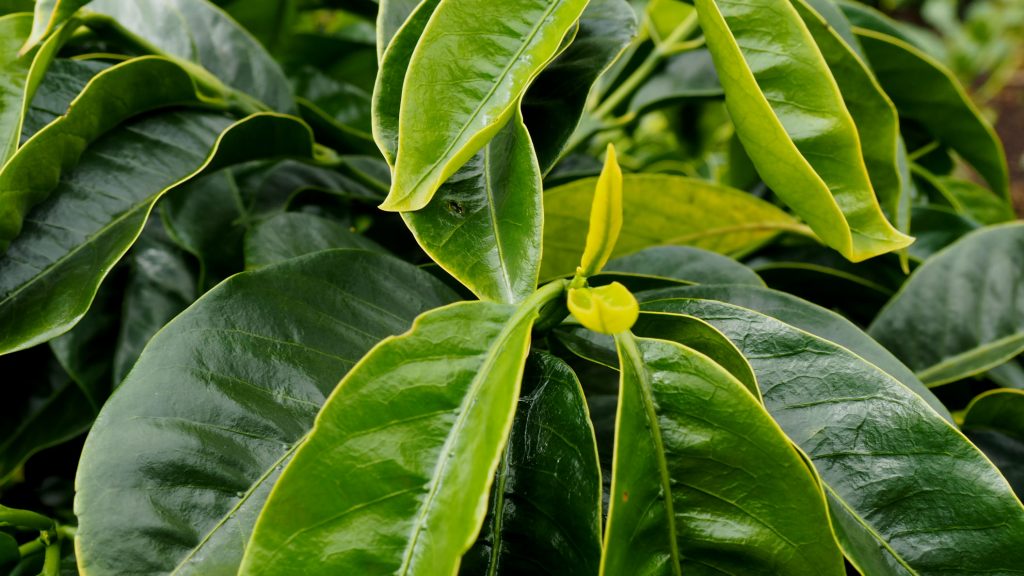
Tracon have kindly shared with us the cultivars for this lot, a combination of the usual local landraces from the region. In this case, Kurume (Kudhume) is known for small fruit and compact size, while Dega (Amharic for a “high, cool place”) is a medium-sized tree that unsurprisingly prefers planting at higher elevations, and Wolisho (Walichu) is a tall tree with large fruits but inconsistent seasonal yields. (Credit to Getu Bekele and Tim Hill for their research and documentation in A Reference Guide to Ethiopian Coffee Varieties.)
Diedrich
Diedrich IR-5 Analysis roasted by Doris Garrido, words by Chris Kornman
Doris roasted this coffee just a day before hopping on a plane to join the Roast Summit in Portland. I’m glad she had a chance to taste it before she left, because, yes please, we will gladly drink more of whatever this is!
With just a small batch, 4lbs (around 1/3 capacity) at her disposal, and armed with the knowledge that this coffee is very low density, somewhat elevated in water activity, and an unusual processing method, she understandably took a unique approach.
Using a low charge temperature, and the uncommon choice of fully open airflow from the onset of roasting, she achieved a nice low turning point despite having her gas set to 100% power. Color change began at 4:25, a little faster than our slowest roasts, a little slower than our fastest roasts. With the exhaust temperature rising quickly, Doris pulled out the rug, dropping the gas all the way to 0% for a full minute in the middle of Maillard, mashing down on the brakes hard enough to extend sugar browning to about 35% of total roasting time, in this case a little over three minutes.
About a minute before first crack, she returned the burners to “on” at our lowest setting, 30% power and the roast more or less coasted from there, exhaust and bean temperature converging in the final moments of roasting, about 1:30 of development time and just a few seconds over nine minutes total in the drum.
On the cupping table the following morning, we tasted concord grape jelly, skin-contact orange wine, fruit punch, and yellow apple. This is an immensely flavorful coffee, brought to fruition by a combination of gentle charge, slow and steady development, and an open airflow.
Aillio
Aillio Bullet R1 IBTS Analysis by Evan Gilman
We use the RoasTime app and roast.world site to document our roasts on the Bullet. You can find our roast documentation below by searching on roast.world, or by clicking on the link below. Take a look at our roast profiles below, as they are constantly changing!
There’s a first time for everything, and while this isn’t my first carbonic maceration coffee from Ethiopia (I served one at my wedding, as a matter of fact), it’s certainly one for the books. It’s my opinion that this could be a great introduction to the processing method for those who haven’t yet taken the plunge. Even from a roasting standpoint, this coffee does require attention but is forgiving and will yield tasty results, regardless.
Smelling this coffee straight out of the bag, I was overwhelmed with the fruit notes and was prepared for anything. Scooping it out into my usual vessel, I noticed that my 365g batch took up a good deal of space – lower density coffee, I thought to myself. I had a bit less coffee to work with than usual for this lot, so my charge temperature of 437F reflected the smaller batch.
Still starting at P8 and F2, I wanted to give this coffee a nice push through Green/Drying stage and into Maillard. At peak rate of change, I increased fan to F3 and then reduced power to P7 shortly afterwards. A bit before yellowing, I added yet more airflow to F4 in what was a pretty early move. My only other move before crack was to reduce heat further to P6 at 4:45 / 348F to extend Maillard as much as possible. After crack, I moved to P5 and F5, riding out post-crack development to 1:11, or 14% of the roast.
I honestly could have taken this coffee a little darker, but we’re here for the bright and bold carbonic maceration coffees, aren’t we? At 7:54 / 395.6F, I dropped the coffee into the cooling tray as it was still cracking a bit and was overwhelmed by the sort of fruity smoke that’s no longer legal here in California. Tobacco and bright blue raspberry fragrances hit my nose while cupping this coffee as well, and persisted into the cup. Candied lemon and a whole array of citrus come through in the cup, and you won’t be disappointed by the gentle florals, either.
This is certainly a wild coffee, but fans of the carbonic maceration process will absolutely love it for its iconoclastic flavor profile. Even some of those who are not yet convinced might change their minds after drinking this coffee. Luck favors the bold – try this one out if you’re not yet convinced of carbonic maceration!
You can follow along with my roast here at roast.world: https://roast.world/egilman/roasts/79p37m5O50Mk1K3skqTEi
IKAWA
Ikawa Pro V3 Analysis by Author’s Name
Our current Ikawa practice compares two sample roast profiles, originally designed for different densities of green coffee. The two roasts differ slightly in total length, charge temperature, and time spent between color change in first crack. You can learn more about the profiles here.
The Ikawa roasts of this coffee were a bit funky and surprising. On the green, this Ethiopian coffee in and of itself is a bit funny in that it has such a low density. These oddities combined with the processing method had me looking forward to dissecting what roast served the coffee best.
The high density roast was zippy, sort of like a sour beer. Acids were a touch higher and really brought out those punchy flavors. On the low density the coffee was sweeter and seemed to compliment the boozy quality in a more cohesive way. The acidity plus the boozy notes was a tad bit off putting for Chris and I while we were cupping this coffee.
Explore the low density roast of this coffee before anything and be sure to read the roasters’ notes for any more details to help you get the best roast!
You can roast your own by linking to our profiles in the Ikawa Pro app here:
- Roast 1: Low Density Sample Roast
- Roast 2: High Density Sample Roast
Brew
Brew Analysis by Alisha Rajan
This is certainly one of the most intriguing coffees I have had the pleasure of trying this year. This carbonic maceration selection from Guji delivers the boozy fruit punch payoff we associate with anaerobic coffees while showcasing the delicate florality associated with Ethiopian coffees.
I knew this one would be boozy and punchy from the get go, which is why I decided to concentrate the brew analysis on a courser EKS43 grind for most of it. I started at a grind size of 9 and 10 respectively, resulting in a high TDS and a less-than-clean finish. I kept my dose around 18.5-19.0g to maintain the sweet and syrupy body, and finally landed on some coarser grind size brews that were absolutely delectable.
My favorite brew on the V60 came in at an EKS43 11 grind, 18.5g dose, extracted in just under three minutes. This one presented with a juicy larger than life sweetness and pleasant acidity upon cooling. The primary tasting notes were honeydew melon, blueberry, raspberry jam, white wine, and a hint of florals to round out some of the other flavors.
My other favorite brew on the Kalita wave came in at an EKS43 11.5 grind, 19.0g dose, also in under a three-minute extraction time. This one presented as spice forward with star anise and cinnamon and was reminiscent of a luscious peach cobbler or cherry pie. A blood orange marmalade acidity infused this brew with life.
All in all, I recommend a courser grind to optimize the jammy notes with delicate acidity, and a moderate to high dose for the perfect syrupy body. This coffee performs well on both conical and flat bed brew devices. A perfect balance of the bold and the restrained, bright yet full of depth, this coffee is a fantastic showcase of terroir and processing. It’s sure to inspire and delight a wide array of palates. Happy brewing!
Related Coffee

Orange, lemon, cranberry, vanilla, pear
Oakland 45 Boxes
Crown Jewel Rwanda Washed Jarama Kivubelt Estate
Lot 50 – 37912-1 – SPOT RCWHSE
Orange, lemon, cranberry, vanilla, pear
Spot
45 Boxes
$189.33 per box
Hops, lime, botanical, floral, and pink grapefruit
Oakland 27 Boxes
Crown Jewel Colombia Carbonic Honey Cascade Hop Co-Fermented Pink Bourbon Edwin Noreña
37702-1 – SPOT RCWHSE
Hops, lime, botanical, floral, and pink grapefruit
Spot
27 Boxes
$376.84 per box
Caramel, grape, jasmine tea, biscoff cookies, and melon
Oakland 7 Boxes
Crown Jewel Yemen Anaerobic Natural Sharqi Haraz Cooperative
37919-1 – SPOT RCWHSE
Caramel, grape, jasmine tea, biscoff cookies, and melon
Spot
7 Boxes
$685.69 per box

Green apple, jolly rancher, apple, mojito, apple cider
Oakland 21 Boxes
Crown Jewel Colombia Carbonic Honey Green Apple Co-Ferment Edwin Noreña
37710-1 – SPOT RCWHSE
Green apple, jolly rancher, apple, mojito, apple cider
Spot
21 Boxes
$434.39 per box