
Crown Jewel Colombia Washed Gesha Juliana Guevara & Wbeimar Lasso
36133-1 – SPOT RCWHSE
Boxes 0
Warehouses Oakland
Flavor Profile Honey, caramel, orange, honeysuckle, and cherry cola
Out of stock


Overview
Overview
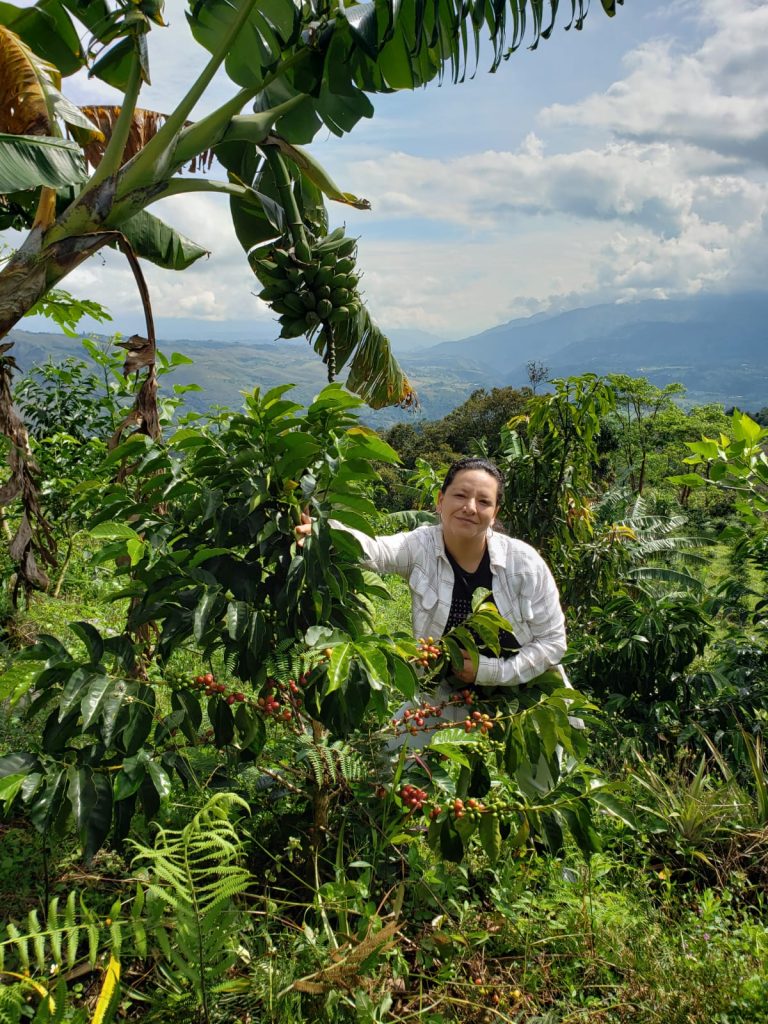
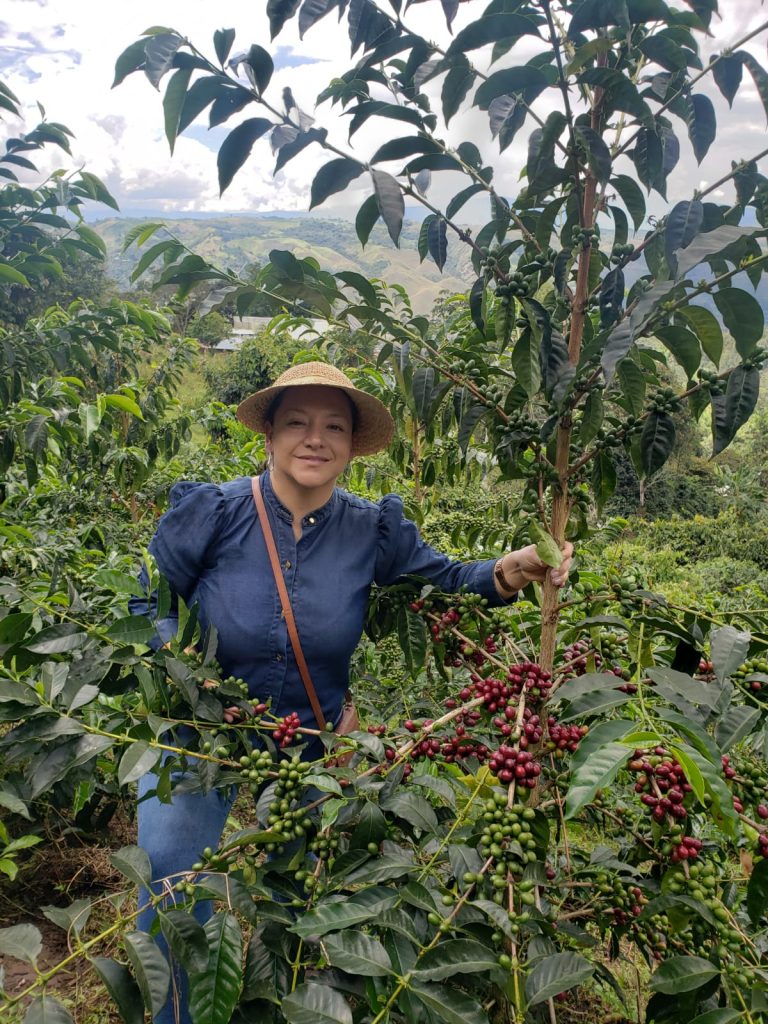
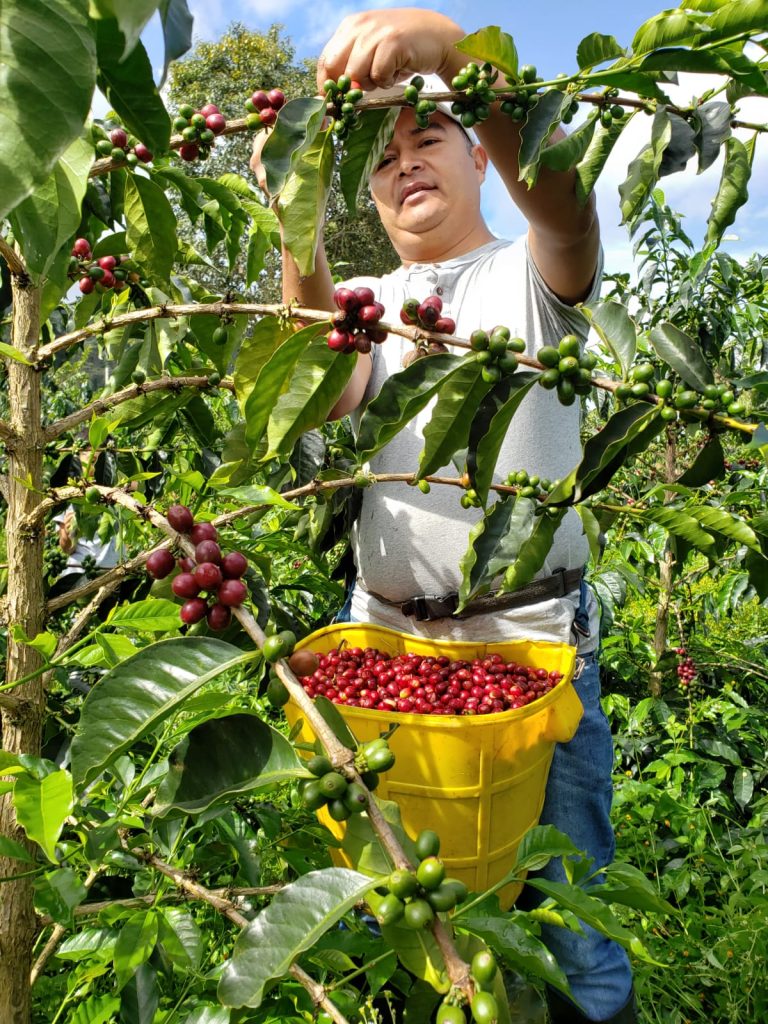
This is a low intervention washed Gesha cultivar coffee from Huila, Colombia, produced by Juliana Guevara and Wbeimar Lasso on their farm, La Terraza.
The flavor profile is distinctively Gesha-like in its botanical-forward cup. We tasted chamomile and coriander alongside light fruity notes of pear, pineapple, and marmalade, with a dense sweetness like almond croissants and chocolate chip cookies.
Our roasters found that these slightly higher moisture beans will maintain a moderately high rate of rise during later-color changes.
Taste
Taste Analysis by Isabella Vitaliano
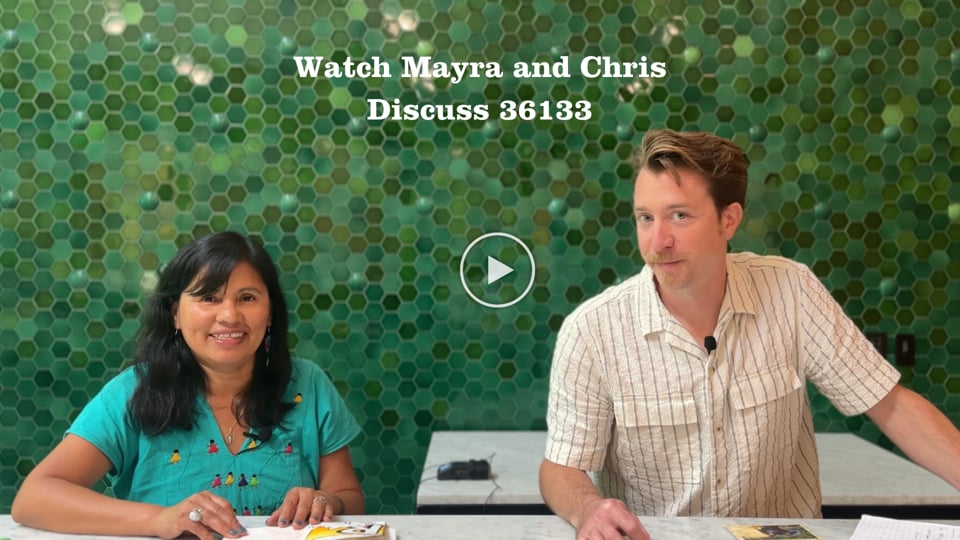
Wbeimar Lasso and Juliana Guevara make up the star duo that are responsible for this coffee. In September, the Crown hosted Development Stage, a two-day symposium geared for coffee professionals and enthusiasts. The Crown was lucky enough to have the two join us for a panel called Little Coffees, Big Impact that discusses how tiny microlots make such big waves in the industry and what goes into producing them.
Both Wbeimar and Juliana are formidable presence in different ways. Wbeimar with his quiet strength and knowledgeable presence discussed what it takes to create a coffee like this and the challenges with logistics and selling coffee. Juliana with her energizing positivity and vision for the future informed the audience of the goals they La Terraza have to support their communities and the impact that coffee roasters have when they buy microlots like these. One of the important differentiators was not just that coffee was being bought but bought consistently to support producers.
In the cup we found notes like honey, pineapple, coriander, marmalade and soft pear. This delicate take on a washed coffee will bring you back to simple joys executed with precision and intention. It’s a coffee that opens up beautifully as it cools with mint-like aromatics, chocolate chip cookies and fresh chamomile. Lots of sweetness is able to be uncovered in the cup with notes like sweet caramel, vanilla, orange and almond croissant.
From the people to the cup profile and everything in-between, I am a huge fan of this delightful, refined Gesha.
Source
Source Analysis by Chris Kornman
Now almost a perennial offering, it’s hard to believe it’s been less than two years since we first picked up a small lot of washed Gesha from Wbeimar and Juliana, humbly offered almost as an afterthought during a sourcing project that included coffees with much louder flavor profiles.
This year, however, the Terraza Gesha was offered to us proudly and with confidence, and our approval process remains streamlined. A beauty of repeat business and trust-building (a two-way street) is that it tends to open new possibilities even as it reinforces consistency, and we’re looking forward to even more upcoming coffees from the impressive project this husband-and-wife team have built in Huila.
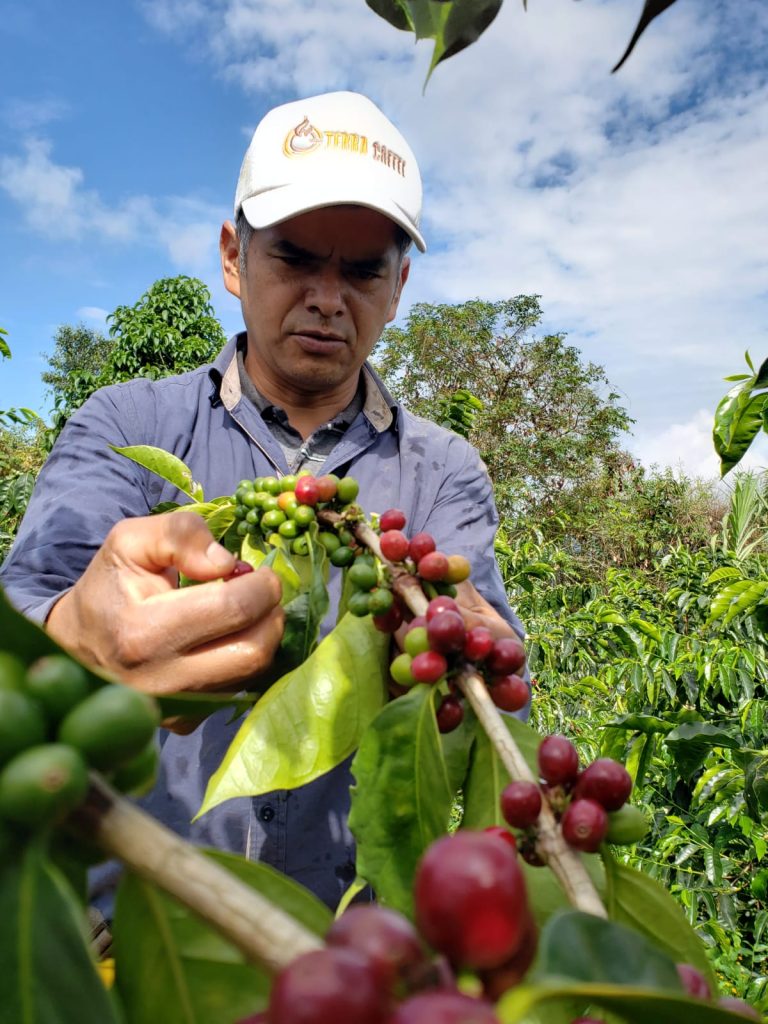
Terraza is the name for the farm owned and managed by Juliana Guevara and Wbeimar Lasso – the duo behind Terra Coffee. It’s basically a variety garden. We’re already in the process of contracting new coffees from the second harvest this year. This Gesha is the last arrival of the main crop.
Wbeimar Lasso, a Colombian Cup Tasters Champion, agro-industrial engineer and third generation coffee producer, is also a bit of a tinkerer with processing – notoriously responsible for multi-fermentation stages coordinated across small farms in Huila – delivering us some of our most unique and interesting coffees with consistency and regularity.
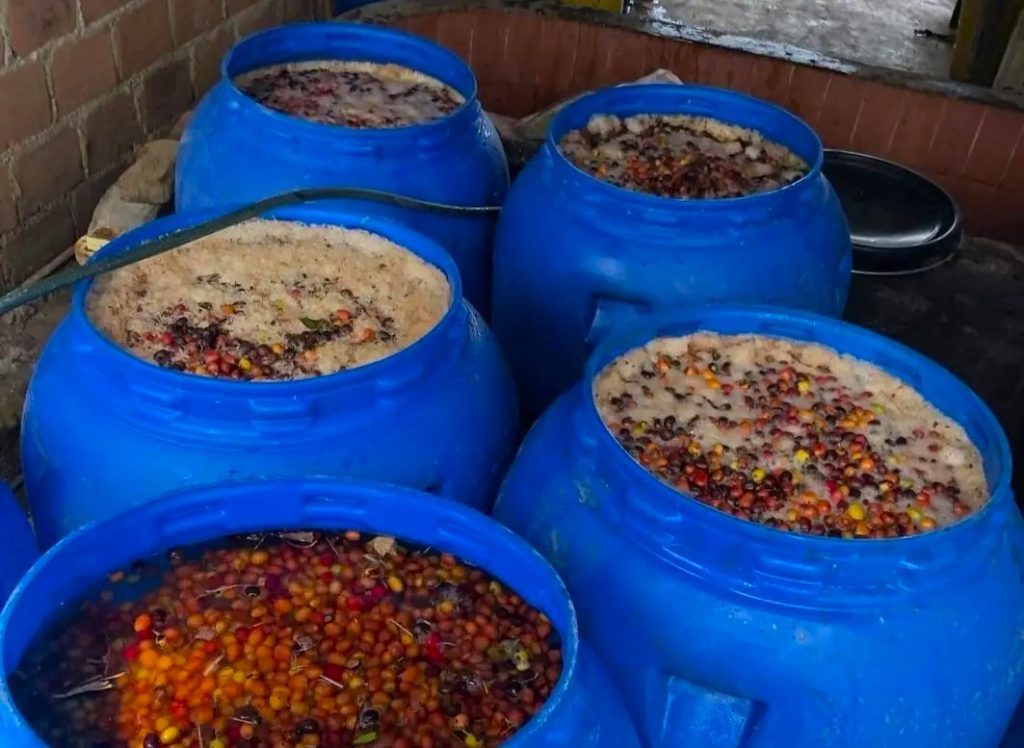
So, it came as a bit of a surprise to me that this is a very traditionally washed coffee. No particular idiosyncrasies in processing required, other than care and precision. Coffee cherries are depulped, fermented 36-48 hours, and dried – mostly in the shade – for 20-30 days.
While botanists selected Gesha trees from western Ethiopia’s forests nearly a century ago, 2025 separates us by two decades from its first appearance at a quality competition, 2004’s Best of Panama. In the 20 years since, the cultivar has gained worldwide notoriety and has been planted in nearly every arabica-producing nation. Gesha’s ongoing quest for relevance, in a sea of unconventional processing methods and ongoing discovery and development of new cultivars (like Sidra, Pink Borbon, et al) has often pushed it into new territories of flavor and (in part) due to increased supply, reduced its value from such meteoric heights as it still occasionally enjoys at auction.
By contrast, this coffee’s flavors reflect a refined elegance, restraint, and simplicity, belying its undeniable luxury. It is a delicate indulgence, one which celebrates the improbable and ornate qualities, guided by careful hands and blessed with the advantages of good soil and weather and heirloom tree types, that reverberate echoes of a better possibility – one in which specialty coffees achieve recognizable value throughout an entire convoluted supply chain, and one in which we can equitably share in both pleasure and profit.
We’re thrilled to be showcasing this intimate and innovative project from Terraza Coffee Estate, and can’t wait to see what comes next from the creative team at Terra Coffee.
Green
Green Analysis by Isabella Vitaliano
The moisture content is a little bit higher on this coffee, around 12%. Water activity is also a little bit above average. Both are still in normal ranges but when storing this coffee make sure to seal it tightly to maintain freshness. The density is on the lower with the screen size being spread pretty widely with 85% between 16-19.
Gesha, the holy grail cultivar, first came to Central America on a ship to Costa Rica. They received the seed in the 50s at a research station called CATIE project, but it was abandoned because it was not rust resistant. Once it failed in Costa Rica, the seed was then sent to Panama in the 60s, and by 2004 the Peterson family won Best of Panama auction using the Gesha cultivar.
You may be confused as to whether you should use the spelling Gesha or Geisha, as they are often used interchangeably. Check out Jenn Chen’s article here to learn more.
Diedrich
Diedrich IR-5 Analysis roasted by Doris Garrido, words by Chris Kornman
Doris and I have a special relationship with roasting Gesha coffees, as I’m sure many roasters who share challenging duties might. Gesha, due to bean size and density, post-harvest treatment, and the high expectations of cuppers, often elicits a little anxiety for the roaster as they step up to the machine.
In this case, those challenges are tempered by the nature of repeat exposure to this coffee from Juliana and Wbeimar, but it also comes with its own unique idiosyncrasies. Every harvest is unique, and this one arrived with elevated moisture content and fairly low density.
As a result, Doris modified her standard approach by starting with a lower charge temperature than usual and extending the “soak,” allowing the coffee to dip to a pretty low 275F turning point. From there, things start to look pretty standard, as we look at the roast curve.
A brief increase to 100% burner power coincides with opening the airflow to 50%, then as Maillard reactions kick in, Doris allows the rate of change to stabilize at around 20F per minute until first crack, when she pulls the rug out from under the roast – raising the airflow to maximum and cutting the burners completely in the last few seconds of roasting.
A total roast time of about 9:45, paired with a slightly shorter than usual 1:15 of development yielded a ground roast color in the 53-ish ColorTrack range and tasted delightful, with fruit notes like apricot jam and cherry cola, a buttery creamy body, and botanical notes reminding us of fresh mint and aloe.
Regardless of how long you prefer to caramelize this coffee, keep in mind that the higher moisture content will likely require a longer drying/Maillard reaction, but that color changes will likely accelerate as you enter (and exit) first crack.
Aillio
Aillio Bullet R1 IBTS Analysis by Evan Gilman
We use the RoasTime app and roast.world site to document our roasts on the Bullet. You can find our roast documentation below by searching on roast.world, or by clicking on the link below. Take a look at our roast profiles below, as they are constantly changing!
It’s not often we get a Gesha coffee coming through, and I’m always happy to try this famous coffee and familiarize myself with the different profiles it presents when grown in various places. This coffee has a slightly higher moisture content than usual, so I knew that even if I saw higher roast loss percentages, I’d be in good stead with this spectacular cultivar.
I started off much on the same tack as usual: 455F charge temperature, P8 power, and F2 fan until a little after turning point. I increased fan speed first to F3, then to F4 a bit before yellowing, but rode out the P8 power setting until further in the roast. At 352F / 6:05 I reduced heat to P7, then shortly afterwards to P6 as the coffee wanted to keep on its same rate of change despite the reduction of heat and decent fan speed – an effect of the high moisture content, no doubt. Just as crack hit, I decided to seep away all power to the burners in increments, allowing this coffee to roll gently through crack. By the time I dropped the coffee into the cooling tray at 395.7 / 9:45, I was at P1 power and F6 fan, with 15% time spent in post-crack development.
The results were delicious, and I’ve had yet another cup this morning. Orange creamsicle sweetness, vanilla, orgeat/almond syrup, and a touch of pleasant dry florals like chrysanthemums came through on filter drip after a good 5-day rest. This isn’t the typical jasmine bomb, but the florals here are undeniable. Along with the gentle and sweet citrus creaminess, I had daydreams of an Orange Julius and various nostalgic, mall-based confectionery. For those of you who grew up without malls, I am simultaneously envious and sad for you, but you’re just going to have to trust me that this is a comforting, complex, and convivial cup. Quaff with confidence!
You can follow along with my roast here at roast.world: https://roast.world/egilman/roasts/DWG27-JwxRbv0dNNCjX2L
Ikawa
Ikawa Pro V3 Analysis by Isabella Vitailiano
Our current Ikawa practice compares two sample roast profiles, originally designed for different densities of green coffee. The two roasts differ slightly in total length, charge temperature, and time spent between color change in first crack. You can learn more about the profiles here.
Overt in its sweetness and delicate in aromatics, we found this coffee best suited on low density roast. The high density roast had a combination of chamomile, coriander, pear and dense sweetness. The low density roast had a bit more chocolate and cacao nib sweetness.
I preferred the high density round of this coffee roast. Fresh aromatics, light fruits brought out a really wonderful expression in the cup. Happy cupping!
You can roast your own by linking to our profiles in the Ikawa Pro app here:
Roast 1: Low Density Sample Roast
Roast 2: High Density Sample Roast
Related Coffee
Hops, lime, botanical, floral, and pink grapefruit
Oakland 27 Boxes
Crown Jewel Colombia Carbonic Honey Cascade Hop Co-Fermented Pink Bourbon Edwin Noreña
37702-1 – SPOT RCWHSE
Hops, lime, botanical, floral, and pink grapefruit
Spot
27 Boxes
$376.84 per box

Green apple, jolly rancher, apple, mojito, apple cider
Oakland 21 Boxes
Crown Jewel Colombia Carbonic Honey Green Apple Co-Ferment Edwin Noreña
37710-1 – SPOT RCWHSE
Green apple, jolly rancher, apple, mojito, apple cider
Spot
21 Boxes
$434.39 per box

Peach, jasmine, peach black tea, grapefruit, and peach nectar
Oakland 49 Boxes
Crown Jewel Colombia Carbonic Honey Peach Co-Ferment Edwin Noreña
37701-1 – SPOT RCWHSE
Peach, jasmine, peach black tea, grapefruit, and peach nectar
Spot
49 Boxes
$376.84 per box
Caramel, grape, jasmine tea, biscoff cookies, and melon
Oakland 7 Boxes
Crown Jewel Yemen Anaerobic Natural Sharqi Haraz Cooperative
37919-1 – SPOT RCWHSE
Caramel, grape, jasmine tea, biscoff cookies, and melon
Spot
7 Boxes
$685.69 per box