
- For online orders all products must come from the same warehouse.
Crown Jewel Rwanda Washed Jarama Kivubelt Estate
Lot 50 – 37912-1 – SPOT RCWHSE$189.33 per box
Boxes 45
Warehouses Oakland
Flavor Profile Orange, lemon, cranberry, vanilla, pear
Add to your artisan.plus account: 
 Download PDF
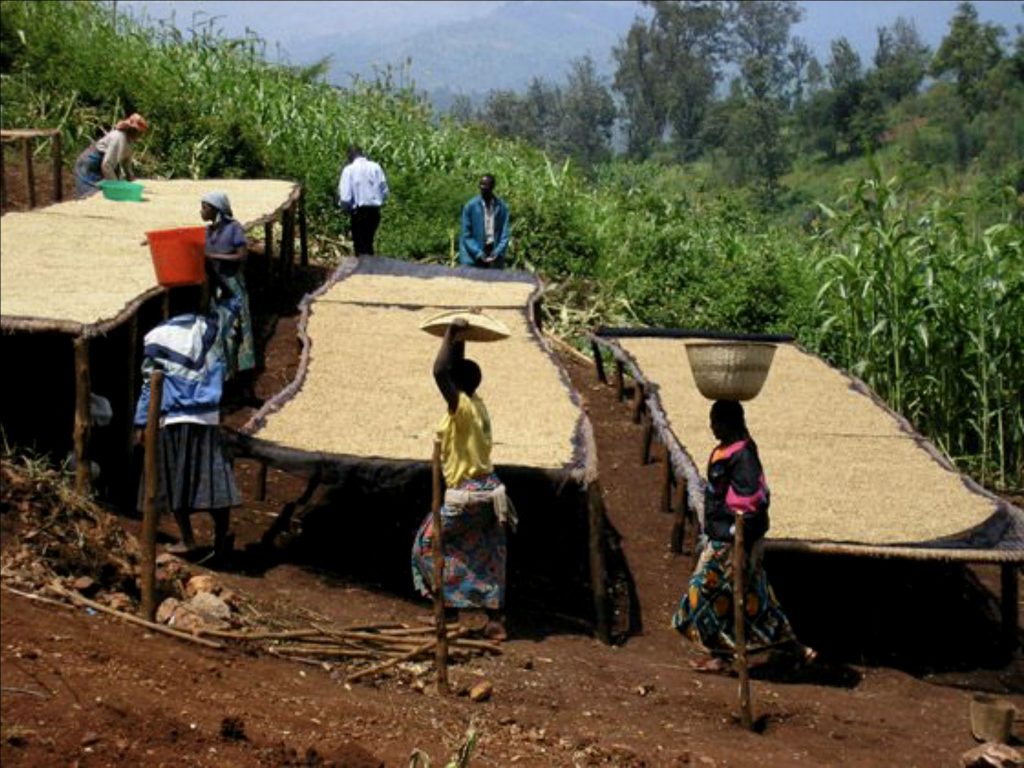
One of this year’s suite of coffees from the boutique Kivubelt group in western Rwanda, this lot comes from the Jarama farm, one of three estates owned and operated by Kivubelt in the Nyamasheke region.
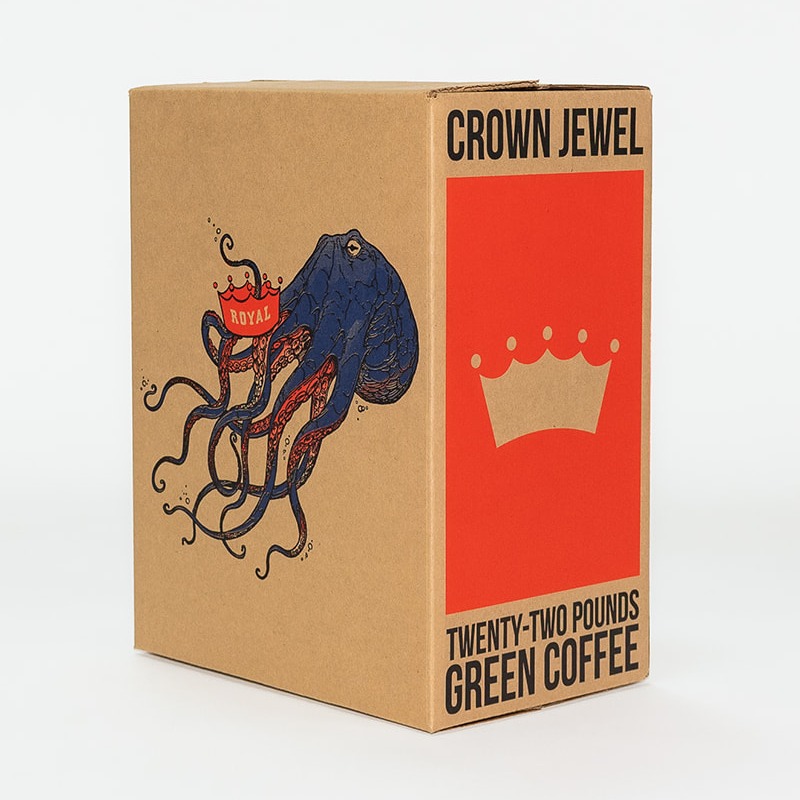
22lb Boxes
Spot


Overview
Overview
This is a low intervention washed coffee from Nyamasheke, Rwanda, produced on Kivu Belt’s private farm and processed at their Jarama washing station.
The flavor profile is iconically Rwandan, representing some of our favorite flavors of the region. We taste strong notes of honey, caramel, and praline sweetness, oolong-tea-like tannins, and delicate pear and apricot fruit flavors. It’s an instant classic.
Our roasters liked 4:3:2 ratio of drying/color change/development and encourage a gentle, low rate of rise during the final moments for the sweetest results.
When brewed, the coffee proved user-friendly to our baristas, who noted the interesting and somewhat dramatic (but delicious) differences that brew devices made. Also, highly recommended as a lighter roast option for your espressos.
Taste
Taste Analysis by Isabella Vitaliano
An idyllic representation of Rwandan coffee, Kivubelt has done it again with sublime tea, grape tones and bright acidity. Often you’ll find zesty orange notes with bright acids and milk chocolate from Rwandan coffee. This lot has both of those qualities and much more. Soft pear, apricot, praline and honey take shape as the overtones on this coffee and is reminiscent of tropical fruit like star fruit, mango and guava.
The bright notes contrast with a dense base of truffle chocolate and raisins. This brings the coffee together in a way that creates a holistic profile that has the ability to transform on espresso, pour over, drip etc.
Rwanda can still be considered a niche origin by some. For those who love east African coffee but want to educate consumers on the diversity of coffee growing origins, consider this lot. If you also just want to have a delicious coffee…. consider this lot. Thrilled to be working with Kivubelt once again, from logistics, to sampling, to the profile and the people, you are supporting an organization that has a keen eye on every aspect of the production.
Source
Source Analysis by Charlie Habegger
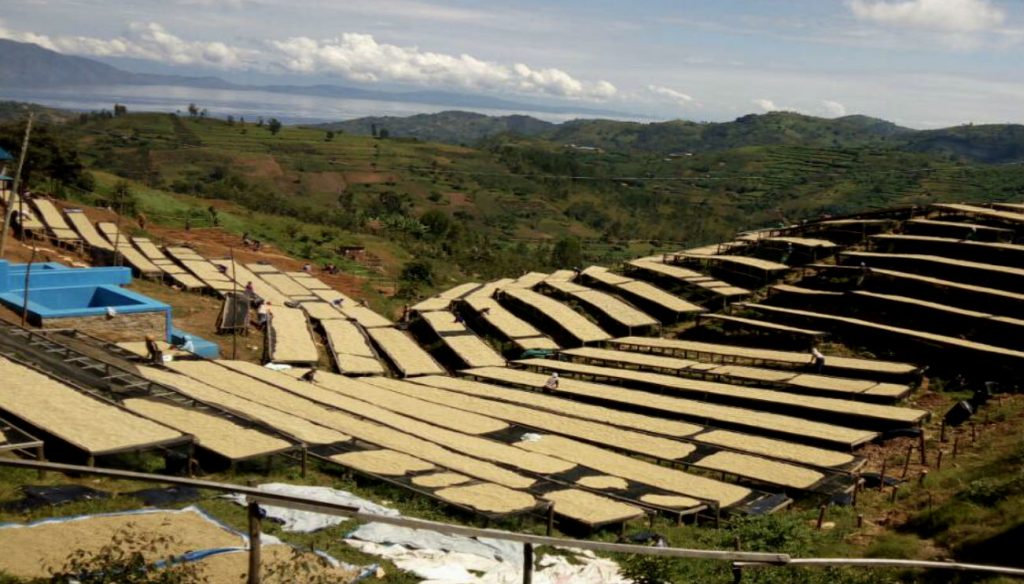
One of this year’s suite of coffees from the boutique Kivubelt group in western Rwanda, this lot comes from the Jarama farm, one of three estates owned and operated by Kivubelt in the Nyamasheke region. Jarama is a 56-acre estate and the largest planted area that Kivubelt oversees.
Kivubelt was established in 2011 by Furaha Umwizey, after returning to Rwanda with a master’s degree in economics from Switzerland. Born and raised in Rwanda, Umwizey’s goal with Kivubelt is to create a model coffee plantation, as sustainable in agriculture as it is impactful in local employment and empowerment. The company began with 200 scattered acres of farmland in Gihombo, a community in Rwanda’s coffee-famous Nyamasheke district that runs along the breathtaking central shoreline of Lake Kivu. Under Umwizey’s leadership, Kivubelt has planted 90,000 coffee trees on their estates, which now employ more than 400 people during harvest months and is a kind of coffee vocational school for local smallholders interested in improving their farming. Kivubelt has also acquired two washing stations, Murundo and Jarama, which combined not only process coffee from the company’s estates, but also that of more than 500 smallholders in the region, offering quality premiums and training programs for participating farming families. This lot from Jarama was picked and processed across March, April, and May by the farm’s 200 employees.
The Nyamasheke district in Rwanda is gifted in terroir. The cool, humid climates of both Lake Kivu and the Nyungwe Forest National Park keep groundwater abundant throughout the uniquely hilly region. Kivu itself is part of the East African Rift whose consistent drift creates volcanic seepage from the lake’s bottom and enriches the surrounding soils. Coffees from this region are often jammier and heavier than in the rest of the country. Coffee from Jarama farm in particular is rich and delicate, with hibiscus aromatics, soft acidity, and oolong tea and toasted nut flavors.
Coffee estates like Kivubelt’s are rare in Rwanda, where coffee was originally forced upon remote communities by the Belgians as a colony-funding cash crop. The Belgians distributed varieties cultivated by the French on Ile de Bourbon (now Reunion Island, near Madagascar) but had so little invested in coffee’s success that they immediately allowed to decline through lack of investment in both infrastructure and the farmers who grew it. As a result the sector suffered near total obscurity in the coffee world from Rwanda’s independence in 1962 until the period of rebuilding following the country’s devastating civil war and astonishingly tragic genocide in 1994. Rwanda’s former cash crop, however, would roar to international buyer attention in the late 2000’s thanks to one of East Africa’s most successful coffee interventions, the Partnership for Enhancing Agriculture in Rwanda Through Linkages (PEARL).
PEARL was a sweeping infrastructure and education investment targeting large regions of Rwanda whose coffee was for the most part processed poorly at home and exported with little traceability. The program, designed and led by the University of Michigan, Texas A&M and a host of Rwandan organizations, vastly increased processing hygiene by building washing stations. It also organized remote and under-resourced smallholders into cooperative businesses capable of specialty partnerships. Perhaps most significantly for the long term, it took the legacy bourbon genetics buried in abandon and polished them anew to the amazement of coffee drinkers everywhere. In the decade following PEARL and subsequent investments in the country’s coffee sector, Rwanda, one of the most rapidly modernizing countries on the continent, has built steadily on top of those first coffees, and we as buyers now have an awe-inspiring reference for how snappy, mouth-watering, and kaleidoscopic the bourbon lineage can be. Kivubelt is one example of focused entrepreneurship aimed at a very specific landscape.
You can read more about Chris’s visit to Rwanda, Kivubelt and the Murundo and Jarama washing stations on our blog.
Green
Green Analysis by Isabella Vitaliano
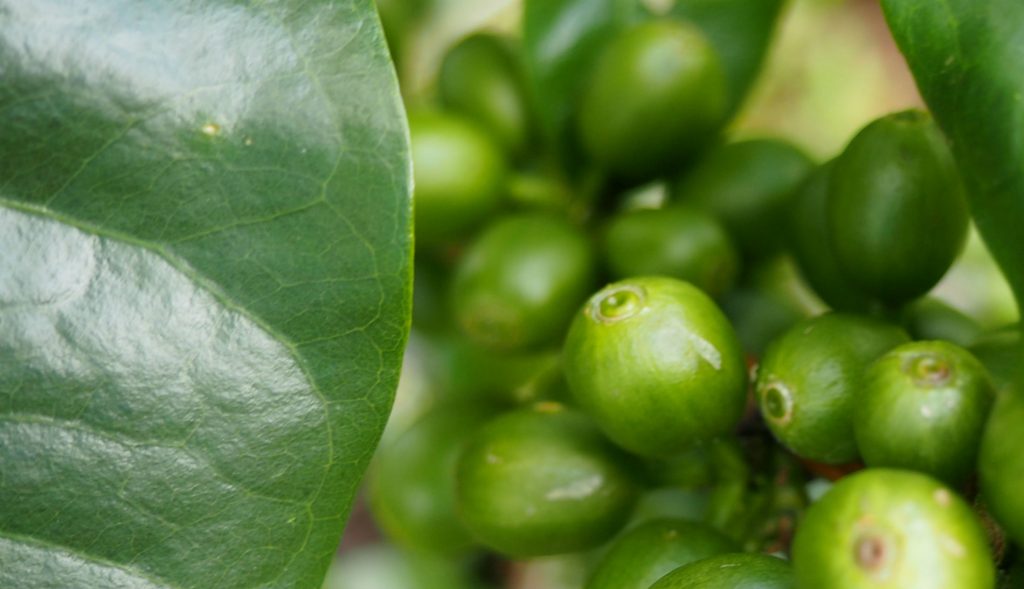
Large beans in the 18-16 range is typical of bourbon varieties. Density is slightly above average, and moisture content is within normal ranges. Bourbon is known for slightly higher yields than typica and is the second major cultivars in coffee cultivation in the 19th century. It’s introduction was a direct response to the outbreak of coffee leaf rust, wiping out many farms, most growing typica at the time.
Bourbon was introduced to Bourbon Island from Yemen in the ealry 1700s but didn’t leave the island until the mid-19th century. The cultivar spread to other parts of the world as missionaries moved from Africa and the Americas. Still a common cultivar for parts of East Africa, you see it coming out from Burundi as well as Tanzania and Rwanda.
Diedrich
Diedrich IR5 Analysis by Doris Garrido
When I first tasted this coffee at the traders’ table in Emeryville, I was struck by its sweet caramel tones and creamy mouthfeel. Since the roasting there is done on a direct-flame sample roaster, I’ve always been a fan of the specific caramelization Patrick gets out of it. I’ve really come to enjoy those complex caramel undertones in certain cultivars and mostly some specific processed coffees, and I felt this Bourbon benefited from it, and I wanted to replicate on my bigger batch. My own sample roast was a bit tarter, which I also enjoyed, so my goal for this batch was to keep that acidity without losing the deep caramelization.
This Rwandan Bourbon is a washed coffee with average density, standard moisture content, and very even bean size.
To make the most of the Diedrich’s heating system, I decided to build energy right at the end of drying and into the start of Maillard. I applied heat after the turning point and held it until just after the color change. Because the Diedrich holds onto heat so well, I started building that energy halfway through drying and kept the flame going until slightly after the color change; at that point, I dropped the gas and finished the roast using the retained energy and open airflow.
The roast began with a charge temperature of 454°F and a turning point of 195.1°F. I first applied 70% gas at 2:14 (209°F), then bumped it to 100% at 3:10. The drying phase lasted 4:31 minutes.
I headed into Maillard with full gas, and color change happened at 302°F at the 4:31 mark. I then dropped the gas to 30% and opened the airflow completely. The yellowing phase lasted 3:13 minutes
Development began at 7:44 when the coffee cracked at 384°F. I let it run for another minute and forty-six seconds to round out the caramelization. Overall, the roast lasted 9:30 minutes with an 11% weight loss.
I cupped it right away, pulling beans straight from the cooling tray. There was a very strong, sweet aroma of dried figs and lemon. It was a little vegetal on the first sip, totally normal for a roast this fresh, but the acidity showed notes of fresh plum, green mango, and green guava. On the sweet side, I picked up cacao nibs, milk chocolate, pear, and toffee. This coffee is headed for the Crown Espresso offering, and I’ll be moving to the Loring for the production batch. I definitely found the tartness I was looking for, but I really liked the creamy finish Chris Kornman got on his Bullet roast. It shows how versatile this coffee performs, so I’m going to try to balance it out a touch extra for the next production roast.
Aillio
Aillio Bullet R1 IBTS Analysis by Chris Kornman
We use the RoasTime app and roast.world site to document our roasts on the Bullet. You can find our roast documentation below by searching on roast.world, or by clicking on the link below. Take a look at our roast profiles below, as they are constantly changing!
Kivu Belt coffees are consistently some of my favorite coffees, and in the past for our Crown Jewel selections we’ve tended to favor coffees from Murundo, one of their more inland locations, a washing station hidden amongst the cloud-soaked hills, supplied by local smallholders. However, this year, we selected a coffee from Kivu Belt’s own estate coffee farm, and processed at the nearby Jarama washing station, from which you could literally tumble down the slopes directly into Lake Kivu. As breathtaking as the views are, we’re of course also enamored with their coffees.
I started this roast with a high charge temperature, P9 power setting, an F2 fan, and my preferred D4 drum speed (which I don’t alter during the roast). I gently tapped the brakes after flying into color change at a brisk 3:39 roast time, extending color change for 2:44, and really backed off the heat and cranked up the fan speed at first crack, allowing me to develop the coffee for nearly 2 minutes without breaking 390F on the IBTS probe and employing what certain folks might call a “crash.”
Trust me, coffees like this can handle it. Gently caramelized without sacrificing the delicate fruit notes of fresh apricot and fresh fig, rendering an affable praline-like sweetness and silky mouthfeel to its presence on the palate, both at the cupping table and later in subsequent brews on pour-over, this coffee was a delight to work with.
You can certainly take it darker than I did; though I wouldn’t necessarily recommend ultra-dark roasting (Rwandan coffees can sometimes taste a bit vegetal at 2nd crack), this coffee will respond well to any light-to-medium roast styles. I highly recommend a low ROR development for the sweetest results. Happy roasting!
You can follow along with my roast here at roast.world: https://roast.world/ckornman.wnD2/roasts/Q8ssPIyA7EyFfVOmJBlds
IKAWA
Ikawa Pro V3 Analysis by Isabella Vitaliano
Our current Ikawa practice compares two sample roast profiles, originally designed for different densities of green coffee. The two roasts differ slightly in total length, charge temperature, and time spent between color change in first crack. You can learn more about the profiles here.
The first Crown jewel on the menu for 2026 and the first Rwandan of the season always brings an element of excitement, especially with the changing of the guards on bar at The Crown. I suspected that the high-density roast would make this coffee eloquently shine in the way that was meant to, but I was surprised at the turn of events.
On the high density roast I find the cup to be zippy and jammy with fresh apricot, coriander and decedent praline. The light density roast was were the surprise came in to play, it was lower in intensity but with really pristine cherry notes, strong botanicals and dark tootsie roll.
The classic route is to go towards the high-density roast as it really expresses the acidity that makes east African coffee so special. The light density route offers a delicious alternative route. Not only is it dynamic on a variety of brew variables but also roast profiles. You’ll have fun playing with this coffee from the renowned Kivubelt cooperative.
You can roast your own by linking to our profiles in the Ikawa Pro app here:
- Roast 1: Low Density Sample Roast
- Roast 2: High Density Sample Roast
Brew
Brew Analysis by Asha Wells
As we ring in the new year, we clear away the old and make space for something new. Personally, I’ll be welcoming this beautiful Rwandan coffee. From the Kivubelt group, in western Rwanda, this coffee felt to me, deeply warming, and invigorating. With deeper nuance in the realm of clove, butterscotch and Guinness, alongside sparkling top notes of the likes of passionfruit and lemon verbena. This coffee reminds me of snowy winter mornings sitting around my grandmother’s fireplace, where we’d play scrabble for hours.
The first few recipes we tried, brewed on a Kalita Wave, all had distinct and pleasant flavor profiles, think tobacco and poached tomato. These brews were all on the heavier side, bold and satisfying. Our favorite of these had a dose of 18 grams, ground at 11 on our EKS43. This recipe was drenched in fruit sweetness, ripe pear, toffee, and golden raisin. Delish!
Wanting to access more nuance and delicate notes in the following brews, we switched to a V60. Selecting one’s coffee brewer with the roast in mind is one way to achieve a well-rounded cup. If a coffee is roasted lighter, using a flat-bottom brewer can increase sweetness and body, complimenting the acidity. If the coffee is roasted darker, a conical brewer can balance a more developed profile by bringing its brightness and florality to the forefront.
Our next recipe, brewed on the V60 was also dosed at 18 grams, and ground at 11, with the only change to this recipe being the brewer, I was actually surprised at how significant a difference it made. Yeilding a much cleaner yet still juicy profile, with upper notes of meyer lemon and passionfruit. Deeper notes in this recipe carried tamarind and black tea.
This was really a lovely coffee to work with, even the less dialed initial brews tasted quite nice, I would say this coffee is very user friendly. My main take away from this analysis was the difference a brewer can make. Of course we think about which brewer we use with every coffee we approach, but the difference between these two profiles, both having essentially the same recipe, was stark. So, with that, choose your tools wisely folks, and happy brewing!
Espresso
Espresso Analysis by Tim Tran
The first Crown Jewel of the new year comes to us from the Kivubelt group in Rwanda. The coffee is a fun nod to the just-passed season of flavors, rich in notes reminiscent of lingering holiday dessert. This coffee on espresso really had a way of keeping the holiday cheer going just that needed to touch longer!
My favorite recipes trended towards slightly faster extraction times, although in diving into different recipes, I found the profile to be fairly dynamic and to change in notably different, but still approachable expressions of flavor. The faster extraction times tended to bring forward a much sweeter profile, with a strongly underscored brown sugar flavor driving the flavor of carriage. As I stretched extraction times longer, the domineering flavor spectrum trended towards savory spices and dried fruit.
My favorite shot was brewed with an 18g dose to make 37g of espresso in 23 seconds. This shot carried notes of graham crackers, caramel, apricot, and cardamom. The sweetness was incredibly forward and present in the shot from the nose to the finish and took me almost to a toffee pudding but perhaps just shy. Overall, a fairly clean espresso shot that carried a lot of fun clarity.
My second favorite recipe on espresso was a 19.5g dose to make 32g of espresso in 22 seconds. Tightening the espresso ratio heightened the tactile texture and the syrupy body paired with the flavorful sweetness made for a tasty drink.
This is a fun coffee to kick the year off on a good note! We are excited to be offering a Jarama classic! I recommend a moderate dose targeting faster extraction times. Holiday cheers (for just a little bit longer)!
Related Coffee
Hops, lime, botanical, floral, and pink grapefruit
Oakland 27 Boxes
Crown Jewel Colombia Carbonic Honey Cascade Hop Co-Fermented Pink Bourbon Edwin Noreña
37702-1 – SPOT RCWHSE
Hops, lime, botanical, floral, and pink grapefruit
Spot
27 Boxes
$376.84 per box
Caramel, grape, jasmine tea, biscoff cookies, and melon
Oakland 7 Boxes
Crown Jewel Yemen Anaerobic Natural Sharqi Haraz Cooperative
37919-1 – SPOT RCWHSE
Caramel, grape, jasmine tea, biscoff cookies, and melon
Spot
7 Boxes
$685.69 per box

Green apple, jolly rancher, apple, mojito, apple cider
Oakland 21 Boxes
Crown Jewel Colombia Carbonic Honey Green Apple Co-Ferment Edwin Noreña
37710-1 – SPOT RCWHSE
Green apple, jolly rancher, apple, mojito, apple cider
Spot
21 Boxes
$434.39 per box
Peach, jasmine, peach black tea, grapefruit, and peach nectar
Oakland 49 Boxes
Crown Jewel Colombia Carbonic Honey Peach Co-Ferment Edwin Noreña
37701-1 – SPOT RCWHSE
Peach, jasmine, peach black tea, grapefruit, and peach nectar
Spot
49 Boxes
$376.84 per box