
- For online orders all products must come from the same warehouse.
ETHIOPIA SIDAMA 2 WASHED FT-FLO ORGANIC DOBENAWICHO
38059-1 – GrainPro Bags – SPOT COMIDWEST
Bags 10
Warehouses Midwest
Flavor Profile Plum, lemon, jasmine, black tea, sweet
Check out our Guide to Ethiopian Coffee Grades


Grower
1530 smallholder farmers organized around the Dobenawicho Primary Cooperative

Altitude
1800 masl

Variety
Regional landraces and local heirloom cultivars

Soil
Vertisol

Region
Aleta Wondo District, Sidama Zone, Southern Nations, Nationalities, and Peoples’ Region, Ethiopia

Process
Fully washed and dried on raised beds

Harvest
October - December

Certification
Fair Trade (FT FLO) / USA ORGANIC
The Sidama zone is one of Ethiopia's most productive, supplying over 40% of the entire country's washed coffee to its central market. Compared to Yirgacheffe, further south, Sidama is a sprawling and varied landscape that transitions from the Great Rift Valley to beyond 2000 meters in elevation. The Aleta Wondo "woreda", or district, where the Dobenawicho cooperative is located, is in southern Sidama, close to the city of Dila and Sidama’s border with Yirgacheffe. Dobenawicho has been in existence since 1975.
Welcome to Sidama
The climb from the southern end of the Great Rift Valley, through Shashamene and past Awasa is gradual, and coffee trees slowly increase in frequency, large, lanky, and dusty by the roadside, many so tall they lean on the roofs of houses for support. Coffees produced in Sidama are earlier than in the far south, delicate, and citric. Sidama has one of the most exemplary cooperative unions in the country, as well as a thriving industry of independent washing stations and medium-sized family estates with export licenses of their own.
The Sidama Union and its Coops
The Sidama Coffee Farmers Cooperative Union (SCFCU) is one of Ethiopia’s largest and best-known exporting organizations. SCFCU is robust; there are 53 member cooperatives in the union and over 80,000 member households throughout the Sidama Zone. Because harvest in Sidama occurs slightly earlier than in the more southern zones of Gedeo and Guji, the fully washed lots from here are usually the year’s very first top quality arrivals from anywhere in Ethiopia.
SCFCU coops each carry out activities that often go unnoticed but are crucial for small producers, including training producers in best organic practices and investing in basic infrastructure needs like road improvements and establishing local warehouses. SCFCU focuses on establishing a certification process for local cooperatives, creating micro-credit for producers and investing in social programs on a larger scale. Environmental training programs, healthcare initiatives, life insurance, and educational opportunities are just some of the ways SCFCU strives to improve the quality of life for coffee producers and their families.
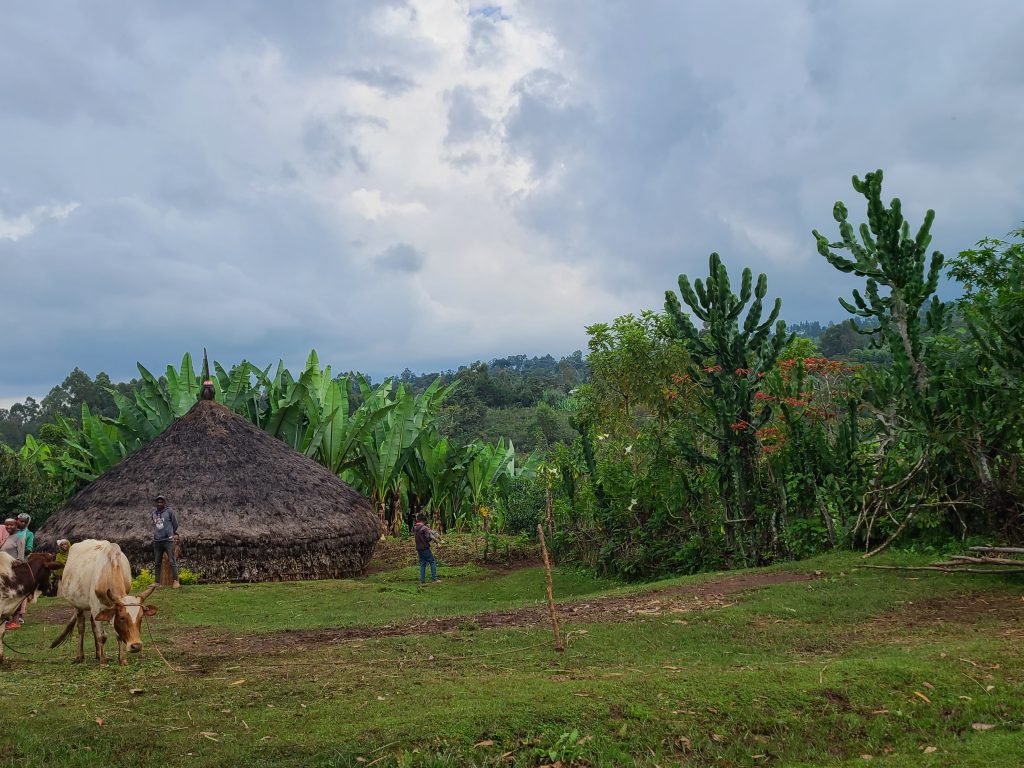
Farmer members throughout the union are truly smallholders, averaging less than a hectare of coffee cultivation each, in which they also produce vegetables for the household and local sale.
Dobenawicho Cooperative and Washed Processing
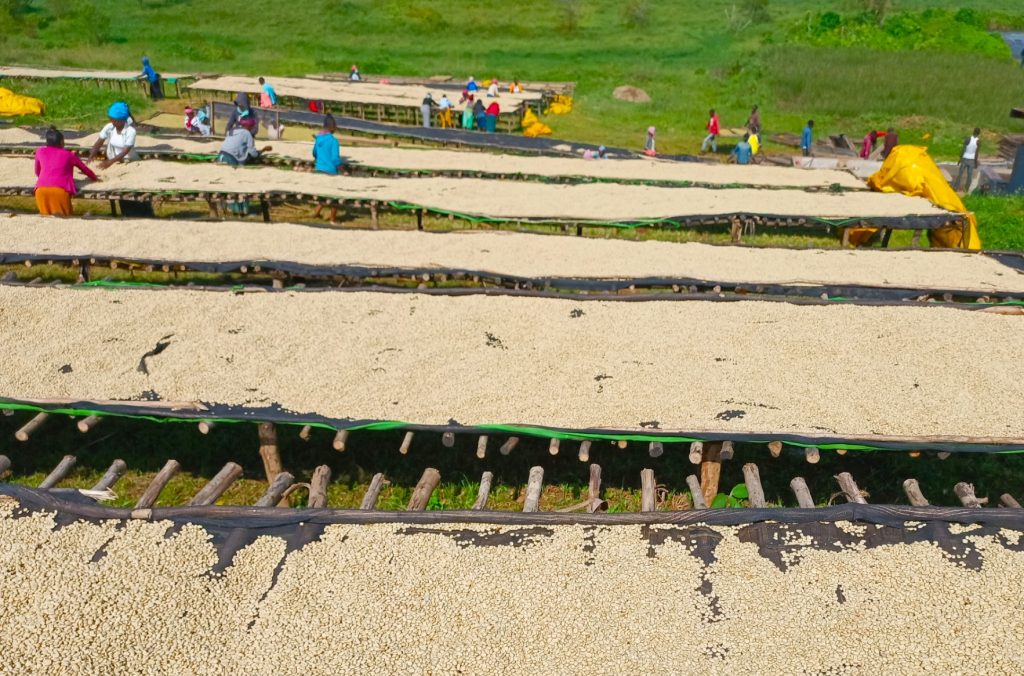
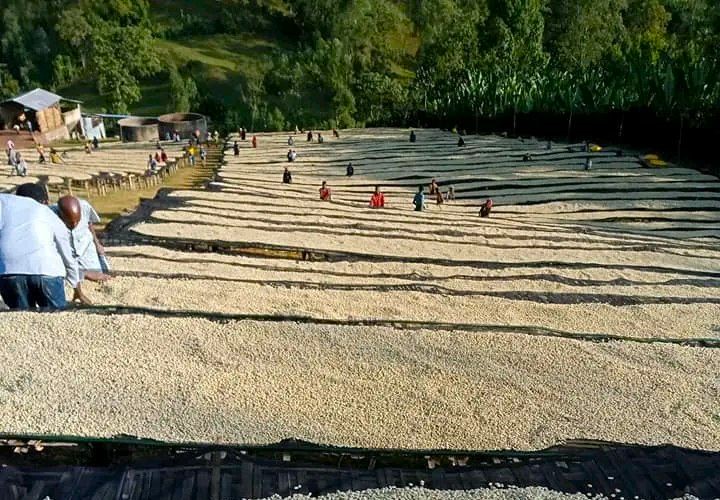
Cherry is delivered daily to Dobenawicho where it is sorted, depulped, and fermented for 48 hours in water, which is traditionally replenished multiple times during the fermentation period to ensure clean, white, and contaminant-free parchment. Once fermentation is complete the coffee is moved immediately to raised screen tables for sundrying, where it is rotated constantly for 10-15 days to ensure gradual, even drying.
The coop employs up to 85 people during harvest to manage all the daily operations of coffee rotation on the drying tables, cherry intake, station finances and record keeping, and of course processing itself.
Related Coffee
Cup notes available upon arrival
Midwest 2 Bags
ETHIOPIA YIRGACHEFFE 3 NATURAL FT-FLO ORGANIC WORKA
36582-1 – GrainPro Bags – SPOT COMIDWEST
Cup notes available upon arrival
Spot
2 Bags
$5.75 per pound

Raspberry, cherry, dark chocolate
Midwest 9 Bags
ETHIOPIA YIRGACHEFFE 1 NATURAL ORGANIC KONGA
36302-4 – GrainPro Bags – SPOT COMIDWEST
Raspberry, cherry, dark chocolate
Spot
9 Bags
$5.82 per pound

Cup notes available upon arrival
Midwest 1 Bag
Kenya AB FAQ
37481-3 – Ecotact Bags – SPOT COMIDWEST
Cup notes available upon arrival
Spot
1 Bag
$5.85 per pound

Dried fruit, carob, herbaceous
Midwest 16 Bags
Decaf Ethiopia Guji 4 Natural Royal Select Swiss Water Process
38462-2 – SPOT COMIDWEST
Dried fruit, carob, herbaceous
Spot
16 Bags
$6.12 per pound