
- For online orders all products must come from the same warehouse.
Uganda Robusta Cherry 17
38143-1 – ETA: Jan 22, 2026 – SEAFORTH
Bags 10
Warehouses Vancouver
Flavor Profile Brown ale, cloves, corn nut


Grower
Producers throughout southern and Northern

Altitude
950 - 1500 masl

Variety
Robusta

Soil
Volcanic loam

Region
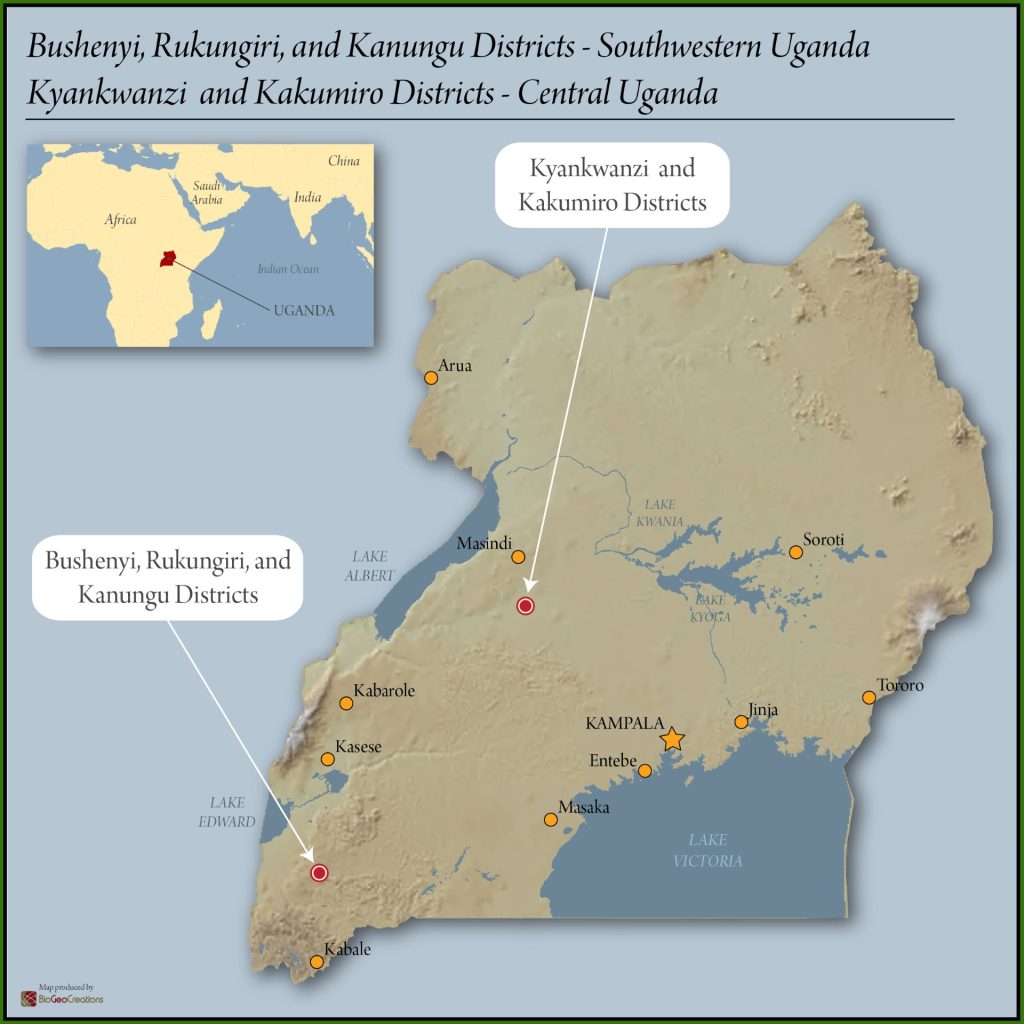
South Western Uganda (Bushenyi, Rukungiri, and Kanungu districts) and Central Uganda (Kyankwanzi and Kakumiro district), Uganda

Process
Full natural

Harvest
May - September | November – January

Certification
Conventional
Sourcing Details
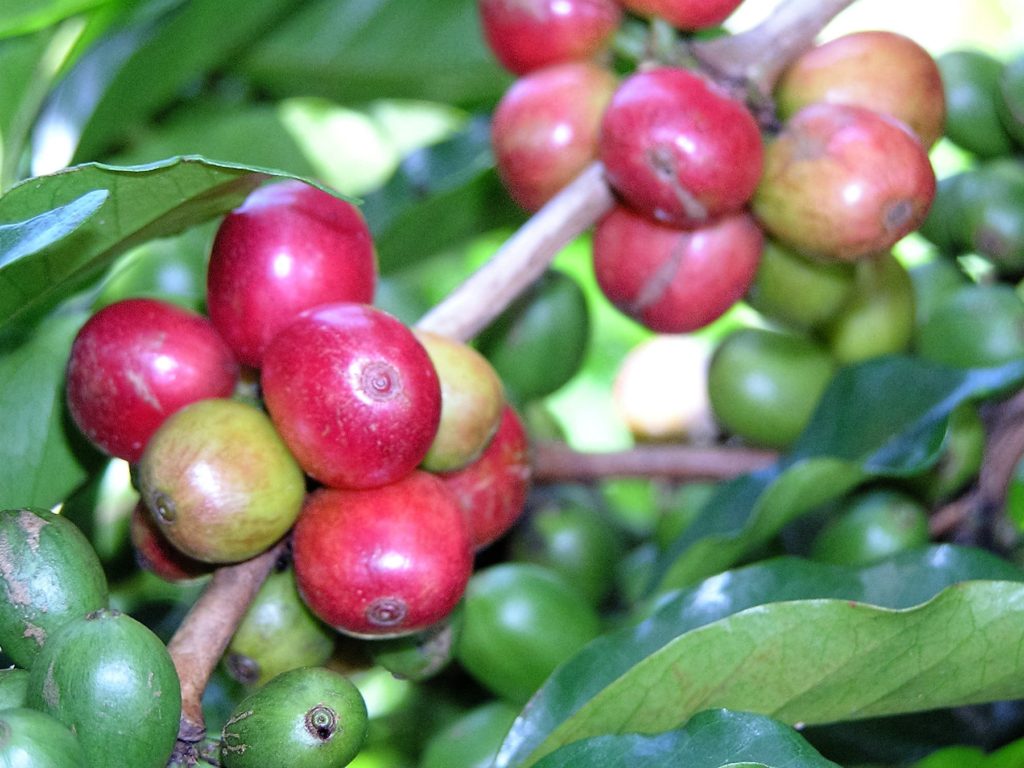
Focus on specialty coffee is on the rise in Uganda thanks in large part to export operations like Kawacom. The bulk of production comes from small family owned farms where coffee is cultivated on just a few acres of land intercropped with bananas, maize, potatoes and nuts. Kawacom has helped producers improve their harvesting strategies, emphasizing the quality premiums associated with only picking cherries that have properly ripened.
Processing Details
There is a growing trend in the specialty coffee world to seek out the Robusta species, which is considered more tolerant to the impacts of climate changes than the Arabica species. Robusta’s flavor profiles, which have a negative reputation, might improve significantly with some of the processing innovations previously reserved for Arabica coffee.Kawacom’s centralized mills support Robusta harvests from small farms so farmers do not have to invest in mill equipment. Production is small enough for each individual farmer to focus on meticulous cherry sorting. Kawacom helps farmers with transportation to the centralized mill and provides transparent purchasing options. At the central mill, the same care in handling arabica coffee is placed on the post harvest of Robusta. Cherries are sorted and dried on raised beds. Kawacom has made infrastructure innovations like drying structures that have greatly improved their ability to consistently meet quality standards for moisture content and water activity.
Exporting Details
Next the coffee is taken to the Kawacom dry-mill, which features a fully staffed cupping lab to ensure traceability and quality control throughout the post harvest process. Kawacom has also helped train producers on best organic practices, which includes using materials like coffee pulp to make organic fertilizers creating an abundant source of plant nutrition that ensures better yields and quality.
Related Coffee

Strawberry, blueberry, vanilla, cocoa, sweet
Vancouver 288 Bags
Ethiopia Yirgacheffe 1 Natural Banko Gotiti
37368 – GrainPro Bags – SPOT SEAFORTH
Strawberry, blueberry, vanilla, cocoa, sweet
Spot
288 Bags
$5.74 per pound

Orange, berries, black tea, herbaceous, clean
Vancouver 271 Bags
ETHIOPIA YIRGACHEFFE GEDEB 1 WASHED FT-FLO ORGANIC BANKO GOTITI
37020 – GrainPro Bags – SPOT SEAFORTH
Orange, berries, black tea, herbaceous, clean
Spot
271 Bags
$5.65 per pound

Lemon zest, bubblegum, chocolate
Vancouver 11 Bags
ETHIOPIA SIDAMA 3 NATURAL ORGANIC
37023 – GrainPro Bags – SPOT SEAFORTH
Lemon zest, bubblegum, chocolate
Spot
11 Bags
$4.85 per pound
Canned peach, chamomile, rose, chocolate
Vancouver 238 Bags
ETHIOPIA YIRGACHEFFE 1 WASHED FT-FLO ORGANIC KONGA
37019 – GrainPro Bags – SPOT SEAFORTH
Canned peach, chamomile, rose, chocolate
Spot
238 Bags
$5.65 per pound