
Kenya Natural
APS 5960 – 36877 – 30.0 kg Box/Vacuum Pack – SPOT SHANGHAI
Bags 258
Warehouses Shanghai


Grower
Kilombe Farm

Altitude
1836 masl

Variety
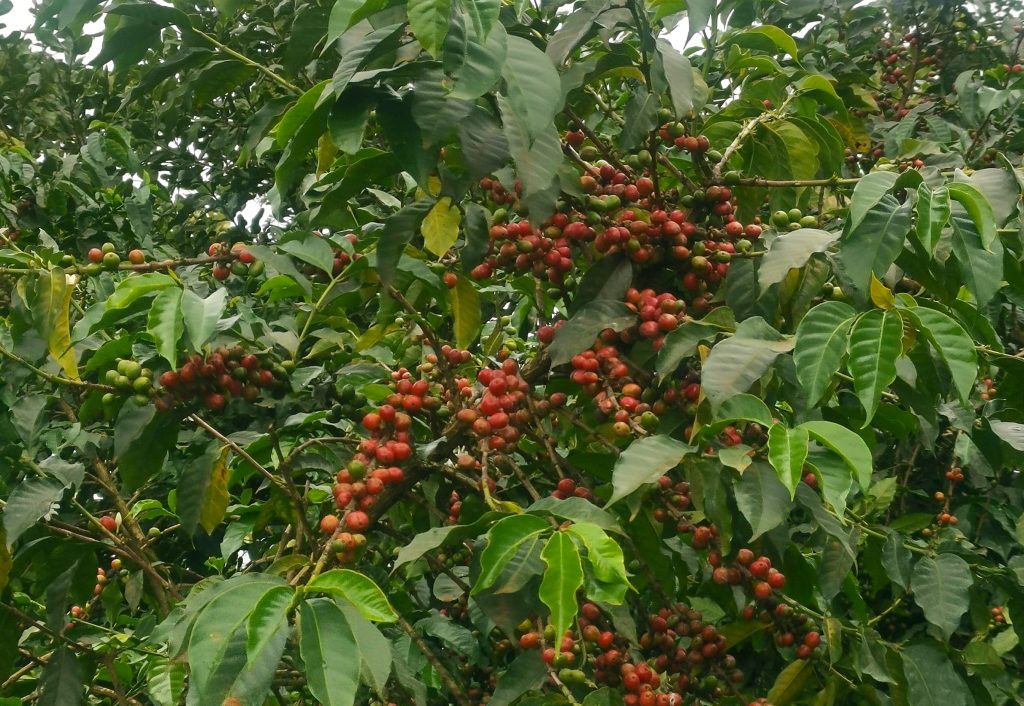
SL28, SL34, and Ruiru 11

Soil
Clay loam

Region
Rongai Sub-County, Nakuru County, Kenya

Process
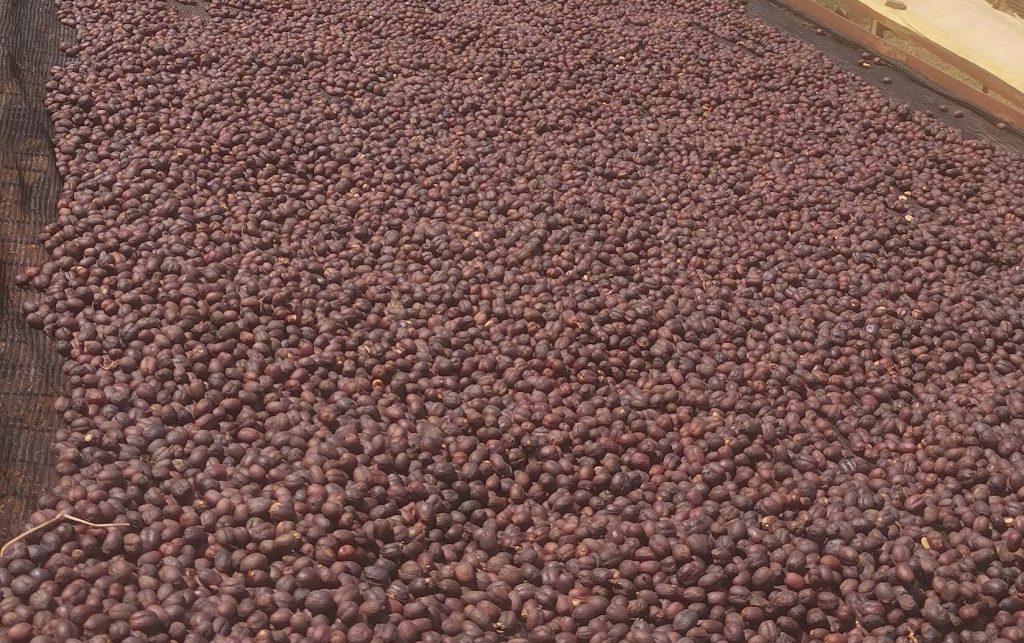
Natural, sun-dried on raised beds

Harvest
September- December

Certification
Conventional
This is a natural processed coffee from a large estate in Kenya’s western region. Kenya is well-known for producing fantastic washed coffee, and lots of it. High quality naturals, on the other hand, are much rarer. Sundried cherries in Kenya’s supply chain are most often undergrades—stripped from the trees at the last minute, or swept off the floor of the farm. Large estates in Kenya, like Kilombe Farm, are typically best suited for quality naturals given their space and resources.
Western Kenya
The Great Rift Valley of Kenya is a breathtaking and serene natural landscape that extends from the Tanzania boarder to the long Lake Turkana, about 120 kilometers north of Nairobi. The lower section of the valley is broad, fertile, and full of natural phenomenon—volcanic lakes (a critical part of the migratory route of huge numbers of Asian and African birds), mud flats, and dramatic escarpments on the east and west sides. It’s both archeologically significant and a consistent draw for domestic vacationers. The valley is not, however, often associated with Kenya specialty coffee.
There are, however, many cooperatives and larger farms operating on the western slope of the valley. This particular micro-climate has the elevation for great coffee, and a mostly-dry climate thanks to the adjacent Rift Valley floor. From here, coffee cultivation continues westward across the round, humid mountains that run to the boarder with Uganda and the enormous Lake Victoria. Some of the oldest typica- and bourbon-lineage coffee trees still growing in Kenya can be found in this area.
Kilombe Farm & Processing
Kilombe Farm is a 120-hectare coffee estate first established in the early 1980s. The coffee produces 500,000 kilos of cherry annually, roughly equivalent to a large washing station in Nyeri. Because of the climate and the farm’s centralized harvest management, it produces large volumes of naturals every year. The farm is planted throughout with a diversity of shade trees, and environmentally friendly agrochemicals that don’t harm the farm’s soil or canopy biodiversity.
Cherries are picked daily during the harvest months. Cherry for naturals is carefully sorted for ripeness, consistency, and to eliminate any foreign material like leaves or other debris from the field. Accepted cherries are immediately moved to raised drying tables to dry in the sun, where they are rotated constantly for 2-3 weeks until an interior moisture of 9-11% is reached. The fully dried cherry pods are then moved into large indoor “conditioning” bins to rest prior to milling, a process that allows moisture to evenly distribute throughout the seed and set up the coffee for a long, stable shelf life.