
- For online orders all products must come from the same warehouse.
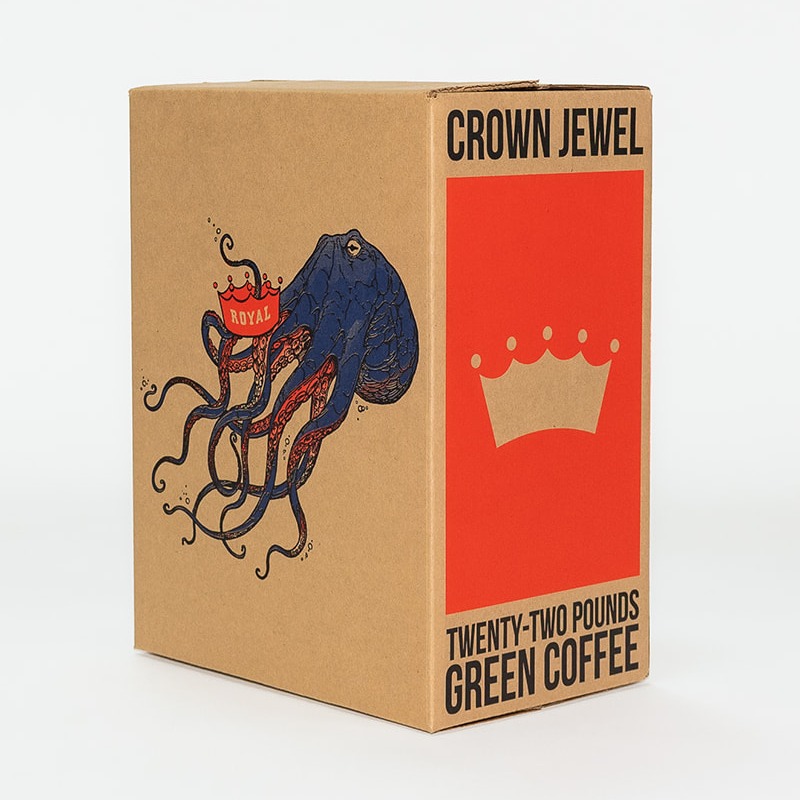
Crown Jewel Yemen Anaerobic Natural Sharqi Haraz Cooperative
37919-1 – SPOT RCWHSE$685.69 per box
Boxes 7
Warehouses Oakland
Flavor Profile Caramel, grape, jasmine tea, biscoff cookies, and melon
Add to your artisan.plus account: 
 Download PDF
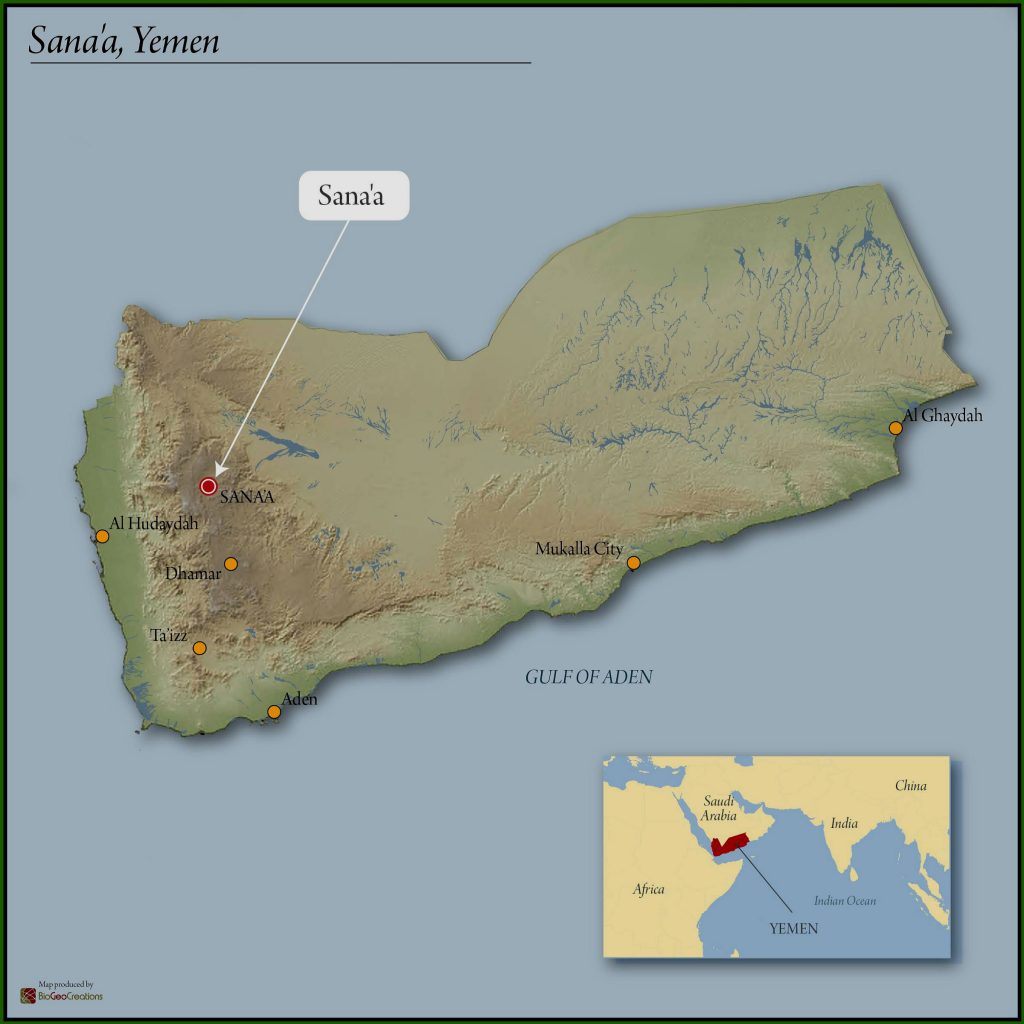
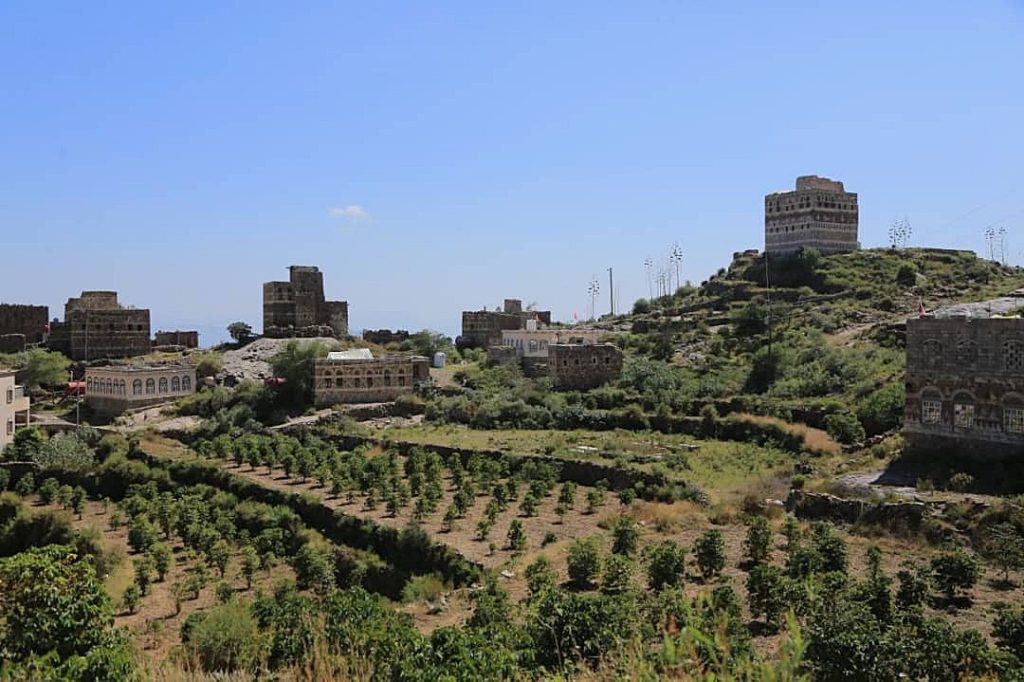
This coffee is produced by legacy farmers of various sizes in the mountains of Eastern Haraz, a large natural preserve and agricultural area in Yemen’s Sana’a Governorate.
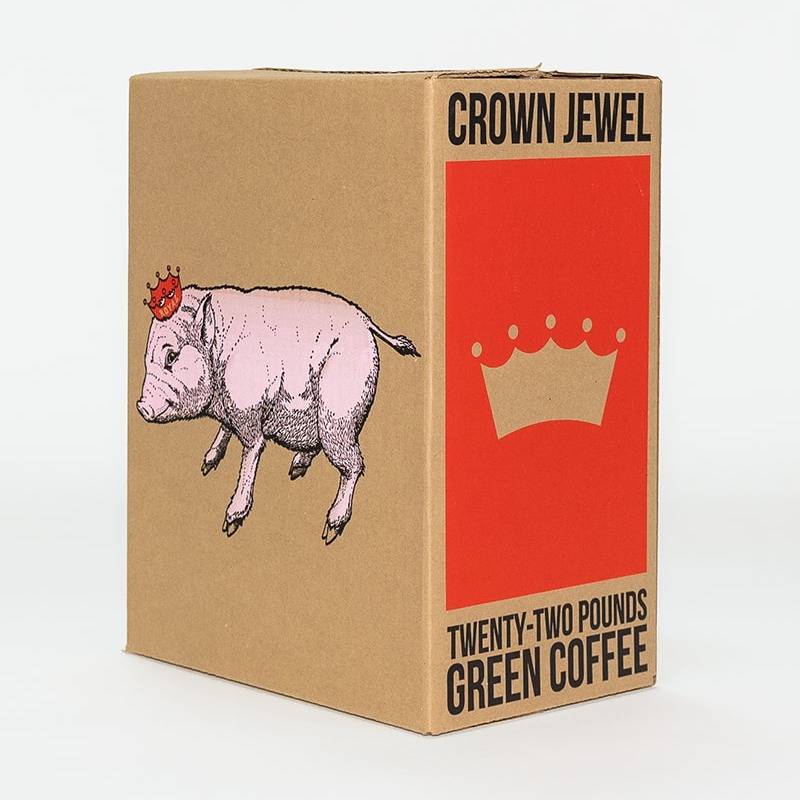
22lb Boxes
Spot
Overview
Overview
This is a high intervention anaerobic natural coffee from Haraz, Yemen produced by smallholder members of the Sharqi Haraz Cooperative.
The flavor profile is dense yet effervescent. This Yemeni rarity unfolds with layers of fudge brownie batter, cola, fig, pomegranate, pink Starburst, and whimsical aromatics of watermelon and yuzu.
Our roasters found a gentle, lower-energy profile with a prolonged low-heat charge phase, moderate airflow, and extended Maillard phase help highlight the Yemen’s dense sweetness and complex aromatics.
When brewed, our team enjoyed it with a medium dose and a tighter grind setting
Taste
Taste Analysis by Isabella Vitaliano
It’s dense and at the same time, effervescent and a bit whimsical. Fudge brownie batter takes center stage with supporting roles of compare, cola, fig and pomegranate. Our notes are a bit all over the place on this coffee because there are really so many flavors to uncover in this coffee. There are some weed-like aromatics, twizzle, watermelon and yuzu. It does this funny little danse back and forth on the palate as your trying to sort out what’s going on here. Single handedly picked by Max Fulmer, Royal’s CEO and origin that is the favorite of the founder, Bob Fulmer, you know it’s one not to be missed.
There are also flavors of menthol, pink starburst. An ambitious coffee for those with explorative palates. One of the first Yemen coffees that I have seen on the Crown Jewel menu, there is something special about having this one the menu. Yemeni coffee can be hard to come by with high cup quality and good pricing which is why it is a rarity to come by on an importer’s inventory sheet. It can be difficult to purchase a whole container of really expensive coffee with no where to go; basic economics. Defying all the rules of economics, not only was this coffee produced by legacy farmers in the country, it was also air freighted to our warehouse. Luxury on top of luxury.
You might be thinking, ‘in this economy? I think not’. But here is this the thing, in the past three years I’ve been working here, maybe more, there hasn’t been a coffee anything like this. A rarity of its kind, we won’t be seeing another coffee like this anytime soon. You found a needle in a haystack, pigs are flying and there is a blue moon out this evening. Perhaps never to be seen again, the trifecta is here and you better grab it before it’s gone. Cheers!
Source
Source Analysis by Chris Kornman, with Charlie Habegger
Among the most venerated of Royal’s stories passed by word of mouth, is that of cofounder Bob Fulmer’s favorite coffee. Various iterations of the story make their way around the office, likely stemming from an interview, lost to the archives of a pre-digital age, when a reporter apparently asked him what coffee he would be, if reincarnated as a beverage. In his own words, circa 2016 (around the time I started bothering him for stories around the cupping table) he wrote, “To this day, all things being equal, given a choice of every origin supplying their best coffee, with a gun to my head, and having to pick only one to drink forever, Yemen Mocca Sanani would be my choice.”
Bob, and by extension Royal, have a deep and time-honored relationship, not just commercially with coffee from Yemen, but with the Muslot family. Bob’s recollections of the introduction to the country, the business, and the Muslots ought to be required reading for all of our customers.
The Muslot family, like Royal, have entered a new generation of coffee trading and continue to adapt to the shifting landscape that is specialty coffee. Fatoum Muslot, Abi Hibah Muslot’s daughter, now runs the export business we continue to secure small quantities of coffee through.
When Max Nicholas-Fulmer, Bob’s son, texted me not long ago asking me what the most expensive coffee we’ve sourced for Crown Jewels in recent years, I shot back “why, trying to break a record?” and imagined we’d be staring down the barrel at an auction lot Panama or a clandestine Ethiopian coffee grown in Haile Selassie’s heretofore undiscovered private garden.
I did not expect it to be of Yemeni origin.
Yemen & Harazi Coffee
This coffee is produced by legacy farmers of various sizes in the mountains of Eastern Haraz, a large natural preserve and agricultural area in Yemen’s Sana’a Governorate. Coffee-growing families in this part of Yemen, similar to many others across the country, tend parcels of terraced land passed through many generations. Haraz’s people have had coffee in the ground for six hundred years, producing and enjoying it about two centuries before Europeans even knew what coffee was.
Though Yemen has always represented a kind of living antiquity of coffee, producers here are just as capable of modern methods. Case in point is this microlot. Only 1000 pounds of coffee, anaerobically fermented, vacuum packed and air-shipped to Oakland expressly to be a Crown Jewel. The extra fermentation is a small tweak on top of centuries of tradition, and the result gives us a good glimpse into both: the enduring; and the inspired.
Our most reliable histories indicate that it would be Sufi imams who would bring coffee into popular use during late night vigils in Yemen’s port of Aden, incontrovertibly no later than the mid-15th century. Arabia Felix, as the region was known at the time, became cultivated coffee’s homeland. For about two centuries, the tiny sliver of the Arabian Peninsula maintained a commercial monopoly on the globe’s supply of green coffee. That Ethiopia, not the Arabian Peninsula, is the origin of our favorite coffee species was a mystery lost upon the first Europeans to encounter the stuff. The Linnaean taxonomic name—arabica—nods to the mistaken provenance. Yemen and parts beyond under the Ottoman Empire embraced coffee, cultivated it, and successfully monetized it.
One of the modern era’s most thrilling coffee discoveries is the existence of an aptly named Yemenia mother population, reported as recently as 2020 by noted coffee geneticist and former World Coffee Research Chief Scientific Officer Christophe Montagnon, et al. These trees exhibit genetic distinction from the rest of the globe, their uncharted lineages altered and reinforced by centuries of adaptation, isolation, and traditional practices.
Maintaining coffee trees in a climate as harsh and uniquely challenging as Yemen’s western and northern ranges requires the kind of proven techniques that only generations of farming can figure out. Coffee farms are iconically terraced on arid, incredibly steep slopes. Where irrigation is not available, bore holes are dug manually into the rock to access individual water reserves for each tree wherever rain is scarce. Coffee trees are spaced generously, about 1000 per hectare (compared to 4000-6000 common in Latin America), both by necessity on the narrow terraces, as well as for better groundwater access and erosion control. Raising young coffee trees is a matter of hardening them for a lifetime of mountainous elements and water scarcity. Older coffee trees become very spacious and tall, and often end up hanging their branches over the terrace edge, known locally as “hanging gardens”. Above the coffee, shade trees are carefully selected and positioned for how well they block water evaporation. As can be imagined, productivity is very low in such conditions. And still, over one million people work in Yemen’s coffee trade, from farm to export.
“Harazi” is a term of terroir distinction, similar to “Kona”, that refers to high-quality heirloom coffee varieties produced in the unique climate and soil of this part of Sana’a, where subtropical conditions and available water springs allow coffee farmers to irrigate—something almost unheard of in the majority of coffee-producing areas in Yemen.
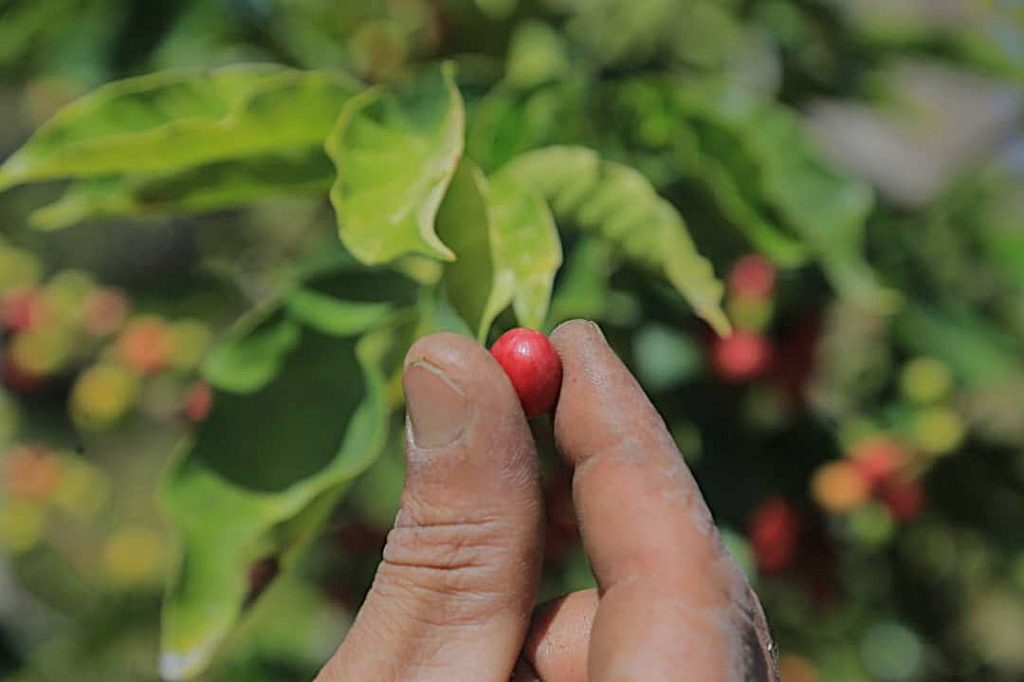
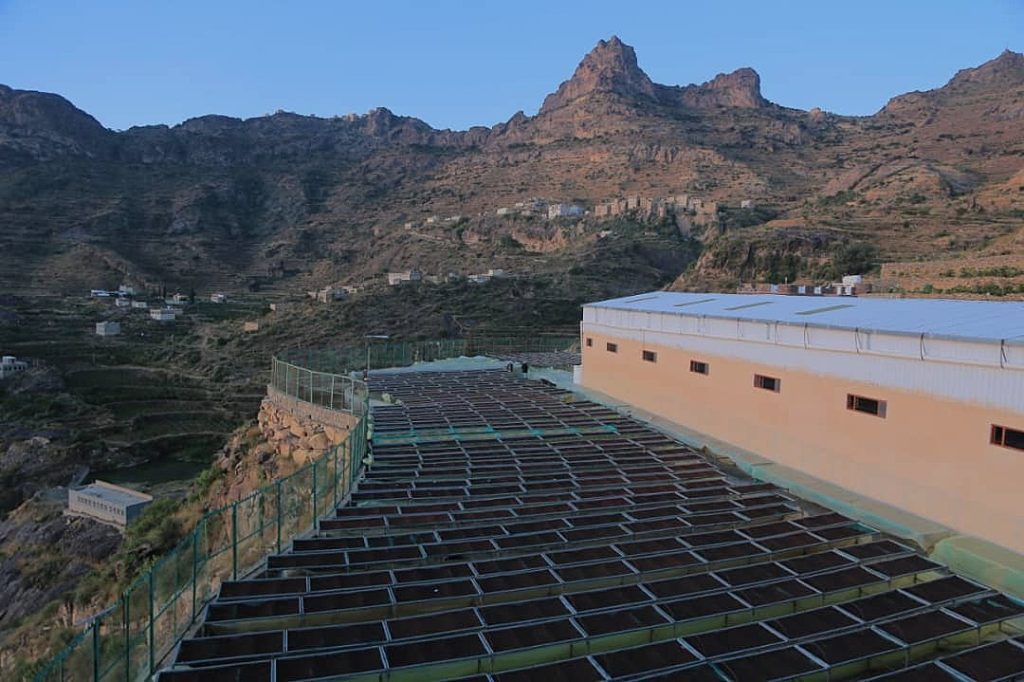
All Haraz coffee, as traditionally everywhere in Yemen, is typically processed as a natural: hand-picked, sorted for consistency, and dried in a single layer in full sun on raised beds or rooftops. Due to the arid climate and slow maturation patterns, coffee is picked almost year-round.
Pearl of Tehama & Processing
Pearl of Tehama, a miller and exporter, is a family business founded in 1970. For many years, all coffee was exported under the name of the family patriarch and founder, Ali Hiba Muslot. After his death in 1980 his three sons continued using the family name until 2012, when the family business, including other trades and retail, was split up. The coffee export business was reborn as Pearl of Tehama for Import, Export, and C.A.S, and is still owned by Ms. Fatoum Muslot, the late Muslot’s daughter. Fatoum’s eldest son, Yasser Al-Khaderi, is the company’s general manager.
This particular lot of coffee from Haraz was carefully curated by Pearl of Tehama from 200 of their partner farmers. Breaking from tradition, however, it was processed centrally, in very small installments. Cherries otherwise destined for families’ rooftops or raised screens were instead delivered to the Muslot’s central processing site where they were packed into sealed tanks to ferment between 48-72 hours anaerobically. Once fermented, the sticky, wilted cherries were moved directly to raised beds to dry in the sun, a process that took 15-20 days. Fully dried cherry pods were then stored in climate-controlled facilities to allow moisture to equilibrate, before sampling for quality control.
Final Thoughts
Getting Yemeni coffee out of the country, to the US, has never been easy. But the current geopolitical landscape makes it nearly impossible.
Yemen’s decades-long civil conflict rages on, its people and politics besieged by warring factions seemingly incapable of setting aside differences to mend deep societal wounds of poverty, hunger, and the effects of climate change. Recently, a Houthi solidarity campaign for the atrocities continuing to unfold along the Gaza strip successfully disrupted international shipping lanes, reminding even the most capitalist among us that complicity has consequences. But the recent relative shipping stability in the Red Sea has taken a human toll in the form of indiscriminate bombing of Yemen by U.S., Israeli, and UK forces. For anyone with the luxury of a 10,000-foot view, the cost of shipping coffees from the region, as measured in human lives, has been difficult to stomach.
Six years ago, I wrote an article for Daily Coffee News about low prices and displacement in coffeelands across the world. In it, I asked my coworker Haile about the sustainability of coffee production in such circumstances. “He directly challenged my long-held belief that supporting farmers through times of crises necessarily provides a measure of stability.” I reported. “‘Coffee growing can’t give any stability or security to the people,’ he said.”
“The stories we tell about the social benefit we provide by simply engaging in commercial activity have always rung hollow,“ I wrote on. “Whether marketing or self-reassuring, the truth is that growing coffee has little meaningful correlation to the larger human struggle of survival, particularly when extreme poverty or violence are involved. Furthermore, the fair payment for specialty coffee — or any crop, for that matter — shouldn’t be dependent upon a contrived narrative.”
Where does this leave us? As I sip this coffee, steeped with equal parts tragedy and triumph, infused with deep history and modern problems, I think there’s probably something worthwhile in acknowledging that we don’t have to, nay, shouldn’t deign to save the world with our coffee purchases, but that we are unequivocally obligated to be ethical in our practice. And, maybe, there’s nothing wrong with celebrating the diamond, born of unimaginable pressure, while recognizing that there is also so much more work to be done so that coffees like this—and more importantly, the people responsible for their existence—may survive the present, and thrive in the future.
Green
Green Analysis by Isabella Vitaliano
I have had far and few interactions with Yemeni coffee but I was not expecting to see some of smallest coffee beans I’d ever seen! As this was being roasted a producer was in visiting the crown, they immediately clocked that this was Yemeni coffee from how small it was. If you haven’t seen it before it’s a significant percentage smaller than Ethiopian beans, at least from my eyes. Fairly low density, which tracks given how small they are, be sure to keep a watchful eye on the roaster. Moisture content and water activity is within average ranges.
The lot is made up of four heirloom Yemeni cultivars, all of which are unfamiliar to me but are all arabica types. None of which are well documented nor are they considered stabilized lineages according. No correlation between genetic clusters and the names given by Yemeni farmers. These are traditional names given not by plant breeders, but coffee farmers from the region. Natural processed coffee from Yemen is very common but anaerobically processed coffee a bit less so, which makes this coffee even more special.
Diedrich
Diedrich IR-5 Analysis by Chris Kornman
For as uncommon a coffee as a heirloom Yemeni cultivar with an anaerobic fermentation, yet dried as a natural, this coffee roasted without much sound and fury.
Given the expected low density, plus taking into account processing methods, I opted for a lowish charge temperature around 415F (and an unusual decision, for me, to keep the burners off entirely, shooting for a very low 175F turning point) and a decently long (1:30) soak prior to raising the gas up to 70%. Color change occurred on cue at 5:00 and 300F, which is around when I opened the airlfow to 50% and dropped the gas to the 30% idle setting, leaving it there, untouched, for the remainder of the roast.
The cooling effect of low gas and moderate airflow helped push Maillard reaction timelines towards four full minutes, and while first crack started quietly, it was audible and consistent at a very normal looking 388F. Opening the airflow fully, the coffee continued to develop more or less on its own momentum. First crack seemed to end very quickly, just 70 seconds or so after it began. Despite the lack of audio indicators, I continued to allow the coffee ample development time (with Bob’s words echoing in my ears, “Yemen Mocca Sanani, roasted full city, made fresh and strong.”
With almost two full minutes of development for a total of nearly 11-minutes in the roaster and a ground Colortrack score of 61.85, this is a bit of an off-brand roast for me. But, she’s an unusual coffee, and deserves a chance to take the stage on her own terms, un-imposed upon by snooty light roasters whose incoherent ramblings about terroir will not be brooked quarter by coffees like this, coffees who were there when the deep magics were written.
Anyway, whatever precious concerns I might’ve had about the coffee’s roast or process or origin quickly faded at our stone cupping table, as myself and my fellow cuppers waxed poetic. Unsurprisingly, a coffee this richly entrenched in history with the twist of modern processing methodologies yielded a spectacularly unique tasting experience.
With a sweetness teetering from pink Starburst candies, Red Vines, and watermelon candies, to vanilla, caramel, and cola, the cup is unabashedly charismatic. It has a rich, dense texture like cookie batter or taffy, but manages somehow to remain light on its feet, effervescent, botanical, and a little spicy. We noted fresh fennel, Campari, aromatic cannabis, pink peppercorn, menthol, and orange bitters, while simultaneously mentioning fresh fig, pomegranate, yuzu, and grape soda. The coffee’s presence is both humble and commanding, austere and audacious, comforting and unexpected.
This is a unforgettable, rare jewel of a coffee, an unusual offering from an often overlooked and unappreciated origin, without any need for precious treatment or unusual styles in roasting, yet evocative and immersive both in its story and flavor.
IKAWA
Ikawa Pro V3 Analysis by Isabella Vitaliano
Our current Ikawa practice compares two sample roast profiles, originally designed for different densities of green coffee. The two roasts differ slightly in total length, charge temperature, and time spent between color change in first crack. You can learn more about the profiles here.
The high-density roast of this coffee was a little bit on the dark chocolate side with some fruit and anaerobic qualities. On the light density roast, we found that there was more balance between the flavors. You get more nuances and more intricate flavor notes like pink peppercorn, yuzu, and watermelon. This makes sense because the beans are visibly so small, and the density is so low, that the coffee would be a better match for a longer and slower roast.
You can roast your own by linking to our profiles in the Ikawa Pro app here:
- Roast 1: Low Density Sample Roast
- Roast 2: High Density Sample Roast
Brew
Brew Analysis by MJ Smith
As soon as I heard that we were going to be getting a Yemini Crown Jewel, I practically BEGGED to be the one to lead this analysis. Not to make it too personal or anything, but as a Muslim myself, I love when I get to taste coffees from predominantly Muslim countries. Not to mention, one of my best friends is from Yemen, so I’m just so excited to tell him all about it! Okay, okay, khalas, enough about me. Let’s get into this coffee! Bismillah!
My first impression right after opening the bag is that it smells like Now & Laters candy mixed with milk chocolate (and yes, that is a good thing…) Things only got better as I started brewing it. This is one of the tastiest, most interesting coffees that I’ve had in a long time! I swear, each brew gave me an entirely different flavor experience. It’s packed full of complex fruits and florals but rounded out by a creamy sweetness that blends and balances everything so beautifully. I actually have three different brews for y’all today; two that were my favorites, and one runner-up that was a favorite of some of the rest of the team.
This first brew was also my first brew of the day, and just as I expected, it was love at first sip. I started with a classic 15.79 ratio on the V60, using a dose of 19g and our usual water dose of 300g. I grounded it at a 9 and ended up with a 3:50 brew time and a TDS of 135, giving me an extraction percentage of 18.88%. To me, there were notes of strawberry ice cream, cheesecake, marzipan, pomelo, tart nectarine, and malt chocolate. There was a certain unique creaminess to this brew that really stood out to me in a good way. As for the rest of the team, there was definitely some strong calibration with this coffee across the board, with marzipan, chocolate, and strawberry all making appearances in other people’s notes. They also found notes of fruity dark chocolate, grapefruit, tootsie roll, ginger, hibiscus, caramel, and peanut brittle.
For the next brew, I kept the recipe exactly the same but switched over to the C70 brewer. This one had a TDS of 1.25 and an extraction percentage of 17.24. It was also my favorite brew of the day. Because of the thicker filter and a potentially weird vacuum-seal moment between the filter and the brewer that might have significantly slowed down the drip rate, this brew tasted significantly different, and in the most magnificent way! My first sip barely even reached my taste buds before I was greeted with a fresh bouquet of jasmine blossoms, followed by sweet flavors of crème brûlée and Biscoff cookies, with some soft hints of raspberry leaf and green grape. The rest of the team found notes of rose, tobacco, caramel, and ginger, as well as raspberry leaf and grape.
This third brew, like I mentioned before, was the favorite of a few of my team members, so I wanted to include it as well. Also brewed on a C70, for this one, I slightly raised the dose to 19.5 and then turned the grind up to 10. When I first tried this one, all I could taste was kettle corn and red wine (which just sounds like a sad night from my 20s…), but once it cooled, after everyone raved about how much they liked it, I went back and found some nice notes of cherry blossom, watermelon close to the rind, lemon water, and glazed donut. The rest of the team tasted berries, hot chocolate, quince butter(?), melon, raspberry tea, soft lemon, cucumber water, and caramel.
One note I’ll make about this coffee that followed suit with other anaerobic coffees we’ve worked with is that it really does taste better with medium dose and a tighter grind, resulting in a seemingly low TDS and extraction percentage. For more fruity flavors, I would recommend a V60, and for more floral notes, I would recommend a brewer with a thicker filter, like a C70 or Chemex. I really did love this coffee, and I’m so excited that it will be making an appearance on our pour-over bar here at the Crown. Come on down and give it a try (or just take my word for it and buy it up right now!) I promise you that this coffee will not last long, so get it while you can! Enjoy!
Espresso
Espresso Analysis by Marie de Courcy
There’s been much buzz around this Yemeni coffee from Sharaq Harazi Cooperative, and rightfully so! I’ve rarely if ever experienced a coffee so rich in flavor depth and diversity. Yemeni coffees are rare in our little specialty bubble and it’s exciting to see one arrive as a Crown Jewel. I spend time outside of work drinking Yemeni coffee and cafe’s around town and felt grateful to be able to experiment with one myself.
My first recipe used a dose of 19g, a yield of 41g extracted in 27 seconds. The shot came through even and produced a shot with dense body, syrupy and complex. There were bright citrus flavors and jasmine florals on the tip of tongue, with deeper richer flavors like fernet branca and milk chocolate caramels on the after taste. I was shocked at how rich in flavor this cup was, every sip felt like I was drinking a different coffee.
I used two more recipes in my testing. The first with a dose of 18g, a yield of 41g extracted in 25 seconds. I tried for as slightly more traditional profile on this one and got just that, while still maintaining some complexity. This really leaned into the floral and herby notes like orange blossom, grapefruit, and amaretto. The body seemed to diminish and we were left with something juicy and clean. My final recipe went all the way in the opposite direction, a dose of 20g, 44g yield, and a 31 second extraction time. The body was drastically heavier than the other two recipes, rich decadent and chocolatey, but still maintaining that floral complexity. We found notes like allspice, christmas fruitcake, snickers, lavender, and applesauce. It had texture like peanut butter rich and warm and inviting.
This coffee was very fun to experiment with, full of flavor and complexity unmatched even by other anaerobic naturals we’ve had come through the Crown. I think this is a truly special coffee and there’s plenty of room to find a recipe that should suit your desires. For something rich, juicy and complex try a moderate dose, with a faster extraction time. For something truly decadent and full bodied try a high dose, high yield and longer extraction time. This coffee is fairly forgiving and tastes great in many different profiles so have fun with it and enjoy.
Related Coffee
Hops, lime, botanical, floral, and pink grapefruit
Oakland 27 Boxes
Crown Jewel Colombia Carbonic Honey Cascade Hop Co-Fermented Pink Bourbon Edwin Noreña
37702-1 – SPOT RCWHSE
Hops, lime, botanical, floral, and pink grapefruit
Spot
27 Boxes
$376.84 per box
Green apple, jolly rancher, apple, mojito, apple cider
Oakland 21 Boxes
Crown Jewel Colombia Carbonic Honey Green Apple Co-Ferment Edwin Noreña
37710-1 – SPOT RCWHSE
Green apple, jolly rancher, apple, mojito, apple cider
Spot
21 Boxes
$434.39 per box
Orange, lemon, cranberry, vanilla, pear
Oakland 45 Boxes
Crown Jewel Rwanda Washed Jarama Kivubelt Estate
Lot 50 – 37912-1 – SPOT RCWHSE
Orange, lemon, cranberry, vanilla, pear
Spot
45 Boxes
$189.33 per box
Peach, jasmine, peach black tea, grapefruit, and peach nectar
Oakland 49 Boxes
Crown Jewel Colombia Carbonic Honey Peach Co-Ferment Edwin Noreña
37701-1 – SPOT RCWHSE
Peach, jasmine, peach black tea, grapefruit, and peach nectar
Spot
49 Boxes
$376.84 per box