
Editor’s Note:
This field report accompanies Royal Coffee’s ongoing partnership with Grounds for Health, an organization dedicated to providing life-saving cervical cancer screening and treatment to women in coffee-growing communities. Royal is currently raising funds in support of this work, with all contributions matched dollar for dollar as part of our 2026 campaign. The experiences documented here reflect the human impact behind that partnership and the communities it exists to serve. Learn more about the fundraiser.
Article Summary:
Royal visited Addis Ababa and Hawassa to train our Ethiopia team and document the life-saving cervical cancer screening work of Grounds for Health. We cupped with the Addis Lab, met GFH clinicians, interviewed patients, and gathered footage for Royal’s 2026 fundraising campaign.
Royal Coffee x Grounds for Health
In early November, Amy Periera from Royal Coffee’s logistics team and I had the opportunity to visit Addis Ababa, Ethiopia and Hawassa, in the coffee lands to the south of Ethiopia’s capital city.
The goal of this trip was to do some training with the Royal Coffee Addis Ababa team and get some footage for an upcoming project. Royal is gearing up for a big fundraising campaign to support the Grounds For Health (GFH) team to get personal accounts of women experiencing the care from along with more videos and photos to help support this campaign. For this weeklong trip, Amy and I had a few directives: Working on the Grounds for health campaign, as well as calibrating with the Addis team and training part of the Addis team on inbound work. I broke up the trip into three sections Addis Lab, Grounds for Health and lastly, exploration.
Addis Lab
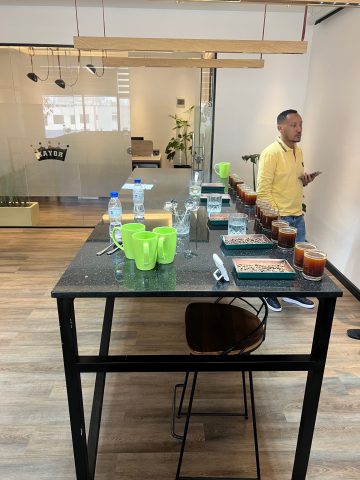
Cupping with Haile at Addis Lab
Addis treated us well and meeting the team, all women might I add, with the exception of Haile was such a pleasure. Aedom and Haileyesus make up the logistics team and Haile has also been Royal’s man on the ground for over 10 years now. Ethiopia is incredibly important to Royal not only in businesses, sure, but also the cultural and botanical significance Ethiopia is to coffee. Segenet and Beti are part of the quality control team with Segenet being the lead QC Specialist and has over 7 years of experience with a large exporter as well as being a Q grader.
The lab itself is new, less than a year old and the idea behind it was to create space to handle larger volumes of Ethiopian coffee. With this new lab the team can process coffee quicker and find newer coffees from producers with ease. In turn, this supports our main office in California to better serve our customers.
On the schedule first was cupping and I had brought Colombian coffees of a few different quality ranges, including the recent drop of co-fermented coffee from Edwin Norena. We had the chance to discuss the marketplace of co-fermented coffees and space for these coffees in different markets. In Ethiopia, it is hard to obtain coffee from other origins due to regulations, so this was some of the team’s first time trying Colombian coffee.
Day in and day out, the team is cupping coffee from the country. From offer samples to pre-ship samples to arrival samples they are constantly approving coffees. They are intimately familiar with the Ethiopian landscape and know different flavors associated with different areas, something I do not have a hard grasp on. I was curious about their favorite coffees, and both Segenet and Beti said their favorite was Guji with a knowing look and a smile on their faces.
I did not get the chance to fully tap into all the knowledge and information the team has under their belt, but I was grateful to meet them, nonetheless. With only a week in Ethiopia, Amy and I had a lot to do, and the next part of our trip was going to Hawassa.
Hawassa x Grounds for Health
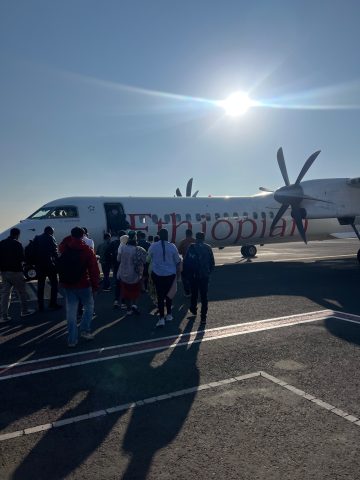
Flight to Hawassa ft. very small airplane
Hawassa Day 1
It was a short 1-hour plane ride from Addis to Hawassa, a flight time that felt luxurious compared to the 24-hour travel time a few days before. Landing around 9am, the sun is just gearing up to what is going to be a hot and dry day at about 80 degrees.
Amy, Haile and I received a warm welcome from three friendly faces, Ashenafi, Demis, and Mesfin. These are three clinical specialists that make up GFH’s team on the ground. A power trio, they have an incredible reach in both mileage and number of women they have been able to test and treat across Ethiopia.
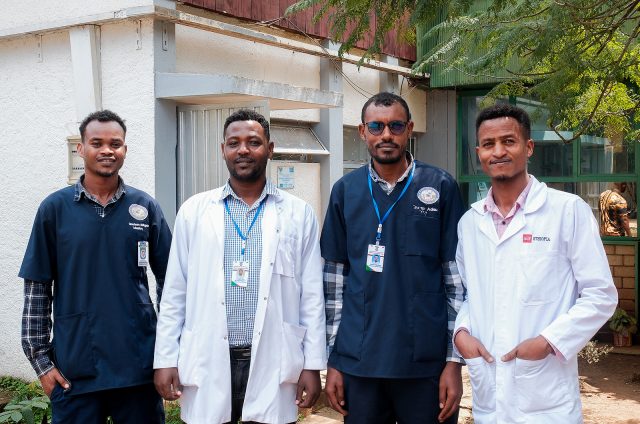
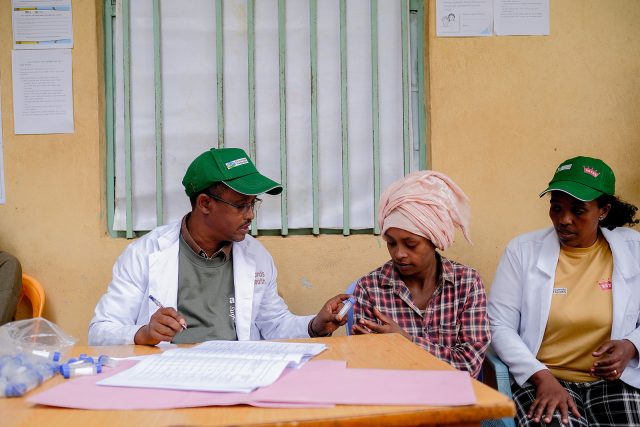
Clinician team completing testing kits at hospital in Hawassa
The three share a light humor of a group that is well acquainted with one another but when talking about the work they have done over the past 14 years you can see how serious and how important they feel and know the work is.
Grounds for Health has been operating since the 80’s and the focus on cervical cancer is because it is one of the easiest cancers to detect, treat, and cure when caught early. Women in developing countries are susceptible to diseases with lack of access to health care, education and treatment.
Initially, the program started off utilizing VAP testing, which uses vinegar as a tool to test the epidemiology of HPV. This is the usual route for testing all across the world and is the gold standard.
VAP testing was initially used in the program but as more research and testing was available, the organization switched to HPV testing. VAP was cheap and easily accessible, but women did not have any privacy in the testing, and the results vary depending on the experience of the clinician.
HPV testing allows for more accurate test results and for women to self-test which gives them autonomy, privacy and dignity. The con of HPV testing is that it is expensive, and it needs to be refrigerated. As they started moving towards HPV testing, they closed their physical clinics to allow for funds to redistribute and reorganize their systems.
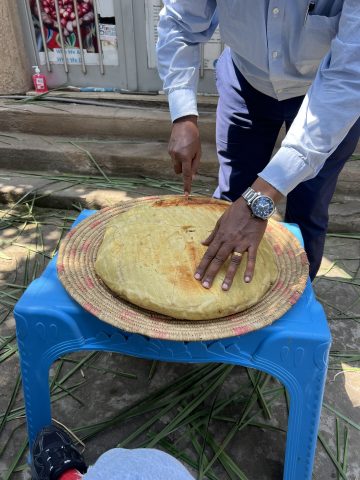
Homemade bread with coffee ceremony
You can see the three of them feel immensely proud of their work. They know the importance of it but remain grounded in their gentle demeanor.
After we arrived at the hotel and settled in, we headed to the GFH office to take a tour and discuss some of their work in further detail.
What struck me during this trip is an incredible kindness that emanates from a majority of the Ethiopians we interacted with. On our way to the office, Amy simply mentioned the word banana, and Mesfin was immediately chatting with the driver. Although they were speaking Amharic, Amy could immediately pick up on what was happening. She insisted we did not need to stop for bananas. Lo and behold, what do you know, five minutes later we just happen to drive by a fruit market and Mesfin is procuring bananas for both of us.
Once we arrived at the office, we went through their very impressive figures and goals for the organization. During this time, Amy asked the GFH team what the impact of the USAID cuts have had on their immediate community. An overwhelming agreement among them is that this has had a disastrous impact on the community and country at large, especially with the current political and economic climate in the country.
After the tour of their main office, we had the chance to share a coffee ceremony with the group, eat fresh baked bread and cake before heading back to the hotel.
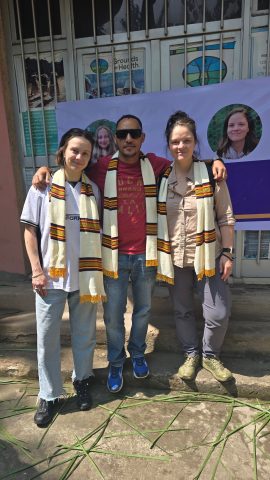
GFH office in Hawassa. From left to right: Isabella, Haileyesus, Amy
Hawassa Day 2
The following day we first went to a government-run hospital to meet the team of clinicians testing for HPV. Grounds for Health works closely with the government for situations such as this to make sure that testing is happening and results can get out to the women as quick as possible. Results can vary in timing depending on the size of the testing group they had for a particular screening day. GFH operates in two different countries currently and preciously working in four additional areas, they need to be highly adaptable and innovative in their execution.
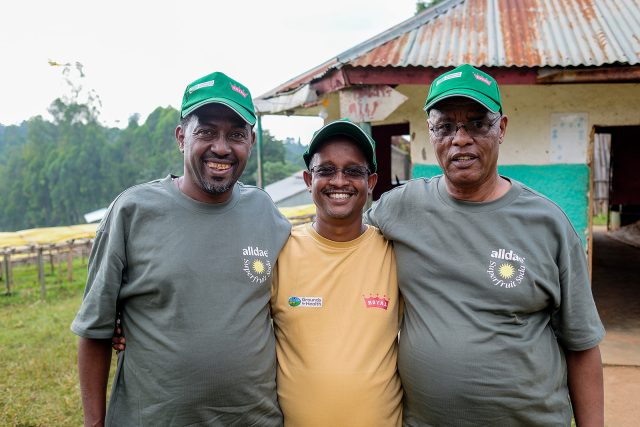
GFH clinician team. From left to right: Mesfin, Demis and Ashenafi
Languages in Ethiopia are often designated by their region. Amharic is commonly spoken in Addis, while other regions speak the language of the region they are in or even more specific dialects to their communities. Ethiopia has almost 100 languages. I mention this because not only is this a factor in how we are able to communicate with our interviewees, but it also is another example of how impressive the work is that GFH does. From education, to screening to treatment, women in these rural communities likely do not speak Amharic and local contacts are necessary to provide effective care, another feat that GFH has accomplished. During the interviews on this day, many of the subjects speak Amharic but Sidamana (spelling might be wrong on this and google is useless) as well, a language common in the Sidama region.
After the government- run hospital, we headed to a cooperative that partnered with GFH to screen and educate women on site. The idea being that they could get health care while they go to work. At the coop, coffee cherry is delivered and then washed and put on raised dry beds. We could see the women working on raised screen beds, sorting coffee, when we arrived. They received us with an especially warm welcome with sweet smiles and a song that is meant to signify a greeting to newcomers.
Screening and education began for the women that arrived and Nafkot, our photographer, who is a local in Addis, took candid shots of the events unfolding. Nafkot has a particularly warm presence about her. It is pretty common for Ethiopian women to be reserved, but she has such a way to make people open up and smile for the camera. The professional shots seen in this blog are credited to Nafkot.
Before beginning our interviews of clinicians and patients, we sat down and shared a snack that consists of fermented Ensete or ‘false banana’. The root of the inset is fermented for a few days while covered in a leaf to protect the fermentation. We share the food in a circle with one another before moving onto interviewing clinicians, community leaders and patients of the program.
I had questions written down and Haile translated for me as we recorded the answers on film. With more subjects than I expected, and different roles that I expected, I needed to think of new questions on the spot to make it relevant for each subject. Between Haile and myself, we found the sweet spot of asking questions while he asked follow up questions that I couldn’t understand without speaking the language.
Many hours later we met as a group to share another coffee ceremony with light snacks in a bungalow that is near the coop. After the long day, most of us were fairly mute, and contently so. After bellies were full we headed back to the hotel, an hour and a half drive in the center of Hawassa.
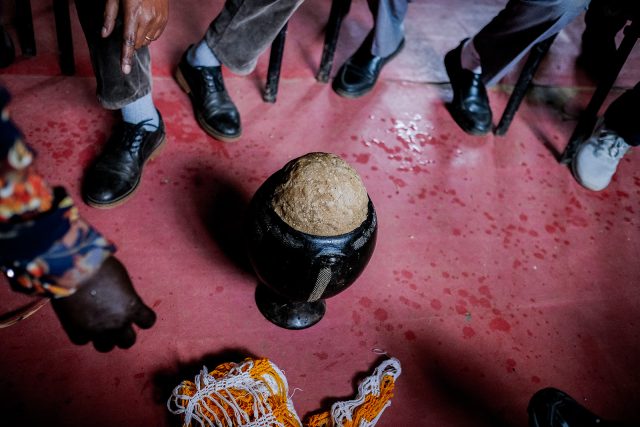
Fermented Ensete shared at coop
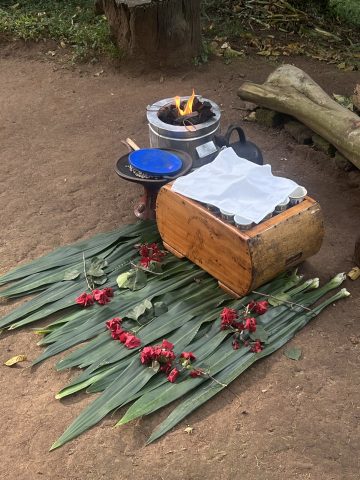
Coffee ceremony the team enjoyed after filiming
Exploring Ethiopia
The filming day was met with a lot of anticipation for everyone and after that was over Amy, Haile and I had one more day together before going our separate ways. We flew back to Addis to do a little bit of exploring the city together. First on our expedition was stopping at a honey shop where Haile often takes his visitors. Bees were buzzing around the shop, and the workers paid no mind to them as they let us sample their honeys. We sampled a range of honey starting with a dark amber honey all the way to a thick, white creamed honey.
On Wednesdays and Fridays fasting food is available, which are all vegetarian dishes. As seen in the photos, you can see the assortment of dishes we got. On the bottom is a beet and carrot dish, this was Amy and I’s favorite dish and overall favorite meal of the whole trip. After this we headed to Unity Park to see the home of Emperor Haile Selassie who remained emperor for 40 years in the early-mid 1900s. The Park is equipped with a zoo, the original ballroom and historical artifacts. Quite large, it took us roughly an hour and a half to walk the entire exhibit. Once our quick bout of exploring was done, Amy and I headed back the hotel to rest before our 21+ hour travel time back to San Francisco.
Wrapping it up
While you’ve heard too much about me, you have not heard too much about Grounds for Health. Starting in January 2026, Royal is launching a fundraiser to provide support for the organization. If you want to donate as soon as possible, you can donate on their website here. As the only non-profit health organization focused on HPV operating in the region, their work is more critical than ever. Stay tuned for more information on how you can support this cause.
Thank you to my travel companion Amy, Haile, and GFH team being such gracious hosts as well as Royal for sending me to work on this project.
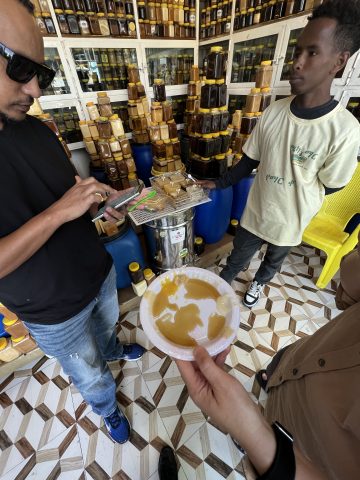
Tasting honey in Addis

Latest Articles by Isabella Vitaliano
What We Accomplished in 2025 and the Work Ahead
Community > Chaos 2025 delivered volatility across both the global economy and the entire coffee supply chain. Yet one thing never shifted: the strength of our community and the collective impact we can make when...