
Article Summary:
Fermentation is the key process shaping coffee flavor. Traditional natural and washed methods rely on microbial activity. Naturals ferment in the whole cherry, creating fruit-forward flavors, while washed coffees ferment after depulping for cleaner, brighter profiles. Poorly managed fermentation can lead to the sensory defect known as “ferment,” marked by sour or rotten notes. New techniques like honey processing, multi-stage fermentation, anaerobic and carbonic maceration, co-fermentation, and microbial inoculation are expanding coffee’s flavor spectrum, blending science with creativity. These methods allow producers to fine-tune acidity, sweetness, and aroma while responding to environmental and resource challenges.
This is a simplified version of an eBook and booklet published by Royal Coffee. Prefer to download a pdf or read the full eBook online as a flip book? Go for it!

Understanding Coffee Fermentation from Classic to Experimental
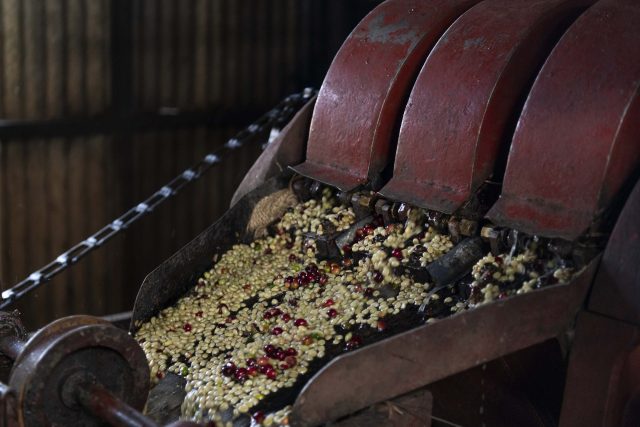
While coffee flavor is dependent on myriad factors from cultivar to roast degree to brewing style and beyond, primary coffee processing – fermentation – is responsible for the creation of major identifiable flavors in basically every coffee.
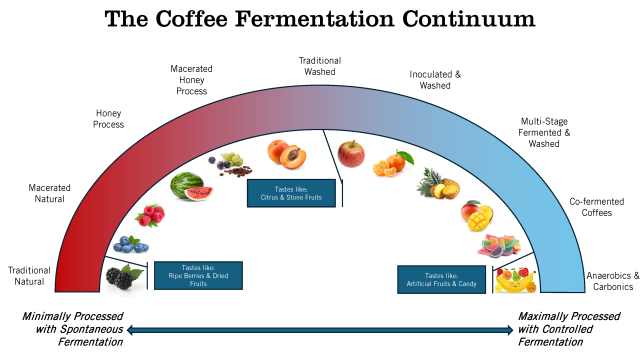
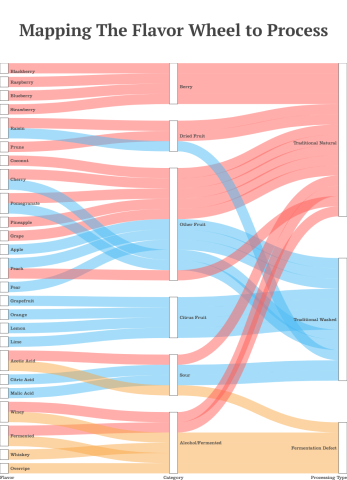
If you were to set two coffees in front of a trained taster, one tasting like ripe blackberries and the other tasting like fresh orange and caramel, the taster would likely predict that the berry-flavored coffee was a natural and the citrusy coffee was traditionally washed. In a world where traditional styles of processing are the only ones available, that taster would likely be correct.
With the advent of unique fermentation techniques, however, our flavor palate has expanded and overlapping styles of processing may create uncommon, unexpected, or simply unpredictable flavors that defy easy categorization.
What is Fermentation?
Fermentation itself is a vast and widely misunderstood process that takes on different definitions depending on the one who might be defining it. Biochemists are fairly strict about the parameters, whereas in food production our definition is a little more flexible.
Fermentation, chemically, is metabolically and enzymatically induced energy extraction from carbohydrates, in the absence of oxygen.
Fermentation, in the context of food and beverage, is a process in which microbes – usually bacteria or yeasts – bring about changes in what we eat and drink. Typically, microbes will consume sugars and produce alcohol and organic acids.
A small population of microorganisms (often a single strain, species, or type) can be referred to as a culture. Cultures of certain microbes may be used as starters to inoculate (or control a microbe population’s exclusivity) a specific type of food or beverage.
Intervention is a term, often used in winemaking, to describe human interaction with fermentation. A low or minimal intervention process might mean that native microbes are allowed to act at will, while a high intervention ferment might employ inoculation, oxygen-reduced environments, and/or other techniques used to control, limit, or expand the microbial influence on the product.
What about Coffee Fermentation?
Is coffee fermented?
The answer is almost always yes. Immediately after harvesting, coffee fruits ferment prior to further processing and export.
Traditional coffee processing can be split into two primary categories – usually referred to as washed and natural – which ferment in different ways and result in different flavors.
There are also various innovative fermentation methods, many of which are relatively new to coffee, which impact tasting notes significantly. There’s also a sensory defect known as “ferment.”
Traditional Natural Coffee Fermentation
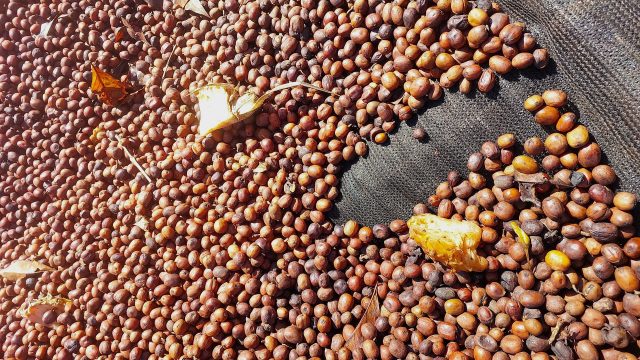
Natural coffees undergo minimal processing, drying the coffee fruit whole around the seeds (beans).
Microbes native to the environment where coffees grow will feed on the fruits as they’re drying. Fermentation here occurs spontaneously, uncontrolled, and generally unobserved. Very little research has been done into the specific types of microbes responsible for natural fermentation, but we can be fairly certain it will be a mixed culture of bacteria and yeast, with specific species likely varying by region.
Natural coffees are expected to taste fruity as a baseline flavor; some may range from delicately peachy to bombastically berry-like. Cuppers usually avoid overly nutty and bland naturals on the one hand, and winey, boozy, vinegar-like, or composty natural on the other.
Traditional Washed and Fermented Coffees
Washed coffee seeds are stripped of their fruit (“depulped”) and then fermented semi-formally prior to the eponymous washing step in processing.
Usually, fermentation will occur in an uncovered tank, either piled dry or submerged in water. Researchers and scientists have traditionally categorized this as a mixed culture of predominantly lactic acid bacteria and yeasts. While fermentation in washed coffees has traditionally been intentional, the culture will likely be impacted by the spontaneously occurring native microbes of the local environment. While monitoring variables such as temperature, sugar content, and pH is possible, traditional controls are usually limited to the duration (usually brief, eight to 48 hours may be the most common length, depending on regional trends and temperatures), and to whether or not the depulped coffee is submerged in water during the process. “Wet” fermentation has some advantages – it homogenizes the process and may limit the fermenting microbe population to more beneficial types.
Washed coffees represent the majority of specialty coffee produced in the world, and are expected to taste clean, mild, and sweet. A typical generic specialty washed coffee from Central America might be caramelly and nutty, while African washed coffees are frequently thought of as being more citric and floral. Generally, traditional washed coffees may taste fruity but rarely dive deeply into berry-like flavors, tasting closer to stone fruit and citrus types of fruit flavors. Regional and processing idiosyncrasies, as well as myriad other factors such as cultivated plant variety may alter flavor substantially.
The Ferment Defect
While washed coffees are intentionally fermented, and natural coffee cherries ferment spontaneously until they are dried, all coffee may be impacted by a nefarious defect cuppers are trained to detect known as ferment.
This sensory defect, typically represented by inconsistent cups (though in severe cases affecting entire lots), presents with overly fruity tasting notes, or even flavors of vinegar, rotting fruit, or compost. It may affect any style of processing but is most associated with washed coffees which spend too long in the fermentation tank, have insufficiently cleaned fermentation facilities, or simply are macerated by “bad” microbial actors.
Recent studies indicate that the ferment defect, or the “over-fermented” flavors, could be considered as a microbial “attack on the bean” itself, rather than simply fermenting the fruit surrounding the seed. Certain scientists have proposed chemical definition of this defect, rather than a sensory one, which might include a threshold of detection of certain ethyl esters responsible for the off-flavors.
New Frontiers in Coffee Processing and Fermentation
Honey Process
In the early 1990s in Brazil, the first of what would eventually become known as “Honey Process” coffees were being created and eventually made available in small volumes for roasters to buy.
Honey Process, also known as “Pulped Natural” and sometimes “Semi-Washed,” is an in-between method, whereby a producer depulps coffee fruits and dries the coffee in mucilage without intentionally fermenting. The spontaneous fermentation is much like that of a traditional natural, except that instead of fermenting a whole unprocessed cherry, fermentation only affects the remaining fruit pulp clinging to the seed.
Honey process coffees sometimes include a color – on a scale from least amount of fruit remaining to most, that scale might read: white honey (with almost no fruit left on the seed), yellow, red, purple, and finally black honey (with all but the skin of the fruit left to ferment on the seed).
As you might imagine, the flavor of honey processed coffee, depending on how much fruit is removed, will vary on its own continuum. White honey coffees may be almost indistinguishable from traditional washed coffees, while black honey coffees can echo aspects of traditional naturals – usually tasting like raisins and grapes. Yellow and red honeys often have a “pulpy” ripe cherry or plum character, without being as overtly fruity as their darker-colored counterparts.
Multi-Stage Fermentations
One innovative step certain producers choose to make might be to use extra steps in their fermentation process to impact flavor.
The most common multi-stage fermentation is probably the post-fermentation soak, commonly employed in most specialty grade washed East African coffees (sometimes referred to as “double washed”). After the coffee parchment is fermented and washed, it will be kept overnight, or for a day or two, submerged in clean water.
We’ve also seen multi-stage fermentations take place before the washing step, where (for example) a coffee might ferment or macerate briefly in whole cherry before depulping and fermenting in parchment, or producers might follow a dry fermentation with a submerged stage. Sometimes these coffees are called “double fermented.” “Fermented (or macerated) naturals” employ some similar techniques. Coffee cherries may ripen in a sealed bag or on a raised bed under tarps prior to drying.
Anaerobics & Carbonics
The popularity of oxygen-deprived fermentation environments in recent years has been hard to ignore. These coffees, typically characterized by over-the-top fruitiness and artificial sweetness like bubble gum, fruit candy, or sweet dessert wines, can be created in a variety of ways but the single unifying factor is that producers use a controlled environment to seal off the coffee. Often using stainless steel fermentation tanks, these fermentation chambers usually require a one-way valve for off-gassing.
Carbonic Maceration is a phrase lifted directly from the wine industry, and when used in the context of coffee it typically indicates whole-cherry fermentation in a sealed tank, usually dried with some or all the fruit remaining on the seed afterwards.
Anaerobic fermentation is more broadly applied to any sealed tank used during fermentation and offers no clarity as to whether the coffee might resemble standard processing or be something truly unique in processing steps. In many cases the coffees are depulped prior to anaerobic fermentation… but not always!
Co-fermented Coffees
Sometimes called “infused” coffees, experiments in fermentation have begun to incorporate additional ingredients (besides the usual coffee, water, and microbes). Frequently co-fermented with fruits, spices, or other food ingredients, these coffees showcase an entirely new and flavorful addition to the fermentation continuum.
Co-fermentation may be controversial in some circles, but there’s no denying that the flavors it can produce are something startling and new. Enzymatic transfer of flavors occur when microbes are actively macerating more than one substance together, so it is possible to have strawberry, cinnamon, or even chili-pepper flavors in the resulting coffees without using traditional post-roasting “artificial flavoring” methods.
Inoculated Coffees
Inoculation, in the food and beverage industries, is a term that indicates the intentional use of specific bacteria or fungi to control a fermentation’s microbial population. In common practice, we often use the phrase “starter culture” to denote the same practice.
In traditional, at-scale winemaking, most fermentations are inoculated with specific yeasts that have been developed to highlight the flavors of particular grape varieties we easily recognize, such as Sauvignon Blanc or Pinot Grigio. In coffee, this is a fairly rare practice, though there are indeed yeast suppliers who are actively developing coffee-specific strains.
What Does the Future Hold?
On the one hand, commercial scale operations in some areas of the world may be at increased risk for drought or unpredictable water supplies due to climate change. Coffees produced in these regions will likely begin to trend towards processing and fermentation types more conducive to water conservation, such as honey processing, dry fermenting for washed coffees, or ecopulping. Changes to processing style will affect fermentation, and therefore flavor.
On the other hand, we’ve entered a uniquely creative period in coffee’s processing history in which innovative and creative producers are employing new technologies and techniques to coffee fermentation, with flavor as the driving factor rather than an afterthought. It’s unlikely that we’ve seen the last of these types of inventiveness, though it may prove hard to predict what comes next.

Latest Articles by Chris Kornman
Notes Between Cuppings Entry 1
Co-fermented coffee is a new processing approach where producers add natural ingredients like fruit, hops, or spices during fermentation to enhance flavor complexity. Unlike flavored coffee, these additives interact with...
Excerpt: Additive Fermentation: “Infused” Coffee is Gaining Popularity and Sparking Industry Debate”
Co-fermented coffee is a new processing approach where producers add natural ingredients like fruit, hops, or spices during fermentation to enhance flavor complexity. Unlike flavored coffee, these additives interact with...
Are All Green Coffees the Same? Factors That Affect Their Flavor
Explore July 2025 Crown Jewel coffee arrivals from Sumatra, Ethiopia, Tanzania, and more. Bold flavors, innovative processing, and standout producers.