
Article Summary:
Green coffee flavor is shaped by three main factors: processing, roasting, and brewing. Processing methods (washed, natural, honey, anaerobic) have the greatest impact, roasting defines sweetness, acidity, and body, and brewing controls extraction and balance. Secondary influences, origin, variety, freshness, and storage, add nuance but are often overshadowed by how coffee is handled after harvest. Defects like ferment, mold, phenol, and potato arise from poor processing or storage.
Are All Green Coffees the Same? Factors That Affect Their Flavor
Are all green coffees the same? What influences flavor in any given coffee? The factors are myriad and there’s not really one definitive answer that will tell you exactly what produced a given flavor in a specific bean or brew.
However, there are plenty of known quantities in the world of coffee flavor and aroma we can explore together.
How Science Explains Coffee Flavor
Flavor, as we perceive it, is related to three distinct sensory experiences that happen more or less simultaneously. On our tongues, we experience texture and weight, something we often describe as “mouthfeel” or “body.” Our tastebuds also distinguish between primary flavor characteristics of sweet, salty, sour, bitter, and umami (savory).
However, it’s our noses that do the heavy lifting when it comes to much of what we describe as flavor. Taste, as it pertains to specific descriptors like “chocolate,” “orange,” or “jasmine” et al., is the result of retro-nasal olfaction. Thus, flavor in coffee can be accurately attributed to aromatic compounds.
Numerous studies and scientific journals and publications make mention of the fact that coffee contains over 1,000 flavor compounds (known to science as VOC, or “volatile organic compounds”), though there are some who argue that fewer than 50 may be primarily responsible for distinguishable flavors.
These compounds are divided into various groups, like aldehydes, acids, furans, phenols, and pyrazines. There’s a convenient list of many influential aromatic chemicals in a recent (2023) food science journal publication in Vietnam, and their flavor affiliations.
Primary Factors – Processing, Roasting, and Brewing
More than any other factor in coffee’s flavor development, there are three primary sources for differentiated tastes in high quality specialty coffee: post-harvest processing, roasting, and brewing.
Post Harvest Processing
We’ve rambled and written lengthy treatises on the flavor of fermentation, the continuum of flavor, and I don’t think we need to retread all that territory here.
Assuming a coffee is handled with care from the start to finish of its journey from tree to port, then there is no greater impact a producer can impart on a coffee’s flavor than that of post-harvest processing. Washed coffees and naturals, honeys, anaerobics, coferments, and any other treatment from the raw fruit to prepared, dried parchment/pod each have dramatic consequences on the taste of a coffee resulting from varying degrees of microbial and human intervention.
Natural coffees are expected to taste fruity as a baseline flavor; some may range from delicately peachy to bombastically berry-like. Cuppers usually avoid overly nutty and bland naturals on the one hand, and winey, boozy, vinegar-like, or composty natural on the other.
Washed coffees represent the majority of specialty coffee produced in the world, and are expected to taste clean, mild, and sweet. A typical generic specialty washed coffee from Central America might be caramelly and nutty, while African washed coffees are frequently thought of as being more citric and floral. Generally, traditional washed coffees may taste fruity but rarely dive deeply into berry-like flavors, tasting closer to stone fruit and citrus types of fruit flavors.
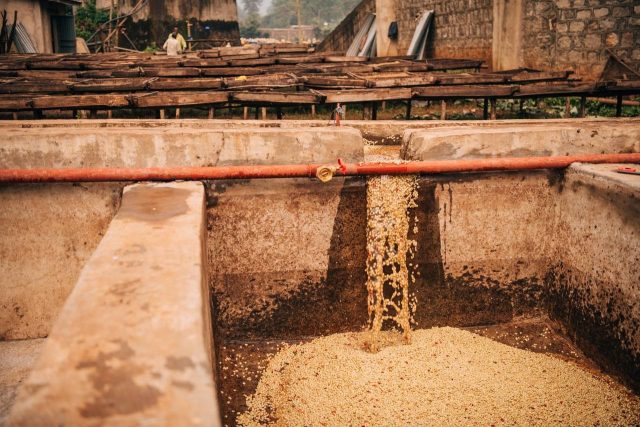
Wet hulled coffees usually taste a little earthy and herbal, while anaerobically fermented coffees frequently are associated with slightly boozy, funky flavors and elevated fruit notes.
Roasting
Coffee, in most modern service environments, is roasted before brewing. It’s an inherently assumed characteristic of enjoying a cup. While many folks can recognize the difference between light and dark roasts, there is plenty of craft to be explored when it comes to the fine nature of flavor manipulation.
Roast degree, however, more than any other aspect of the process, remains critical in determining a substantial portion of the flavor profile of any given coffee. Research published first in Beverages in 2020 and rewritten for the audience of Roast Magazine later that year found that of the variables use to manipulate time and temperature in roasting, none of them mattered as much in terms of flavor than the final roast color.
Light roasts tend to highlight a coffee’s acidity, and can showcase delicate floral and fruit flavors. Medium roasts lean more towards caramelized sweetness and a balance of the characteristics of the bean and the influence of the roasting process. Dark roasts typically offer fuller bodied brews with lower acidity and heightened bitterness, with roasty or smokey flavors dominating the experience.
However, beyond final roast degree, more subtle but still important flavors can develop depending on the particular approach a roaster takes (the roast profile). Shorter, hotter roasting styles often favor acidity over body, while slower roasting might showcase smoother body while sacrificing acidity. Roasting equipment, airflow, and type of heat transfer (conductive, convective, or radiant) may impact flavor as well.
Check out our Roast Glossary for more information.
Brewing
Finally, the preparation of the actual beverage is critically important to flavor. While the majority of professionally brewed coffee typically falls within a narrow range of parameters, it’s possible to make coffee with a very broad variety of brew specs.
The coffee center at UC Davis has done extensive research on the topic of extraction science. After reviewing and updating the “brewing control chart” they identified clusters of consumers who preferred various types of brewed coffee beverages, from the high-acidity fruity coffee lovers, to those preferring simple, sweet coffees, to those that loved bitter, heavily extracted brews, they were able to manipulate a particular coffee and roast simply by altering brew ratio, total dissolved solids, and extraction percentages.
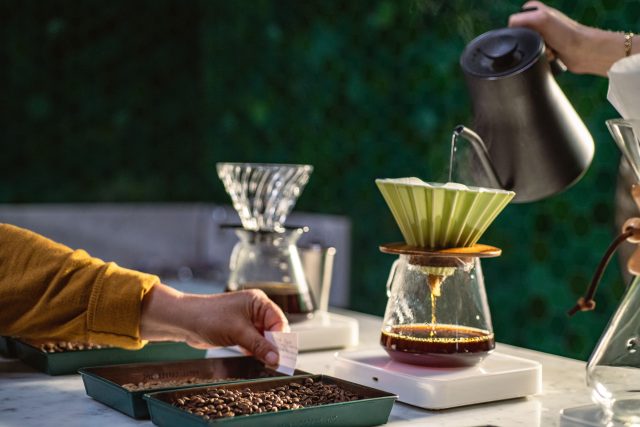
If the science of extraction isn’t your strong suit, that’s ok. Simple choices like the type of brewing device (filter drip or pour-over, immersion methods like French Press, or espresso) each impact variables like perceived sweetness, acidity, body, and bitterness. Each have their own “ideal” brewing parameters, and you can bet that regardless of the method you choose, you’ll find different flavors depending on how finely you grind, how much water you use compared to coffee, and what type of filtration (if any) is employed.
If we were to generalize a couple of basic principles based on different brew types, we might expect a few of the following characteristics. Filtered coffee, especially pour-overs, tends to be clean and emphasize acidity and sweetness over body, easily showcasing fruit and floral notes. Immersion-based brew methods, like a French press, often leave a higher lipid concentration in the resulting brew, leaning more towards full mouthfeel and body, with less nuanced fruit or floral character. Espresso, of course, is highly concentrated by comparison and dialing it is an art and craft unto itself, but it will always be much stronger than filtered drip. And cold brew, particularly the common practice of steeping coarsely ground coffee over a long period of time, emphasizes viscosity and acidity, but can be diluted to drinking strength with the addition of water.
Brewing involves a surprising number of variables, and it’s one of the unique things about coffee compared to many other specialty foods and beverages, in that its final preparation is often up to the consumer. Variables like water temperature and mineral content, grind size, water-to-coffee ratio, filter type, and even the number of pulses or use of a bloom during pour-over and drip coffee brewing can substantially impact flavor.
You can check out our brewing glossary and guide to understanding extraction elsewhere on our website.
Secondary Coffee Flavor Factors
If we normalize for variables like processing, roasting, and brewing, then we are left with a wide world of exciting, albeit slightly more subtle flavors, from contributing influences such as origin, cultivar, and personal experience, to name a few.
Terroir / Origin
I know, I know, you’re furious with me for relegating this critical, coveted facet of flavor to “secondary” status, but please believe me when I tell you I’ve tasted far too many coffees, gems of the soils in which they grew, influenced, overshadowed, or even spoiled by fermentation, roasting, or brewing techniques or errors. Inescapably, even the most recognizable coffee origins bow to the bombastic impact of the big three.
However, with thoughtful custodians of coffee at the reigns, terroir can shine. What impacts the flavor of terroir in coffee? Certainly, countries of origin often are associated with strong flavor affinities. Is that a dash of jasmine-like florals in your cup? Probably Ethiopian in origin. Do you taste grapefruit and tomato? Almost certainly Kenya. Is it reminiscent of a snicker’s bar, all peanuts and caramel and milk chocolate? Wouldn’t be surprised if the origin is Brazil. Are we tasting peat moss and fresh earthiness? Could be Indonesian, maybe from Sumatra.
Recently, some solid academic research points to a potential contributing factor in each of these cases… local microbiomes. While local soil and available nutrients, variations in rainfall, and degrees of shade all play pivotal roles on that great stage of terroir, it might be the invisible activity of bacteria and yeasts who command the largest presence in the cup.
Tree Type
Certain coffee trees have genetically programmed flavors, some more easily distinguishable than others. There are two main commercial species of coffee trees: arabica (which tends to be milder and sweeter) and robusta (which tends towards bolder and more bitter flavors).
Within the arabica species, hundreds if not thousands of varieties have been cultivated worldwide over the course of coffee’s history. Among the most remarkable in the cup include the Gesha variety, known for its intense floral characteristics. Other similarly floral and unique Ethiopian-landrace descendent trees include Chiroso, Pink Bourbon, Sidra, Java, and Wush Wush.
Other cultivars with common flavor associations might include SL28, often regarded as high in citric acidity with mild savory herbal notes, Catimors and Sarchimors, which are typically less fruity and more nutty than their 100% arabica counterparts, and Pacamara, known for its unique savory-onion-like characteristics.
Freshness, Staleness, Storage Conditions and the Slow March of Time
On a long enough timeline, eventually all coffees will taste the same—stale, flattened, faded, papery, dusty. Time marches on.
The quest to preserve freshness (and therefore, its flavor), particularly in the last twenty-or-so years of specialty coffee’s story, has evolved to include a multiprong approach. Recognition of seasonality has created more sophisticated annual patterns of trade, and not just the ripeness of a coffee cherry, but its proximity to the peak of harvest season can be correlated with freshness and quality of flavor.
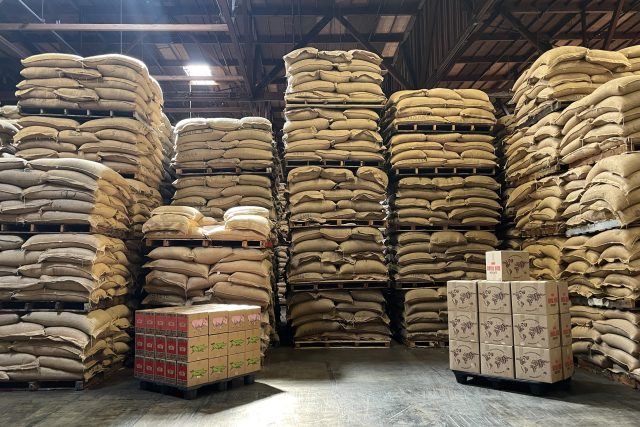
Understanding the importance of moisture and water activity in the role of aging has led to better controls at origin and preservative packaging like GrainPro and Ecotact bags to help mitigate the migration of a green coffee’s water content. Storage environments are increasingly subject to climate controls, including in some instances employing a deep freeze!
None of these strategies will stop the spinning wheel of time, but each in their own way acts as a preservative to help keep coffee as fresh as possible for as long as possible, before the flavors of age creep in.
Roasted coffee, too, will stale over time. While freezing is an option we’ve explored, and recommend, many roasters prefer to encourage their customers to use coffee within a few days to weeks of the roast date, and employ various types of coffee packaging to help preserve the flavor of freshly roasted beans.
Sensory Defects and Flaws in Green Coffee
(This section contains substantial excerpts from my book Green Coffee: A Guide for Roasters & Buyers, used with permission)
The most detrimental cup characteristics are recognizable in the cup, nearly-impossible to roast over, and trainable to taste. These primary sensory defects are ferment, mold, phenol/rio, and potato, and each are related to green coffee handling. An additional secondary defect, quakers, can be identified after roasting.
Ferment
Ferment as a sensory defect is the overly fruity, winey, acetic/vinegar-like flavor most frequently found in washed coffees which have undergone some degree of “over-fermentation,” where microbial activity extends beyond the fruit pulp and into the green coffee seed. It’s usually restricted to a few beans (sometimes identifiable as stinkers or sours) in the batch (perhaps an unstirred pocket of the fermentation slurry), but it could apply to an entire lot which perhaps was left in the tanks too long.
“Overfermented coffee” presents a higher than-usual concentration of ethyl esters, and it has been proposed that the “ferment” flavor defect, and what cuppers mean by the term “over-fermentation,” is the result of microbes macerating not just the pulp around the coffee but penetrating to the seed itself. This can also appear visually as brownish sours or stinkers.
Mold
Mold’s basic sensory character is roughly equivalent to the smell of a musty basement or the flavor of bread mold. It can occur—perhaps more than most other sensory defects—in degrees which can make detection difficult; I’ve worked with many professional tasters who struggle to identify it in low concentrations. As with other primary defects, it may affect a small number of beans in a batch, or the whole lot, and may have occurred at the wet mill, dry mill or during transit or storage.
Not all molds are toxic, but an especially high-profile mycotoxin known as Ochratoxin A (OTA) has been detected in coffee. Generally, lower grade commercials, instants and decafs have been the primary source of this kind of contamination in coffee, though that hasn’t stopped well-known brands from touting their toxin-free alternatives. What they’re selling is, in my researched opinion, more about peace of mind than it is about clean product.
Phenol / Rio
Coffee and most other plants are full of phenols. In coffee, tannins in the fruit and chlorogenic acid in the seed are the primary contributors. Phenolic compounds are rich in antioxidants and generally considered as healthy for human consumption.
However, the phenolic sensory defect—identified readily by flavors of iodine, band-aid, or “hose water”—seems to be primarily the result of either bacterial infection during growth or drying, and drought-conditions. The International Trade Centre (ITC) identifies Carbolic Acid and Hydroxybenzene as synonyms for the defect.
In Brazil, this flavor defect historically was referred to as “Rio” or “Rioy,” and has the distinction of its own grade. So called “hard” coffee, fully affected by phenolic flavors throughout the lot, are sought in certain markets (notably in Greece and Saudi Arabia).
Potato Taste Defect (PTD)
The potato defect, which smells and tastes like raw potatoes, primarily after it is roasted, is found endemically in certain East and Central African Great Lakes coffees, mostly in Rwanda, Burundi, the Democratic Republic of Congo, and Uganda. It has been less frequently encountered in Tanzania, Zambia and Kenya.
It holds no relationship to root vegetables other than the fact that coffee containing the defect tastes and smells quite a bit like raw potatoes. This is caused by a particular member of the chemical family of pyrazines, commonly produced by plants naturally. Some pyrazines found in vegetables like green peppers are responsible for similar flavors in wine, for example.
Current consensus as cause for PTD in coffee blames a unique species of bacteria, identified in the genus Pantoea and is given the species name Coffeiphila (“coffee-lover”). It finds an entry point into the coffee seed by way of a break in the skin of the cherry, frequently caused by the antestia bug. One of the studies cited even noted that the bacteria “gave off a strong, potato-like odor.”
No matter the specific cause, the problem is localized regionally and originates at the farm level, well before the coffee is processed, exported, roasted or consumed.
Quakers
Underripe coffee often curls into a U-shape and may result in quakers—coffee seeds that don’t properly react during the Maillard stage of roasting. Even at a relatively dark roast, quakers will stand out with their pale orange or khaki appearance, and when ground emits a rancid toasted peanut aroma. (For further reading, see Andi Trindle’s informative article “Detecting Defects” in Roast’s January/February 2008 issue.)
Quakers are identifiable only when the coffee has been roasted. Not all green coffee identified as underripe results in quakers, and vice versa. Both CQI and SCA recognize underripe as an allowable secondary defect, but the SCA defines specialty coffee with zero tolerance for quakers.
Flavor attributes of quakers and underripe coffee differ. A single quaker may taint a sample and create inconsistencies from cup to cup on an evaluation table ranging from harsh peanut to fatty flavors. However, underripes present at the cupping table as astringent, accompanied by a fresh hay-like or grassy flavor.
Physical Flaws
There are a wide range of primary and secondary defects in green coffee. The extent to which they contribute to negative flavors could be as minor as a slight toastiness or as major as one of the primary defects above. You can read a succinct guide to green grading for physical defects here.
Personal Experience and External Influences
What was that Yogi Bera quote again? Ninety percent of tasting is half mental?
The truth is, our personal sensory experience is highly individualized, and often shaped by factors outside of our control.
Physiological sensitivities, psychological state, culture, and exposure to certain tastes and flavors all exert an outsized influence on our ability to experience and describe a coffee. Even the simple presence of external stimuli like aromas, visual distractions, or auditory influence can affect our ability to perceive and discuss flavor.
While well-aligned peers can calibrate to reference standards, even this is a highly rigorous and nuanced skill that requires self-awareness, situational awareness, and humility.
Tasting coffee engages our senses, and when done in the company of others can bring about lively discourse and commonality of purpose. It’s one of my favorite exercises in the world, in no small part because of how complex and rewarding the experience is, particularly when you know the depth of the influences impacting your morning cup.

Latest Articles by Chris Kornman
Notes Between Cuppings Entry 1
Co-fermented coffee is a new processing approach where producers add natural ingredients like fruit, hops, or spices during fermentation to enhance flavor complexity. Unlike flavored coffee, these additives interact with...
Excerpt: Additive Fermentation: “Infused” Coffee is Gaining Popularity and Sparking Industry Debate”
Co-fermented coffee is a new processing approach where producers add natural ingredients like fruit, hops, or spices during fermentation to enhance flavor complexity. Unlike flavored coffee, these additives interact with...
July 2025 Crown Jewel Updates
Explore July 2025 Crown Jewel coffee arrivals from Sumatra, Ethiopia, Tanzania, and more. Bold flavors, innovative processing, and standout producers.