
Article Summary:
Coffee acidity describes flavor brightness. Most brews sit near 5.5 pH. Acidity comes from organic acids in green coffee and changes through roasting: lighter roasts retain fruity malic and citric acids, while darker roasts break them down into bitter quinic and caffeic acids. Robusta tastes more bitter due to higher caffeine, not higher acidity. Origin and processing affect perception. African coffees tend to be brighter, Asian coffees lower in acidity. Roasters can manage acidity through roast level, green selection, and process choice to match flavor or health preferences.
Understanding Coffee Acidity: What It Is and Why It Matters
Coffee acidity can be a confusing topic for some. For many reasons people can avoid acidic coffee either due to health issues or flavor preferences. It can be quite a dividing factor in how people prefer their coffee. In this article we go over types of acidity in coffee, why does acidity matter, how the roasting process impacts acidity and more!
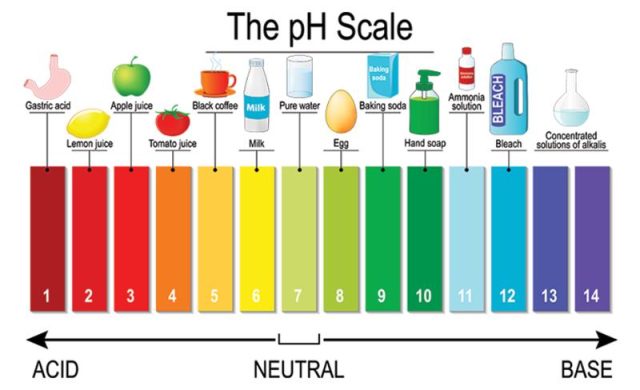
Acidity in a cup does not necessarily translate to it having a lower pH – most brewed coffee at normal drinking strength is slightly acidic regardless of factors like roast degree, origin, or process, at roughly 5.5 pH.
For a quick recap on your high school science class, the lower the pH the higher the acidity and the higher the pH the lower the acidity.
What happens during roasting?
First, we have to talk about green coffee and the roasting curve. There are four main stages of roasting, drying/dehydration, Maillard reaction, caramelization/first crack and then second crack/pyrolysis.
Stage one: Drying/Dehydration, this is when the temperature of the roaster meets equilibrium with roasted green coffee sitting out at room temperature. This is the dip in temperature until it recovered around the minute and a half mark.
Stage two: Millard reaction is when color change occurs and lots of flavor development happens. There is a browning reaction between amino acids and reducing sugars. The roaster can visibly see the coffee turn from green to yellow and finally a brown color. The acids inherent in the coffee are realized during this stage to bring a lively flavor to the coffee.
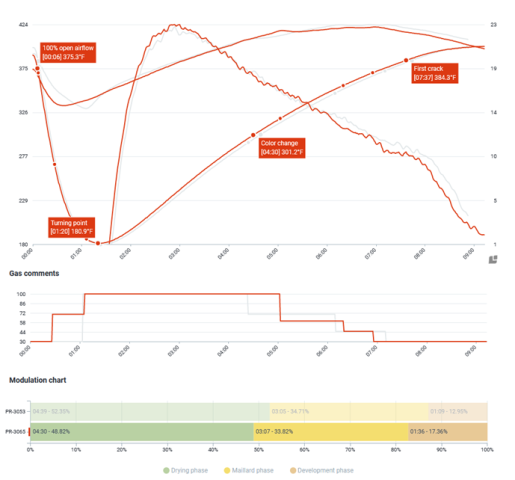
Stage 3 and beyond is called post crack development. Dring this phase further sugar browning continues , color darkens and weight deceased. The roaster can hit second crack if the bean temperature hits 425-440 F or 12+ minutes (or so). After second crack, carbonization begins and a process called pyrolysis starts as well. This is when at first sugars are caramelized but then it reaches a point where degradation of organic materials occur. This includes acids and other flavors are broken down leaving more chocolaty, smokey and even bready notes. This pyrolysis reaction is one of the reasons darker roasts have more of those chocolatey, smokey and even bready flavors.
Coffee that has higher acidity is not necessarily better than coffee with lower acidity. The great thing about coffee is that it really is all personal preference. Later on you will find a guide that will help you navigate purchasing green coffee and marketing for those looking for either high or lower acidic coffees.
What about Robusta?
Robusta coffee is generally not more acidic but because it has 3x the amount of caffeine, it makes it more bitter tasting than arabica coffee. If you were to take a caffeine pill and crushed it in your mouth, you would find that the compound simply tastes bitter. Especially with triple the amount of caffeine, that is one of the bigger flavors from Robusta coffee. Caffeine does not break down in heat below 460F. Most coffees roast between 425 -455F and so the amount of caffeine in robusta is still substantially higher than Arabica even if it may be roasted for longer.
Now that we have a better understanding of roasting, let’s get into the mechanics of acids in green coffee.
Acid types in Coffee
Acidity contributes to the liveliness of the coffee and often described as ‘sour’ when bad or ‘bright’ as good. There are a few organic acids that contribute to this
- Malic Acid: Is associated with green apples, rhubarb, strawberry and raspberry
- Citric Acid: This is more citrus notes such as lemons, oranges and nectarines
- Tartaric Acid: Associated with grape, blueberry, or banana-like flavors
- Acetic Acid: Can be more vinegar forward and is less often considered pleasant. Acetic acid doesn’t degrade during roasting like other organic acids.
- Chlorogenic Acid: Contributes to bitterness in the cup as will as the color of the final bean. During the roasting process this gets broken down into quinic and caffeic acids. They are responsible for bitterness and astringency in the cup.
Marketing acidity in coffee
There is a market for less acidic coffees and while there are coffees with higher and lower acidity, perceived acidity it not the same as pH. It is likely just that a roaster is roasting the coffee darker to burn off some of those acids inherent in green coffee.
If clients have concerns about acid reflux or GRED symptoms. Instead of steering them towards a low acid coffee you can guide them to a darker roast that you have available or even a decaf coffee. Caffeine itself can activate acid reflux of GRED symptoms for those that have health issues associated with it.
Coffees from origins like Kenya and Ethiopia are known for their high acid flavor profiles and on the opposite side, Asian coffees are known for less acidic profiles. Central and South American sit somewhere in between. This generalization is for washed coffees.
Remember, this is a simplified explanation and there is so much diversity that each origin has to offer. Processing is another big factor that can change perceived acidity in coffee and is not taken into account in this assumption.
How to tell if coffee is too acidic?
You can tell if a coffee has too much perceived acidity it feels sour, unbalanced or disjointed in the cup. The ideal way to make sure you are cupping coffees and compare. You can compare roasts to determine the success of the roast or compare quality of coffee when purchasing green coffee. Below are some examples of verbiage to use when tasting.
- Too much acidity: sour, one-dimensional,
- Pleasant acidity: bright, lively, tart, zesty, zippy. crisp, effervescent
- Too little acidity: dull, flat, dead
Another way to describe acidity is by using connotation from your fellow cupping team. Doris, often used to us grapefruit when there was an unpleasant sourness in the cup that she didn’t like and unripe guava when she did like it. Knowing linguistic connotations between team members can help greatly in describing and evaluating attributes like sourness.
Through lots of practice and by tasting different coffees you will get a better understanding of what it means to have a balanced coffee and when something is too acidic.

Latest Articles by The Crown

Hey Mambo! Assume Nothing Drink Recipe
By Asha Wells “Assume Nothing!” A mantra for The Crown as we worked towards opening our doors in March of 2019, the phrase became a Menu section, encouraging our visitors...
Why Coffee Origins Matter: Flavor, History & Global Impact
written by Isabella Vitaliano, Lab and QC Specialist Article Summary: Coffee origin shapes cup profile, availability, pricing, and storytelling. Knowing country context helps buyers match flavor goals and manage risk....
Red Velvet Underground Assume Nothing Drink Recipe
By Katie Briggs “Assume Nothing!” A mantra for The Crown as we worked towards opening our doors in March of 2019, the phrase became a Menu section, encouraging our visitors...