
written by Isabella Vitaliano, Lab and QC Specialist
Article Summary:
- Coffee origin shapes cup profile, availability, pricing, and storytelling. Knowing country context helps buyers match flavor goals and manage risk.
- South America: Brazil dominates supply ~40% (65M bags, 2024), wide quality range, lots of conilon; Colombia ~13M bags with reliable washed milds and growing experimental lots; Peru ~3.9M bags, leading in Organic coffee; Ecuador small but notable for Sidra and Typica Mejorado; Bolivia tiny volume, sweet clean cups.
- Central America: Honduras ~5.5M bags, certifications common; Guatemala ~3.5M bags, strong traceability and diverse profiles; Nicaragua ~2.6M bags, chocolate-forward; El Salvador small volume, Pacas and Pacamara; Panama tiny output, premium Gesha.
- North America: Mexico shifted from estates to smallholders; Hawaii is niche and historic, mostly Kona.
- Africa: Ethiopia ~10.6M bags, archetypal florals and fruit, strong domestic consumption; Kenya bright, savory acidity via intensive washing; Rwanda and Burundi small volumes with cooperative-driven washing stations; Uganda ~6.7M bags, mostly robusta.
- Asia-Pacific: Vietnam ~29M bags, global robusta engine; Indonesia ~11M bags with wet-hulled Sumatras; India ~6.2M bags, strong R&D and robusta share; PNG ~840k bags, smallholder driven; Timor-Leste emerging.
- Socio-political and historical factors matter: colonial legacies, conflict, labor, infrastructure, and domestic consumption patterns all influence quality, price, and traceability.
- Buying implication: align desired flavor with origin and process, but expect wide variability within countries. Use traceability, processing style, and farm scale to refine selections.
Why coffee origins matter?
Origins matter when buying coffee due to the quality, sociopolitical implications among other things. Each coffee-producing country as a rich (and often dark) history in its cultivation of coffee. In this blog post we explore a brief overview of some of the counties that produce coffee. By understanding these implications better roasters can make better purchasing decisions and better market their product.
You’ll find the material goes through South America, North America, Africa and then Asia. Under each continent countries will follow in alphabetical order.
South America
Brazil
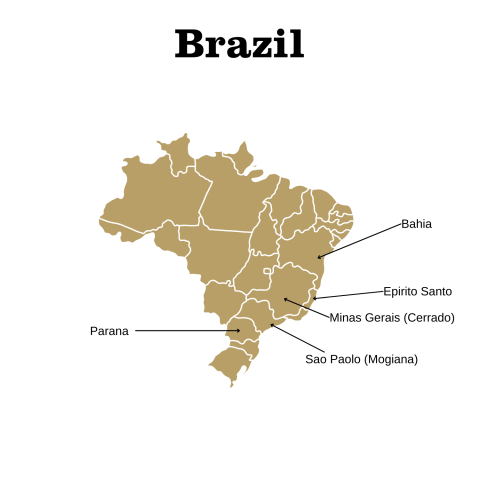
Brazil produces the most amount of coffee of any country in the world, approximately 40% of the world’s supply, achieving a whopping 65 million 60kg bags in 2024. Due to how much the country produces, it has a big impact on the C market. Massive estates produce much of the coffee in the region in mass quantities. However, Brazil is large and has so many different types of microregions that small producers are curating a diverse selection of coffee offerings. Surprisingly, smallholders still make up the majority of the coffee producing population.
A vast amount of the coffee from Brazil can have mild acidity, often tasting a bit nutty and chocolaty. Because Brazil produces so much commercial coffee, a lot of it is commodity grade coffee and impacts prices for the C market. It is generally considered easy to obtain cheap, bulk Brazilian coffee, which is true, but there is a wide range of offerings from different producers and microclimates all over the country. It can be a little bit more difficult to find high grade Brazilian coffee but it’s out there, and it’s delicious. Conilon is the name of the most commonly grown cultivar of Robusta (Canephora), which accounts for a little less than a third of the country’s output.
Bolivia
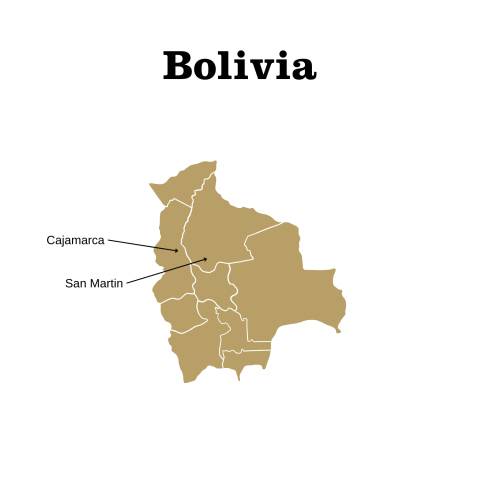
Bolivia is usually considered a niche origin in the specialty world. Offerings from this country can be few and far between due to the lack of government support, it being landlocked, competing cacao production, labor shortage and extremely low production volume (85,000 kg bags for 2024). Most often used as a single origin offering for coffee roasters, we rarely see them sold to consumers in blends because roasters and importers have to be intentional about sourcing these coffees. Coffee profiles from this coffee are often very sweet and clean but do not have very strong fruity flavors.
Washed coffee often comes from the region, as Bolivia is such high altitude it is hard to get natural coffee up to temperature in order to ferment properly on the drying table. To combat this, some producers use an anerobic style fermentation, extending fermentation timelines and allowing for more control.
Colombia
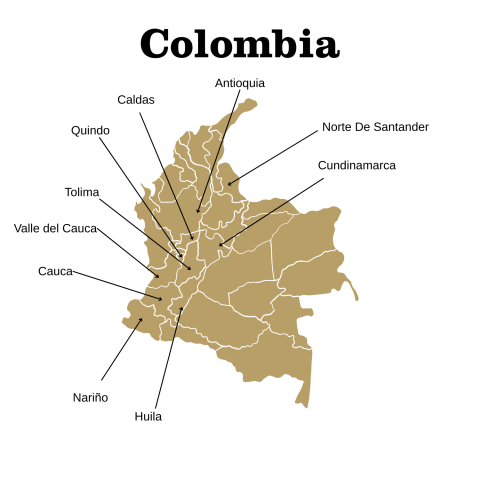
Well-known for high quality coffee, the government has invested heavily in infrastructure and marketing for the coffee sector of the country. Washed milds are readily available from the country with small micro lots of experimental style processing on the rise. Coffee is the top commodity for the country followed by palm oil and chicken meat. In 2024 production of 60kg bags was at 13 million and made up 8% of the global production, placing the country third in global production after Brazil and Vietnam. Small farm holders make up most of the producers but you’ll find large estates as well. Cup quality and flavor profiles can range from chocolatey and heavy to jammy, sweet and fruity. Colombia is one of the few countries, along with Indonesia, Mexico, and Ethiopia, where we see a rise in specialty coffee being consumed in origin countries.
Costa Rica
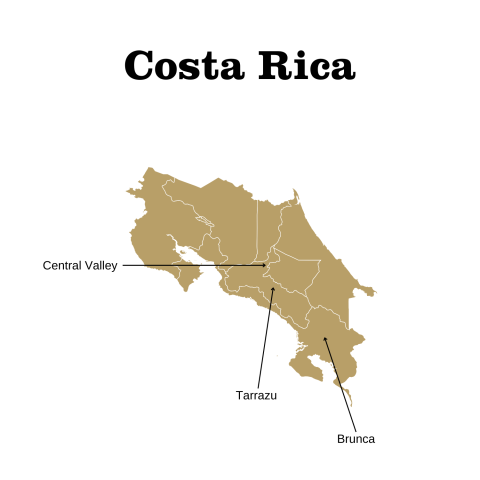
Well known for organic coffee production, eco-tourism and modern processing culture known for top quality honeys and naturals. Costa Rica contributes to a small portion of the world’s exportable coffee, about 1%. Despite this, coffee remains a very important crop to the economy of the country with coffee exports valuing at over 300 million in 2015.
Production began in Costa Rica in the late 18th century and by the 1830’s coffee was being exported out the country on it’s way to England. Although it was bound for England it was intersected at Chile and rebagged and named “Café Chileno de Valparaíso”. For a time producers did not have contacts of anyone with a ship that sailed to Europe. Direct export began in 1843 and England began to be more financially invested in the country. This led to the establishment of an Anglo-Costa Rican bank in the 1860’s that was meant to provide finance to support the growth of the industry. For almost 50 years, coffee was the sole export for the country
Ecuador
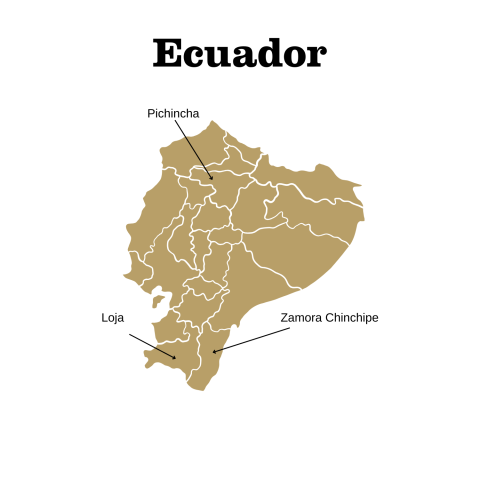
Ecuador produced roughly 0.2% of global production at 355,000 60kg bags for the 2024 year. Robusta makes up a decent amount of production for this South American country, and it also produces a lot of instant coffee. Ecuador imports more coffee than it exports due to strong local and tourist consumption. Washed milds are readily available from Ecuador but you can find very small amounts of experimental style processing and there are some famous producers from the region known for their pristine cup quality. Due to the country nationalizing the dollar and other economic factors, coffee from Ecuador is inherently more expensive than other South American countries. Ecuadorian-developed cultivars Sidra and Typica Mejorado have gained international recognition due to cup quality and use in top-level barista and brewer’s cup competitions.
Peru
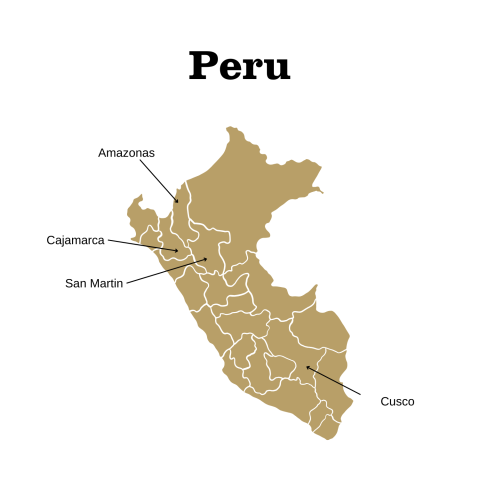
A diverse climate that is supportive of agriculture cultivation, Peru produces a ton of coffee and is consistently in the top 10 coffee producing countries in the world. In 2024 it made up 2% of the global production at 3.88 million 60kg bags produced. The top producer of organic coffee in the world, there is ample infrastructure to support organic and fait trade certified coop crop. The cup profile is often sweet and clean but not always the most complex. More and more you see the country with specialized microlots with distinctive profiles. The country has dealt with extremely tumultuous sociopolitical issues due to a highly active terrorist group in the 70’s. Internal consumption of coffee is low and most of the production is exported out of the country.
The Andes Mountain range flows vertically along the Peruvian border, with ample amount of land and a variety of climate to grow coffee with different elevations, soil nutrients and sun exposure.
Central America
El Salvador
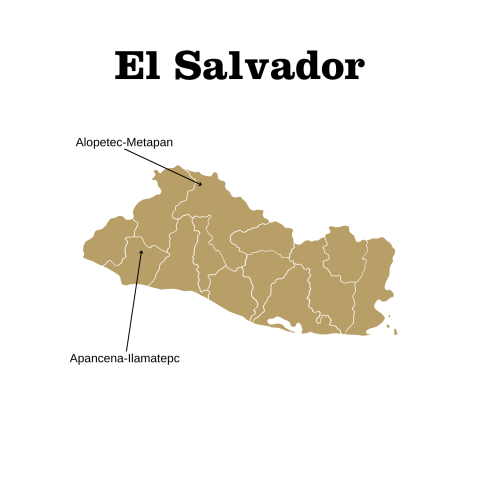
El Salvador produced 561,000 60kg bags in the 2024 year, roughly 0.3% of the global production. One of the more progressive Central American countries, it was the first to have pave highways and investment in ports and other government infrastructure. Profiles from the region are often balanced with mild acidity and most of the production is through small farm holders. Washed coffees take up most of the production volume with very small amounts reserved for natural and other processing styles.
There are a couple guesses as how coffee first arrived In El Salvador. One guess is that coffee seeds were brought over from Guatemala in the 18th century. Most of this coffee is assumed to be domestically consumed for another 100 years when it started to become exported. Another story is that a Salvadoran priest took plants from Costa Rica in the 19th century and began commercial cultivation then. El Salvador contributed the naturally occurring Pacas variety, as well as the extraordinary Pacamara cultivar to coffee’s genetic catalog in the 20th century.
Guatemala
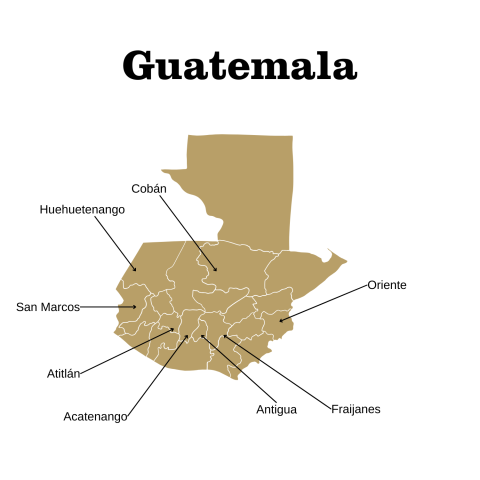
Coffee from Guatemala can have a range of flavors including lighter, fruity and complex all the way to heavier and more chocolaty cups. Ranking 11 in coffee production volume in 2024, it makes up 2% of the global production at 3.5 million 60kg bags. Coffees are highly traceable due to the supportive infrastructure like roads, education and financial support that was funded by the government in the early 1900s. Small farm holders take up much of the production but there are estates in the country as well.
Guatemala’s agricultural history is complicated, with indigo and sugarcane predating coffee as a colonial crop. In the 19th century the coffee industry was heavily supported, particularly at the estate level, while in the mid-20th century a push for a return to indigenous and smallholder land ownership eventually led to a US-backed coup and long, bloody civil war. Today, there remains a mix of larger estates in well-established regions and smallholder and indigenous communities in the more remote areas like Huehuetenango and Coban.
Honduras
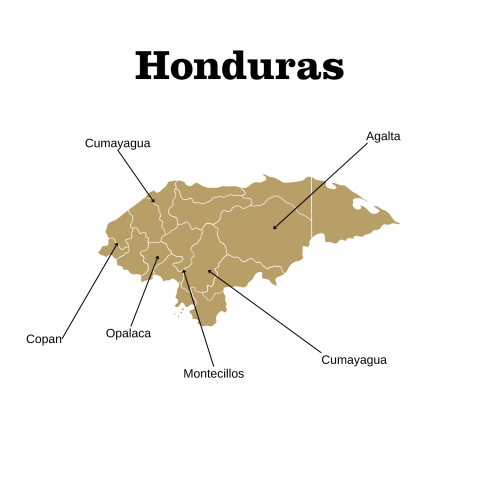
Although it is the largest producer of coffee in Central America, Honduras was a bit of a late bloomer in coffee production compared to its neighbors. The country is now consistently in the global top 10 in terms of production volume and produced 5.52 million 60kg bags in 2024, making up 3.2% of the world’s global production. Washing makes up the majority of the processing type offered from the country but a small amount of producers offer natural processes along with anaerobic and other types of processing. Flavors from the country are often nutty with some fruit characteristics and mild acidity. Large estates take up a good chunk of the production volume and the country began differentiating their coffee via certification in 2009. Over 50% of its 2024 crop was differentiated coffee, mostly through UTZ (now merged with Rainforest Alliance), Organic, FTO and Rainforest Alliance.
Nicaragua
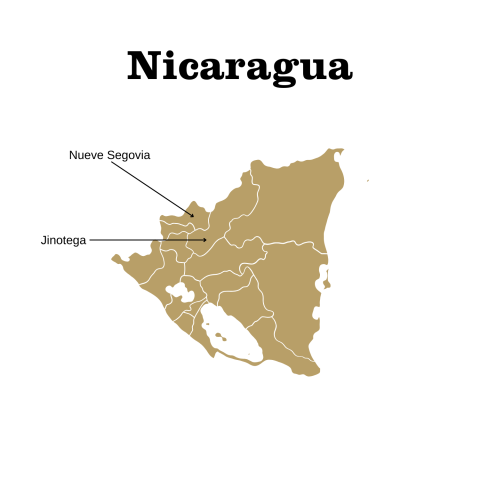
Coffee is one of the top commodities produced in Nicaragua, above sugar and peanut oil, and the country produced 2.56 million 60kg bags in the 2024 year, accounting for 1% of the world’s global production and ranking #12 for volume produced. The country produces a small amount of Robusta coffee but Arabica takes up most of the volume. Flavor profiles from this region are often deep with chocolate notes and some milder fruit flavors. Traceability has improved over the years and a majority of the production is through small farm holders. Nowadays you can find traceability down to the estate or producer group and cooperatives.
Coffee was introduced to Nicaragua relatively early during the late 18th century, By the late 19th century it was adopted as a commercial crop and from, 1840-1940 there was a quick acceleration of coffee production in the country. As coffee gained importance to the country, more input and labor was needed to keep up with production. Politics in the country in recent years have hampered coffee exports, either in the forms of popular protests that block access to roads, or lack of availability of containers and port calls due to questionable policymaking.
Panama
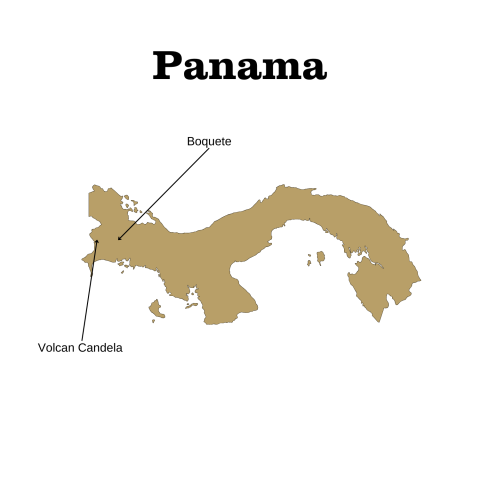
Panama is well known for its cultivation of Gesha but that makes up a small portion of the production volume. In 2024, the country’s total production was at 75,000 60kg bags. The geography has distinct microclimates that support a diverse set of flavor profiles from different regions. Small farm holders make up most of the production volume with coops and producing groups combining coffee to make larger lots to market. The country is well known for its labor laws that have a higher wage than most Central American countries, a cost that is passed down the supply chain to roasters and consumers.
When coffee first arrived in Panama it was not known for the highest cup quality. As the years progressed Panama has made quite a name for itself, producing some of the most luxurious and most expensive coffee in the world.
North America
Hawaii
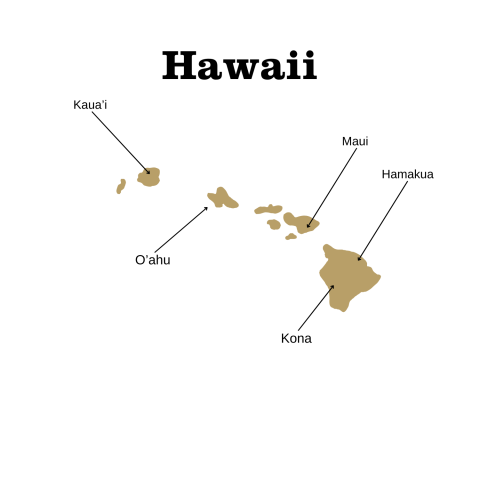
Coffee was first brought to the state in 1817, however the first plantings were unsuccessful, and it wasn’t until 1825, when the governor was on his way back from Europe and stopped by Brazil, returning with coffee plants to cultivate in Hawaii. These plants thrived and coffee production expanded pretty quickly after that. It is likely that coffee was brought to the Big Island in 1828 and the first plantation began in 1836. In 1858 coffee plants were essentially wiped out due to coffee blight.
Coffee was planted in several locations around the Big Island but the Kona district was most supportive for growth of coffee. Native Hawaiians and Chinese laborers worked in large plantations owned by Caucasians in the mid to late 1880s. By the 1890s, Japanese immigrants began their coffee legacy in the same fields. When the United States annexed Hawaii in 1898 and formed the territory of Hawaii, tariffs on sugar were dropped, resulting in farmers ripping up their coffee trees and planting sugar because it was much more profitable.
Mexico
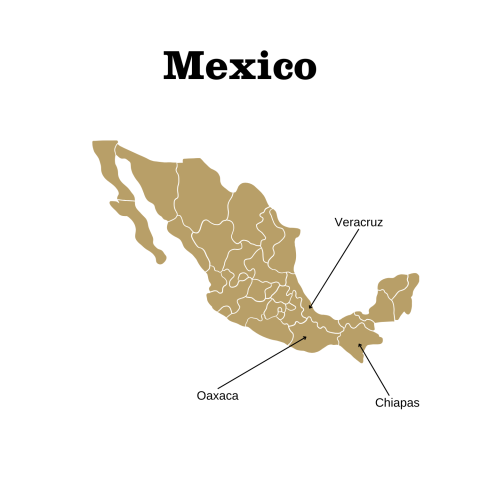
Mexico had its first spread of coffee production around the late 18th century where it likely came from Cuba. Land registration began due to land conflicts on the border of Guatemala and Mexico, in Veracruz. Rich Europeans purchased land during this period and began investing in the area to support coffee production. This led to the displacement of indigenous peoples in the area. For a long period Mexico had a plethora of mineral deposits which delayed the focus and investment towards the coffee industry.
Most of the coffee production was controlled by large estates but eventually there was a move towards small farm holder production. In 1914 there was a redistribution of land to indigenous people of the area. When this happened, many of them settled into their own land and took their skills with them, thus the creation of many small farm holders. By the 1970’s the government implemented programs to help support coffee growers with education and financial support. This led to an increase in coffee production all over the country.
Africa
Burundi
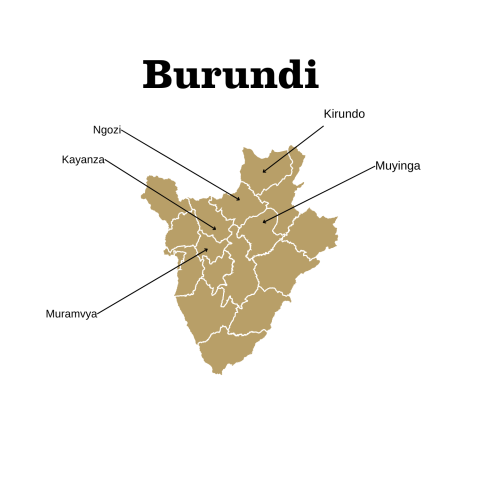
In 2024, Burundi produced 115,00 60kg bags, roughly 0.07 % of global production. Washed coffee is readily available from the country along with natural style processing. Most of the production is done by small farm holders that contribute to a producing group or cooperative. The infrastructure of the country is set up around washing stations to easily process cherry and combine in order to make larger lots and market the coffee.
The country has a particularly tumultuous history with coffee growing, like many coffee growing regions. It was forced to cultivate the crop initially by Germany and then then after WWI Belgium took control of the country. In 1962 Burundi was able to gain its independence but the economic and political climate was very rocky with a series of coups and political unrest. Devastated by sociopolitical issues throughout the 80’s, 90’s and early 2000’s by a slew of coups, assignations and a genocide. During the time of the Burundi Civil war, 1993 -2005 caused a drop in production and value of coffee in the country. Today, it is by both dollar value and total volume the country’s most important export.
Ethiopia
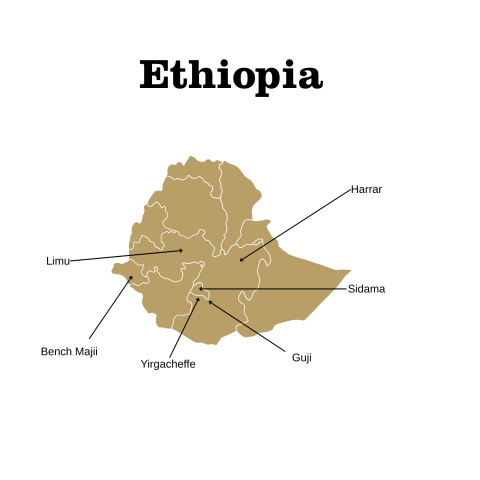
Ethiopia is well known and highly sought after in the specialty coffee world, and is the widely acknowledged origin of Arabica. Flavors from the country are famous for their complex acidity, high aromatics, floral notes and tropical like fruit flavors. Ethiopian naturals are known to be very distinct and have intense fruit flavors, in particular a sought-after blueberry note, and for many coffee drinkers they can be the gateway into specialty coffee due their distinct characteristics. Washed and natural coffees are readily available, and it is one of the only countries in the world that consumes more coffee internally than it does export. This says a lot considering it is often in the top 5 coffee producing countries consistently. In 2024 it produced 10.63 million 60kg bags which takes up 6% of the global production at number #5. Ethiopia does not trade coffee on the C market and instead has their own auction system. It is the only coffee growing country that was not colonized, merely occupied briefly by Italy, and the only place that coffee was not a forced cultivated crop.
Kenya
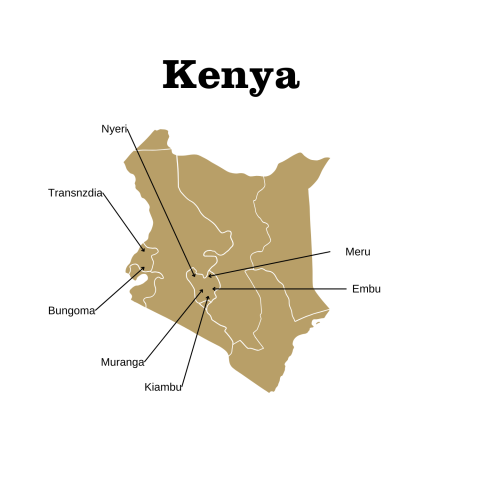
Coffees from Kenya are often immediately recognizable due to the distinct savoriness and sharp acidity. Common flavors include tomato and citrus with high acidity and complex savory notes. In 2004 it produced 750,000 60kg bags and ranked #20 in production volume in the world. Although production is lower than neighboring Ethiopia, it is well regarded and sought after in the specialty coffee region. Small farm holders make up much of the production in Kenya and like Ethiopia, does not trade coffee on the C market. There are some small and medium estates, but very view large estates with 50 acres or more. The land has rich soil, diverse microclimate and an abundance of rivers flowing throughout the entire country. Easy access to water makes washed processed the go-to for the region and producers will do a double or even triple wash on their coffee cherry. Washing stations are often centralized and there are many cooperatives in the country.
Rwanda
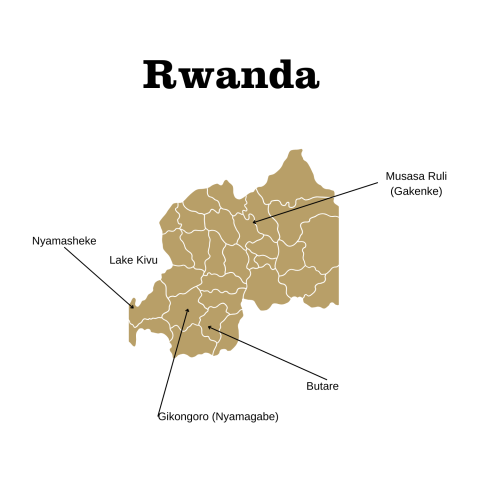
In 2024 the country produced 300,000 60kg bags which is roughly 0.2% of the global production. Although the exports are small compared to some of its neighboring countries, there is a vast array of flavor profiles and processing styles. Mostly washed comes from the region and you’ll often find distinct East African flavors like high acidity, zesty orange with hints of berries and florals. Rwanda’s coffee producing population is mostly small farm holders, averaging just 183 trees per family. Traceability is fairly easy to find and trace back to the washing station but because the farms are so small, you won’t be able to trace it back to a single producer.
Much like Burundi, Rwanda has recent history with political turmoil, genocide and widespread sexual violence. Over the years Rwanda has continued to rebuilt the country after the devastation and coffee has been a source of income and growth for many citizens.
Tanzania
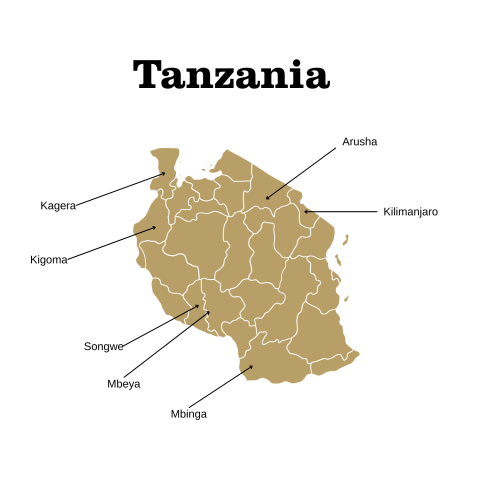
Coffee first became a cash crop for Tanzania under German colonial rule. They enforced planting of Arabica trees through the northern portion of Tanzania. The indigenous people of the land, the Haya people, traditionally would boil the cherries, boil it and smoke it for several days and then chew the coffee rather than drink it.
In 1914 Germany first took control of Tanzania and after WWI the British then took control and planted over 10 million seeds in Bukoba. During this time was lots of conflict and pushback with the British and Indigenous groups of the region.
During the early and mid-1990s reforms were put in place to create an easier pathway for direct trade. Coffee wilt disease spread throughout Tanzania and Uganda during this period as well and created major setbacks for the industry. With roughly 450,000 small-holder farmers they produce roughly 90% of the coffee from the country. Larger estates also exist in the country and the make up the last 10% of the coffee grown.
Of this production volume, around 60% is arabica and the remaining is Robusta. Production overall for the 2025/2026 year is predicted to hit 1.45 million 60kg bags. Which is up from 1.35 million the previous year. Robusta is driving production and volume is up due to the bicyclical nature of the harvest volumes. Direct consumption is lower than other east African countries as 77,000 bags a year. The tourism and restaurant sectors make a huge contribution to this number.
Uganda
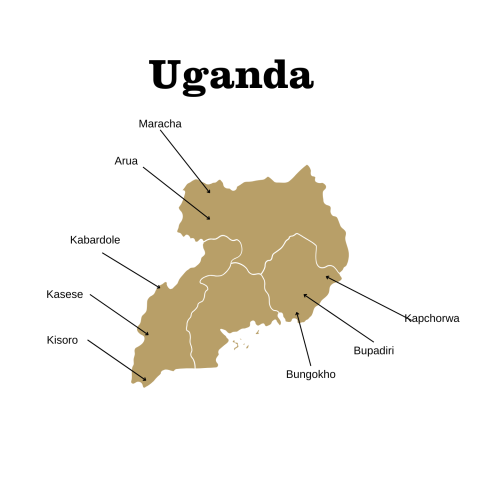
Uganda produced quite a bit of coffee at 6.7 million 60kg bags in 2024 and ranking #6 in volume worldwide. Although Uganda produces a large amount of coffee, it wasn’t until recently that the country was producing specialty coffee. It’s primarily known for its Robusta export which sits at around 80% and the species of coffee is actually native to rainforests of Uganda. Profiles from the country tend to be heavier bodied with lots of chocolate notes. Eastern parts of the country tend to be washed coffees while the west of the country often are natural processed coffees. Ugandans consume very little of the coffee they produce.
Yemen
Yemen produced 347 thousand 60kg bags in 2019, representing just 6% of the country’s annual agricultural export revenue. After coffee made its way from Ethiopia to the Arabian Peninsula, likely in the 15th century, Yemen became the world’s first commodified coffee producer, exclusively supplying the world for more than a century of commercial monopoly. Famous for its natural coffees, typically grown in small terraced gardens and traditionally dried on rooftops, the supply of Yemen’s coffee to the United States has dwindled in recent decades as demand for the beans has increased elsewhere in the middle east, particularly in Saudi Arabia, and as the country’s years-long conflict disrupts transportation, governance, infrastructure, and international relations.
Asia
East Timor
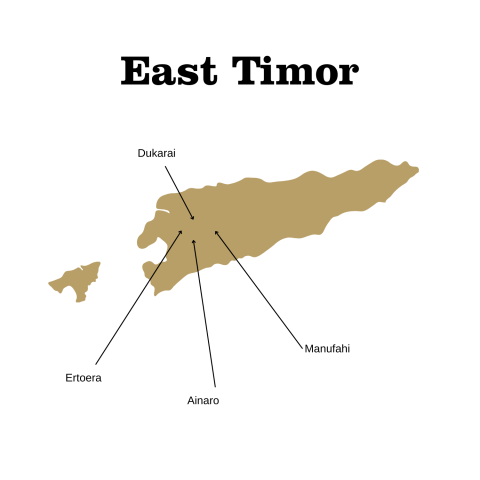
The Democratic Republic of Timor-Leste, colloquially known as East Timor, is one of the world’s youngest nations, and the first new sovereign nation of the 21st century. Home to less than 2 million people, this majority-Catholic nation is half of an island shared with the country of Indonesia, who relinquished control of the territory in 1999. With 15 national languages, it is apparent that this is a diverse country despite its diminutive size. People have inhabited this land since at least 42,000 years ago, but the earliest accounts of trading were all related to sandalwood, a fragrant and valuable tropical product that brought significant trade as far back as the 14th century.
India
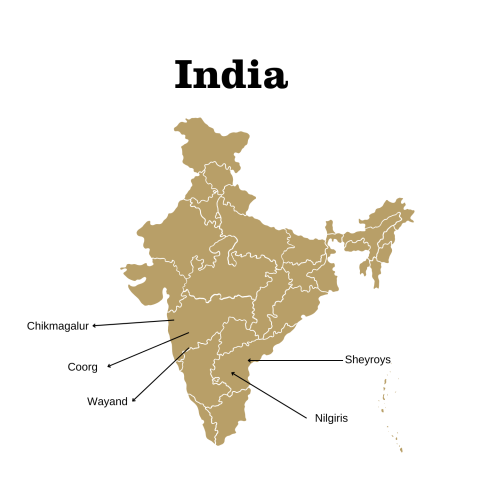
The highlands of India are well suited for coffee production and India produces a substantial amount of at 6.2 million 60kg bags and ranked #7 for global production in 2024. Most of the coffee production is Robusta and of the 6 million bags produced India consumes roughly 2 million 60kg bags of coffee. Due to the lower elevation and hotter climate, the country is better suited for Robusta production. Baba Budan was the first person to bring coffee seeds to southern India and started planting them. Once under British colonial rule the coffee sector took a backseat to tea plantation as the demand increased. In the wake of the first coffee leaf rust outbreak, Indian coffee researchers took the lead on developing resistant cultivars, and the country’s R&D sector for agronomy in coffee remains among the strongest in the world to this day.
Indonesia
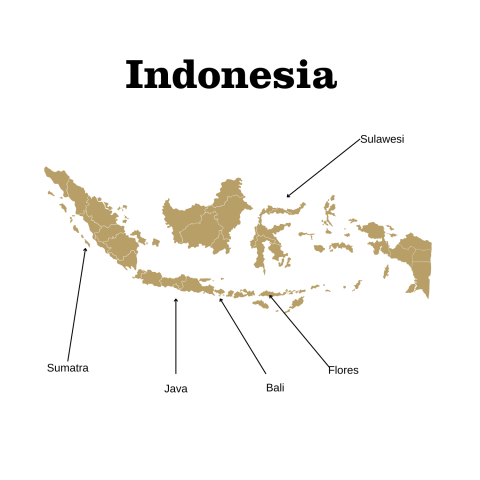
The country produced almost 11 million 60kg bags of coffee in 2024 and consistently ranks in the top five for production volume. Coffee is the 9th largest commodity produced in the country with palm kernel and palm oil taking the top two spots. Coffee-producing islands in Indonesia include Sumatra, Bali, Flores, Sulawesi and Java.
Sumatra
Sumatra is the second largest island in Indonesia, the sixth largest island in the world, and perhaps the most famous origin for Indonesian specialty coffee. This island is the leader in world production of wet-hulled coffee (Bahasa Indonesia: giling basah), a process with a hallmark herbal flavor profile that sets it apart from all other coffees. Coffee production stretches across the entire island, from Arabica in the mountainous interior to Robusta at lower elevations. Just for a sense of scale, a drive North to South across Sumatra is a little longer than the drive from Vancouver, Canada to Tijuana, Mexico.
Java
It is very common in Java to have large estates and fetched high premiums up until the end of the 20th century. The Dutch colonized Java and forced cultivated the production of coffee in the early 19th century. Elevation for coffee production starts at 900m and reaches as high as 1800m.
Bali
Coffee was initially grown in on the plateau of Kintamani and coffee production experienced a setback in 1963 when a major volcano erupted and destroyed farmlands, homes and claimed thousands of lives. By the late 20th century the government began to make investments in the coffee sector. Most of the island produces Robusta coffee and Japan bought a substantial portion if not all the coffee crop. Tourism provides a lot of income for the island, but agriculture is the largest employer for residents.
Papua New Guinea
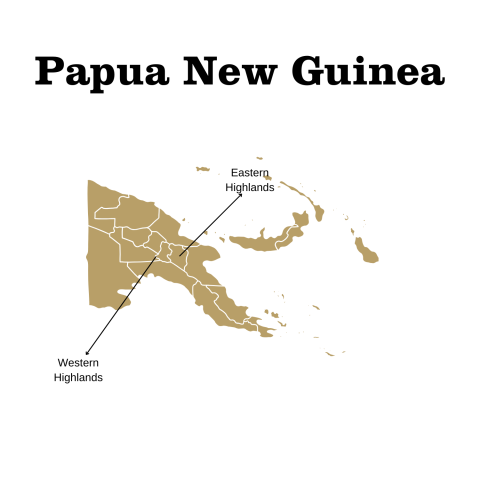
The country covers the eastern half of Papua (the west is Indonesian territory) and although they are grown in close proximity to Indonesia the coffees from this region are a lot different. Producing 840,000 60kg bags in 2024, PNG accounts for 0.5% of the global production. The top commodity is oilseeds and coconut oil with coffee ranking number 9 in percentage of global production. Coffee production began in the last half of the19th century and it wasn’t until the 1920s that production really kicked up with the planting of Jamaican Blue Mountain seeds. More investment in the country’s coffee sector began to take place and more infrastructure popped up. This, coupled with Brazil’s drop in production in the 70’s encouraged farmers to plant even more seeds and get more organized. More government funded investment led to programs that supported small farms to contribute to cooperatives to boost quality. Roughly 95% of the producers are small farm holders and produce most of the countries’ coffee. This means that a large majority of the population is involved in the coffee sector.
Vietnam
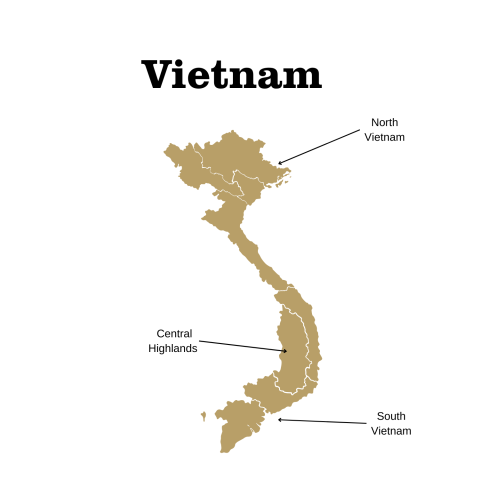
You may not expect it, but Vietnam is the number two coffee producer under Brazil and produced 29 million 60kg bags of coffee in 2024. The country produces mostly Robusta coffee, and the lower elevation land is well suited for the species.
Coffee was brought to the country in 1857 and gained momentum in the early 20th century for production volume. During the Vietnam war production came to a quick halt. Once the war was over production quickly increased and the amount of land dedicated to coffee farming shot up by 25% and yields increased one-hundred-fold in the following 25 years. Government reforms further supported production and new companies to form in Vietnam that focused on coffee production. In the span of four years starting in 1996, the production would double and subsequently cause a crash in C market price. Although the C market only trades in Arabica coffee, Vietnam is such a large supplier for the world, that the massive oversupply impacted the whole world’s coffee price. Eventually prices recovered as did the production volumes. Weather patterns, diseases and socioeconomic factors that impact the coffee sector in Vietnam still impacts coffee prices till this day.
Conclusion
The focus on this piece was on specialty origins that Royal imports from but there are many coffee growing countries that have high volume and were not mentioned. Malaysia (#14) Laos (#24), China (#13), Philippines (#23), Venezuela (#22), Cote D’Ivore (#17) and Dominican Republic of Congo (#20) all produce a lot of coffee but are not represented in this reference guide.

Latest Articles by The Crown

Hey Mambo! Assume Nothing Drink Recipe
By Asha Wells “Assume Nothing!” A mantra for The Crown as we worked towards opening our doors in March of 2019, the phrase became a Menu section, encouraging our visitors...

Understanding Coffee Acidity: What It Is and Why It Matters
Article Summary: Coffee acidity describes flavor brightness. Most brews sit near 5.5 pH. Acidity comes from organic acids in green coffee and changes through roasting: lighter roasts retain fruity malic...

Red Velvet Underground Assume Nothing Drink Recipe
By Katie Briggs “Assume Nothing!” A mantra for The Crown as we worked towards opening our doors in March of 2019, the phrase became a Menu section, encouraging our visitors...