
Editor’s note: Written November 6, 2025; updated November 12 with new information from NBC News and other sources.
TL;DR: The Supreme Court’s recent hearing on the IEEPA tariffs signals skepticism about presidential trade powers but offers no quick relief for importers or roasters. Refunds appear off the table, and even if IEEPA is narrowed, alternative authorities under the 1974 Trade Act mean the tariff risk, especially for Brazil, remains very real. The outcome will likely hinge as much on politics as on law.
Let’s unpack what happened during oral arguments and what the potential outcomes could mean for the coffee industry.
I listened to the full Supreme Court oral arguments on the IEEPA (the International Emergency Economic Powers Act) tariffs on November 5th. The discussion in the courtroom was more complex than the headlines suggest, and the implications for global coffee supply chains are significant.
The administration defended the tariffs as regulatory rather than revenue-raising, even though billions of dollars have already been collected. Several Justices questioned whether that distinction holds legal weight, asking whether the function of collecting revenue, rather than the stated intent, should determine if the tariffs qualify as a tax.
The Court’s Skepticism Does Not Guarantee Immediate Change
One key point emerged clearly: even if the Court finds that the IEEPA tariffs exceeded presidential authority, the remedy would almost certainly apply only to future actions. While the outcome remains uncertain, it seems that refunds are off the table, and we do not expect any retroactive relief for the tariffs we’ve paid.
The Justices pressed hard on statutory interpretation and the reach of executive power, but they did not reveal a definitive direction. Their questions showed skepticism, not certainty.
Some Justices also raised concerns about whether IEEPA, an emergency powers statute originally designed for sanctions and national security, was ever meant to authorize broad import duties. That line of questioning further underscored the Court’s unease with the scope of executive authority.
Tariff Risk Remains Even if IEEPA Is Overturned
Striking down IEEPA authority would not eliminate tariff risk. The president still has tools under the 1974 Trade Act. While those tools have constraints such as a 15 percent cap on tariff levels and a 150-day timeline, they still offer meaningful leverage.
For the global coffee industry, the most consequential scenario would involve tariffs on Brazil. Brazil is the largest producer and sets the tone for pricing, availability and market structure worldwide. Currently set at 50%, any sustained tariffs on Brazilian coffee would send shockwaves through the entire industry.
Other origins would likely see smaller impacts. The Trade Act tools can influence trade patterns, but they do not provide the sweeping authority that IEEPA attempted to leverage. The result would likely be ongoing uncertainty rather than a dramatic shift.
According to recent reporting, the Court’s final decision could take several months, with a ruling expected by the first or second quarter of 2026. Even if IEEPA is struck down, the tariffs would not vanish overnight; implementation changes would likely depend on separate administrative and political actions.
Politics Will Shape the Outcome More Than Legal Theory
This case increasingly looks like a political decision dressed in legal arguments. The timing of last Tuesday’s election results may affect how the next steps unfold. Even if the Court narrows IEEPA, the policy direction afterward will depend on political priorities, not just legal interpretation.
Analysis from Jefferies Financial Group
Aniket Shah, Global Head of Sustainability and Transition Strategy at Jefferies, described the hearing this way:
“The Supreme Court is likely to strike down Trump Administration’s reciprocal and trafficking tariffs. Justices questioned whether regulating importation in IEEPA could authorize tariffs as taxes, emphasizing that revenue raising powers belong to Congress. The government’s inability to cite precedent for such authority further weakened its case, and the tone of the hearing shifted consensus from a 50-50 outlook to a strong expectation of invalidation.”
If that outcome occurs, Shah expects short-term turbulence from refund disputes and administrative delays. Over time, reduced uncertainty could stabilize markets that have been reacting to policy swings.
What Roasters Should Focus on Now
- The next several weeks will likely bring noise and speculation. Practical preparation matters more than prediction.
- Keep a close watch on Brazil as tariff exposure is most concentrated there.
- Maintain diversified supply strategies to soften potential price shocks.
- Expect short term volatility regardless of the Court’s ruling.
- Prioritize flexible contracting and risk management.
We will continue to track developments and share updates as the situation evolves. We’ve got great Brazil substitutes, and our team is fully equipped to help you navigate the current coffee landscape.

Latest Articles by Max Nicholas-Fulmer
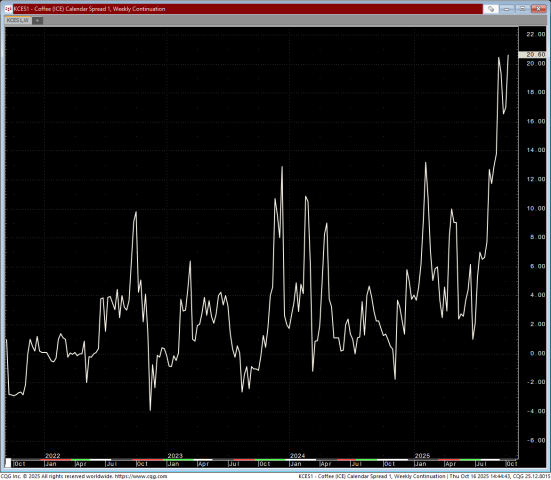
Coffee Market Update: Backwardation and What It Means for Roasters
The global coffee market has entered uncharted territory. Tight inventories, Brazil tariffs, and U.S.–Colombia trade tensions are pushing C-market prices higher and sustaining extreme backwardation. Learn what it means for...

Tariff Updates: What’s Changing and What to Watch
Editor’s Note August 20th: Brazil: A 50% tariff on green coffee takes effect August 6, with no exemption granted. The increase is tied to recent political tensions and was confirmed by Commerce Secretary...
Understanding the Impact of New Tariffs on Coffee Imports
Editor’s Note: The White House is clarifying that Trump’s announcement of a 90-day tariff “pause” means that the “tariff level will be brought down to a universal 10% tariff” during...