
Espresso Takes Over – A Brief History
Espresso has long been the cornerstone of the coffee industry. But how did it begin?
In the late 1800’s the world saw a swarm of innovations around brewing coffee. With the creation of steam power, the first espresso machine was introduced at the 1906 World’s Fair called the Ideale by inventor Desiderio Pavoni. He coined the term “caffe espresso”. Due to his successful marketing espresso quickly became a word that was used to describe coffee that was made quickly(1).
Introduction and Innovation
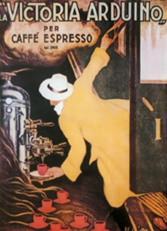
Pier Teresio Arduino was a competition of Pavoni who harnessed his marketing skills to “further entrenched espresso into the Italian consciousness.”. Italian espresso is highly marketed to this day. The Italian National Espresso Institute (INEI) was developed in 1998 to define exactly what is Italian espresso how to preserve and trademark the name. They are in operation till this day and you can even get certified to serve the “original Espresso”.
The initial expo in 1906 showcased the first espresso machine in Italy. Coffee drinkers preferred their espresso black and although this new invention was fast by utilizing steam pressure at 2 bars, it was not consistent and the coffee was often burnt. We can infer this by comparing INEI’s standards to the original pressure gauges and temperatures that espresso was brewed a(1)t.
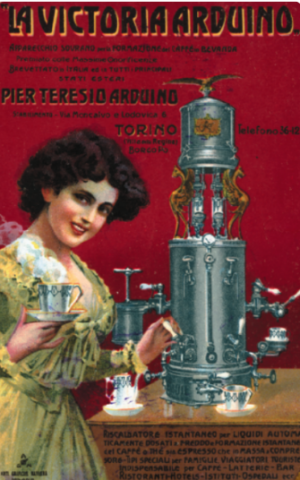
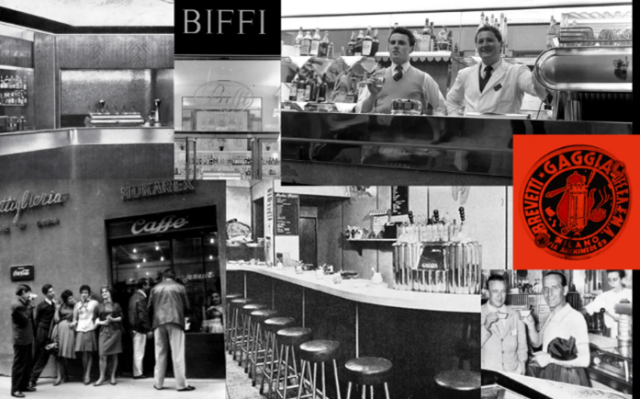
Archile Gaggia, also in Italy, helped to solve this problem by adding levers to harness pressure and forcing steam from a boiler, bringing the pressure up to 8-10 bars. This pressure was able to create crema for the first time. Another rebrand resurfaced in the form as caffee crème., implying that because the coffee was “such high quality, it produced its own cream”.
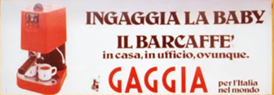
Gaggia was the first to create a mass-produced espresso machine and to bring espresso to the home space. The Baby Gaggia model, an iconic (and adorable) machine developed by Japanese designer Makio Hasuike made its way into the homes and hearts of the Italian people in the 1970s.
Lugi Bezzera and Pavoni contributed key components to some of the original designs released in 1903. Adding on a steam wand and pressure valve that are essential to the design elements of an espresso machine.
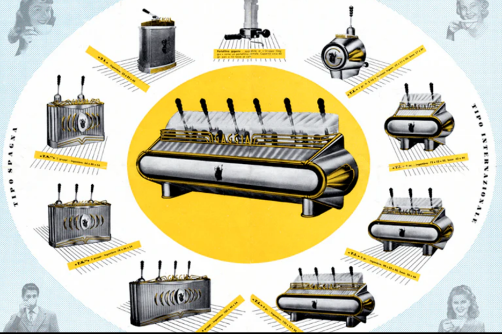
Giuseppe Bambi was part of the original group of engineers that pushed innovation of the espresso machine. He started his company, La Marzocco, in 1927 and made modifications to his designs by adding a vertical boiler and moved onto a horizontal boiler that added more group heads to an espresso machine. The amount of coffee people were consuming was growing and Bambi’s research focused on improving output.
By the 1950’s, levers were implemented in the machines that increased to 14 atm. This transformed the taste by adding cream to the experience of sipping coffee. At this point, an automatic water pressure and electric motor were added along with
In the 1970’s, La Marzocco released the iconic GS series which introduced independent boilers, one for espresso and the other for steaming milk. The group heads were attached directly to the boiler to create consistent temperatures and therefore, consistent espresso shots.
The GS series was an instant success and new lines like the GS-2, Linea and FB70 were released shortly after. In 1990 Starbucks start using La Marzocco in their cafes all around the world. In the early 2000s La Marzocco took an even larger step into the international stage by sponsoring the World Barista Championship.
An icon of the industry, you also see newer players in the espresso machine industry in the early 2000s like Synesso- a Seattle based company or Slayer – a Washington based company.
Origins Consumed
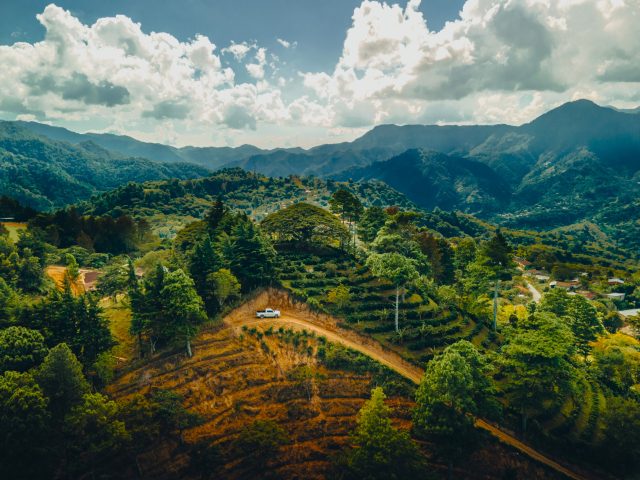
Brazilian naturals made up the bulk of Italian blends and 60% of the country’s coffee imports till the late 1900s. In the 1970s, a frost hit Brazil and impacted the coffee market in a very dramatic way, as Brazil produces most of the world’s coffee. After this, the market had to focus on other origins in order to get the coffee they needed. This is when the Italian market starts purchasing more robusta coffee from Vietnam. By the mid-1990s robusta made up 44% of imports while Brazil fell to 27%(2).
Italians were considered insensitive to the quality of coffee they were served, instead they chose the location based on the environment and people working there(3). Many in the third wave of coffee world typically steer away from robusta coffee and instead prefer seasonal blends to highlight origins over a taste that might be more consistent.
Italian immigration after WWII pushed espresso in the U.S. and into other countries like Germany, France, Switzerland and Belgium along with their colonized East African colonies.
Cultural Exchange
American soldiers in Italy during WWII were looking for a way to make Italian espresso more palatable. Used to drip coffee at home, they would take espresso and dilute it with hot water. This became known as café americano or American coffee. After the war soldiers would bring the Americano back to the states to continue consuming it.
Overall, espresso was not welcomed easily into English speaking regions. The preferred beverage choice was cappuccino form in these areas, most notably the U.S.. Milk was an important ingredient for the expansion of espresso. Americans in particular wanted something larger and sweeter (a trend that continues till this day). By providing customers with these types of drinks, it created a differentiated product from those that people could make at home.
From this point onward, coffee culture spread like wildfire and into the eras that we know today; first, second and third wave of coffee. With each wave you see more emphasis on different styles of roasted coffee along with higher traceability.
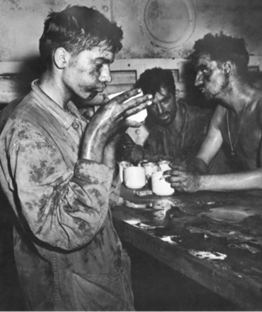
What started off as a convenient hot sludgy drink evolved into a highly sought after beverage that can bring comfort in the form of your local shop or emulate luxury. All within the span of 100 years the production and consumption of espresso, in its various forms, has spread all over the world.
Sources:
“Making Italian Espresso, Making Espresso Italian” Jonathan Morris (1)
Benoit DAVIRON, Stefano PONTE, The Coffee Paradox. Global markets, commodity trade and the elusive promise of development, (London, 2005), pp. 143-44.(2)
(insensitive to quality)Benoit DAVIRON, Stefano PONTE, The Coffee Paradox. Global markets, commodity trade and the elusive promise of development (3)

Latest Articles by The Crown

Hey Mambo! Assume Nothing Drink Recipe
By Asha Wells “Assume Nothing!” A mantra for The Crown as we worked towards opening our doors in March of 2019, the phrase became a Menu section, encouraging our visitors...

Understanding Coffee Acidity: What It Is and Why It Matters
Article Summary: Coffee acidity describes flavor brightness. Most brews sit near 5.5 pH. Acidity comes from organic acids in green coffee and changes through roasting: lighter roasts retain fruity malic...
Why Coffee Origins Matter: Flavor, History & Global Impact
written by Isabella Vitaliano, Lab and QC Specialist Article Summary: Coffee origin shapes cup profile, availability, pricing, and storytelling. Knowing country context helps buyers match flavor goals and manage risk....