
Are you starting a coffee business and need to get more information about purchasing wholesale green coffee beans? Look no further. In this blog, we take a deep dive into the most frequently asked questions from new green coffee buyers.
What to look for when purchasing green coffee beans?
Browsing green coffee inventory can feel overwhelming and confusing, especially when starting out. When buying green coffee beans, you need to understand what your menu needs in terms of volume, origin, flavor profile and pricing that makes sense for you and your business.
Flavor profile – What are your goals for flavor profiles in coffee? Having a clear vision of roasting style and the experience you want to create for your customers can help speed along your buying journey. This makes communication with your trader easy and efficient.
Seasonality – Do you want to focus on the seasonality of coffee? Or maintain consistency throughout the year? Coffee is a seasonal product, and you can embrace this by cycling origins throughout the year and showcasing different producers and regions. Or, if your client base prefers to have consistency throughout the year you can either bulk buy coffee or create blends between different origins to achieve certain flavor profiles.
Green coffee beans can become stale, something to keep in mind if you are moving through lots slowly. Roasting old green coffee can taste stale, papery or the original flavor profile becomes flat.
Sampling – Sampling is a very common practice when buying green coffee beans. When contacting an importer such as Royal Coffee, a trader might offer to send samples to help you narrow down your decision. Check out our Green Coffee Sample Feedback Guide to get more details on how to initiate those conversations and appropriate timeframes.
Pricing – Calculating profit margins, the “C” market, budget, price per lb, Region, cultivar, time of year, and lot size are all variables that play into how a coffee is priced. Having an idea of market trends can help you determine why a coffee is being priced a certain way, and how to sift through inventory sheets to find the perfect green coffee for your menu.
Where do the best green coffee beans come from?
Incredible green coffee can be found all over the world. Ethiopia and Kenya are often sought after in the specialty world, they produce superior quality green coffee. Other recognized origins might include Colombia, Costa Rica, Ecuador, and Indonesia… but great coffee can be found in dozens of countries worldwide. Kenya, Colombia, Ethiopia, Brazil, Vietnam and Indonesia make up a large portion of coffee production volume every year.
Coffee growing regions and producers are so diverse that it is hard to isolate countries or regions to find the ‘best’ green coffee beans. Generally, the more information that you can obtain about the coffee, the better quality it is.
Macrolots are large, often blended regionally (but not always) and generally you might find less information because of it. Microlots which are usually small single lots often come from a single producer or blend coffees from small producers in the same neighborhood.
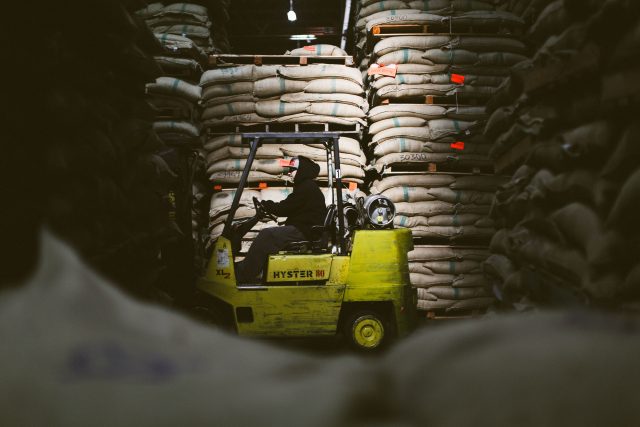
Brazil, for example produces 40% of the world’s volume in coffee has massive estates that can produce very large quantities of coffee– multiple containers of coffee (40,000lb) could be from the same estate. Macrolots from Ethiopia, on the other hand, often are produced by thousands of contributing farmers.
On the other hand, Royal carries a high-end line of microlots that are sold in 22lb boxes which contain a plethora of information and analysis including source, taste, espresso analysis and more.
Cup quality is also key; it is important to have the proper sensory background and skill to know how good or bad the coffees you taste are. One avenue to brushing up your sensory skills is to take a Q Combo course.
Keep in mind that the better a coffee is, the more you’ll probably need to pay for it. A good green coffee trader can help new buyers navigate the confusing pricing, quality, and availability intersection.
How to check the quality of green coffee beans?
There are several different measurements you can take to determine the quality of green coffee. Cup evaluation is one of the most important factors in determining the quality of green coffee.
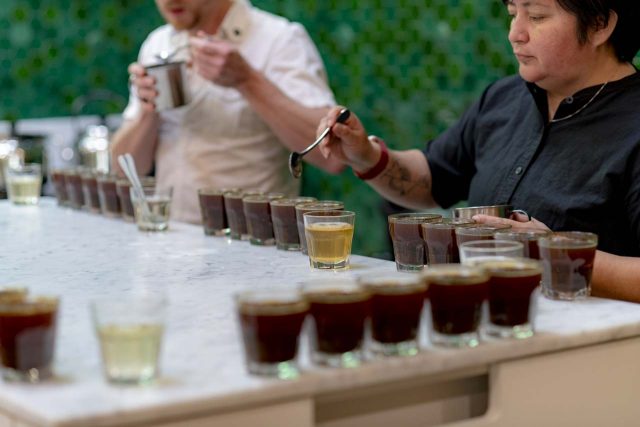
You can determine cup quality by cupping coffees, taking scores, and comparing notes and the experiences of other members of your QC team.
Density, moisture readings, screen size, visual defects and water activity should all be evaluated upon receiving your coffee sample and/or shipment. Moisture readings in particular, are important to determine food safety measures and the likelihood of mold forming in your coffee.
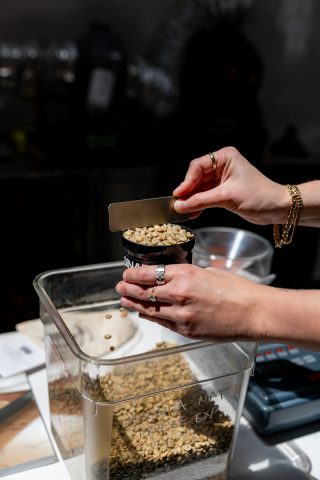
The quality of your green coffee impacts the quality of your roasted coffee. Just as in cooking, it all starts with the ingredients. You can’t cook (or roast) your way out of a bad ingredient. As you continue to learn what quality you are looking for, the easier coffee buying will be.
Activities like calibrating with local roasters/QC team, taking sensory classes or taking private consulting, are all ways to improve your ability to determine quality and make smarter green coffee purchasing decision.
If you have issues with quality, check out our Green Coffee Sample Feedback Guide to get more details on how to initiate those conversations and appropriate timeframes.
Storage methods can impact how long your coffee can last, as green coffee can go stale.
What’s the best green coffee?
The best green coffee has the cup quality that meets your needs, is shelf stable with moisture readings at optimal ranges, and the price that makes sense for you and your business.
Often, coffees from Ethiopia and Kenya are highly sought after due to reputation and popularity. The best green coffee will have higher cup quality which can be determined by the CQI grading system. This system ranks coffee on a scale of 100 points, anything above 80 is considered a specialty grade. Anything above 90 is rare. This 80-90 range is a very short range to express the cup quality of your coffee.
There are many different types of competitions for green coffee including Cup of Excellence (CoE). CoE is a well-known rigorous competition that producers can enter their coffees to compete. It includes many cupping evaluations over a three-week process. National competitions are held in coffee producing countries such as El Salvador, Ecuador, Costa Rica, Burundi, Peru and more. These competitions are meant to award the best coffee in the relevant regions.
While competitions are great for giving producer recognition it does not represent all of the best green coffee available. Having the skills to properly evaluate cup quality is the best way to determine the value of the quality of your coffee. Being aware of the intersection between cup quality and pricing is also an important factor in understanding how much you should pay and if the cup quality is worth the price.
If you need some support in determining the quality of your green coffee, Royal offers Cup Quality Evaluation services. It includes evaluation and sample feedback as well as the opportunity to respond with any follow-up questions that might come up during the process.
Are all green coffee beans the same?
Not all green coffee beans are the same nor should they be treated as such. As discussed earlier, taking different measurements like density, screen size, and water activity will determine how you approach green coffee in a coffee roaster. You should have different expectations for coffees with different regions, processing techniques, and cultivar types.
Processing techniques – Natural and washed are traditional processing techniques that are a big determinant of flavor profile of green coffee beans. Not only do they taste different, but the green beans themselves also look very different. There are many types of processing methods in-between both methods (honey process) as well as new and innovative methods such as co-fermented coffees. The processing method is a major factor that impacts cup quality and flavor profile.
Regionality – Where a green bean is from will determine pricing, quality and availability. Coffee is a seasonal crop and fresh green coffee will only be available at certain times of the year. Depending on the economy, reputation, and scarcity of green coffee will impact pricing of a coffee.
Cultivar – Cultivar type can affect the flavor profile of the coffee, yields, resiliency to diseases and more. Availability of cultivar types often come from demand signals and are distributed from national coffee research institutions that are either publicly funded or funded through the government. Cultivars can also be distributed through private institutions but can be more expensive and less accessible to producers. Understanding that different coffee growing regions grow specific cultivar types due to historical distribution and government funded support, is important to understand the type of coffee you are getting and expected flavor profiles.
Region, cultivar, and processing can impact density, and moisture levels of a coffee which in turn will affect how you should approach and roast a coffee. You can learn more about roasting or take private consulting with our expert staff at The Crown in Oakland, CA.
Royal makes your first green coffee purchasing decision easy and breezy with our How to Buy Green Coffee Beans & FAQ. There is so much more to learn about green coffee; explore the updates, experiments, and thoughts of Royal further by checking out our blog and podcast.

Latest Articles by The Crown
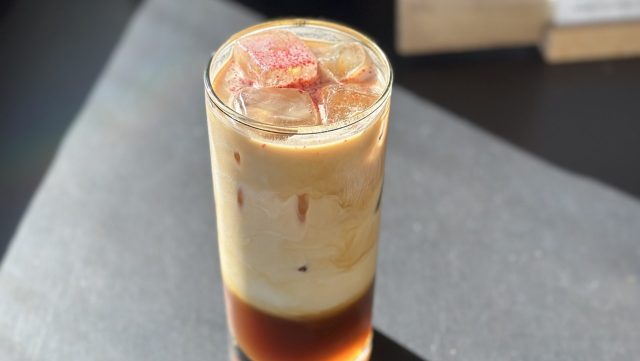
Hey Mambo! Assume Nothing Drink Recipe
By Asha Wells “Assume Nothing!” A mantra for The Crown as we worked towards opening our doors in March of 2019, the phrase became a Menu section, encouraging our visitors...
Understanding Coffee Acidity: What It Is and Why It Matters
Article Summary: Coffee acidity describes flavor brightness. Most brews sit near 5.5 pH. Acidity comes from organic acids in green coffee and changes through roasting: lighter roasts retain fruity malic...
Why Coffee Origins Matter: Flavor, History & Global Impact
written by Isabella Vitaliano, Lab and QC Specialist Article Summary: Coffee origin shapes cup profile, availability, pricing, and storytelling. Knowing country context helps buyers match flavor goals and manage risk....